Moka Pot Sizes: Which to Buy, and Why You Can't Brew Half a Pot
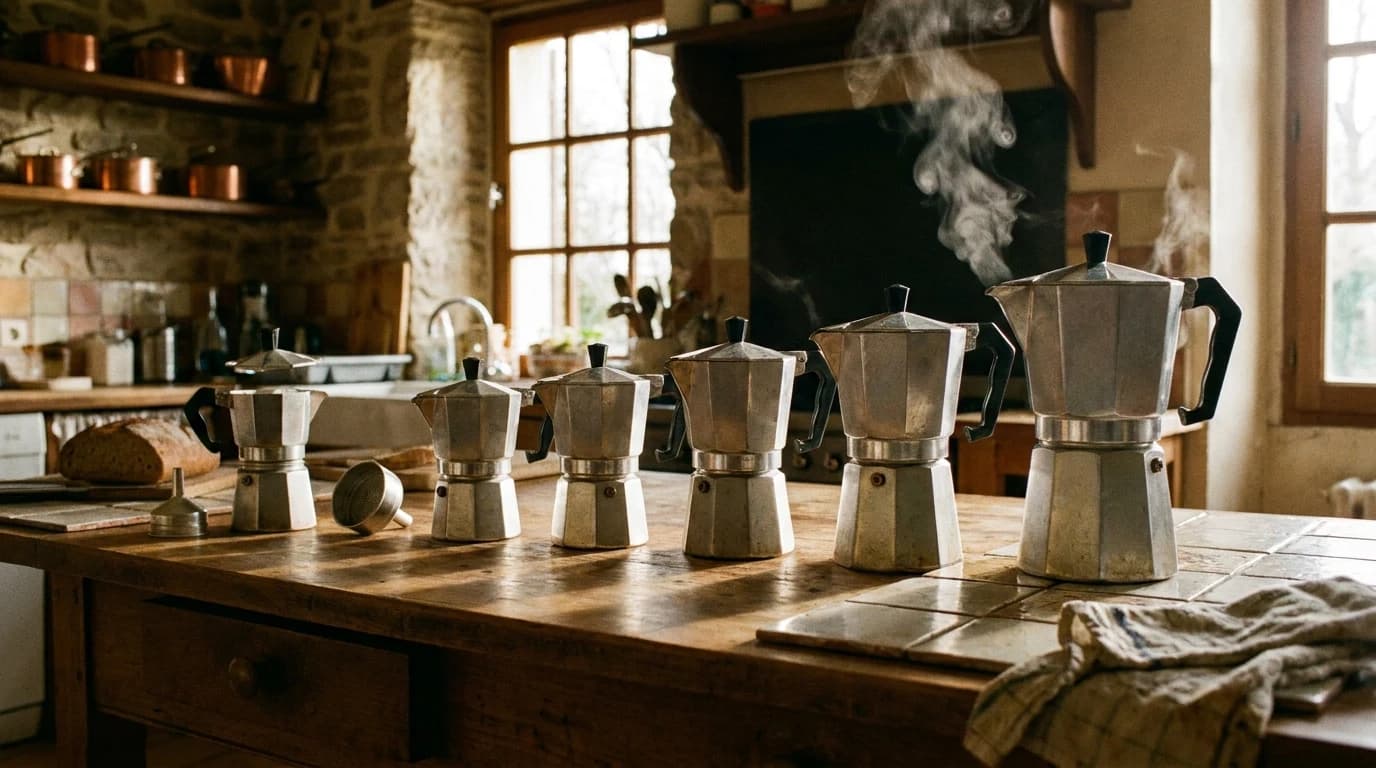
A moka 'cup' is about a 2 oz espresso serving — Bialetti's own pages put a 3-cup at 4.4 oz total and a 6-cup at 9.1 oz. Buy the size that matches what you drink every day: a 3-cup for one espresso-style drinker, a 6-cup for a full mug or two people. You can't usefully brew a half pot — the pot is designed to run filled to just below its safety valve — so if your household needs two different amounts, the practical answer is two pots.
Key takeaways
- A moka cup is roughly a 2 oz espresso serving, per Bialetti's own product pages — a 6-cup Moka Express produces 9.1 oz, about one large mug.
- Output is not linear across sizes: Bialetti lists the 3-cup at 4.4 oz, not three times the 1-cup's 2 oz, so size by the published totals rather than multiplying.
- Cup counts don't even match across lines — the stainless Venus 6-cup yields 7.9 oz while the aluminum Moka Express 6-cup yields 9.1 oz, both Bialetti figures.
- There is no half-pot mode: the water goes to just below the safety valve, and Bialetti says the air gap above the water is what drives the brew, so buy the size you drink daily.
- Aluminum Moka Express pots need an adapter plate for induction; the stainless Venus and Cuisinox Roma work on induction directly, and GROSCHE's aluminum Milano explicitly does not.
- Solo, espresso-style7.9BrewSift ScoreGood
- One mug, or two people8.9BrewSift ScoreExcellent
- Induction, 7.9 oz8.7BrewSift ScoreExcellent
- Budget pick, not induction8.1BrewSift ScoreExcellent
- Foam experiment, 5.4 oz8.5BrewSift ScoreExcellent
Prices are approximate and change often. BrewSift earns a commission on qualifying purchases, at no extra cost to you.
A "cup" is not what you think it is
The single biggest sizing mistake with moka pots happens before the pot is even in the cart: reading "6-cup" as six cups of coffee. A moka cup is an espresso-sized serving — about 2 fluid ounces, a figure Bialetti prints on its own product pages. A 6-cup Moka Express produces 9.1 oz of concentrated coffee: one large mug's worth, not a carafe.
Rule of thumb: a moka "cup" is a 2 oz espresso serving, not a mug. Read the cup number as shots, not as breakfast.
Output does not scale the way the number implies
It gets less intuitive. Output doesn't scale linearly with the cup number. Bialetti's published figures run 2 oz for the 1-cup, 4.4 oz for the 3-cup, 9.1 oz for the 6-cup, 14.2 oz for the 9-cup and 22 oz for the 12-cup — the per-cup yield creeps up as the pot grows. Three moka cups is 4.4 oz, not three times the 1-cup's 2 oz.
Cup counts aren't even comparable across lines from the same company. The stainless Venus 6-cup yields 7.9 oz where the aluminum Moka Express 6-cup yields 9.1 oz — same brand, same number on the box, a different amount of coffee. So size by the manufacturer's stated output:
- Read the stated output in ounces, not the cup count printed on the pot.
- Don't multiply. Per-cup yield rises as pots get bigger, so the published totals are the only reliable figure.
- Don't compare cup numbers across lines. A Venus 6-cup is 7.9 oz; a Moka Express 6-cup is 9.1 oz.
The sizes, in Bialetti's own numbers
| Size (Moka Express) | Stated output | What that means in practice |
|---|---|---|
| 1-cup | 2 oz | A single espresso-style shot |
| 3-cup | 4.4 oz | One solo drinker, espresso-style or a small strong cup |
| 6-cup | 9.1 oz | One full mug, or two espresso drinkers |
| 9-cup | 14.2 oz | Two mugs / a small household |
| 12-cup | 22 oz | Crowd duty |
On r/mokapot, the standing recommendation for one person is the 3-cup, with the 6-cup as the size for a full mug or for sharing — and a recurring caution that six moka-cups is genuinely a lot of concentrated coffee for one drinker.
Why there's no half-pot mode
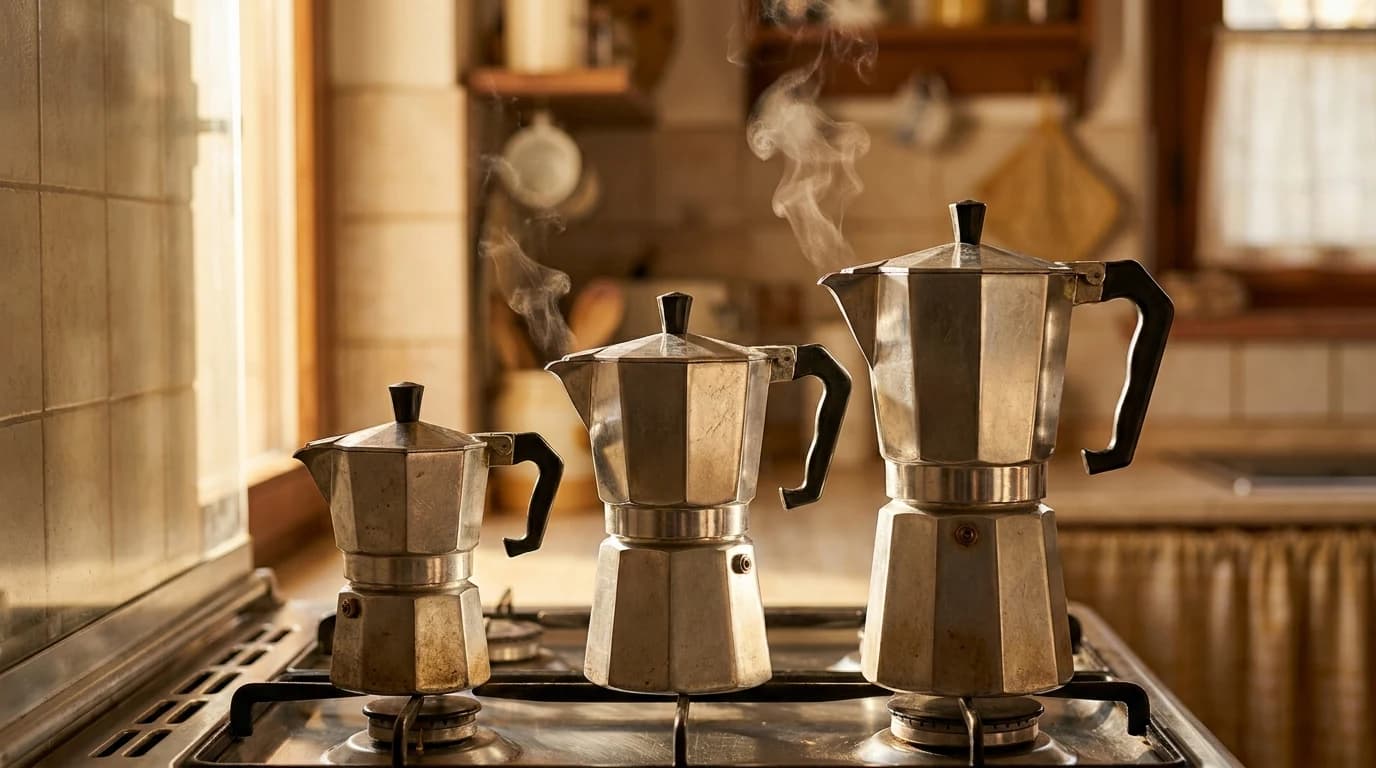
Here's the constraint that makes sizing matter: a moka pot has essentially one dose. Bialetti's instructions are to fill the boiler to just below the safety valve — the valve doubles as the fill line — and its brewing guide explains that the air gap between the water surface and the basket is the working part of the brewer. Heat expands that trapped air, and the pressure pushes hot water up through the grounds. Overfill above the valve and you lose the gap; Bialetti's own guidance says the result is boiled, bitter coffee.
Under-filling changes the same geometry in the other direction, which is why the community's settled answer to "can I just brew half my 6-cup?" is: don't.
Remember: the pot has one dose — the boiler filled to just below the safety valve. Buy for that dose, because you get it every time you brew.
What to do when you want a smaller drink
What actually works:
- Brew at full strength and dilute in the cup. This is the r/mokapot workaround for getting a smaller drink out of the pot you already own, and our coffee ratio calculator will tell you how much water to add for the strength you're after.
- Keep two sizes. A 3-cup for solo mornings, a 6-cup when you're sharing. Several r/mokapot regulars simply own both, which is less absurd than it sounds once you accept that the pot has one dose.
What people try that doesn't work:
- Filling the boiler halfway. The air gap above the water is the working part of the brewer, so shrinking it isn't a volume control.
- Overfilling above the valve to stretch one pot further. Bialetti's guidance is explicit that losing the gap gives you boiled, bitter coffee.
- Tamping the basket to compensate. Bialetti says fill loose and level; over-pressed grounds are one of the conditions it names for forcing the safety valve open.
Keep the valve working
While you're looking at the valve, Bialetti recommends occasionally rinsing it with hot water and working its little piston back and forth so limescale never seizes it. Too-fine grinds sit alongside over-pressed grounds on Bialetti's list of things that make the safety valve vent, so grind is part of the same picture. If your moka coffee tastes burnt regardless of size, that's a heat and technique problem — our moka bitterness fix covers it.
Aluminum, steel, and the induction question
The classic aluminum Moka Express — 3-cup or 6-cup — works on gas and electric, but induction needs Bialetti's separate adapter plate. If your stove is induction, the material decides the shortlist before the size does.
If your stove is induction
| Pot | Material | Induction |
|---|---|---|
| Moka Express (3 / 6-cup) | Aluminum | Adapter plate needed |
| Venus 6-cup | 18/10 stainless | Works directly |
| Brikka 4-cup Induction | Hybrid steel and aluminum boiler | Works directly |
| GROSCHE Milano | Aluminum | No — separate induction SKU |
The Venus 6-cup is 18/10 stainless and works directly, which makes it the straightforward induction pick at the 6-cup size (Moka Express vs Venus). The GROSCHE Milano is the budget aluminum route — and explicitly not induction-compatible; GROSCHE sells a separate induction version, so check which SKU you're looking at.
The Brikka exception
The outlier is the Bialetti Brikka, which adds a second, weighted pressure-regulating valve above the boiler's normal safety valve, engineered to build more pressure and top the cup with a foam layer. What that buys and costs:
- It yields less than the cup number suggests. Bialetti lists the 4-cup Brikka at 5.4 oz.
- Owner opinion is the most divided of any pot here. Some love the extra body; others find it fussy to dial in.
- The foam is short-lived. The owners who don't rate it point out that it doesn't survive the pour.
- The induction model uses a hybrid steel-and-aluminum boiler, so it doesn't need the adapter plate.
If the choice is down to the Brikka or the classic pot, our Brikka vs Moka Express head-to-head weighs the crema against the extra cup and the lower price.
The buying logic, condensed
Buy the size that matches what you actually drink every morning, because that's the amount the pot makes — every time. There is no single winner here, only the pot that matches your daily amount and your stove:
- Espresso-style solo drinker: 3-cup, 4.4 oz.
- One big mug, or two people: 6-cup, 9.1 oz.
- Induction stove: the stainless Venus, or the Brikka Induction if you want the foam valve; both work directly.
- Budget, and not induction: GROSCHE Milano.
- Want the foam experiment and accept the fiddliness: Brikka, at 5.4 oz for the 4-cup.
- Two different amounts on different days: two pots, genuinely the answer the community lands on.
Whatever size you land on, the grind matters as much as the hardware — our grind size by brew method guide covers where moka sits between espresso and drip, and the grind size calculator turns that into a starting setting for your grinder. The full moka pot lineup has our current picks.
Your next step
Pick your size, then dial in the grind.
The pots, and who each size is for
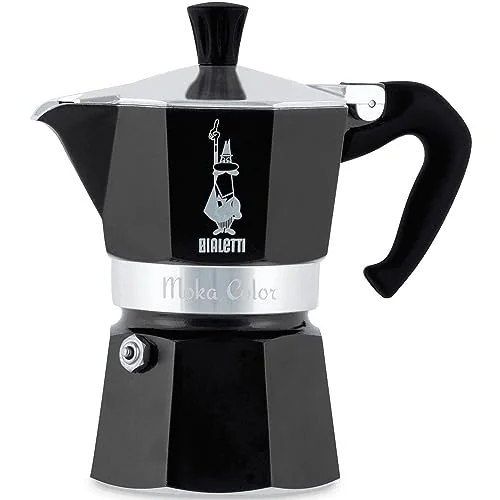
Moka Express 3-Cup
The small classic — perfect when you only want a cup or two and don't want to over-fill.
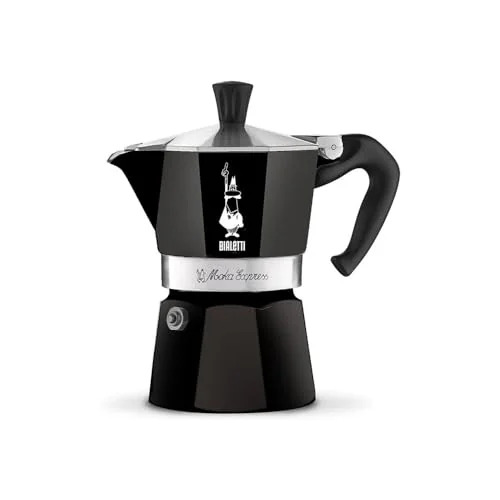
Moka Express 6-Cup
The iconic aluminium stovetop pot — strong, sweet, espresso-adjacent coffee for the price of lunch.
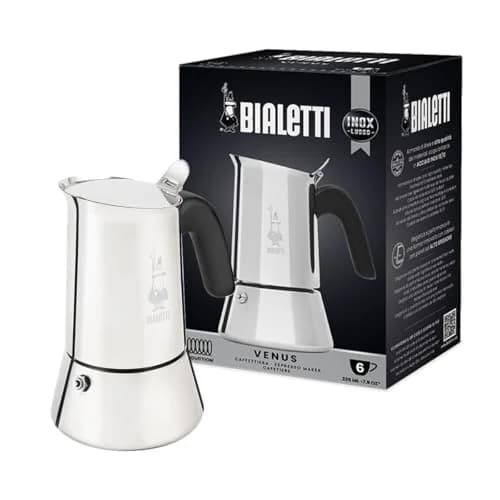
Venus Induction 6-Cup
Bialetti's stainless moka — works on induction, lasts longer, and won't pit like aluminium.
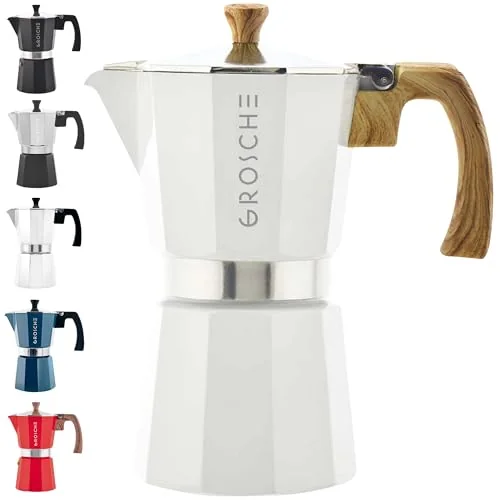
Milano Stovetop 6-Cup
A budget aluminium moka that brews the classic cup with a comfy soft-touch handle.
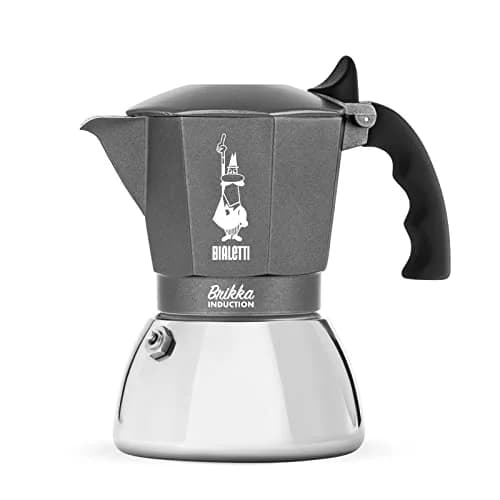
Brikka Induction 4-Cup
A weighted pressure valve builds real crema — the closest a moka pot gets to espresso.
BrewSift earns a commission on qualifying purchases made through these links, at no extra cost to you. Prices shown were checked on publication and change often.
FAQ
How much coffee does each moka pot size actually make?
Using Bialetti's own published outputs for the Moka Express: 1-cup makes 2 oz, 3-cup makes 4.4 oz, 6-cup makes 9.1 oz, 9-cup makes 14.2 oz, and 12-cup makes 22 oz. Note the yield per cup rises as pots get bigger, so use the totals, not multiplication.
Can I brew half a pot in a 6-cup moka?
Not as the pot is designed. Bialetti's instructions fill the boiler to just below the safety valve, and the air gap above the water is what generates brewing pressure; the community's settled answer on r/mokapot is to own a smaller pot instead, or brew a small pot at full strength and dilute in the cup.
What size moka pot should one person buy?
The common recommendation is a 3-cup (4.4 oz) if you drink it espresso-style, or a 6-cup (9.1 oz) if you want one full mug. A 6-cup is a lot of concentrated coffee for one person, so match the pot to your actual daily amount.
Do moka pots work on induction stoves?
Only steel ones, natively. The aluminum Moka Express needs Bialetti's induction adapter plate; the stainless Bialetti Venus and Cuisinox Roma work directly; the Brikka Induction uses a hybrid steel-and-aluminum boiler. GROSCHE's aluminum Milano is explicitly not induction-compatible — GROSCHE sells a separate induction SKU.
Should I tamp the coffee in the basket?
No. Bialetti says to fill the basket loosely and level, without pressing. Its own valve guidance names over-pressed grounds and too-fine grind among the conditions that force the safety valve to open.
What does the Bialetti Brikka do differently?
Bialetti fits it with a second pressure-regulating valve on top of the normal boiler safety valve, designed to build more pressure and top the cup with a foam layer. It also yields less — the 4-cup Brikka is listed at 5.4 oz. Owner opinion is split: some love the extra body, others find it fussy and call the foam short-lived.
Sources
- Bialetti — Moka Express product page (size table: 3-cup ≈ 4.4 oz output)
- Bialetti — Moka Express 9-cup and 12-cup pages (14.2 oz and 22 oz outputs)
- Bialetti — the moka safety valve explained (fill gauge, venting, cleaning the piston)
- Bialetti — using Bialetti coffee makers (air gap drives the brew; no tamping; low-to-medium heat)
- Bialetti — Venus stainless moka pot page (6 cup = 7.9 oz output, induction-ready)
- Bialetti — Brikka 4-cup Induction page (5.4 oz, dual-layer boiler, pressure-regulating valve)
- Cuisinox — Roma stovetop espresso maker (18/10 stainless, induction, 25-year warranty)
- r/mokapot — what size moka pot should I get (the two-pot consensus)