Bialetti Brikka vs Moka Express
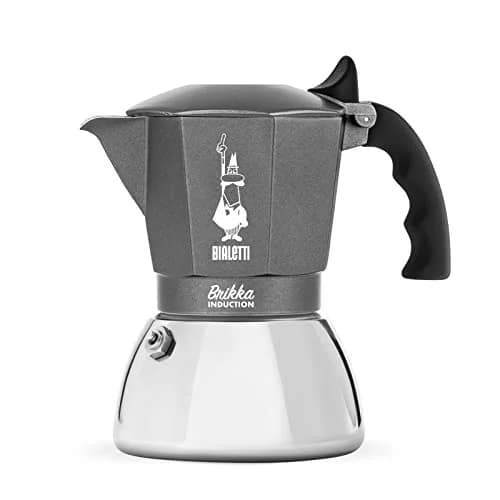
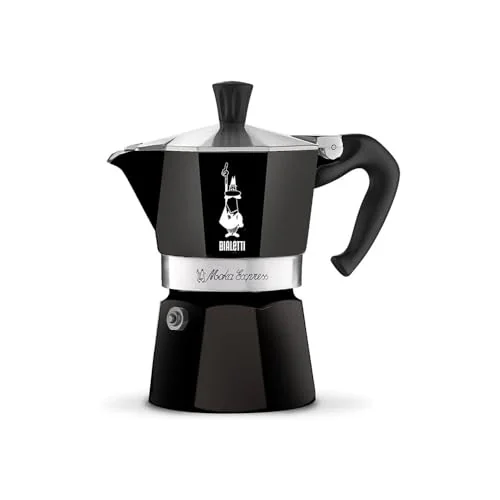
Short answer: Buy the Brikka if crema is the reason you are looking at a moka pot, or if you cook on induction; buy the Moka Express if you want more coffee, for less, with nothing extra to clean. The Brikka is the Moka Express with a weighted pressure valve on top: it holds pressure back until it releases, which is what builds the layer of crema an ordinary moka pot cannot produce. The version we link also has Bialetti's two-layer aluminium and steel boiler, so it works on induction without an adapter. That is the whole difference, and you pay for it twice — the 4-cup Brikka costs more than the 6-cup Moka Express, and the valve is one more part to keep clean. The Moka Express is the eight-sided classic: bigger, cheaper, dead simple, and it scores higher here on cup quality, ease and value.
Updated
Part of our guide to the best moka pots (stovetop espresso makers).
Head to headHighest overall score: Bialetti Moka Express 6-Cup (8.5 vs 8.9) — but pick by how you brew.
 |  | |
|---|---|---|
| Score | 8.5/ 10 | 8.9/ 10 Higher |
| Price | $70.49approx.Checked 2026-10-09 | $64.95approx. |
| Get it for | crema and a richer cup, induction hobs | making more coffee, lowest price, least to clean and least to go wrong |
| Material | Two-layer aluminium and steel boiler | Aluminium |
| Size | 4 cup (about 5.4 oz, per Bialetti) | 6 cup (9.1 oz per Bialetti) |
| Stovetop | Gas, electric, induction (per Bialetti) | Gas / electric; induction with Bialetti's adapter plate |
| Cleaning | Rinse with water; no soap or dishwasher | Rinse with warm water; no soap or dishwasher (Bialetti) |
| AmazonFull review of Bialetti Brikka Induction 4-Cup | AmazonFull review of Bialetti Moka Express 6-Cup |
Prices are approximate; use the listing for the current offer.
What the extra money buys — The Brikka costs more than the Moka Express while brewing less — about 5.4 oz from the 4-cup pot against 9.1 oz from the 6-cup one, by Bialetti's figures. What the extra money buys is the weighted pressure valve and the crema it raises, the one thing an ordinary moka pot cannot do, plus an induction-capable boiler. What it costs you is capacity, price, and a valve that needs occasional cleaning; the Moka Express scores higher here on cup quality, ease and value with none of that to think about.
Approximate — verify the latest price
BrewSift earns a commission on some purchases. It never changes our scores. Why you can trust us
Approximate — verify the latest price
BrewSift earns a commission on some purchases. It never changes our scores. Why you can trust us
Bialetti Brikka vs Moka Express: which wins for you
The weighted pressure valve builds a genuine crema — the closest a moka pot gets to espresso.
Bialetti puts the 6-cup Moka Express at 9.1 oz of coffee, against about 5.4 oz of coffee and crema from the 4-cup Brikka.
Bialetti specifies this Brikka for induction, gas and electric; the aluminium Moka Express is made for gas and electric and needs Bialetti's induction adapter plate.
Cheaper than the Brikka despite brewing more, and it scores higher on value here.
No pressure valve to service; the Brikka's valve needs occasional cleaning to keep working.
Bialetti Brikka vs Moka Express: score by dimension
BrewSift sub-scores for moka. The longer bar wins each row; equal scores are both highlighted.
Bialetti Brikka vs Moka Express: specs side by side
Bialetti Brikka vs Moka Express: the bottom line
Buy the Brikka if crema is the reason you are looking at a moka pot, or if you cook on induction; buy the Moka Express if you want more coffee, for less, with nothing extra to clean. If you just want the stronger all-rounder, the Bialetti Moka Express 6-Cup edges it on our overall score (8.5 vs 8.9).
More comparisons in moka pots
Other matchups we have run side by side, same scoring, same spec sheet.
Common questions
Brikka vs Moka Express: what is the difference?
One part. The Brikka adds a weighted pressure valve over the spout that holds the brew back and releases it in a burst, which raises a crema; the Moka Express pushes coffee up through an open spout and makes no crema. Everything else follows from that: the Brikka costs more, makes less coffee per size, and has a valve to keep clean, while the Moka Express is cheaper, simpler and scores higher here on cup quality, ease and value. The Brikka we link also has an induction-capable boiler, which the classic aluminium Moka Express does not.
What does the Brikka's valve actually do?
It is a weighted valve that sits over the spout and holds the brew back until enough pressure has built underneath, then releases it in a burst. That burst is what produces the crema layer on top, which an ordinary moka pot cannot make — a standard Moka Express simply pushes coffee up through an open spout as it heats. It is also the part that needs occasional cleaning, since coffee oils and grounds around the valve are what stop it sealing properly.
Is the Brikka worth paying more than the Moka Express?
Only for the crema, or for induction. If you drink your moka coffee black and want the traditional cup, the Moka Express makes more of it for less money and scores higher here on cup quality, ease and value. If you are chasing something closer to espresso — especially for milk drinks, where the crema and the thicker body hold up better — the Brikka is the one of the two that gets you there. Note that we link a 4-cup Brikka against a 6-cup Moka Express, so you are paying more for less coffee: about 5.4 oz against 9.1 oz, by Bialetti's figures.
How much coffee does each one make?
Less than the cup numbers suggest, because Bialetti counts moka cups as espresso-sized servings of about 2 oz, not mugs. Bialetti puts the 4-cup Brikka at about 5.4 oz of coffee and crema, and the 6-cup Moka Express at 9.1 oz; the 3-cup Moka Express is 4.4 oz. If you want one mug-sized drink, the 6-cup Moka Express is the closer fit, and if you want a short, crema-topped coffee for one or two, the 4-cup Brikka is.
Does the Brikka work on an induction hob?
The Brikka we link is the induction version, which Bialetti builds with a two-layer aluminium and steel boiler and specifies for induction, gas and electric. The classic Moka Express is aluminium and made for gas and electric; on induction, Bialetti's answer is its induction adapter plate. If induction is your situation and crema is not the priority, Bialetti's stainless Venus works on induction without an adapter, and we compare it against the Moka Express separately.
Can either one go in the dishwasher?
No. Bialetti's care instruction for both is to rinse with water after use, with no soap and no dishwasher. That matters more for the Brikka, because its valve is the part that stops sealing when coffee oils and grounds build up around it, so it needs an occasional careful clean by hand. The Moka Express has no valve over the spout and is the easier of the two to keep working.
Is either one real espresso?
No. Both brew at a small fraction of the pressure an espresso machine uses, so neither produces a true espresso shot no matter what the packaging says. The Brikka gets meaningfully closer by holding pressure back before release, which is why it can raise a crema at all. If you want actual espresso, that is an espresso machine, and a moka pot is a different and much cheaper drink that happens to sit near it.
Bialetti Moka Express 6-Cup
$64.95