Super-Automatic vs Semi-Automatic Espresso: Which Actually Fits Your Mornings
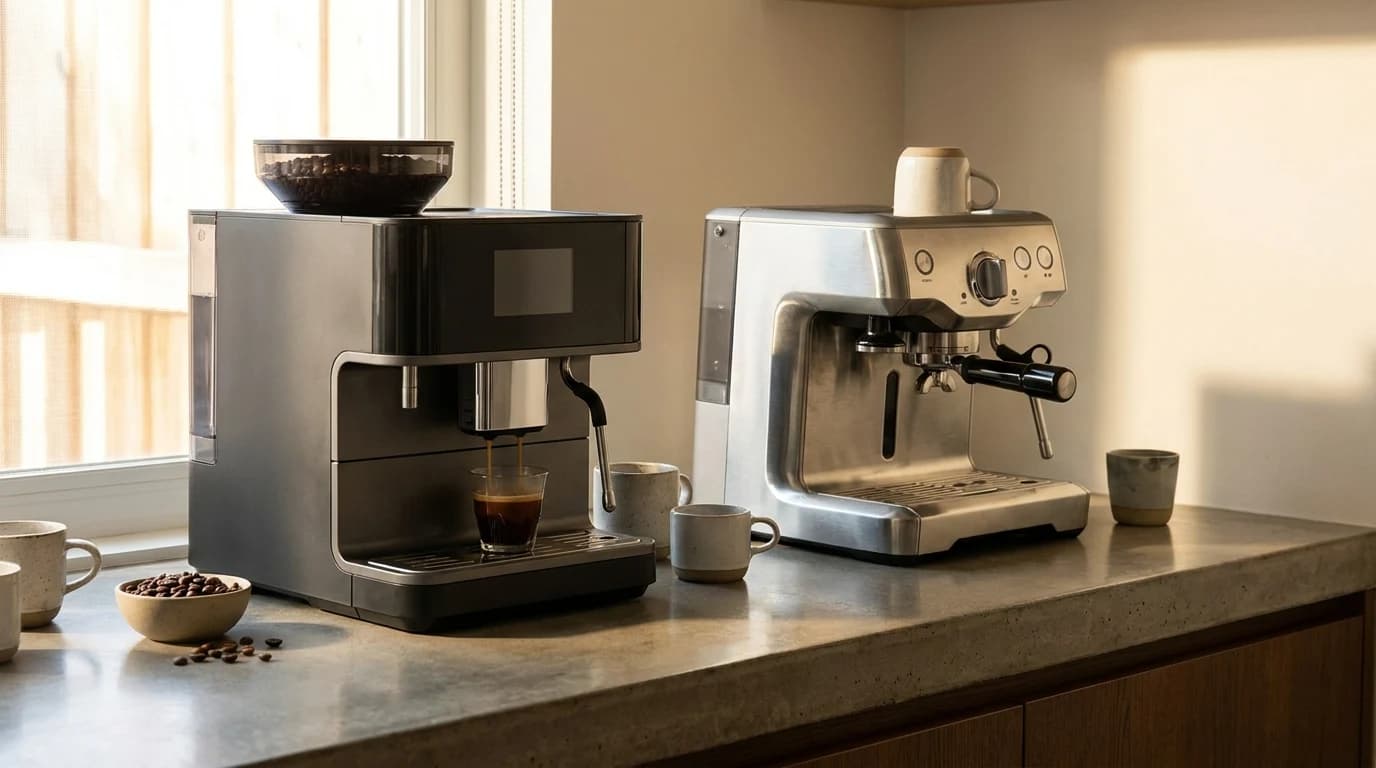
Buy a super-automatic if the machine must serve people who won't learn to dial in espresso — it grinds, doses and brews at one button, and machines like the Philips LatteGo models trade the learning curve for a cleaning routine. Buy a semi-automatic if you want control of dose, grind and extraction and will actually use it — but budget for a separate grinder on machines like the Bambino Plus and Gaggia Classic Pro, which include none. Neither type is low-maintenance; the chores are just different.
Key takeaways
- A super-automatic automates grinding, dosing and brewing at one button press; a semi-automatic automates none of it, and two of the three semi-autos here (Bambino Plus, Gaggia Classic Pro) don't even include a grinder — price the setup, not the machine.
- Super-autos are not maintenance-free: Philips' own care guidance includes rinsing the milk system after every use, weekly brew-group rinses, periodic lubrication and a cleaning-tablet cycle — the espresso learning curve is replaced by a cleaning routine.
- Philips' up-to-5,000-cups-without-descaling claim is conditional: its own footnote bases it on eight AquaClean filter replacements at the machine's prompts.
- The 15-bar number on spec sheets is pump capability, not brew pressure — Breville states 9-bar extraction via a 15-bar pump, and Gaggia's OPV is set to 9 bar.
- Within the Philips range, the 2200, 3200 and 4400 share the same 12-step ceramic grinder — moving up the ladder buys drink count, profiles and interface, not better brewing hardware.
- Not every super-auto froths milk: the JURA ENA 4 makes four black-coffee drinks and has no milk system at all.
- One-touch for non-hobbyists8.3BrewSift ScoreExcellent
- Same grinder, 3 buttons7.9BrewSift ScoreGood
- Bigger hopper, iced drinks7.9BrewSift ScoreGood
- Shot control, auto milk8.5BrewSift ScoreExcellent
- Semi-auto in one box8.1BrewSift ScoreExcellent
- The rebuildable one7.8BrewSift ScoreGood
Prices are approximate and change often. BrewSift earns a commission on qualifying purchases, at no extra cost to you.
The question underneath the question
"Super-automatic or semi-automatic" sounds like a hardware comparison, but the r/espresso regulars keep landing on the same reframe: it's a question about people. A semi-automatic makes the operator responsible for dose, grind and extraction; a super-automatic takes those variables away. Enthusiasts will tell you — as opinion, and they say it often — that a well-driven semi tastes better and a super-auto's shots shine mostly under milk. But the counter-argument comes up just as often: if the people using it won't learn to dial in a grinder, the super-automatic is the machine that actually gets used every day.
Rule of thumb: buy for the person who will actually use the machine at 6:45am, not for the person you plan to become.
So before specs: who's making coffee in your house, and what will they genuinely do on a weekday morning?
What each type actually automates
A super-automatic grinds, doses, tamps and brews from whole beans at one button. The Philips 3200 LatteGo makes five drinks one-touch; Philips' Aroma Extract system holds brew water between 90 and 98°C automatically — the super-auto's substitute for a barista's temperature control. The De'Longhi Magnifica Evo automates seven recipes including iced coffee with its LatteCrema milk carafe.
| Step | Super-automatic | Semi-automatic |
|---|---|---|
| Grinding | Built in (Philips: 12-step ceramic) | You, on a separate grinder — unless it's the Barista Express |
| Dosing | Automatic | You (the Bambino Plus expects an 18 g dose) |
| Tamping | Automatic | You |
| Brewing | One button | You start and stop the shot |
| Milk | Carafe system — or none at all | Steam wand, manual or automatic |
What the semi-auto leaves to you
A semi-automatic automates almost none of that — and often includes less hardware than you assume. The Breville Bambino Plus ships with no grinder at all: it expects you to deliver an 18 g dose into its 54 mm portafilter from a grinder you bought separately. Same for the Gaggia Classic Pro. The Barista Express is the exception that explains its bestseller status — a built-in 16-setting conical burr over a PID-controlled thermocoil.
Price the setup, not the machine. A super-auto's sticker includes the grinder; most semi-autos' stickers don't. Run both totals through the espresso budget calculator before you compare price tags, and our dual-use grinder guide covers what that second purchase really costs.
The 15-bar number on the box
- The "15 bar" printed on nearly every box is pump capability, not brew pressure.
- Breville states 9-bar extraction via its 15-bar pump.
- Gaggia calibrates its overpressure valve to 9 bar.
- Nobody brews at 15.
The maintenance truth nobody markets
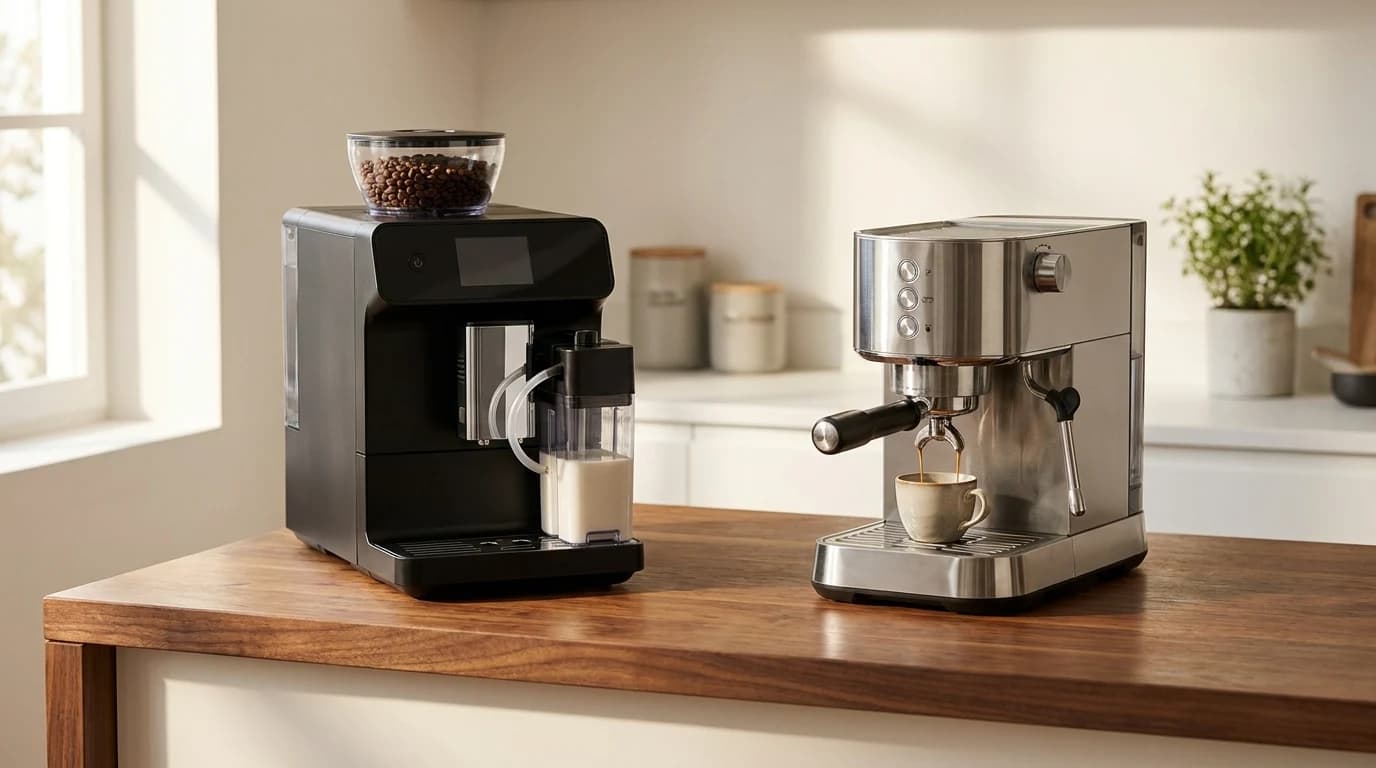
The super-auto pitch is effortlessness, and it's half true: the effort moves from brewing to cleaning.
Philips' actual care routine
Philips' own care guidance for its machines runs:
- Rinse the LatteGo after every use — Philips says roughly 15 seconds under the tap, or the dishwasher
- Fresh water daily, and rinse the tank weekly
- Pull the brew group and rinse it under the tap roughly weekly
- Lubricate it periodically with Philips' own grease
- Run a coffee-oil-remover tablet every couple of months
- Descale when the machine prompts
That's a real routine — r/superautomatic treats it as the price of admission, not a defect.
Remember: a super-automatic doesn't remove the work, it swaps an espresso learning curve for a cleaning schedule.
Removable brew group vs sealed
Philips machines pop theirs out for a tap rinse — the single feature r/superautomatic praises most, because sealed designs concentrate coffee residue where owners can't reach. It's even sold as a spare part, so a worn group is a $50-part event, not a dead machine. JURA's ENA 4 takes the opposite philosophy: maintenance runs as machine-driven programs with JURA's own tablets, and JURA doesn't state its brewing unit is user-removable.
The 5,000-cup asterisk
Philips' "up to 5,000 cups without descaling" carries a footnote — it assumes you replace the AquaClean filter all eight times the machine asks. Filters are a running cost, not an optional extra, if you want that interval.
Semi-autos have their own chores — backflushing the Gaggia's brass group, machine-prompted clean cycles and descales on the Breville — and their own long-game advantage: the Classic Pro's 58 mm group and three-way solenoid are the reason r/espresso treats it as a machine you keep alive indefinitely with gaskets and service kits. That's genuinely valuable if you're the rebuild type; the same threads note that paying a technician can cost more than replacing a budget machine.
Milk, and the machines that skip it
Milk drinks decide more purchases than espresso does, and the milk system is where these two families diverge hardest.
| Machine | Milk system | What that means day to day |
|---|---|---|
| Philips 3200 / 2200 LatteGo | Two-part, tube-free carafe | Philips claims a 15-second rinse under the tap; dishwasher-safe |
| De'Longhi Magnifica Evo | LatteCrema carafe | The same one-touch job, carafe-style |
| Breville Bambino Plus | Automatic steam wand | Textures to a selected temperature and style, then purges itself |
| Barista Express / Gaggia Classic Pro | Manual steam wand | Better microfoam in trained hands — but those hands have to get trained |
| JURA ENA 4 | None | Four black-coffee drinks, no milk system at all |
So read the drink list before you buy. The ENA 4 is a deliberately milk-free machine: wonderful for an Americano household, a mistake for a latte one. The Bambino Plus is the clever hybrid at the other end — manual espresso, automatic milk.
The honest buying logic
Buy a super-automatic if:
- The machine has to serve people who won't learn to dial in espresso
- One-touch milk drinks matter more to you than control of the shot
- You'd rather keep a cleaning schedule than a learning curve
- You want the grinder included in the sticker price
Buy a semi-automatic if:
- You want to own dose, grind and extraction — and will actually use that control
- You're fine buying a separate grinder (the Bambino Plus and Classic Pro include none)
- You want to texture milk yourself
- You like the idea of a machine you rebuild rather than replace
Which machine, specifically
- Philips 3200 LatteGo — one-touch drinks and the tap-rinsable brew group when the machine must serve non-hobbyists. The 2200 if three drink buttons are enough; the 4400 buys twelve drinks and saved profiles, not better brewing hardware. All three share the same 12-step ceramic grinder; 3200 vs 2200 compares those two directly.
- De'Longhi Magnifica Evo — for the bigger hopper and the iced-coffee recipes. See Philips 3200 vs Magnifica Evo.
- JURA ENA 4 — for a black-coffee household happy with machine-driven maintenance programs.
- Breville Bambino Plus plus a grinder — real espresso control with training wheels on the milk.
- Barista Express — the whole semi-auto experience in one box.
- Gaggia Classic Pro plus a grinder — the machine you'll still be rebuilding in a decade. See Gaggia Classic Pro vs Bambino Plus.
Either way, the coffee matters more than the automation: a super-auto fed stale beans makes stale one-touch lattes. Start with our espresso machines lineup and super-automatic picks for current pricing, and if your shots taste off on a semi-auto, the dial-in calculator and the sour vs bitter diagnosis guide are the fastest fixes.
Your next step
Compare current prices and picks
The machines this comparison covers
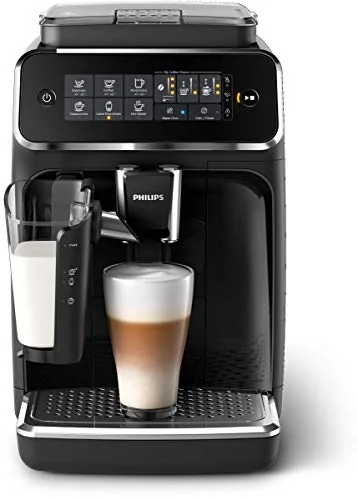
3200 Series LatteGo
The value bean-to-cup pick: one-touch milk drinks and the easiest milk system to clean.
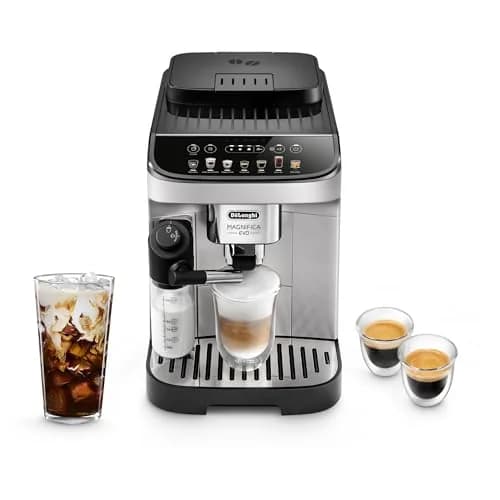
Magnifica Evo
The most affordable name-brand bean-to-cup that still does the basics well.
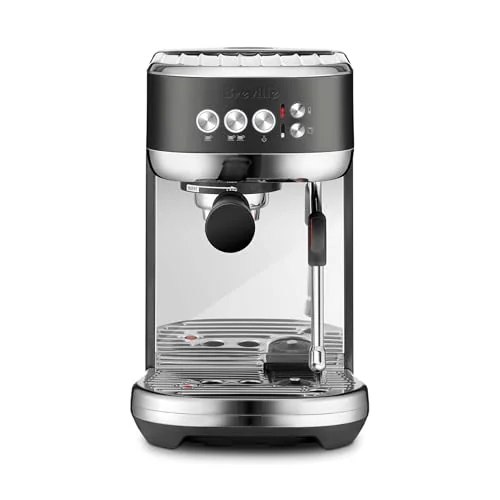
Bambino Plus
The easiest path to genuinely good espresso and hands-free milk in a tiny footprint.
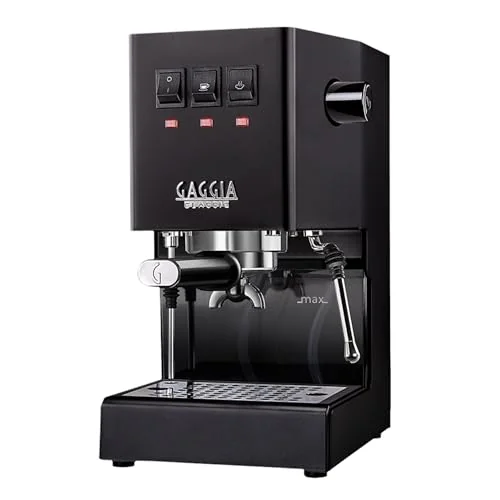
Classic Evo Pro
A 58mm commercial-style machine that teaches real espresso and welcomes modifications.
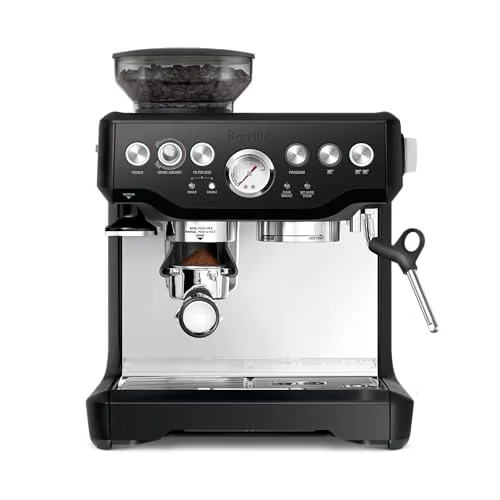
Barista Express
The classic all-in-one: built-in grinder, manual wand, everything you need to start in one box.
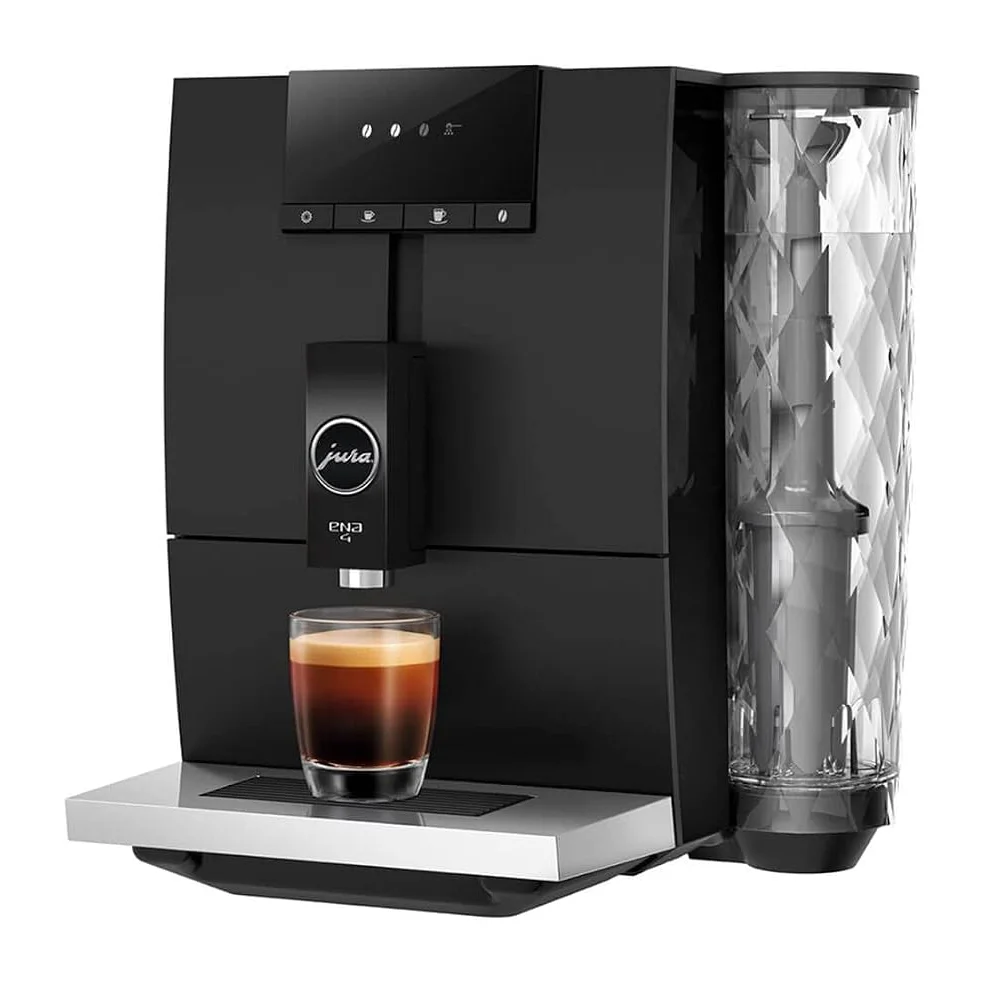
ENA 4 Metropolitan Black
JURA's smallest bean-to-cup: a narrow, beautifully built machine for people who drink espresso and coffee, not lattes.
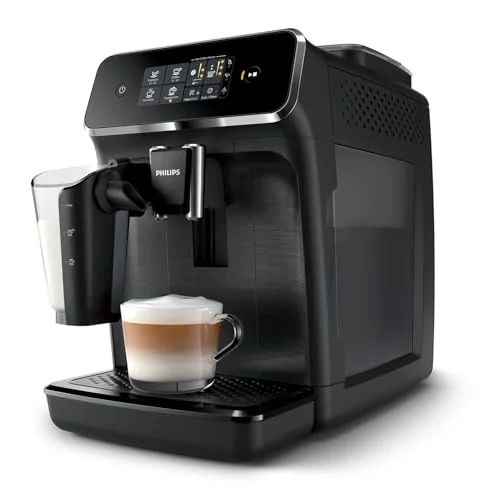
2200 Series LatteGo
The most affordable way to get a one-touch latte from whole beans, with the easy-clean LatteGo carafe.
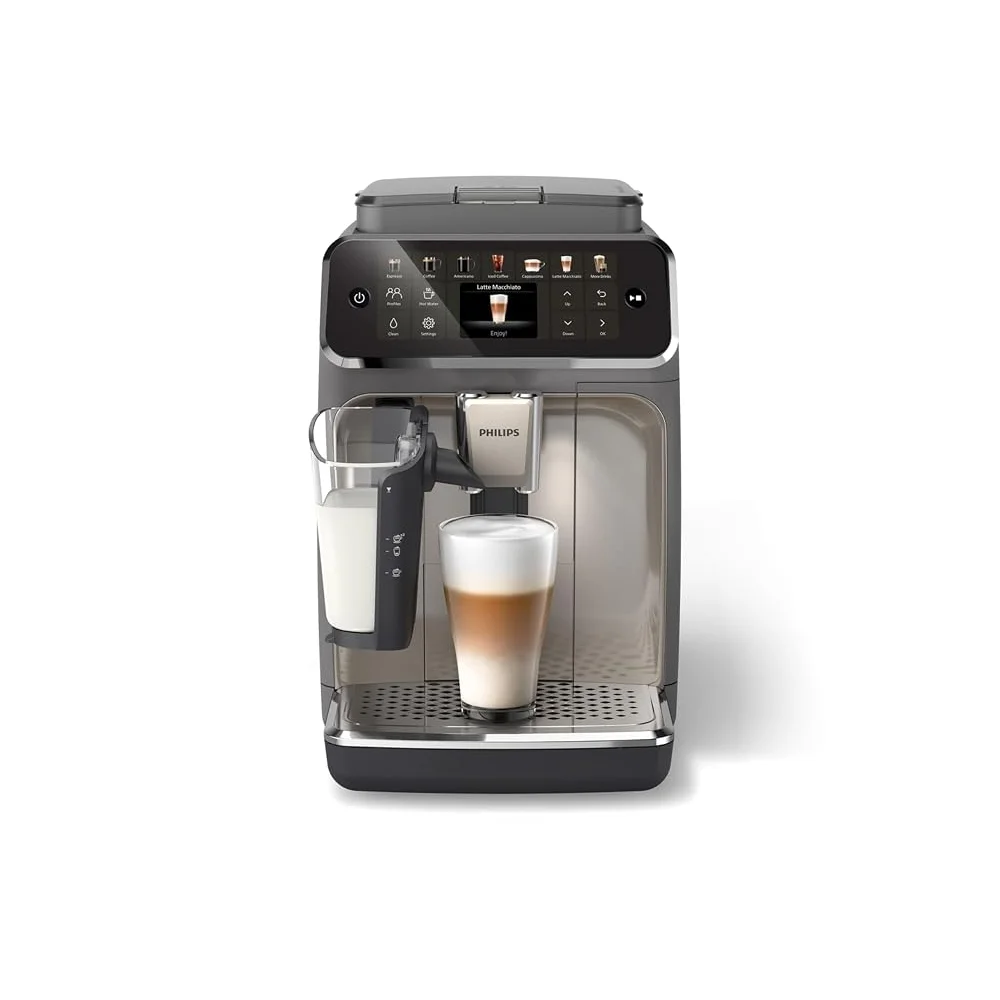
4400 Series LatteGo EP4444/90
The step up from the 3200: twelve one-touch drinks including iced, and Philips' quieter SilentBrew grinder.
BrewSift earns a commission on qualifying purchases made through these links, at no extra cost to you. Prices shown were checked on publication and change often.
FAQ
Does a super-automatic make worse espresso than a semi-automatic?
There's no measured data behind that claim, so we won't assert it. What's verifiable: a super-auto fixes the variables (Philips holds brew water at 90–98°C automatically), while a semi-auto hands them to you (the Barista Express gives you 16 grind settings and PID temperature control). The r/espresso community's view — opinion, not measurement — is that a well-driven semi-auto tastes better and a super-auto's shots shine mostly in milk drinks.
Which type is less work to clean?
Honestly: similar total effort, different chores. Philips' own routine includes rinsing the LatteGo after every use, weekly tank and brew-group rinses, brew-group lubrication and a coffee-oil-remover tablet every couple of months. Semi-autos want backflushing (Gaggia Classic Pro) or machine-prompted cleaning cycles and descaling (Barista Express). Neither is zero-maintenance.
How often does a super-automatic need descaling?
Philips claims up to 5,000 cups without descaling using its AquaClean filter — but its own footnote conditions that on replacing the filter eight times as the machine prompts. Without buying filters, the claim doesn't apply. JURA runs descaling as a machine-driven program with its own tablets.
Is automatic milk froth as good as a steam wand?
They're different products. The LatteGo is a two-part, tube-free carafe Philips says rinses in about 15 seconds or goes in the dishwasher; a manual wand (Barista Express, Gaggia) can texture microfoam for latte art but has to be learned and purged. The Bambino Plus splits the difference: manual espresso, but an automatic steam wand that textures to a set temperature and self-purges.
What's the real price difference once you include a grinder?
Smaller than it looks. Super-autos include the grinder; the Bambino Plus and Gaggia Classic Pro include none, so add a real espresso-capable grinder to their sticker price. The Barista Express is the semi-auto exception with a built-in 16-setting conical burr.
Do all super-automatics have a removable brew group?
No — verify per model. Philips explicitly lists a removable brew group (sold as a spare part, so it's replaceable rather than terminal), while JURA describes only a 'variable brewing unit' on the ENA 4 without stating it's user-removable, and runs maintenance as internal programs instead.
Sources
- Philips — EP3241 3200 LatteGo leaflet (one-touch drinks, ceramic burrs, 15 bar, 1.8 L, removable brew group, AquaClean 5,000-cup footnote)
- Philips — EP2235/40 2200 leaflet (12 grind steps, 20,000-cup burr claim, LatteGo 15-second rinse, Aroma Extract 90–98°C)
- Philips — brew group spare part CP0208/01 (user-replaceable)
- Philips — super-automatic cleaning guide (per-use, weekly, monthly routines; HD5061 brew-group grease)
- De'Longhi — Magnifica Evo ECAM29084SB (7 one-touch recipes, 13 grind settings, LatteCrema)
- JURA — ENA 4 (four black-coffee specialties, no milk system, Aroma G3 grinder)
- Breville — Bambino Plus BES500 (no grinder, 54 mm portafilter, 9-bar extraction, 3-second ThermoJet, auto steam wand)
- Breville — Barista Express BES870 (16-setting conical burr, 250 g hopper, PID Thermocoil at 200°F)
- Gaggia — Classic Pro (58 mm brass group, 9-bar OPV, backflush-capable)
- r/espresso — semi vs super-automatic thread (the who-will-use-it consensus)