One Grinder for Espresso and Pour Over: When It Works, When You Need Two
One grinder can do both if its maker actually claims both ranges — the Baratza Encore ESP, Fellow Opus 2 and DF54 do; Fellow's Ode Gen 2 explicitly does not. The catch is workflow, not capability: every switch back to espresso means re-dialing and purging a few grams, which is why the community's standing advice for daily both-drinkers is a dedicated espresso grinder left dialed in, plus a cheaper filter or hand grinder. Occasional switchers do fine with one dual-range machine.
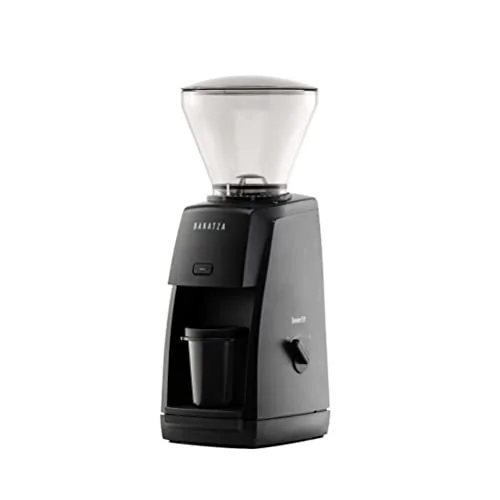
Encore ESP
For the majority reader here — mostly filter, espresso now and then, one grinder on the counter — the Encore ESP is the budget answer built exactly for this, with a 40-click dial that spends settings 1 to 20 on espresso and 21 to 40 on filter. One honest disclosure: owner reviews on Baratza's own page repeatedly report the plastic ring burr holder cracking, and Baratza confirms it is a deliberately sacrificial part. If you want the stronger all-rounder instead of the budget one, the Opus 2 carries Fellow's explicit espresso yes across 48 settings.
- Genuine espresso + filter range
- Baratza repair/parts support
- Best all-round value
Price is approximate and changes often — check the listing.
Key takeaways
- Espresso needs resolution, not just fineness: Baratza splits the Encore ESP's dial so settings 1–20 move the burrs as little as ~20 microns per click for espresso while 21–40 step much coarser for filter.
- Check the maker's own claim, not the retail listing: Fellow states outright that the Ode Gen 2 cannot do espresso while selling the Opus 2 as a dual-range yes — and Timemore's own C2S page makes no espresso claim even though Amazon listings do.
- The real cost of one grinder is the switch: re-dialing espresso after every coarse session plus purging retained grounds, which is workflow friction no spec sheet shows.
- Retention decides whether single-dosing works: DF64 claims under 0.1 g for the DF54, while an independent retailer measured 0.5 g to 4.7 g across four well-regarded grinders — attribute numbers to whoever measured them.
- Burr size doesn't predict brew method: the filter-only Ode Gen 2 has the biggest burrs here (64 mm flat) and the espresso-capable Opus 2 the smallest electric ones (48 mm conical).
- No manufacturer publishes an 'espresso = X microns' range — the precise-sounding figures on coffee blogs are untraceable, so we don't print one.
- Occasional espresso, budget8.1BrewSift ScoreExcellent
- Stronger all-rounder8.1BrewSift ScoreExcellent
- Dedicated espresso grinder8.6BrewSift ScoreExcellent
- Low-retention single-doser8.5BrewSift ScoreExcellent
- Filter only, forever7.9BrewSift ScoreGood
Prices are approximate and change often. BrewSift earns a commission on qualifying purchases, at no extra cost to you.
The question isn't capability — it's your 7am
Ask whether one grinder can handle espresso and pour over and you'll get a confusing chorus of yes and no. Both answers are right, because they're answering different questions. Capability is settled by the manufacturers themselves: several grinders are explicitly designed for both ranges. Livability is what the r/espresso threads keep circling: every time you come back from a coarse filter grind, you re-dial the espresso setting and purge a few grams through the burrs. One grinder can do both jobs. Whether you'll enjoy doing that dance daily is the actual decision.
That reframing changes what you shop for. If capability were the binding constraint you'd be comparing burr diameters. It isn't, so the two useful questions are duller: does the maker itself claim the range you need, and what does the daily switch cost you?
Rule of thumb: Capability is a spec; livability is a workflow. One grinder can do both jobs — the real question is whether you want to re-dial and purge every morning.
Why espresso is the hard direction
Fineness is the obvious requirement — resolution is the real one
Espresso pushes water through a compressed puck in roughly half a minute, so the grind must be fine enough to build real resistance; pour over drains freely for minutes at a much coarser setting. But fineness alone isn't the requirement — resolution is. At espresso fineness, a hair of burr movement visibly changes the shot, while the same movement at filter coarseness barely registers in the cup.
That is the entire design story of the Baratza Encore ESP: its 40-click dial is deliberately lopsided, with settings 1–20 compressed into the espresso range — moving as little as about 20 microns per click, per CoffeeGeek's analysis — while 21–40 take normal coarse strides for filter, French press and cold brew. Baratza even makes the espresso window relocatable with shims. It's a genuine dual-use design, not a marketing line. Our grind size tool lays those methods out side by side.
The number this article deliberately won't print
One figure you won't find here: an "espresso is X microns" range. No manufacturer in this comparison publishes one, and the precise-sounding numbers circulating on coffee blogs don't trace back to anything. Treat that absence as information — if no spec sheet says where espresso begins, a grinder's espresso credentials can only come from what its own maker claims.
Read the maker's claim, not the listing
The cleanest illustration that dual-use is a design choice comes from Fellow, which sells two similar-looking grinders with opposite answers. The Ode Gen 2 carries the biggest burrs here — 64 mm flats — and Fellow says outright it is not suitable for espresso: it's a wide-burr, coarse-stepped filter specialist. The Opus 2, with the smallest electric burrs in this lineup at 48 mm conical, gets Fellow's explicit espresso yes across 48 settings. Burr size predicts nothing; the maker's stated range is the spec that matters.
What each maker actually claims, in its own words
| Grinder | The maker's own espresso claim | What the maker states about adjustment or retention |
|---|---|---|
| Baratza Encore ESP | Yes — dial split 1–20 espresso / 21–40 filter | ~20 microns per click in the espresso half (CoffeeGeek); shim-relocatable window |
| Fellow Opus 2 | Yes, explicitly | 48 settings, 48 mm conical burrs |
| Fellow Ode Gen 2 | No — "not suitable for espresso" | 64 mm flat burrs, coarse-stepped |
| DF54 | Yes — an espresso-and-filter single-doser | Under 0.1 g retention, DF64's own claim |
| 1Zpresso J-series | Yes — the fine end is the design target | 8–8.8 microns per click, published |
| Timemore C2S | No claim on Timemore's own page | 38 mm burr, about 36 levels |
Apply that same test everywhere. The DF54 is marketed by its maker as an espresso-and-filter single-doser (Encore ESP vs DF54). 1Zpresso publishes 8–8.8 microns per click for its J-series hand grinders — finer published resolution than most electric grinders. And the Timemore C2S? Amazon listings mention espresso; Timemore's own page says nothing about it. The maker's page is the ceiling for capability claims.
Three checks that settle it in under a minute
- Does the maker's own product page say espresso, in its own words? A retailer's bullet doesn't count.
- Does the adjustment get finer at the fine end, or step uniformly from espresso to cold brew?
- Can you return to a known setting — a numbered dial you can count back to — after a coarse session?
Rule of thumb: If the maker's own page doesn't claim espresso, treat the grinder as filter-only. An Amazon listing is not a spec sheet.
The switching tax, and how people actually pay it
The r/espresso and r/pourover consensus is remarkably consistent about where the pain lives. Daily both-drinkers who run one grinder describe the same routine every time they come back to espresso:
- Re-dial the espresso setting after the coarse session.
- Purge a few grams to clear the previous setting's retained grounds — an r/pourover corollary: leftover espresso fines carried into a filter brew muddy the cup.
- Accept the dial-in shots as the cost of doing business. If you want to shorten that part, the espresso dial-in tool turns the guesswork into arithmetic.
Who one grinder genuinely works for
The people happiest with a single machine share traits you can check against your own week.
One grinder works if:
- You brew asymmetrically — mostly one method, occasionally the other.
- You single-dose, so switching coffees and settings is already part of the routine.
- Your grinder is stepless or very finely stepped, and returning to a known number is easy.
You want two if:
- You drink both espresso and filter daily.
- You resent the purge-and-re-dial routine at 7am more than you resent the second machine on the counter.
- You already own a filter grinder worth keeping — several posters recommend adding an espresso grinder rather than replacing both with one compromise machine.
Single dosing, and why retention decides it
Single dosing is the workflow that makes one grinder livable: hopper empty, each dose weighed and ground to order. Its enabling spec is retention — whatever stays in the burrs contaminates the next brew. Claims and measurements diverge here, and the attribution matters as much as the number:
- DF64 claims under 0.1 g for the DF54 — the maker's own figure for its own grinder.
- Clive Coffee's own measurements across four respected grinders ran from 0.5 g (Baratza Sette) to 4.7 g (Compak E10).
- The Eureka Mignon Specialità landed at about 1.3 g in that same set of retailer measurements.
Attribute retention numbers to whoever measured them — "zero retention" is a marketing phrase, not a physics result.
Which brings us to the community's actual standing advice: once you drink both daily, buy two grinders. The canonical split is a dedicated espresso grinder that never leaves its dial-in — the stepless Specialità is the classic pick, its micrometric adjuster landing between where clicks would fall — plus a cheaper filter grinder or a hand grinder for pour over.
The honest recommendations
Occasional espresso, mostly filter. One dual-range machine is fine — the Encore ESP is the budget answer built exactly for this, with one honest disclosure: owner reviews on Baratza's own page repeatedly report the plastic ring burr holder cracking, and Baratza confirms it's a deliberately sacrificial part. The Opus 2 is the stronger all-rounder; Encore ESP vs Opus weighs the two directly.
Daily both. Split it. Espresso grinder dialed in and untouched — Specialità or DF54 — plus a 1Zpresso J or your existing filter grinder for pour over. The numbered hand-grinder dial makes the second machine cheap and repeatable.
Filter only, forever. The Ode Gen 2 exists precisely for you, and its maker's honesty about espresso is exactly why it's trustworthy about filter.
Whatever you pick, grind setting is the dial that matters most in the cup — our grind size by brew method guide maps the territory, and the full grinder lineup carries current picks and pricing.
Your next step
Ready to pick the grinder?
The grinders this argument actually points at
Encore ESP
The grinder most people should buy first — it does espresso and filter, and Baratza will fix it forever.
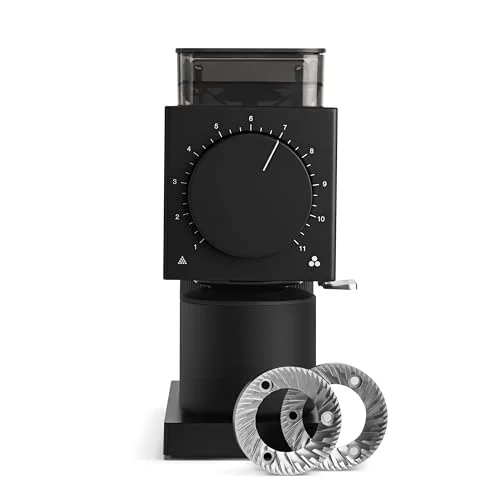
Ode Gen 2
The best filter-only grinder: 64mm flat burrs, near-zero retention, and an exceptionally clean cup.
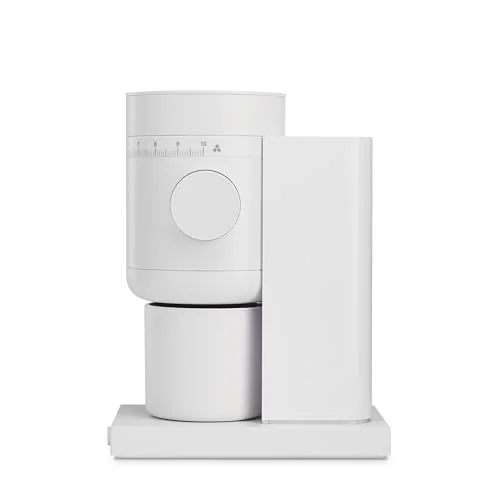
Opus 2
Fellow's all-rounder, now in its second generation: a wide espresso-to-cold-brew range and a design that earns its counter space.
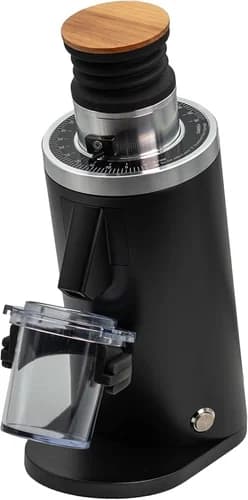
DF54
Single-dose 54mm flat-burr performance at a price that undercuts the establishment.
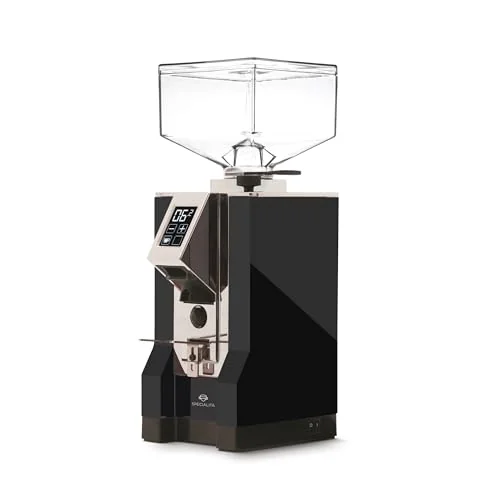
Mignon Specialità
A quiet, stepless, Italian-built espresso grinder that holds a dial-in shot after shot.
BrewSift earns a commission on qualifying purchases made through these links, at no extra cost to you. Prices shown were checked on publication and change often.
FAQ
Why does espresso need a finer grind than pour over?
Espresso forces water through a compressed puck in under half a minute, so the grind must be fine enough to build resistance; pour over drains freely over several minutes at a much coarser setting. The hidden requirement is adjustment resolution — at espresso fineness, a tiny burr movement changes the shot, which is why the Encore ESP compresses half its dial into the espresso range.
Which grinders genuinely do both?
The ones whose makers say so on their own pages: Baratza's Encore ESP (a split 1–20 espresso / 21–40 filter dial), Fellow's Opus 2 (an explicit yes to espresso), the DF54 (marketed as an espresso-and-filter single-doser), and 1Zpresso's J-series hand grinders (8–8.8 microns per click). Fellow's Ode Gen 2 is the explicit no.
What does single dosing mean and why does it matter here?
Running the hopper empty and weighing each dose of beans as you grind it. It lets you switch coffees and grind settings freely — which is exactly what a dual-use workflow needs — but it only works well on low-retention grinders, since whatever stays in the burrs contaminates the next brew.
How much coffee do I lose switching between methods?
Two costs, neither huge but both daily: a purge of a few grams to clear the previous setting's retained grounds, and the dial-in shots you pull when returning to espresso. There's no honest universal gram figure — retention ranges from under 0.1 g (DF54, maker's claim) to nearly 5 g (independent retailer measurements of other models).
Is a stepped or stepless grinder better for dual use?
Stepless (like the Eureka Mignon Specialità's micrometric adjuster) can land between where two clicks would fall, which matters most at the espresso end. Finely stepped designs with numbered dials fight back with repeatability — it's trivial to return to 'setting 8' after a filter session, which is exactly the dual-use pain point.
Is a hand grinder a serious espresso option?
1Zpresso's J-series moves its burrs 8 to 8.8 microns per click — finer published resolution than most electric grinders — and hand grinders' numbered external dials make returning to a known setting trivial. That's why the community's favorite cheap second grinder is a hand grinder, in either direction of the split.
Sources
- Baratza — Encore ESP (dial split 1–20 espresso / 21–40 filter; 40 mm M2 conical burrs; shim-adjustable range)
- CoffeeGeek — Encore ESP analysis (~20 microns per click in the espresso half; small conicals' historic espresso weakness)
- Fellow — Ode Brew Grinder Gen 2 ('Ode is not suitable for espresso'; 64 mm flat burrs)
- Fellow — Opus 2 (48 mm conical, 48 settings, explicit espresso yes)
- Eureka — Mignon Specialità (55 mm flat burrs, patented stepless micrometric adjustment)
- Clive Coffee — what single dosing is, plus measured retention (Sette ~0.5 g, Specialità ~1.3 g, M7D ~4.5 g, E10 ~4.7 g)
- DF64 Coffee — DF54 (espresso-and-filter single-doser, sub-0.1 g retention claim)
- 1Zpresso — grind setting resolution by model (8–8.8 microns per click on the J series)
- r/espresso — one grinder for pour over and espresso thread (the workflow-friction consensus)