Semi-automatic and manual machines that pull real espresso — you control the grind, dose, and milk. The most rewarding (and most fiddly) way to make coffee at home.
Quick steer — Buy here if you want to learn the craft and pull real shots — and budget for a separate grinder, because most of these machines do not include one.
Top pick: Breville Bambino Plus (8.5/10, Approx. $399.95). The easiest path to genuinely good espresso and hands-free milk in a tiny footprint.
Skip this
Spending the entire budget on the machine and nothing on the grinder
It is the most repeated mistake in r/espresso, and the fix is expensive because the second purchase ends up being the grinder anyway. Espresso forces water through a very fine bed of coffee in twenty to thirty seconds, so an inconsistent grind shows up in the cup no matter what pushes the water.
The BrewSift Score is a 0–10 weighted average of category-specific sub-scores, built from manufacturer specifications, published reviews and aggregated owner reports — not hands-on testing. In this category it weights espresso quality 25%, milk-drink workflow 15% and ease of use 15%, plus 4 smaller factors. How we score →
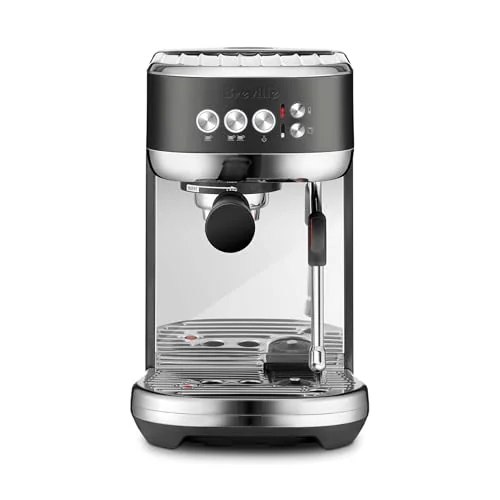
The easiest path to genuinely good espresso and hands-free milk in a tiny footprint.
Breville's ThermoJet heats in ~3 seconds and the automatic steam wand textures milk to a set temperature and foam level, so beginners get café-style lattes without learning to steam. A 54mm portafilter and pre-infusion punch above the price; you just need a decent grinder beside it.
3-second heat-up
Automatic milk texturing to set temp & foam
Compact footprint
No built-in grinder
Plastic body
What owners say — Owners love the speed and auto-milk; a few wish for a 58mm basket and metal body.
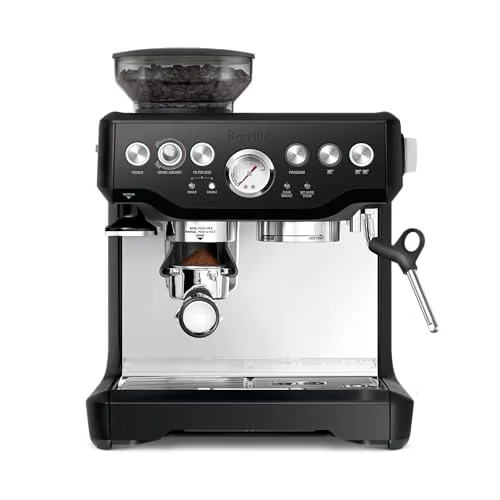
The classic all-in-one: built-in grinder, manual wand, everything you need to start in one box.
A conical burr grinder, dose control, manual steam wand, and 54mm portafilter make this the default first machine for a reason. You learn real espresso skills (grinding, dosing, steaming) at a fair price. A dedicated grinder beats the built-in one, but the convenience and value are hard to argue with.
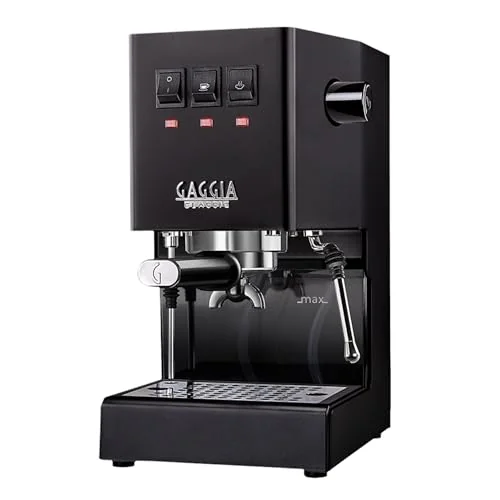
A 58mm commercial-style machine that teaches real espresso and welcomes modifications.
The enthusiast's entry point: a 58mm commercial portafilter, a proper steam wand, sturdy build, and a huge modding community (PID kits, OPV, flow control). It demands technique and has no frills, but the espresso ceiling far exceeds the price. The listing we link is the RI9380 Classic Evo Pro, with an aluminium boiler; Gaggia North America now sells the Classic Pro E24, a revision with a lead-free brass boiler, so check which model a listing ships.
An affordable all-in-one with a built-in grinder, guided tamping, and a real steam wand.
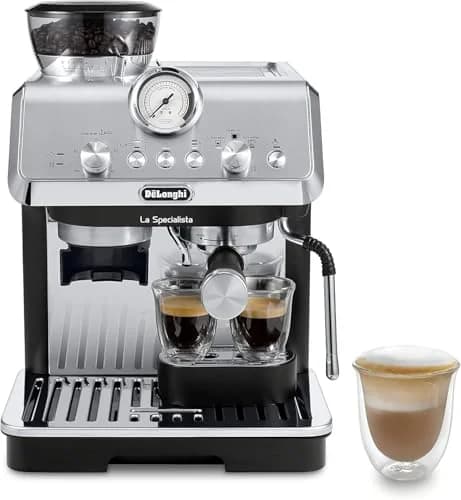
DeLonghi's answer to the Barista Express undercuts it on price: a built-in conical grinder, a guided dosing-and-tamping station, and a manual steam wand in a compact body. The espresso is good rather than exceptional, but as a single-box way to learn with milk drinks it's strong value.
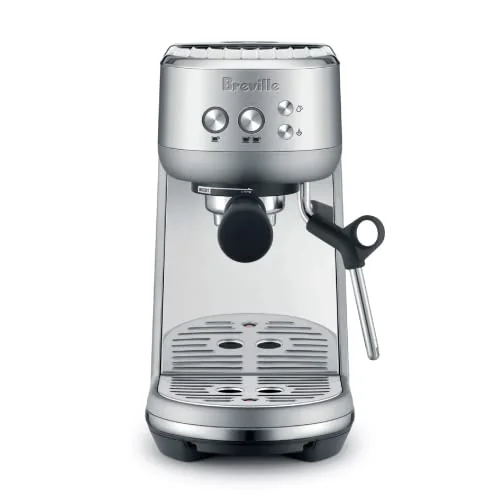
The Bambino Plus's cheaper sibling — same fast heat-up and tiny footprint, with a manual steam wand.
Drops the automatic milk texturing of the Bambino Plus but keeps the 3-second ThermoJet heater, 54mm portafilter, and pint-sized footprint. The cheapest way into genuinely capable Breville espresso if you don't mind steaming milk yourself.
The machine is not the part that decides how your espresso tastes. Owners who have upgraded in both directions consistently report that a modest machine with a good grinder beats an expensive machine with a poor one, which is why five of the eight machines ranked here assume you are buying a grinder separately rather than trying to include one.
What owners actually report
r/espressor/Coffeer/gaggiaclassic
Ask r/espresso which machine to buy and the first answer is almost always about the grinder instead: the sub returns to the point relentlessly that grind consistency sets the ceiling and the machine only holds the puck and pushes water through it. Once that is settled the recommendation splits cleanly by temperament. People who do not want to modify anything are pointed at the Breville Bambino and Bambino Plus, for the fast heat-up and the fact that they work well out of the box; people who like tinkering are pointed at the Gaggia Classic Pro, described as producing better shots and being far more repairable, at the cost of a longer learning curve and the usual PID and OPV modifications. The all-in-one Barista Express draws consistent praise as a machine and consistent criticism for its built-in grinder, which owners describe as the weak link they eventually work around.
Consistently praised
Breville Bambino Plus — The default recommendation for people who want good espresso without a project: owners cite the near-instant heat-up and the automatic milk texturing as the reason beginners get drinkable results in week one.
Gaggia Classic Pro — Recommended by owners who want to keep the machine for a decade: a commercial 58mm portafilter, parts that are actually replaceable, and a well-documented modification path that most other machines in the price band do not have.
Consistently warned about
All-in-one machines bought for the built-in grinder — Barista Express owners repeatedly report the grinder, not the brew group, as the part that limits them, citing inconsistency, coarse adjustment steps and retention, and most say they eventually added a separate grinder anyway.
Budget machines with pressurized or dual-wall baskets — The recurring warning is that a pressurized basket manufactures crema regardless of the grind, which caps how good the shot can get and hides the feedback you would otherwise use to improve.
Only three of the eight espresso machines BrewSift ranks include a grinder; the other five are sold on the assumption that you buy one separately. The category spans $150 to $995, a 6.6x spread.
The single-boiler wait
Almost every home machine under $800 is single-boiler: it switches between brew and steam temperatures, so there's a short pause between pulling a shot and steaming milk. If milk drinks are your priority, an automatic-steam machine like the Bambino Plus — or a super-automatic — removes that hassle entirely.
All-in-one machines (like the Breville Barista series) are convenient and great value, but a separate grinder almost always grinds better and upgrades independently. If counter space and budget allow, a separate grinder is the better long-term path.
PID temperature control
A PID holds brew water within a degree or two, which is the single biggest factor in shot consistency. It's worth prioritizing once you're past the entry level.
Manual, semi-automatic, automatic: what the labels actually mean
Strictly, a manual espresso machine is a lever machine, where your arm or a spring you load by pulling the lever creates the brewing pressure. In everyday shopping the word is used far more loosely: most people searching for a manual espresso machine mean one where they grind, dose, tamp, start the shot and steam the milk themselves, which the trade calls a semi-automatic. Automatic, used precisely, means a pump machine that stops the shot at a programmed volume, and super-automatic means the machine grinds, doses and tamps as well. Every machine on this page is a pump-driven semi-automatic in that loose manual sense. None of them is a lever machine, which BrewSift does not currently rank. The practical test for any listing is simple: if there is a portafilter you lock in by hand and an electric pump behind it, you are looking at a semi-automatic, whatever the title says. If there is a bean hopper and no portafilter, it belongs with the super-automatics.
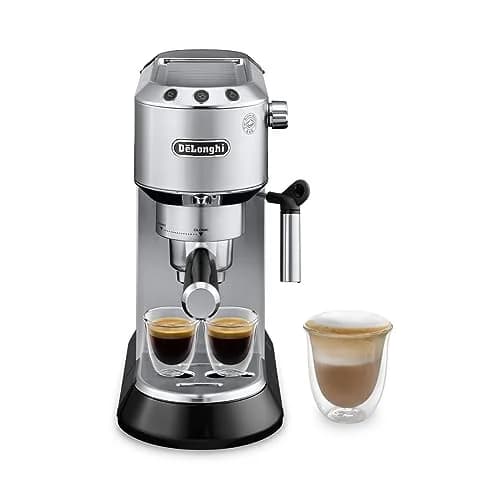
The portafilter diameter is the least-discussed spec on an espresso listing and one of the most consequential over years of ownership. The machines ranked here fall into three groups: the De'Longhi Dedica Arte and La Specialista Arte use 51mm baskets, the four Breville machines use 54mm, and the Gaggia Classic Pro and Rancilio Silvia use the 58mm commercial size. A wider basket holds the same dose in a shallower bed, and 58mm is the size cafe machines use, so it has by far the widest choice of aftermarket baskets, tampers, distribution tools and puck screens. 54mm has a healthy accessory market of its own because Breville sells so many machines on it. 51mm is the most limited, and on the Dedica it ships as a pressurized basket. None of this changes the first month, when every size makes drinkable espresso. It matters when you want a better basket, a precise tamper or a bottomless portafilter, and it cannot be changed later because it is fixed by the group head.
A pressurized, or dual-wall, basket has a single small exit hole under the coffee bed, so the basket itself creates the resistance that a correctly ground and tamped puck would otherwise provide. That makes it forgiving: pre-ground supermarket coffee and an uneven tamp still produce something with foam on top. It also puts a ceiling on the shot, because the basket produces the same resistance whether your grind is right or wrong, so you lose the feedback that teaches you to improve. A non-pressurized basket, the kind cafes use, relies entirely on your grind and tamp: get them right and the shot is noticeably better, get them wrong and it gushes or chokes. The Dedica Arte ships with a pressurized 51mm basket and the La Specialista Arte leans the same way, which is part of why they are the easiest machines here to get a first result from and the two with the lowest ceiling. If you are buying a machine before you own a good grinder, a pressurized basket is a reasonable bridge. Once you have a burr grinder that reaches espresso, a non-pressurized basket is the upgrade that lets it show.
If you only drink straight espresso or americanos, a steam wand is a part you pay for and never use, and some people search specifically for a machine without one. Every semi-automatic on this page includes a wand: a manual wand on most, an automatic one on the Bambino Plus and Barista Touch, and a commercial wand on the Silvia. BrewSift does not rank a wand-free semi-automatic, and in practice the cheapest machines here still carry one. The one machine we rank with no milk system at all is the Jura ENA 4, a super-automatic built around espresso and black coffee, which trades the portafilter and the craft for one-button shots. If you want to pull your own shots and never steam, the simplest route is to buy the machine whose espresso suits you and ignore the wand, since an unused wand needs no cleaning. The Bambino is the smallest and least complicated option here, and the Gaggia Classic Pro is the one to choose if shot quality and repairability matter more than footprint.
Buy it for life: what makes an espresso machine repairable
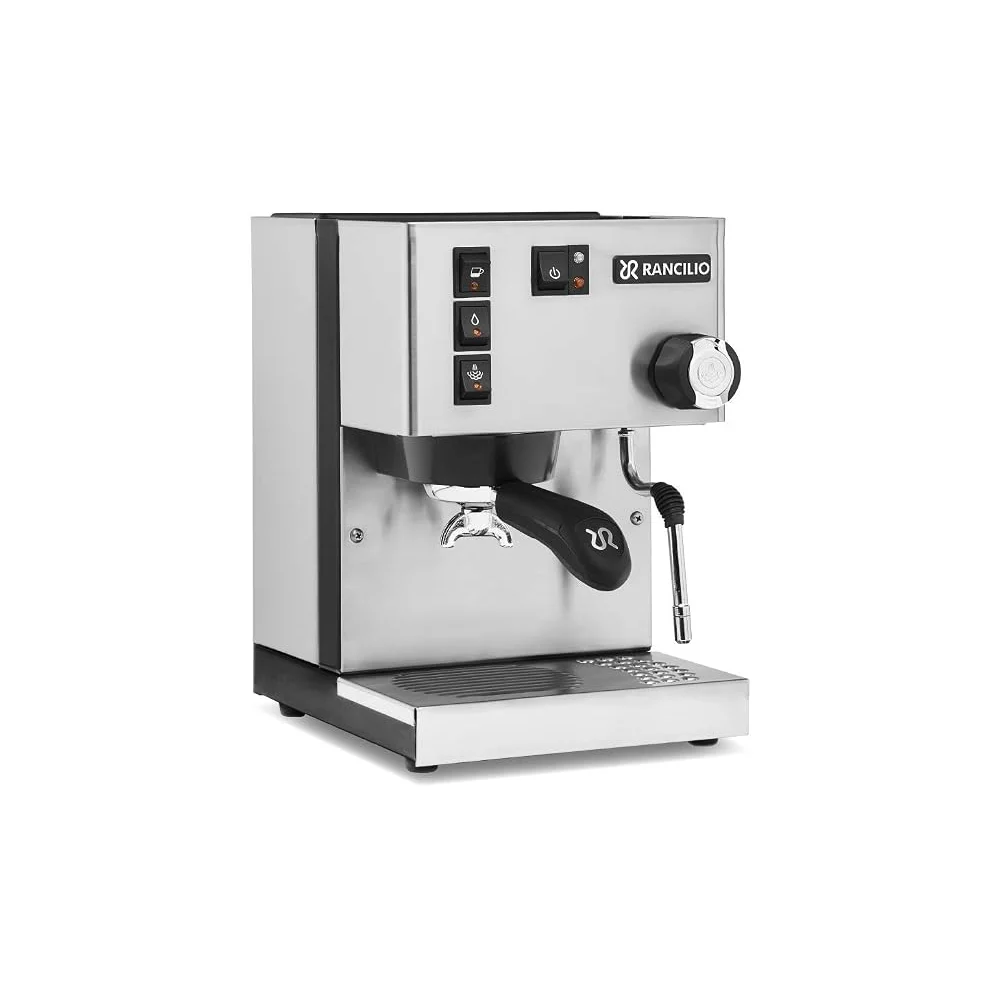
Espresso machines fail in predictable places: seals and gaskets, pumps, solenoid valves, thermostats and control boards, plus scale anywhere hard water has been heated. A machine that lasts decades is one where those parts are standard, sold separately and reachable with ordinary tools. That is why the two machines owners most often describe as keepers are the Gaggia Classic Pro and the Rancilio Silvia: both use the 58mm commercial group, both have a simple layout without a touchscreen, and both have a large community publishing parts lists and repair guides. The Silvia adds a brass boiler and a stainless steel body. Machines with more electronics, such as the Barista Touch and its touchscreen, give you more convenience on day one and more components that can fail out of warranty. None of that makes them bad buys, but if longevity is the priority, ask four questions before you buy: can you order the group gasket, shower screen and pump by part number, does the manufacturer or community publish a repair guide, is the heating and control layout simple, and will descaling reach every part water touches.
Mid-range espresso machines: what the extra money actually buys
Between the cheapest machines here and the enthusiast end, the money buys one of three quite different things, and it helps to know which you are paying for. The first is automatic milk: the Bambino Plus and the Barista Touch texture milk to a set temperature and foam level without you holding the jug, which is the biggest quality-of-life jump for anyone who drinks lattes. The second is a built-in grinder: the Barista Express, the La Specialista Arte and the Barista Touch put the grinder in the same body, so the setup is complete in one box. The third is commercial parts: the Gaggia Classic Pro and the Rancilio Silvia spend their budget on the 58mm group, the boiler and the steam wand rather than on convenience, and ask you to supply skill and a separate grinder in return. A mid-level machine that does all three does not exist at this price, so pick the one you will use every morning. Milk drinkers who want easy results should weight automatic milk; people who want one purchase should weight the grinder; people who want to learn and keep the machine for years should weight the parts.
Semi-automatic machines with a built-in grinder, compared
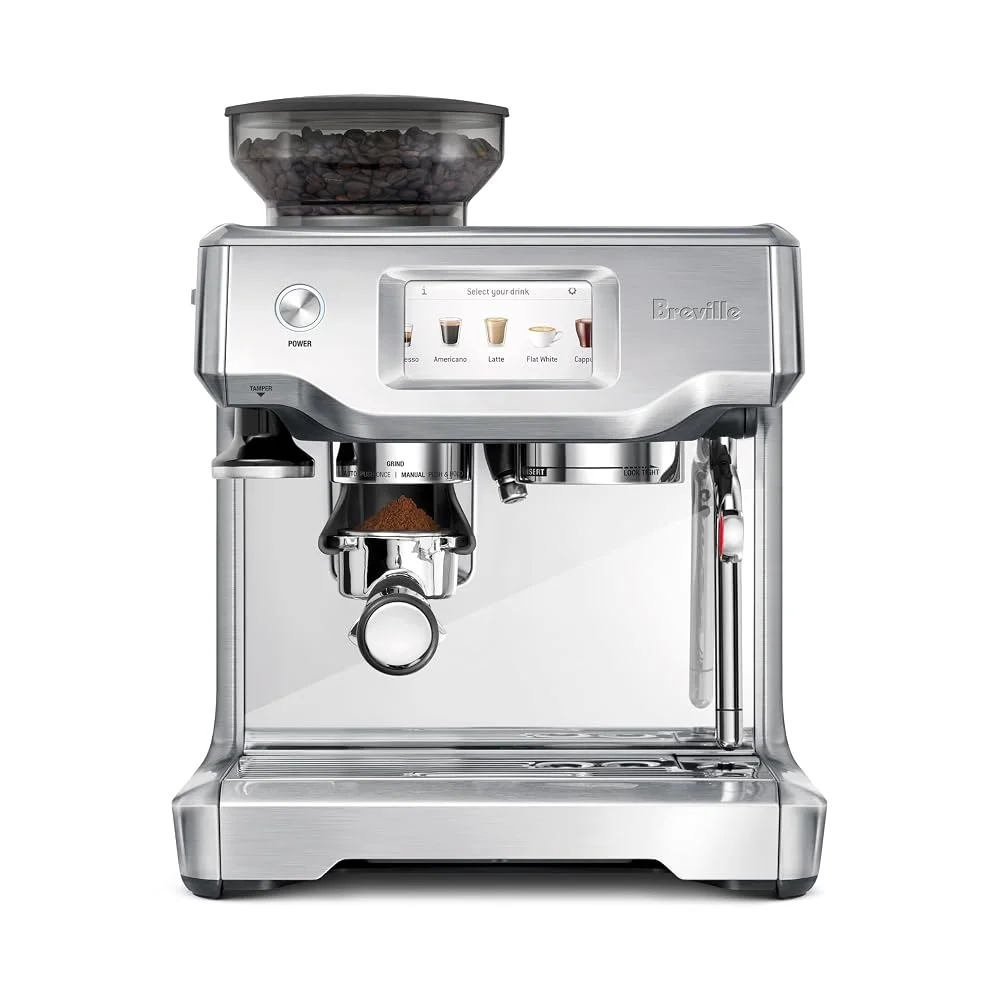
Three machines on this page grind and brew in one body, and they differ more than their shared all-in-one label suggests. The Breville Barista Express is the classic: a built-in conical burr grinder, a 54mm portafilter and a manual steam wand, so you learn to steam milk yourself. The Barista Touch keeps the same 54mm platform and conical burr grinder and adds a colour touchscreen that walks you through grind, dose and milk, plus an automatic steam wand that sets milk temperature and foam level for you. The De'Longhi La Specialista Arte takes a different route to the same goal, with a built-in conical burr grinder, a guided dosing and tamping station to cut mess, a manual steam wand and a smaller 51mm basket. What they share is the trade-off covered above: a built-in grinder is convenient and usually coarser in its adjustment than a good standalone grinder, and you cannot upgrade it separately. Choose the Barista Express for the best balance of control and value, the Touch if you want the machine to guide you and texture milk automatically, and the Arte if tidy dosing matters more than portafilter size.
Do I need a separate grinder for an espresso machine?
If your machine has no built-in grinder, yes — espresso needs a fine, consistent, adjustable grind that pre-ground coffee and most cheap grinders can't deliver. Budget for a quality burr grinder alongside the machine.
What's the difference between semi-automatic and super-automatic?
Semi-automatic machines have you grind, dose, tamp, and steam milk yourself — more control, more skill. Super-automatics do all of that at the push of a button — more convenience, less control.
What is a manual espresso machine?
Strictly, it is a lever machine, where you create the brewing pressure yourself by pulling a lever, either directly or by loading a spring. In everyday use, though, most people who search for a manual espresso machine mean a semi-automatic: a pump machine where you grind, dose, tamp, start the shot and steam the milk yourself. Every machine on BrewSift's espresso page is that kind of pump-driven semi-automatic, and none is a lever machine. If a listing shows a portafilter you lock in by hand and describes an electric pump, it is a semi-automatic regardless of what the title calls it.
Can I buy an espresso machine without a steam wand?
Yes, but not among the semi-automatics BrewSift ranks, which all include a wand. If you only drink straight espresso, the simplest route is to buy the semi-automatic whose shots suit you and ignore the wand, since an unused wand needs no cleaning. The one machine we rank with no milk system at all is the Jura ENA 4, a super-automatic designed around espresso and black coffee, which suits someone who wants one-button shots rather than pulling their own.
What is the best semi-automatic espresso machine with a built-in grinder?
For most people it is the Breville Barista Express: a built-in conical burr grinder, a 54mm portafilter and a manual steam wand in one box, which makes it the most balanced all-in-one we rank. The Breville Barista Touch uses the same platform and adds a touchscreen and an automatic steam wand, so it suits someone who wants guidance and hands-free milk. The De'Longhi La Specialista Arte adds a guided dosing and tamping station and uses a smaller 51mm basket. In every case the built-in grinder is the part owners most often outgrow, so a separate grinder is the usual later upgrade.
Which home espresso machine lasts the longest?
The machines with the best reputation for lasting decades are the simple, repairable ones: the Rancilio Silvia and the Gaggia Classic Pro. Both use the 58mm commercial group, both avoid touchscreens and complex control boards, and both have a large owner community publishing parts lists and repair guides. The Silvia adds a brass boiler and a stainless steel body. Longevity in any machine also depends on descaling on schedule and replacing the group gasket when it hardens, which are the two maintenance jobs most often skipped.
Does portafilter size matter on an espresso machine?
It matters more over years than in the first month. The machines BrewSift ranks use 51mm, 54mm or 58mm portafilters, and all three sizes make good espresso. The difference is the accessory market: 58mm is the commercial size, so it has the widest choice of baskets, tampers and distribution tools; 54mm, used by Breville, has a large market of its own; 51mm, used by De'Longhi's Dedica Arte and La Specialista Arte, has the fewest options. The size is fixed by the group head, so choose it at purchase if you expect to upgrade baskets or tamp more precisely later.
Are pressurized espresso baskets bad?
Not bad, but limited. A pressurized basket has a single small exit hole that creates resistance on its own, so pre-ground coffee and an uneven tamp still produce foam on top of the shot. That makes it a sensible starting point if you do not yet own a burr grinder that reaches espresso. The cost is a lower ceiling and no feedback, because the basket behaves the same whether your grind is right or wrong. Once you grind fresh on a capable grinder, a non-pressurized basket produces a noticeably better shot.
What else do I need to budget for besides the espresso machine?
The grinder comes first unless the machine has one built in, because espresso needs a fine, consistent and finely adjustable grind that pre-ground coffee and blade grinders cannot give. After that, the small items that make daily espresso easier are a scale that reads to a tenth of a gram with a timer, a tamper that fits your basket exactly, a milk jug if you steam, and descaling solution or a water filter if your water is hard. None is expensive compared with the machine, but together they decide how consistent your shots are.