How to Use a Moka Pot: Bialetti's Method, Step by Step
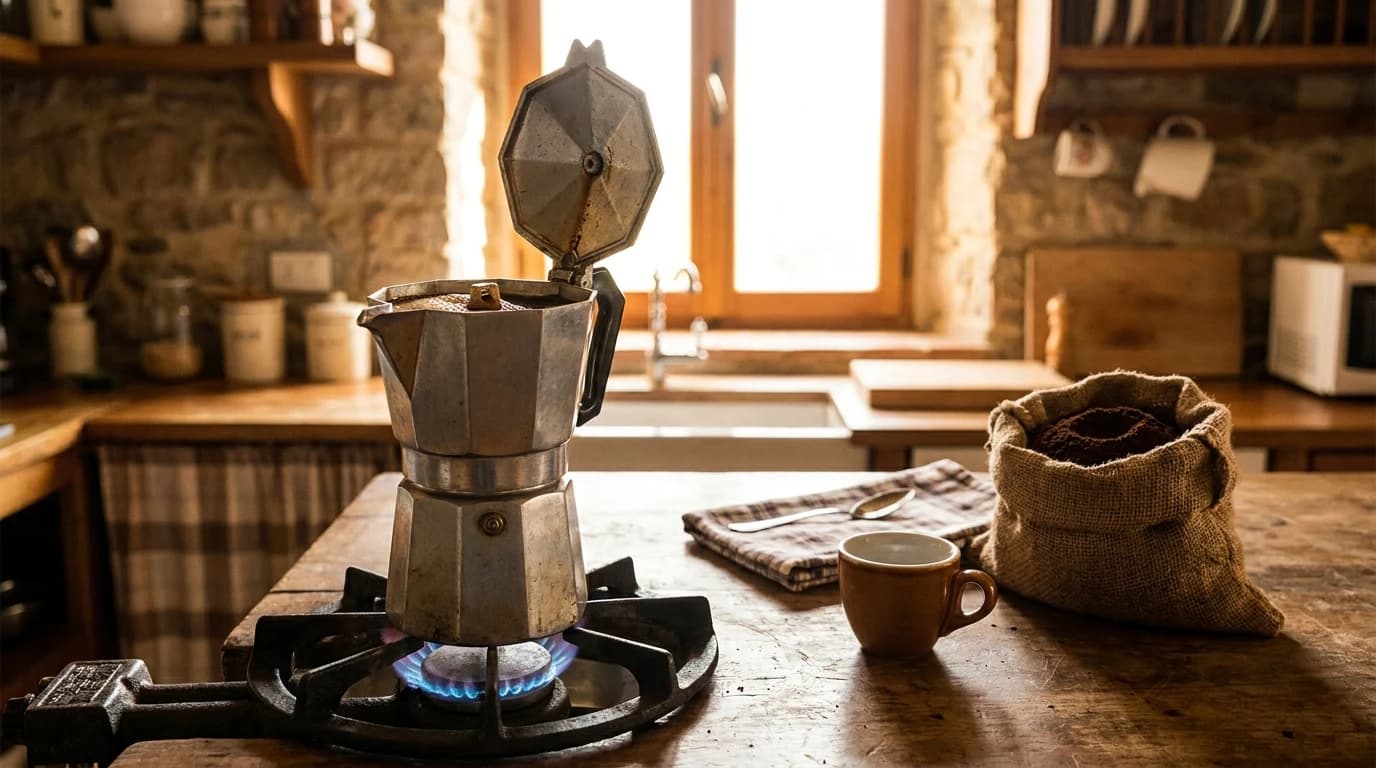
Fill the base with water to just below the safety valve, fill the funnel with medium-fine coffee until it is level without tamping, screw the pot together and heat it on low to medium. Take it off the heat as soon as the top chamber is full. Bialetti puts the brew at 3 to 6 minutes, recommends throwing away the first three brews from a new pot, and says to clean it with water only, never soap or the dishwasher.
Key takeaways
- Fill the water to just below the safety valve. Bialetti says the air gap above the water is what pushes it up, and that overfilling gives boiled, bitter coffee.
- Fill the funnel loosely and level with a medium-fine grind, gritty rather than powdery in Bialetti's words, and never tamp it.
- Use low to medium heat with the flame kept under the base, and take the pot off as soon as the top chamber is full.
- Aluminium Bialetti pots need Bialetti's 13 cm induction plate on an induction hob; the stainless Venus and the Brikka Induction work directly.
- Bialetti says to rinse with water only, with no soap and no dishwasher, and to descale with two teaspoons of citric acid or vinegar in a brew without coffee.
- The classic aluminium pot, 9.1 oz8.9BrewSift ScoreExcellent
- Solo size, 4.4 oz7.9BrewSift ScoreGood
- Stainless, works on induction8.7BrewSift ScoreExcellent
- Weighted valve, induction-ready8.5BrewSift ScoreExcellent
- Budget aluminium, not induction8.1BrewSift ScoreExcellent
Prices are approximate and change often. BrewSift earns a commission on qualifying purchases, at no extra cost to you.
To use a moka pot, fill the base with water to just below the safety valve, fill the funnel loosely with medium-fine coffee without pressing it down, screw the pot together and set it on low to medium heat. Take it off the heat as soon as the top chamber is full. That is Bialetti's own method for the Moka Express, and the whole brew takes a few minutes. The details below are where most first pots go wrong.
The short version: water to the valve, coffee loose and level, low to medium heat, off the moment the top is full.
Before the first brew
A new pot needs one job done before it makes coffee you keep. Bialetti's New Zealand site says to hand wash every part in hot water first, then recommends throwing away the first three brews.
You need very little else:
- Ground coffee at a medium-fine grind. Bialetti describes it as gritty when rubbed between your fingers, not powdery.
- Water. Cold or hot both work; more on hot water below.
- A stove that suits the pot. Aluminium pots need gas, electric or ceramic. Induction needs stainless or an adapter plate, covered further down.
How to use a moka pot, step by step
This follows Bialetti's instructions for the Moka Express, with its notes on each step.
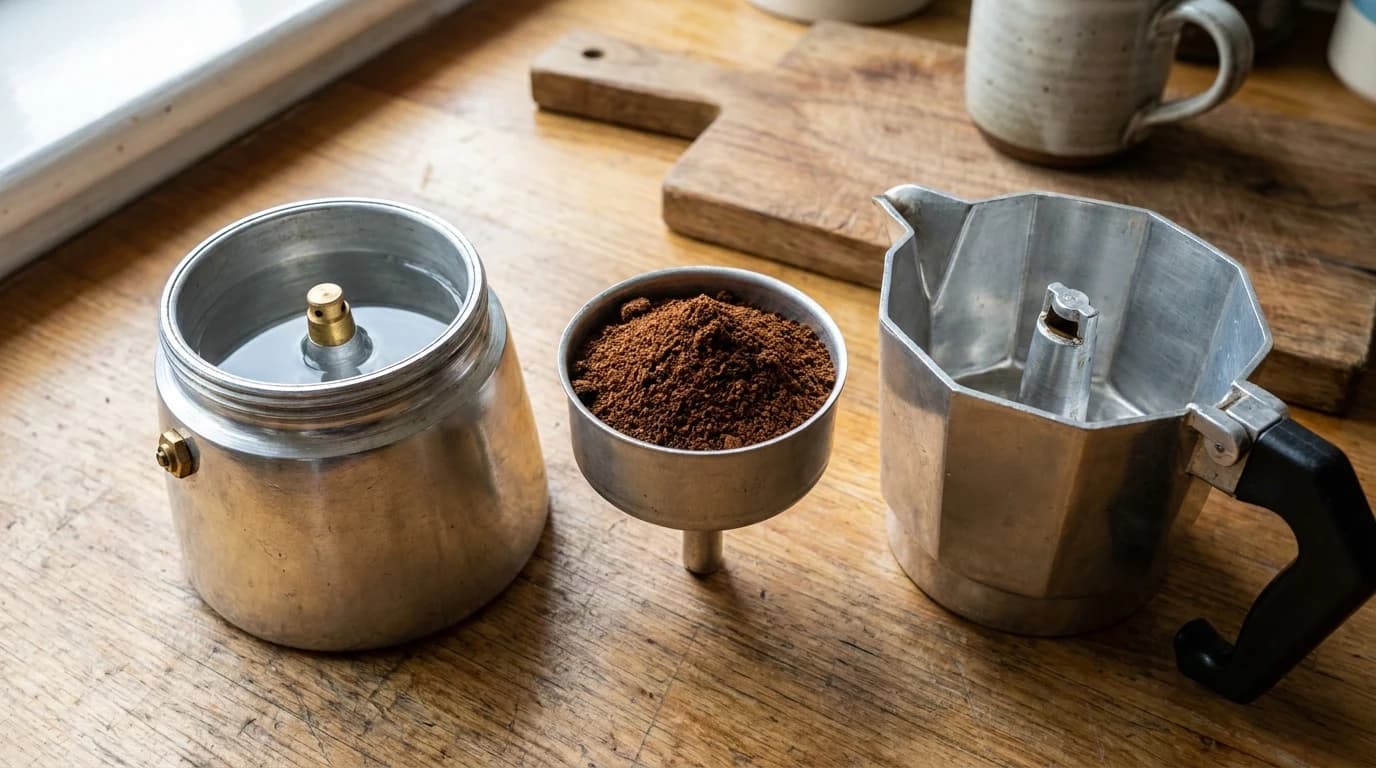
1. Fill the base to just below the valve
Unscrew the pot and fill the bottom chamber with water to just below the safety valve. Bialetti explains why the line matters: the air in the space between the water and the coffee filter is what heats and forces the water up. Fill above the valve and you lose that gap, which Bialetti says gives boiled, bitter coffee.
2. Fill the funnel loosely and level it
Drop in the funnel and fill it with coffee until it is level with the rim. Bialetti's instruction is blunt: "Do NOT tamp coffee down." Bialetti's guide to the safety valve names three things that make it open: coffee ground too finely, coffee pressed too hard into the filter, and a heat source that is too hot. The grind size chart shows where moka sits between espresso and drip.
3. Wipe the rim and screw it together
Brush loose grounds off the rim of the funnel so the gasket seals, then screw the top on firmly. If you started with hot water, hold the base with a cloth.
4. Heat on low to medium
Bialetti says to use low to medium heat, and on gas to keep the flame from reaching up the sides of the pot. Bialetti's New Zealand site puts the brew at 3 to 6 minutes. Starting with water that is already hot shortens the time the coffee sits over the flame, which is the first fix in our bitter moka coffee guide.
5. Take it off when the top is full
Coffee rises through the column into the top chamber. Bialetti's instruction is to remove the pot from the heat as soon as the top is full. You will usually hear it first: the flow turns pale and sputters as the last of the water comes through. Leaving it on past that point keeps heating coffee you have already made.
6. Pour straight away
Serve the coffee as soon as it is made. If the pot is still sputtering, running the base under the cold tap for a few seconds stops the brew.
Common first-pot mistakes
Most disappointing first pots come from one of these, and every one is covered in the steps above:
- Filling the water above the safety valve
- Pressing the coffee into the funnel
- A flame that reaches up the sides of the pot
- Leaving the pot on the heat after the top chamber is full
- Brewing a half-filled large pot to make less coffee
How much coffee and water
The pot sets the recipe for you. A full basket and water to the valve is the dose, so the size of the pot decides how much you make. Bialetti publishes the output of each Moka Express size:
| Moka Express size | Bialetti's stated output |
|---|---|
| 1-cup | 2 oz |
| 3-cup | 4.4 oz |
| 6-cup | 9.1 oz |
| 9-cup | 14.2 oz |
| 12-cup | 22 oz |
Wikipedia's summary of moka brewing puts the usual ratio at about 1 part coffee to 10 parts water by weight, which is why the result tastes so strong. A smaller pot is the only way to make less, because there is no half fill. Moka pot sizes covers which size to buy, and the coffee ratio calculator works out how much hot water to add if you want a longer drink.
Remember: the pot has one dose, a full funnel and water to the valve. If you want less coffee, buy a smaller pot rather than filling a big one halfway.
Moka pots on induction
Bialetti's classic aluminium pots do not heat on induction on their own. Bialetti's fix is its 13 cm induction plate, which sits between the hob and an aluminium pot. Steel pots work directly:
| Pot | Body | Induction, per Bialetti |
|---|---|---|
| Moka Express 3-cup or 6-cup | Aluminium | Needs the induction plate |
| Venus 6-cup | 18/10 stainless steel | Works without an adapter |
| Brikka Induction 4-cup | Two-layer aluminium and steel boiler | Works directly |
The Moka Express vs Venus comparison covers the classic pot against the stainless one. The Brikka adds a weighted valve that changes how it brews, so follow its own manual and see Brikka vs Moka Express before you buy one.
Cleaning a moka pot, aluminium and stainless
Bialetti's cleaning guide is short. Its product pages for the aluminium Moka Express and the stainless Venus and Brikka all say the same: rinse with water, no soap and no dishwasher.
What Bialetti says to do:
- Let the pot cool, take it apart and rinse every part under running hot water
- Dry each part with a clean cloth and reassemble only when fully dry
- Wipe the gasket with a damp cloth, and clear blocked holes in the filter plate with a soft toothbrush or a needle tip
- Descale now and then: fill the boiler, add two teaspoons of citric acid or vinegar, brew without coffee and throw the liquid away
What Bialetti says not to do:
- Use soap or detergent, which it calls too aggressive and says can leave an unpleasant taste
- Put the pot in the dishwasher, which it says can alter the surface of the metal
Owners split on soap. Many on r/mokapot wash with a little mild dish soap by hand and say it does no harm. The dishwasher is the one point both camps agree on.
Is a moka pot an espresso maker?
Not quite, though it is often sold as a stovetop espresso maker. Wikipedia puts moka brewing at about 1 to 2 bar of pressure against the 9 bar that espresso standards specify, so moka coffee is strong and concentrated but is not espresso. It still makes a good base for milk drinks. Our moka pot rankings compare the pots, and our best coffee for a moka pot guide covers the beans.
Your next step
Choosing your first pot? See the ones we rate.
Moka pots this method works with
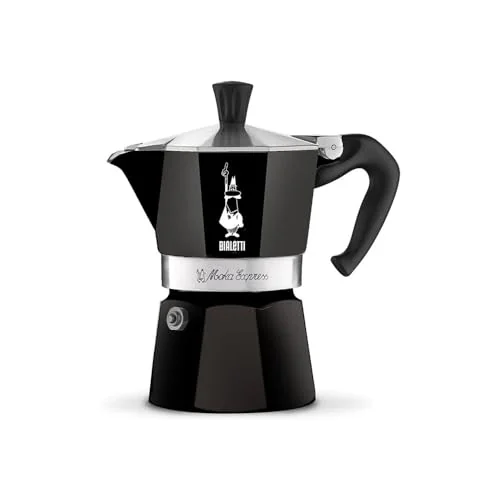
Moka Express 6-Cup
The iconic aluminium stovetop pot — strong, sweet, espresso-adjacent coffee for the price of lunch.
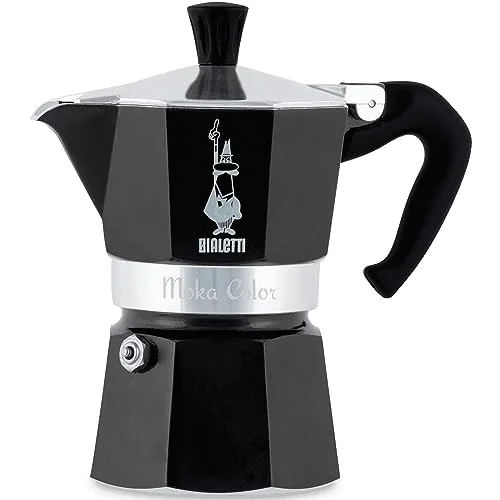
Moka Express 3-Cup
The small classic — perfect when you only want a cup or two and don't want to over-fill.
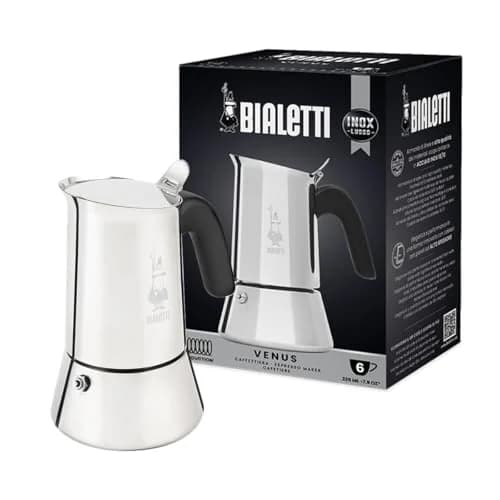
Venus Induction 6-Cup
Bialetti's stainless moka — works on induction, lasts longer, and won't pit like aluminium.
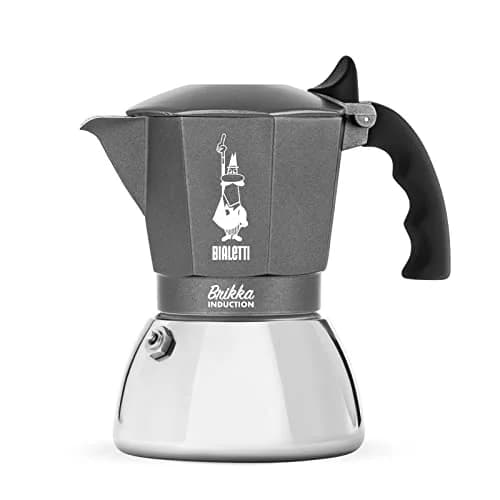
Brikka Induction 4-Cup
A weighted pressure valve builds real crema — the closest a moka pot gets to espresso.
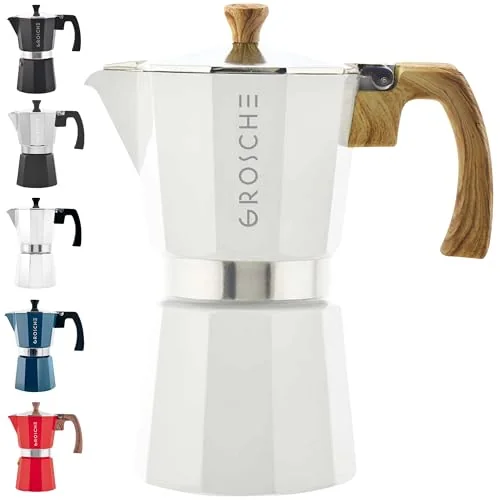
Milano Stovetop 6-Cup
A budget aluminium moka that brews the classic cup with a comfy soft-touch handle.
BrewSift earns a commission on qualifying purchases made through these links, at no extra cost to you. Prices shown were checked on publication and change often.
FAQ
How do you use a moka pot for the first time?
Wash every part by hand in hot water, then brew and throw away the first three pots, as Bialetti's New Zealand site recommends. After that, brew as normal: water to just below the safety valve, coffee loose and level in the funnel, low to medium heat.
How much coffee do you put in a moka pot?
Fill the funnel until it is level with the rim and do not press it down. The basket sets the dose, and moka brewing typically runs at about 1 part coffee to 10 parts water by weight. To make less coffee, use a smaller pot rather than a half-filled large one.
Should you tamp coffee in a moka pot?
No. Bialetti's instructions say not to tamp the coffee down. Its guide to the safety valve names coffee pressed too hard into the filter, coffee ground too finely and a heat source that is too hot as the conditions that make the valve open.
When do you take a moka pot off the heat?
As soon as the top chamber is full. Bialetti's instruction is to remove it from the heat immediately at that point, and its New Zealand site puts the whole brew at 3 to 6 minutes. The flow usually turns pale and sputters just before.
Can you use a moka pot on an induction stove?
Only a steel one, or an aluminium one on an adapter. Bialetti's aluminium Moka Express needs its 13 cm induction plate, while the stainless Venus works on induction without an adapter and the Brikka Induction uses a two-layer aluminium and steel boiler that works directly.
How do you clean a moka pot?
Bialetti says to let it cool, take it apart, rinse every part under running hot water and dry it with a clean cloth, with no soap and no dishwasher. Descale now and then by brewing water with two teaspoons of citric acid or vinegar and no coffee, then discarding it.
Is a moka pot the same as an espresso maker?
No, although it is often sold as a stovetop espresso maker. Moka pots brew at about 1 to 2 bar of pressure, while espresso standards specify 9 bar, so moka coffee is strong and concentrated but is not espresso.
Sources
- Bialetti New Zealand — using Bialetti coffee makers (water below the valve, medium-fine grind, do not tamp, low to medium heat)
- Bialetti New Zealand — Moka Express (discard the first three brews, 3 to 6 minutes, 13 cm induction plate)
- Bialetti — how to clean the coffee pot at home (no soap, no dishwasher, citric acid or vinegar descaling)
- Bialetti — the moka safety valve (too-fine grind, pressed coffee and high heat make it open)
- Bialetti — Moka Express 9-cup page (output by size, induction plate adapter, rinse with no soap)
- Bialetti — Venus 6-cup stainless (induction without an adapter, no soap or dishwasher)
- Bialetti — Brikka 4-cup Induction (two-layer aluminium and steel boiler)
- Wikipedia — Moka pot (1 to 2 bar against 9 bar for espresso, about 1:10 coffee to water)