Drip and batch brewers for black coffee by the cup or carafe. The right one nails brew temperature and even saturation — the difference between flat and flavorful.
Quick steer — If you mostly drink black coffee, an SCA-certified drip brewer is the highest-value purchase in coffee. Pick by carafe type and basket shape, then put the rest into a burr grinder.
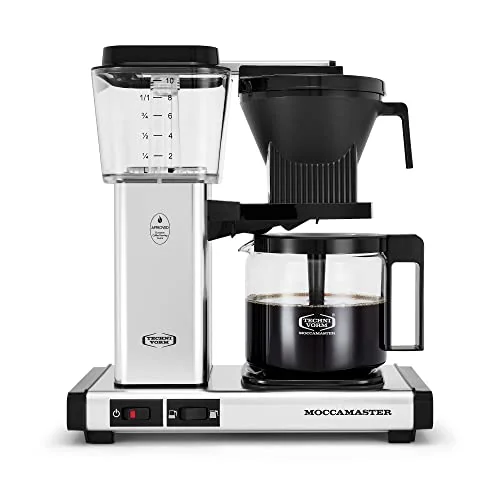
Top pick: Technivorm Moccamaster KBGV Select (8.5/10, Approx. $364). The icon: SCA-certified brewing, a copper heating element, and a machine you'll keep for a decade.
Skip this
A drip maker chosen on features rather than on whether it brews to standard
Programmable timers and strength settings do not change whether the machine gets water to the grounds at the right temperature for the right length of time. The Specialty Coffee Association publishes the list of home brewers that meet its standard, and starting there rules out most of the field before you compare features.
The BrewSift Score is a 0–10 weighted average of category-specific sub-scores, built from manufacturer specifications, published reviews and aggregated owner reports — not hands-on testing. In this category it weights brew quality 30%, ease of use 18% and value 17%, plus 3 smaller factors. How we score →
The icon: SCA-certified brewing, a copper heating element, and a machine you'll keep for a decade.
Hand-built in the Netherlands, the Moccamaster hits the 196–205°F brew window, brews a full pot in about six minutes, and is fully repairable with parts you can buy. The KBGV Select adds a half/full-batch switch. It's expensive, but it's the last drip maker most people buy.
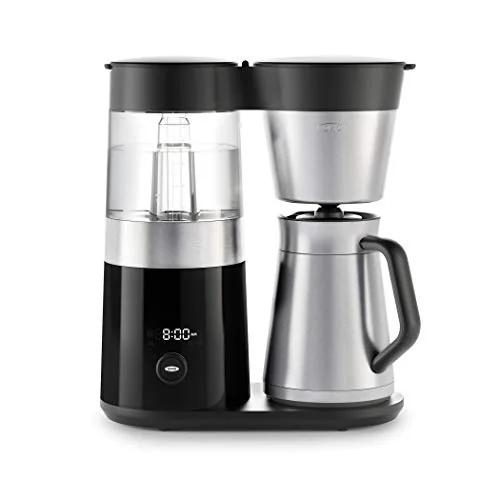
SCA-certified brewing and a thermal carafe for well over $100 less than a Moccamaster.
A rainmaker shower head saturates the grounds evenly, the brew hits the correct temperature window, and a double-walled thermal carafe keeps coffee hot without a plate stewing it bitter. A programmable timer rounds out the best-value certified brewer.
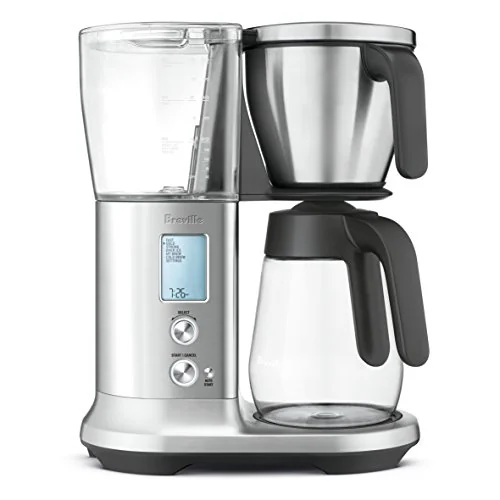
The most adjustable certified drip maker — six modes plus full custom temperature and bloom — now discontinued by Breville, so this is remaining stock.
SCA-certified out of the box, but where it stands apart is control: Gold, Fast, Strong, Iced, Cold Brew, and a fully custom mode with adjustable temperature, bloom time, and flow. Two things changed in 2026: Breville has discontinued the Precision Brewer line (its current certified drip machine is the Luxe Brewer), and this listing is the glass-carafe BDC400, not the thermal model. Still the pick if you like to dial in your drip the way you'd dial in espresso, and accept buying a retired model.
6 brew modes + full custom
Adjustable temp & bloom
Works with V60/Chemex via adapter
Discontinued by Breville — remaining stock only
Glass carafe on this listing (thermal model also retired)
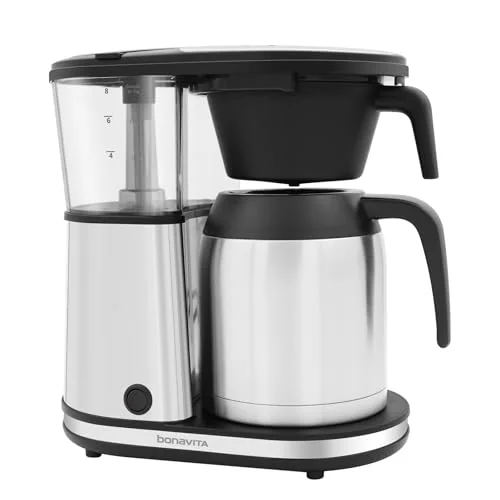
The Bonavita coffee maker to buy: SCA-certified brewing with one button and a thermal carafe — no menus, no fuss.
The Connoisseur (model BV1901TS) is Bonavita's 8-cup drip coffee maker: a flat-bottom basket for even extraction, an optional pre-infusion mode, a 1500W heater Bonavita rates at 194–205°F, and a stainless thermal carafe — all controlled by a single button. Bonavita states a full 8-cup pot in about six minutes. The pick for people who want great coffee without a learning curve or a timer to program.
Dead-simple one-button operation
Pre-infusion mode
Thermal carafe
No programmable timer
Basic display
What owners say — Amazon owners average 3.9 stars across 10,407 ratings on the shared Connoisseur listing — a mixed score next to the brewer's reputation, so the low-star reviews are worth reading for failure patterns rather than for taste.
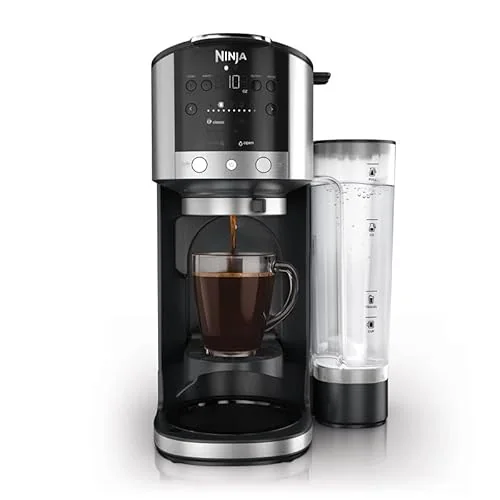
Brews both ground coffee and K-cups, plus single cups to full carafes — the flexible household pick.
One machine that takes ground coffee or pods, brews single cups or a full glass carafe, and adds iced and 'specialty' concentrate modes. It isn't SCA-certified and the brew is good-not-great, but the flexibility suits homes where everyone wants something different.
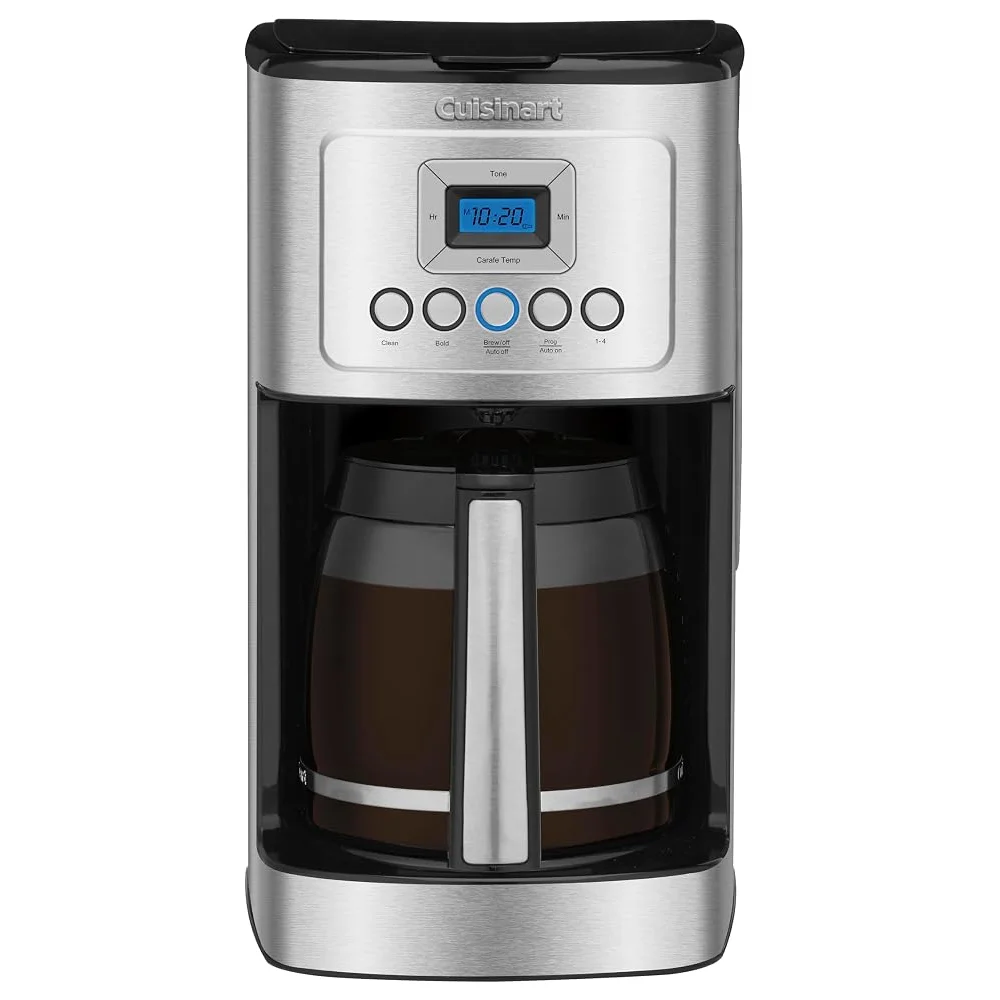
The mainstream 14-cup workhorse the category needed - programmable, hotter than most, and under $150.
Cuisinart's PerfecTemp is the default American drip machine: 14 cups, a 24-hour programmable timer, brew-strength control, a 1-4 cup setting for small batches, adjustable keep-warm temperature and a reusable gold-tone filter. It is not SCA-certified and it will not out-brew a Moccamaster, but it is the machine most households actually buy, and it fills the gap under every other pick on this page.
14-cup capacity with a 1-4 cup small-batch mode
24-hour programmable timer and adjustable keep-warm
Reusable gold-tone filter included
Not SCA-certified
Glass carafe on a hot plate can stew the last cups
What owners say — Amazon owners average 4.4 stars across 44,032 ratings with 7K+ bought in the past month - by far the largest owner base of anything on this page; the persistent complaint across those reviews is a dripping carafe.
Among brewers that hold SCA certification, the coffee is genuinely hard to tell apart, and owners who have run a Moccamaster next to a Bonavita or an OXO usually say so plainly. The premium at the top of this category buys metal, repairability, warranty and appearance rather than a measurably better cup.
What owners actually report
r/Coffeer/JamesHoffmannr/BuyItForLifer/pourover
The recurring conclusion across r/Coffee, r/JamesHoffmann and r/BuyItForLife is that SCA certification is the specification that matters, and that once a brewer holds it the differences in the cup get small. Owners who have run a Moccamaster alongside a Bonavita or an OXO very often report that they cannot reliably tell the coffee apart, and reframe the Moccamaster premium as buying build quality, replaceable parts, a long warranty and a machine that looks good on a counter. The OXO gets recommended most often for people who want it to just work, with its cleaning and its usefulness as a hot-water source coming up repeatedly. Two practical warnings recur: the Moccamaster's height means it does not fit under some cabinets, and glass carafes on hotplates are widely disliked, with the thermal-carafe versions recommended instead.
Consistently praised
OXO Brew drip makers — The recurring answer for people who want one button and good coffee: owners cite easy cleaning, a spec sheet that holds SCA certification, and the fact that it doubles as a hot-water source for pour-over and tea.
Bonavita Connoisseur — Recommended repeatedly as the machine that gets you the certified-brewer cup for roughly half the money, with pre-infusion and a shower-head sprayer that owners note are not always present on dearer machines.
Technivorm Moccamaster — Praised for what happens over a decade rather than for the cup: owners describe every part as replaceable, a long warranty honoured in practice, and machines still running after ten years.
Consistently warned about
Glass carafes sitting on a hotplate — The most consistent complaint about otherwise well-liked machines. Owners describe coffee turning bitter within half an hour on the plate, and the recurring recommendation is a thermal-carafe version of the same brewer.
Assuming a higher price means better coffee among certified brewers — Owners who have run several SCA-certified machines repeatedly report that the coffee is very hard to tell apart, and that the price difference goes into materials, warranty and appearance.
Uncertified machines chosen on their feature list — Certification is a brewing-performance test rather than a marketing badge, and the recurring advice is to check the certified list first, then choose on carafe type and size, rather than the other way around.
The most adjustable certified drip maker — six modes plus full custom temperature and bloom — now discontinued by Breville, so this is remaining stock.
Setting aside the filters, the seven drip machines BrewSift ranks run $107 to $368, a 3.4x spread, and every one of them is built around the same job: getting water to the grounds at brewing temperature and keeping it there.
Look for SCA / Golden Cup certification
A brewer certified by the Specialty Coffee Association (SCA) — sometimes called Golden Cup certified — has been verified to hit the 195–205°F brew window, hold proper contact time, and saturate the grounds evenly. It's the single simplest signal that a machine actually brews coffee rather than just dripping hot water through a bed of grounds. Certified drip makers (Technivorm Moccamaster, OXO Brew, Breville Precision Brewer and a handful of others) consistently make better coffee than cheap machines that never reach temperature. If you only remember one spec, remember this one.
Thermal carafe vs hot plate
A glass carafe on a hot plate keeps stewing your coffee after it's brewed, and the longer it sits on that heat, the flatter and more bitter it gets. A double-walled stainless thermal carafe takes the coffee off the heat entirely and keeps it drinkable for hours by insulation alone. If you brew a full pot and drink it over a morning, thermal is well worth it; if you finish a pot quickly or brew single mugs, a hot plate is fine. The hot plate is the usual reason a decent machine's coffee tastes worse by the second cup.
Even saturation and the shower head
Great drip depends on wetting all the grounds evenly, and cheap machines fail here — they dribble water onto one spot, leaving dry clumps and channels that under-extract. Better makers use a wide shower head or a pulse/bloom cycle that distributes water across the whole bed and pauses to let fresh grounds degas. This even saturation, together with correct temperature, is what separates a flavorful, balanced pot from a weak-and-sour one. It's a big part of what SCA certification is quietly testing for.
Programmability, capacity, and single-serve
Match the format to your routine. A programmable timer that has coffee ready before you're up is the feature people use most; a thermal 8–12 cup maker suits a household, while a compact 1–4 cup or single-serve machine suits one or two drinkers and wastes less. Some brewers (Breville Precision Brewer, Ninja systems) do both batch and single-cup. Don't overbuy capacity — a large pot half-brewed extracts less evenly than a right-sized one filled properly, and stale leftover coffee is the enemy of a good morning.
Grind, ratio, and a burr grinder still matter
A certified brewer won't save bad inputs. Even the best drip machine wants freshly ground coffee at a medium grind and roughly a 1:16 to 1:17 coffee-to-water ratio (about 60g per liter) to taste its best. Pre-ground supermarket coffee and eyeballed scoops are what leave most home drip tasting flat, not the machine. Pair a good maker with a burr grinder and a simple scale and the same brewer makes noticeably better coffee — the machine sets the ceiling, your inputs decide how close you get to it.
How to compare two coffee makers, spec by spec
Put two brewers side by side and compare them in this order, because the top of the list decides how the coffee tastes and the bottom decides how you feel about owning it. First, brew temperature: does the maker state a brew window, and is it inside 195 to 205 degrees Fahrenheit? A machine that publishes no temperature figure usually has a reason. Second, contact time, meaning how long the water sits with the grounds for a full batch. Roughly four to eight minutes for a full carafe is the healthy range; a machine that empties a 10-cup tank in three minutes is under-extracting, and one that takes fifteen is stewing. Third, water distribution: a wide shower head or an explicit bloom and pulse cycle beats a single-hole dribble, and manufacturers who have solved this say so. Fourth, basket geometry, which almost nobody compares and which changes the cup noticeably. Fifth, carafe type, thermal or glass on a plate. Sixth, capacity and whether there is a half-batch setting, since a brewer forced to make four cups in a twelve-cup basket saturates poorly. Only then compare price, programmability, and finish. Those are the six things BrewSift scores each drip maker on as well, weighted the same way: brew quality first, then ease of use, temperature control, capacity and carafe, cleaning, and value.
Flat-bottom or cone basket, and the specs that aren't on the box
Basket shape is the most consequential spec that comparison charts leave out. A flat-bottom basket holds the coffee bed in a shallow, even layer, so water passes through at a similar depth everywhere and the extraction is forgiving and balanced. That is why the certified brewers built around simplicity, like the Bonavita Connoisseur, use a flat bed. A cone basket concentrates the grounds toward a point, which gives a longer path through the center and can produce a brighter, more layered cup, but it is fussier about grind and less tolerant of an uneven pour from the shower head. Neither is better in the abstract, but they want different grind sizes, so switching between them means re-dialing your grinder. While you are looking past the headline specs, check four more: brew time for a full batch, whether replacement carafes, baskets and seals are sold separately, height with the lid open, since many brewers will not fit under an 18-inch upper cabinet with room to refill, and whether the reservoir is removable or you carry the carafe to the tap. None of these appear on the front of the box, and every one of them is something you live with daily.
SCAA or SCA certification: the name changed, the test didn't
If you have searched for SCAA certified coffee maker reviews and found few recent results, that is because the acronym retired. The Specialty Coffee Association of America merged with its European counterpart in 2017 to become the Specialty Coffee Association, so SCAA and SCA refer to the same body and the same certified home brewer program. Older reviews and a lot of product listings still say SCAA, and they are describing the same certification. What the program verifies is narrow but valuable: the brewer reaches and holds water in the correct temperature window, keeps the coffee in contact with the water for an appropriate time, wets the bed evenly, and produces a finished brew whose strength and extraction land inside the Golden Cup range. What it does not verify is everything else you care about. It says nothing about how long the machine lasts, how easy the basket is to clean, whether the carafe dribbles when you pour, how quiet it is, or whether parts will be available in five years. It also does not mean an uncertified brewer is bad, because submitting a machine costs money and some manufacturers simply do not bother. Treat certification as a reliable floor for brewing competence, not as a ranking.
What review sites and star ratings actually measure
Averaged owner ratings for coffee makers measure a specific and fairly narrow set of things, and taste is not usually one of them. Most reviews are written in the first few weeks, when what stands out is whether the machine arrived intact, how loud it is, whether the carafe pours cleanly, and how the timer works. Longevity shows up later, when the heating element weakens or a seal starts leaking, and by then the average has already stabilized. Anything requiring a side-by-side comparison, like whether this brewer extracts more evenly than the one it replaced, gets described rather than measured, because a single owner has nothing to compare against. That is why star ratings cluster so tightly that they rarely separate two brewers meaningfully. Read reviews for the things owners genuinely observe well: failure patterns after a year, cleaning annoyances, carafe and lid design, and how the machine behaves at half batch. Judge brewing itself from published temperature and contact-time specs, basket design, and certification. Comparison sites that discount-hunt are a separate tool; a sale price on a brewer that never reaches temperature is not a bargain, so settle on the shortlist by spec first, then watch prices on the two or three machines that survived.
What separates a $250 brewer from an $80 one, and where it stops mattering
The jump from a cheap supermarket brewer to a certified one is the largest quality step in this category, and it is mostly one thing: a heating element powerful enough to hold water in the correct window for the whole cycle instead of trickling lukewarm water through the bed. Budget machines fail here, which is why their coffee tastes thin and sour no matter what beans you feed them. Above that floor, the returns get much smaller and change in character. Roughly $150 to $250 you are buying a thermal carafe, a better shower head, a programmable timer, and a half-batch mode, all of which are real, as with the OXO Brew 9-Cup or the Bonavita Connoisseur. Further up the range you are largely buying control, build, and repairability rather than a categorically better cup. The Breville Precision Brewer earns its place if you actually want to adjust temperature, bloom time and flow; the Moccamaster earns its price through a hand-built, fully repairable design that stays in service for a decade, not because its coffee is dramatically better than a certified brewer at half the money. For anyone chasing the last few percent, the honest answer is that grinder, ratio and bean freshness move the cup further than any brewer above the certification line does.
Fast brewing: how quick a good coffee maker should be
Speed is one of the most searched coffee maker features and one of the easiest to misread, because a drip brewer that finishes a full pot very quickly is usually doing it by rushing water past the grounds. Contact time is part of extraction, so the certified brewers publish a window rather than a record. Moccamaster states a saturation time of four to six minutes for its KBGV Select, and Bonavita says its Connoisseur brews a full 8-cup pot in about six minutes. A brewer that empties a large tank much faster than that is trading taste for time, and one that takes far longer is often a machine that cannot heat water quickly enough. If mornings are genuinely short, three features save more time than raw brew speed: a programmable timer that has the pot ready when you get up, as on the OXO Brew 9-Cup and the Cuisinart PerfecTemp; a thermal carafe, so a pot brewed early is still good an hour later; and a small-batch setting, since four cups brew faster than twelve. For one cup in a hurry, a single-serve or pod machine is the honest answer.
The hottest coffee maker, and why hotter is not the goal
Searches for the hottest coffee maker, or one that brews at 200 degrees, usually come from coffee that is lukewarm by the time it reaches the mug. The brewing water has a ceiling that is set by chemistry rather than engineering: the recommended window is roughly 195 to 205 degrees Fahrenheit, because hotter water pulls out bitter compounds faster than the flavour you want. Moccamaster states 196 to 205 degrees for the KBGV Select and Bonavita rates the Connoisseur at 194 to 205, so a machine that reaches about 200 is doing its job. When the coffee in the cup still feels cool, the cause is almost always after the brew: a cold carafe, a cold mug, cold milk, or a pot left to sit. Rinse a thermal carafe with hot water before brewing, warm the mug the same way, and drink the first cup soon after the brew finishes. A hot plate keeps coffee hot, but by cooking it, which is the trade the thermal-versus-glass section above describes. Cheap machines that never reach the window make the opposite problem: coffee that is both cool and sour.
The most durable coffee makers: warranty, parts and water
Durability in a drip brewer comes down to three things you can check before buying. The first is the warranty and what happens after it: Moccamaster states that every machine it makes carries a five-year warranty and that it will repair it for life, which is the clearest long-term promise in this category. The second is whether wear parts, meaning the carafe, the lid, the brew basket and the seals, are sold separately, because a broken carafe should cost a carafe, not a machine. The third is scale. Minerals from hard water build up inside the heating element, slow the flow and eventually lower the brew temperature, so descaling on schedule is the single biggest thing an owner can do to make a brewer last. One counter-intuitive detail comes straight from Moccamaster: it advises against running distilled or reverse osmosis water through its brewers, because mineral-free water leaches minerals from the copper heating element and can damage it permanently. Filtered tap water that still carries some minerals is the safer default for any brewer with a copper element.
Batch brewer is a cafe term for a large commercial drip machine that brews into a big airpot or urn, and some people search for one when they really mean a home drip maker that brews a full carafe. At home the useful distinction is between machines that brew a good full pot and machines that also brew a good small one. A brewer forced to make a few cups in a basket built for twelve saturates the bed poorly, so if you often brew for one or two, look for a half-batch or small-batch setting or a smaller machine. The Moccamaster KBGV Select can brew a half or a full carafe, the Cuisinart PerfecTemp has a dedicated 1-4 cup setting, and the Bonavita Connoisseur is sized at four to eight cups rather than twelve. If you regularly serve a crowd, a larger carafe on the same certified standard beats brewing two pots on a smaller machine, and a thermal carafe keeps the second round as good as the first.
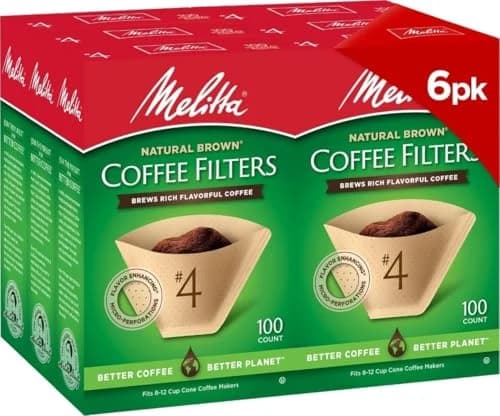
Paper gives a cleaner, lighter cup and no cleanup; a permanent mesh filter lets more oils and fine particles through for a heavier cup and saves the ongoing cost. Check the basket shape — cone machines take #2 or #4 cone papers, flat-bottom machines take basket filters.
What is SCA certification on a coffee maker?
It means the Specialty Coffee Association has independently verified the brewer meets the standards for a proper cup — brewing in the 195–205°F range, holding correct contact time, and saturating the grounds evenly. Machines that pass earn a place on the SCA's certified home-brewer list (Moccamaster, OXO Brew, Breville Precision Brewer and others). It's the most reliable at-a-glance signal that a drip maker actually brews well, because most cheap machines never get the water hot enough to extract coffee properly.
Thermal carafe or hot plate — which is better?
A thermal carafe is better for flavor. A hot plate keeps heating the coffee after brewing, and the longer it sits on that heat, the more bitter and flat it gets. A double-walled thermal carafe removes the coffee from the heat and keeps it hot by insulation, so it stays drinkable for hours. Choose thermal if you sip a pot slowly over a morning; a hot plate is fine only if you finish the coffee fast or brew single mugs. Glass is cheaper and lets you see how much is left.
Why does my drip coffee maker make weak or bitter coffee?
It's usually one of three things: the machine never reaches proper brew temperature (common on cheap, non-certified makers, giving weak sour coffee), a hot plate stewing the pot bitter after brewing, or your inputs — stale pre-ground coffee, the wrong grind, or too little coffee for the water. Start by using freshly ground coffee at roughly a 1:16 ratio and a medium grind; if the machine still can't brew hot and evenly, an SCA-certified maker will fix the temperature half of the problem.
How much coffee should I use per cup in a drip maker?
A reliable starting ratio is about 1:16 to 1:17 by weight — roughly 60 grams of coffee per liter of water, or about two level tablespoons per 6oz 'cup' on the carafe markings. Note that carafe 'cups' are usually 5–6oz, not a full 8oz mug, which trips a lot of people up. Weigh the coffee with a scale rather than scooping for consistency, then adjust to taste: more coffee for a stronger pot, not a finer grind.
Do I need a burr grinder for a drip coffee maker?
You don't need one, but it's the biggest upgrade to a drip setup after the machine itself. Freshly burr-ground coffee at a consistent medium grind extracts far more evenly than pre-ground or blade-chopped coffee, which is full of uneven fines and boulders that make the cup muddy and bitter. Even an entry burr grinder noticeably improves a good drip maker — the machine sets the quality ceiling, but fresh, even grounds are how you actually reach it.
How do I compare coffee makers before buying?
Compare them in order of what changes the cup. Start with brew temperature: look for a stated window inside 195 to 205 degrees Fahrenheit. Then contact time for a full batch, ideally around four to eight minutes. Then water distribution, meaning a wide shower head or a bloom and pulse cycle rather than a single dribble hole. Then basket shape, carafe type, and whether there is a half-batch setting. Price, programmability and looks come last. If a listing will not state a brew temperature, treat that silence as an answer and move on to a machine that does.
Is SCAA certification the same as SCA certification?
Yes. The Specialty Coffee Association of America merged with the European association in 2017 to form the Specialty Coffee Association, so SCAA and SCA name the same organization and the same certified home brewer program. Older reviews and many product listings still use the SCAA acronym. The certification verifies that a brewer hits the correct temperature window, holds proper contact time, saturates the grounds evenly, and produces a brew inside the Golden Cup strength and extraction range. It says nothing about durability, cleaning, or carafe design, and an uncertified machine is not automatically bad since submission is voluntary and costs the manufacturer money.
What is the best coffee maker for someone picky about coffee?
Choose on control and repeatability rather than price. If you want to adjust the brew rather than accept a fixed profile, the Breville Precision Brewer is the most adjustable certified drip maker, with custom temperature, bloom time and flow. If you want one profile done consistently for many years, the Moccamaster KBGV Select is hand-built, certified, and fully repairable with parts you can buy. Either way, the brewer sets the ceiling and your inputs decide how close you get: a burr grinder, a scale, a ratio near 1:16, and beans within a few weeks of roast move the cup further than upgrading from one certified brewer to another.
Should I get a flat-bottom or cone-shaped filter basket?
Flat-bottom is the more forgiving choice and the reason several certified brewers use it. The shallow, even bed lets water pass through at a consistent depth, which produces a balanced cup even when your grind is slightly off. A cone basket concentrates the grounds toward a point, giving a longer path through the center that can taste brighter and more distinct, but it is fussier about grind size and less tolerant of uneven water distribution. They also want different grind settings, so switching basket styles means re-dialing your grinder. If you are buying one machine and want reliable results without fiddling, flat-bottom is the safer pick.
Can I trust coffee maker reviews and star ratings?
Trust them for the things owners genuinely observe, and not for brewing quality. Reviews are reliable on noise, carafe and lid design, timer behavior, cleaning annoyances, and failure patterns that show up after a year. They are weak on extraction and taste, because most are written in the first few weeks and nobody has a second machine sitting alongside for comparison, which is why star averages cluster so tightly that they barely separate brewers. Judge brewing itself from published brew temperature, contact time, basket design and certification, then use reviews and price tracking to choose between the two or three machines that already clear that bar.
Is a Bonavita coffee maker worth buying, and which one?
Yes, if you want a certified drip brewer with almost nothing to set. The Bonavita coffee maker we rank is the Connoisseur, model BV1901TS: an SCA-certified 8-cup machine with a hanging flat-bottom basket, a shower head, an optional pre-infusion mode and a stainless thermal carafe, run from a single button. Bonavita rates its 1500W heater at 194 to 205 degrees Fahrenheit and a full 8-cup pot at about six minutes. Bonavita's own comparison chart also lists a smaller 5-cup model, the BV1500TS, with a standing basket and a 33oz maximum, which suits one or two drinkers better. What you give up against the OXO Brew 9-Cup is a programmable timer; what you give up against a Moccamaster is its hand-built, fully repairable construction.
What is the fastest brewing coffee maker?
Fast is only a virtue up to a point, because drip coffee needs a few minutes of contact time to extract properly. Certified brewers aim for a window rather than a record: Moccamaster states four to six minutes of saturation time for its KBGV Select, and Bonavita says its Connoisseur brews a full 8-cup pot in about six minutes. A machine that empties a full tank much faster is usually under-extracting. To save time in the morning, a programmable timer, a thermal carafe and a small-batch setting matter more than raw speed, and for a single cup a pod or single-serve machine is quickest.
What coffee maker makes the hottest coffee?
Look for one that reaches the recommended brewing window of about 195 to 205 degrees Fahrenheit rather than one that promises the highest number, since hotter water extracts more bitterness. Moccamaster states 196 to 205 degrees for the KBGV Select and Bonavita rates the Connoisseur at 194 to 205. If your coffee feels cool in the mug, preheat the carafe and the mug with hot water and drink it soon after brewing; a cold carafe and mug lose more heat than any difference between good brewers.
What is the most durable coffee maker?
The Moccamaster is the usual answer, and the reason is its support rather than its looks: Moccamaster states every machine carries a five-year warranty and that it will repair it for life. For any brewer, durability also depends on whether carafes, lids and baskets are sold as spare parts and on regular descaling, since mineral scale in the heating element is the most common cause of a slow, cooler brew. Moccamaster also advises against distilled or reverse osmosis water, which can damage its copper heating element.
What is a batch brewer?
In a cafe, a batch brewer is a large commercial drip machine that brews into an airpot or urn for many servings at once. At home the term usually just means a drip coffee maker that brews a full carafe. If you brew for one or two people, what matters more is whether the machine also brews a small batch well, through a half-batch setting like the Moccamaster KBGV Select's or a 1-4 cup mode like the Cuisinart PerfecTemp's, because a small dose in a large basket extracts unevenly.
Which coffee maker makes the strongest coffee?
Strength comes from the ratio of coffee to water, not from the machine, so any certified brewer makes strong coffee if you use more grounds per cup. A brew-strength setting, like the one on the Cuisinart PerfecTemp, changes how the machine runs the water rather than adding coffee, so it helps less than simply increasing the dose. Start around 1:16 coffee to water by weight and move toward 1:14 for a stronger pot, keeping a medium grind so the extra coffee extracts evenly rather than turning bitter.