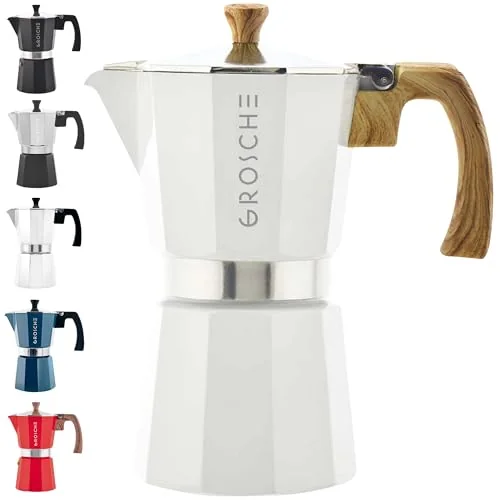
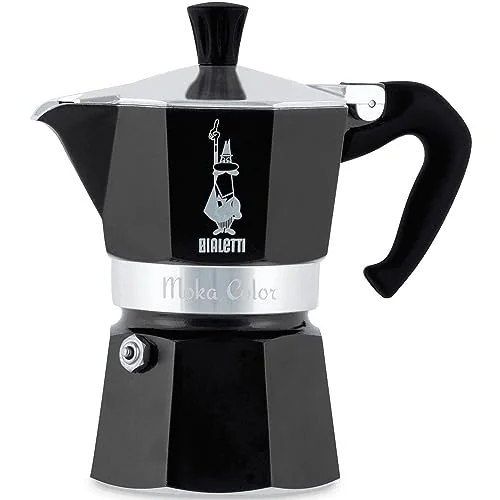
The stovetop classic. A moka pot forces steam-pressured water up through coffee for a strong, espresso-adjacent brew — no electricity, no fuss, and barely any money.
Quick steer — Buy the size you actually drink — a moka cup is an espresso-sized serving and there is no half-pot mode — and buy stainless if your stove is induction.
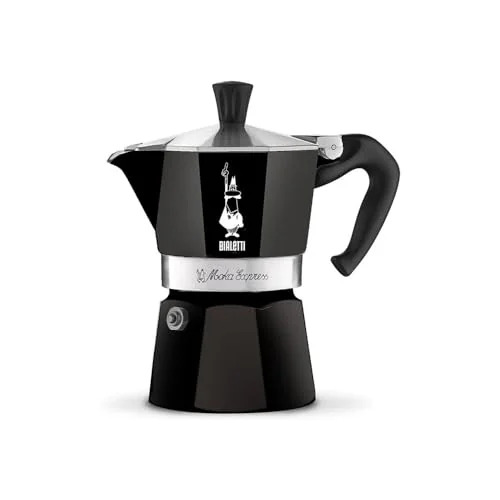
Top pick: Bialetti Moka Express 6-Cup (8.9/10, Approx. $59.95). The iconic aluminium stovetop pot — strong, sweet, espresso-adjacent coffee for the price of lunch.
Skip this
Putting an aluminium moka pot through the dishwasher
Bialetti's own cleaning guidance says to rinse with running water and dry with a cloth, and rules out both dishwashers and abrasive products because they alter the surface of the metal. This is the fastest way to ruin a pot that would otherwise last decades.
The BrewSift Score is a 0–10 weighted average of category-specific sub-scores, built from manufacturer specifications, published reviews and aggregated owner reports — not hands-on testing. In this category it weights cup quality 30%, ease of use 20% and build quality 20%, plus 2 smaller factors. How we score →
The iconic aluminium stovetop pot — strong, sweet, espresso-adjacent coffee for the price of lunch.
The original eight-sided Bialetti has made stovetop coffee for 90 years. It brews a bold, low-cost cup that's close enough to espresso for milk drinks. Aluminium means it can't go on induction, but it brews a touch sweeter than steel.
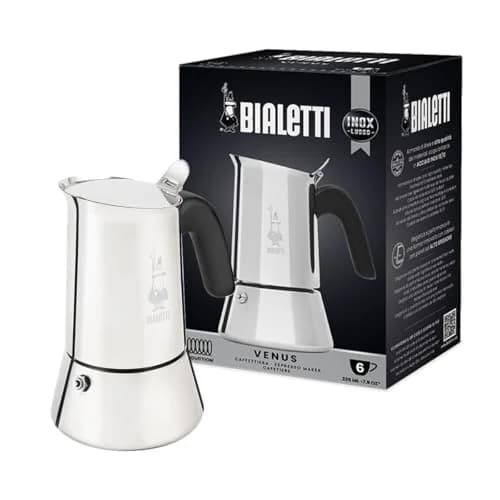
Bialetti's stainless moka — works on induction, lasts longer, and won't pit like aluminium.
Bialetti's Venus is the stainless-steel moka pot in the range, made from 18/10 stainless and specified for gas, electric and induction cooktops without an adapter. Bialetti measures moka pots in espresso-sized servings rather than mugs, and puts the 6-cup Venus at 7.9 oz of coffee, a little less than the 9.1 oz it lists for the aluminium 6-cup Moka Express. Like the rest of the range, Bialetti says to rinse it with water after use, with no soap or dishwasher needed.
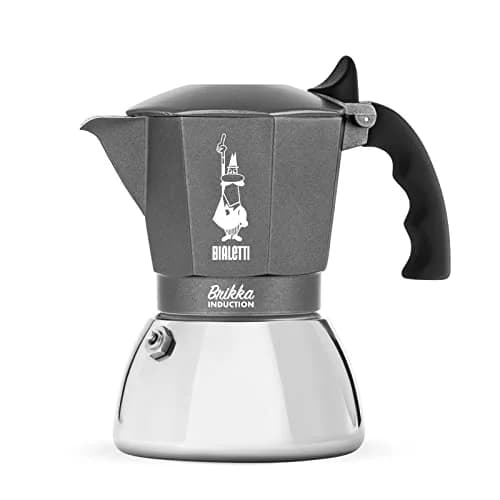
A weighted pressure valve builds real crema — the closest a moka pot gets to espresso.
The Brikka is Bialetti's crema moka pot: a weighted valve holds the brew back until pressure builds, which is what raises the layer of crema an ordinary moka pot cannot. This induction version, per Bialetti, uses a patented two-layer aluminium and steel boiler, so it works on induction as well as gas and electric. Bialetti sizes it for espresso servings rather than mugs: the 4-cup pot brews about 5.4 oz of coffee and crema. Bialetti also says to rinse it with water after use, with no soap or dishwasher, and the valve needs occasional cleaning to keep sealing.
The soap rule everyone repeats is the manufacturer's rule, and owners largely do not follow it. Bialetti says water only, no soaps or detergents; the recurring position in r/mokapot is that washing by hand with mild dish soap does no harm and that not washing is what leaves rancid coffee oils behind. Both camps agree on the two things that genuinely damage the pot: the dishwasher and abrasive scouring.
What owners actually report
r/mokapotr/Coffee
Two questions dominate r/mokapot and the moka threads in r/Coffee, and neither is about brand. The first is sizing, where the recurring correction is that a moka pot 'cup' is a small Italian coffee rather than a mug, so a 3-cup makes roughly one strong drink and people buying for two are steered to a 6-cup. The second is material: aluminium is described as the traditional look and slightly stronger cup, stainless as the easier one to live with, tolerant of neglect, dishwasher-survivable and induction-compatible, with several owners of both saying the taste difference is small enough that maintenance temperament should decide it. Cleaning is the one genuine disagreement. Bialetti's own guidance is water only, and the sub's recurring position is that mild dish soap by hand is fine and that skipping it is what leaves the rancid oils people blame for bitter coffee. The Brikka's extra crema draws a consistently sceptical strand, with owners describing it as foam rather than crema and the valve mechanism as inconsistent.
Consistently praised
Bialetti Moka Express 3-cup — The size people who drink alone keep coming back to: the recurring description is that the whole brew makes one strong drink, and owners post about pots bought two decades ago that are still the daily driver.
Bialetti Venus and other stainless pots — Recommended for anyone who will not baby the pot: stainless tolerates detergent, survives being left overnight, and works on induction, which the classic aluminium body does not.
Consistently warned about
Buying by the number of cups on the box — The most common sizing mistake in the sub. A moka cup is roughly a small espresso-sized serving, so a pot sized by that number rather than by how much coffee you actually drink usually arrives too small.
The Brikka bought specifically for crema — Owners who have run both a Brikka and a Moka Express frequently report little or no difference in taste and describe the extra layer as foam rather than true crema, with several noting the pressure valve does not behave consistently between brews.
Dishwashers and abrasive scouring on aluminium — This is the one cleaning point everyone in the debate agrees on, and it matches Bialetti's own care guidance: harsh detergent, dishwashers and scouring pads all attack the surface of a raw aluminium pot.
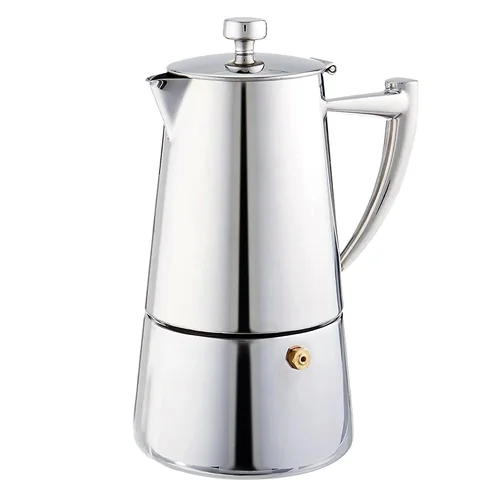
The six moka pots BrewSift ranks run from about $43 to $119, a 2.8x spread, and the price tracks the material and the warranty more than the brewing. The dearest is the stainless Cuisinox Roma, but the stainless Bialetti Venus sits at about $44, level with the aluminium Moka Express 3-cup and GROSCHE Milano, so at today's prices an induction-ready pot no longer has to cost more.
Aluminium vs stainless steel
Classic Bialetti-style pots are aluminium: light, cheap and the traditional look. Bialetti says the aluminium Moka Express is not dishwasher safe and does not work on induction on its own; its fix is a separate 13 cm induction plate that sits between the hob and the pot. Stainless steel pots such as the Bialetti Venus work on gas, electric and induction without an adapter, per Bialetti. Stainless has traditionally cost more, though at today's prices the Venus sells for about the same as an aluminium 3-cup. Bialetti's care advice is the same for both: rinse with water, no soap and no dishwasher. If your hob is induction, buy stainless or budget for the plate.
Moka pots are sized in 'cups' of about 2oz each, and they brew best only when filled to capacity, because the design relies on the water reaching the right pressure before it pushes through the grounds. Buy the size that matches how much you actually drink — a 6-cup pot half-filled makes weak, uneven coffee. A solo drinker is better served by a 1- or 3-cup pot they fill every time than a big one they run half-empty.
A standard moka pot makes strong, syrupy coffee but no real crema — the golden foam you get from an espresso machine. If crema matters to you, a pressurized-valve pot like the Bialetti Brikka adds a weighted valve that holds back the brew until the pressure climbs, producing a genuine (if modest) crema layer. It's the closest a stovetop pot gets to espresso, at the cost of a valve you'll need to keep clean.
A moka pot makes café-strength coffee without a $500 machine or a $6 daily habit. The appeal is simple: no electricity, no pods, no learning curve, and a pot that lasts decades for the price of a couple of lattes. If you're priced out of an espresso machine but tired of drip, this is the upgrade — buy a burr grinder to go with it and the cup gets dramatically better.
Which size moka pot to buy, in Bialetti's own numbers
A moka pot cup is an espresso-sized serving, not a mug, and Bialetti publishes what each Moka Express size actually makes: 2 oz for the 1-cup, 4.4 oz for the 3-cup, 9.1 oz for the 6-cup, 14.2 oz for the 9-cup and 22 oz for the 12-cup. Output does not scale evenly with the cup number, so use the published total rather than multiplying, and do not compare cup numbers across lines: Bialetti lists the stainless Venus 6-cup at 7.9 oz, less than the aluminium 6-cup. Size matters more here than in most categories because a moka pot cannot be part-filled. Bialetti's instructions fill the water to just below the safety valve and the funnel to level, so the pot makes one amount every time. One espresso-style drinker is well served by the 3-cup; one full mug or two people points to the 6-cup; a household that sometimes needs both is better served by two pots than by one large one run half empty.
A moka pot brews strong, at about 1 part coffee to 10 parts water, so it rewards medium-to-dark espresso-style blends with chocolate or caramel sweetness and a medium-fine grind, which Bialetti describes as gritty rather than powdery. Few roasters label a coffee for moka. illy lists the moka pot among the brew methods for its whole-bean Classico, and Café Bustelo describes its ground coffee as perfect for a moka pot; most other good moka coffees are sold as espresso blends. Pre-ground espresso is finer than Bialetti's recommended grind, so fill the funnel loosely and never press it down.
Moka pot, stovetop espresso maker, Italian coffee maker
These are the same pot. Bialetti's own US page for the Moka Express uses all three names, and Amazon listings for the Moka Express and the GROSCHE Milano both say stovetop espresso maker. The name promises more than the pot delivers: a moka pot brews at roughly 1 to 2 bar of pressure against the 9 bar that espresso standards specify, so it makes strong, concentrated coffee rather than true espresso. Every pot on this page works the same way: water in the base, coffee in the funnel, and steam pressure pushing the brew up into the top chamber. The differences that matter are size, material and whether your hob is induction.
Not in the strict sense, although stovetop espresso maker is the name most listings use. A typical moka pot brews at about 1 to 2 bar of pressure, while espresso standards specify 9 bar, so moka coffee is strong and concentrated but is not considered espresso and has no true crema. The Bialetti Brikka comes closest: its weighted valve lets pressure build higher before the coffee rises, which gives a more espresso-like cup with a visible layer of foam. Moka coffee makes a good base for lattes and other milk drinks.
Why does my moka pot coffee taste bitter or burnt?
Almost always heat and grind. Use medium heat, not high — the coffee should trickle out in a slow golden stream, not spurt. Pull it off the burner the moment you hear the gurgle and see pale, foamy coffee (that's the water running out). Use a grind between espresso and drip — too fine chokes it and over-extracts; too coarse under-extracts and runs weak. Finally, never tamp the grounds: fill the basket level and leave it loose.
Aluminium, stainless or induction: which moka pot should I buy?
On gas or electric, either material works and the choice is about care and looks. Aluminium is the classic Moka Express; stainless steel, like the Bialetti Venus, is the one owners describe as more tolerant of neglect. On induction, buy stainless or a pot sold as induction-ready: Bialetti says the Venus works on induction without an adapter and the Brikka Induction uses a two-layer aluminium and steel boiler, while an aluminium Moka Express needs Bialetti's separate 13 cm induction plate. Bialetti's cleaning advice is the same for all of them: rinse with water, no soap, no dishwasher.
What grind size should I use for a moka pot?
A medium-fine grind — finer than drip, coarser than espresso, roughly the texture of table salt. Pre-ground 'espresso' from the supermarket is often too fine and will over-extract or clog the pot. The single biggest upgrade to moka coffee is a burr grinder set just coarser than your espresso setting, dialed so the brew flows steadily without stalling.
How do I clean and care for a moka pot?
Bialetti's guidance is to let the pot cool, take it apart, rinse every part under running hot water and dry it with a clean cloth. It rules out soap and detergent, which it says are too aggressive and can leave an unpleasant taste, and the dishwasher, which it says can alter the surface of the metal; its product pages give the same advice for the stainless Venus and Brikka. Descale now and then by brewing water with two teaspoons of citric acid or vinegar and no coffee. Wipe the gasket with a damp cloth and clear blocked holes in the filter plate with a soft toothbrush; a worn gasket is the usual cause of a pot that leaks or loses pressure.
What size moka pot should I buy?
Count in ounces, not cups. Bialetti lists the Moka Express 3-cup at 4.4 oz of coffee and the 6-cup at 9.1 oz, which is two espresso-style drinks or the base for two milk drinks. Size for the amount you will make every time, because a moka pot cannot be part-filled: the boiler wants filling to just below the safety valve and the basket wants filling level, and brewing a small amount in a large pot gives weak, uneven coffee rather than simply less of it. One or two drinkers are better served by a 3-cup than a half-empty 6-cup, and a household that occasionally needs more is better served by a second pot.