How to Descale a Coffee Maker or Espresso Machine
Descaling dissolves the limescale hard water leaves inside a coffee maker or espresso machine. Run a descaler (or, for a drip maker, the vinegar mix its manual allows) through the water path, let it sit, then rinse with at least two full tanks of fresh water. Keurig says every 3 to 6 months and Nespresso once or twice a year; if your manual is silent, every one to three months is a sensible start, sooner with hard water.
Key takeaways
- Limescale is mineral scale from hard water that clogs the water path, slows heating, and dulls flavor.
- Follow your maker's interval first (Keurig says 3 to 6 months, Nespresso once or twice a year); if the manual is silent, every one to three months is a sensible start, sooner with hard water.
- Commercial descaler is safer for espresso and super-automatic machines; Nespresso says never to use vinegar in its machines.
- Descaling and cleaning are different jobs: descaler removes mineral scale, a cleaner such as Cafiza removes coffee oils.
- The rinse matters as much as the descale: run at least two full tanks of clean water afterward (three if your descaler says so).
- Keurig brewers8.6BrewSift ScoreExcellent
- Nespresso, Original & Vertuo8.6BrewSift ScoreExcellent
- Espresso or drip, in bulk8.9BrewSift ScoreExcellent
- Backflush between descales8.9BrewSift ScoreExcellent
Prices are approximate and change often. BrewSift earns a commission on qualifying purchases, at no extra cost to you.
Descaling means running an acidic solution through your machine to dissolve the limescale that hard water leaves behind, then rinsing thoroughly. Do it every one to three months, more often with hard water. Below is the why, the how often, and a safe step-by-step that works across drip makers, pod machines, and espresso machines.
Why descaling matters
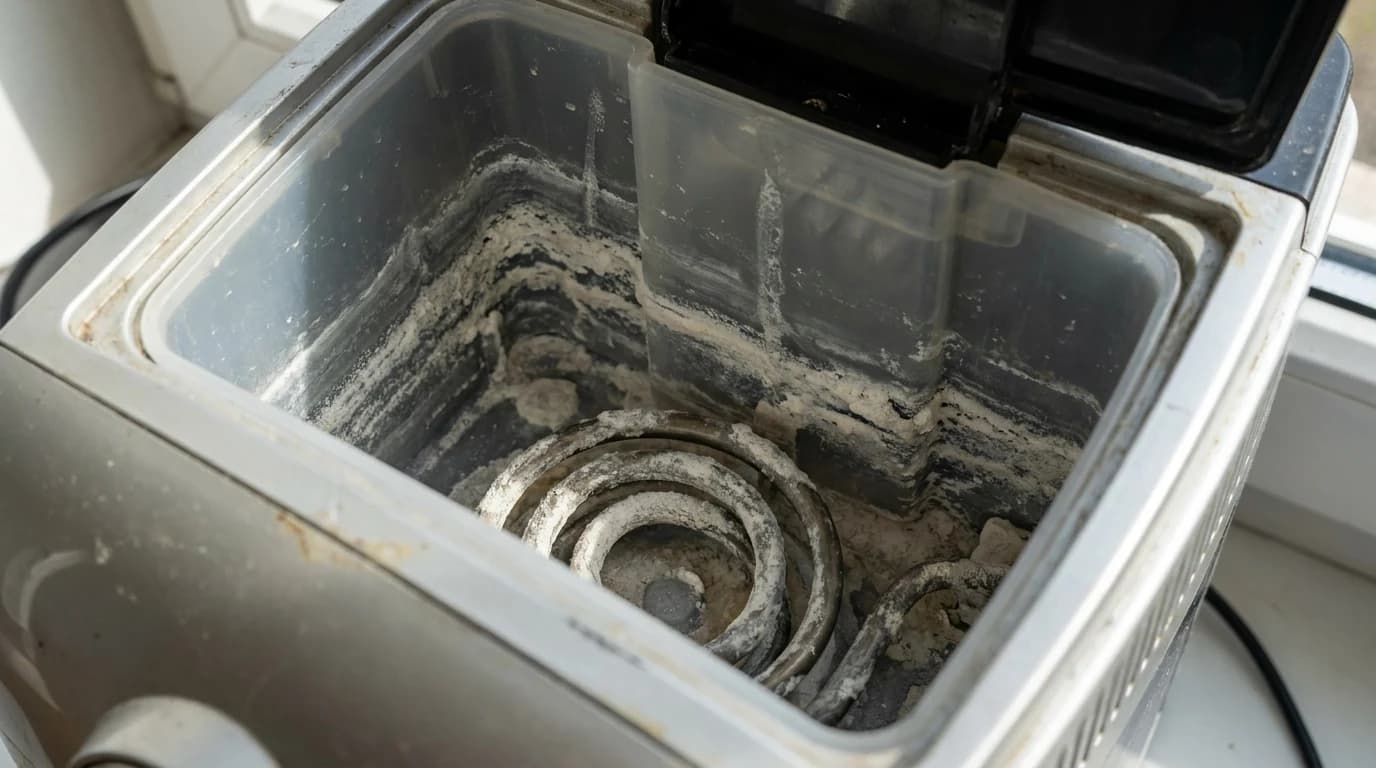
Every time your machine heats water, dissolved minerals, mostly calcium and magnesium, come out of solution and stick to the boiler, heating element, and internal tubing as a hard chalky crust. That crust is limescale, and hard water produces it faster. As it builds, it insulates the heating element so the machine takes longer to reach temperature, and it narrows the water path so flow slows and pressure drops. The result in the cup is weaker, unevenly extracted coffee that can taste flat or slightly metallic.
Scale is also the quiet killer of espresso machines and super-automatics, where the tolerances are tighter and a clogged passage can stop the machine entirely. Keeping scale in check is the single biggest thing you can do to extend a machine's life. If you are choosing new gear, our espresso machine and super-automatic espresso roundups note which models make descaling easier.
Why it sneaks up: scale builds gradually, so the coffee gets worse gradually. Most people adjust their grind and blame their beans for months before they think about the boiler.
How often should you descale
There is no universal number because it depends on your water, your machine and how much you brew. Start with what your machine's maker says. The four below each publish their own rule, and they disagree with each other. We research rather than test: these intervals come from each maker's support pages, checked October 15, 2026.
What the manufacturers say
| Brand | How often | What to use | Rinse |
|---|---|---|---|
| Keurig | Every 3 to 6 months, or when the descale light comes on (select brewers) | Its own descaling solution, per your brewer's instructions | Per your brewer's instructions |
| Nespresso | Once or twice a year (Nespresso Australia) | Its descaling kit; never vinegar, which it says can seriously damage the machine | Per your user manual |
| Mr. Coffee (drip) | A deep clean once a month | About 1 part white vinegar to 2 parts water, left to sit 15 to 30 minutes | Two water-only brews |
| Philips Café Gourmet (drip) | Regularly; no fixed interval given | Any liquid descaler, or white household vinegar at 4% acetic acid; no powder descalers or descaling tablets | Two more brew cycles with fresh, cold water |
So a rule from one brand does not transfer to another: vinegar is the routine method for a Mr. Coffee drip maker and banned outright for a Nespresso.
Starting point if your manual is silent
The table below is our own rule of thumb, not a manufacturer figure. The single biggest factor is water hardness, and a descale light on your machine overrides it.
| Machine type | Soft or filtered water | Moderate water | Hard water |
|---|---|---|---|
| Drip coffee maker | Every 2-3 months | Monthly | Every 2-4 weeks |
| Pod machine (Nespresso, Keurig) | The maker's interval above | The shorter end of that interval | When the descale light comes on, or sooner |
| Semi-automatic espresso | Every 2-3 months | Monthly | Every 2-4 weeks |
| Super-automatic espresso | When it prompts | When it prompts | When it prompts, or monthly |
Daily, high-volume use pushes you toward the shorter end of each range. The easiest way to slow scale is to start with better water. A water filter that reduces hardness lengthens the gap between descales, though it never removes the need entirely.
Signs your machine needs descaling
- Water flows more slowly, or the pump sounds louder and strains.
- The machine takes noticeably longer to heat up or to finish a cycle.
- Coffee comes out cooler, weaker, or tastes flat and slightly metallic.
- You see white chalky flakes or crust around the tank, spout, or heating element.
- A descale indicator light comes on, or the menu shows a descale reminder.
Descaler vs vinegar
Both are acids that dissolve scale, but they are not equal. Neither is a cleaner: Urnex and Breville both treat removing coffee oils and removing mineral scale as separate jobs, so a cleaning tablet never goes in the water tank in place of descaler.
Use a commercial descaler when:
- The machine has a pump, seals, or a boiler (espresso, super-automatic)
- The manual specifies it, or warns that vinegar voids the warranty
- You want a clean rinse with no residual smell or taste
White vinegar is acceptable when:
- It is a basic drip coffee maker
- The manufacturer explicitly permits it
- You are willing to rinse several extra cycles
What to buy. For a Keurig, the maker's own descaling solution is the one the warranty language names, and our Keurig guide covers which Keurig descaler to buy, and whether vinegar is safe in one. For a Nespresso, the two-pack descaling kit fits every Original and Vertuo model. For an espresso machine or drip maker, a tub of Urnex Dezcal is dozens of descales (not for aluminum boilers) — and if your espresso machine has a three-way valve, Cafiza tablets are the backflush detergent that keeps shots tasting clean between descales.
Commercial descaler rinses away cleanly and leaves no lingering smell or taste. If you do use vinegar, never leave it sitting in the machine for hours, which can be hard on seals. For pod machines, use the brand's own solution: Nespresso says never to descale its machines with vinegar.
The general step-by-step
This process is the common shape of descaling across most machines. Always defer to your specific manual, because tank sizes, buttons, and descale cycles differ.
- Empty and prep. Remove any water filter cartridge from the tank first, since descaler can ruin it. Empty the drip tray and remove used pods or grounds.
- Mix the solution. Follow the descaler's dosing. For a drip maker whose manual allows vinegar, Mr. Coffee's mix is about 1 part white vinegar to 2 parts water, while Philips runs 4% household vinegar straight. Fill the tank to the marked line.
- Run it through. Place a large vessel under the outlet and run the solution through the water path in batches until the tank is nearly empty. On an espresso machine, send some through the group head and some through the steam wand so both circuits get treated. On a super-automatic, start its built-in descale cycle and let it manage the timing.
- Let it work, then finish. Some products ask you to pause partway so the solution can sit and dissolve scale; Mr. Coffee says 15 to 30 minutes for a vinegar run. Then run the rest through.
- Rinse twice, at least. Refill with fresh water and run at least two full tanks through every circuit to flush all residue; some products ask for more, and Urnex's household powder directions for drip makers call for three. Espresso and super-auto machines especially need a thorough rinse. Reinstall the filter and brew one throwaway cup before your real coffee.
The step people skip: the second rinse. One tank of clean water is not enough to clear descaler from a boiler and a steam circuit, and the leftover taste gets blamed on the beans.
Machine-type notes
Drip makers
The most forgiving. A vinegar-and-water run followed by two clean-water cycles handles them well.
Pod machines
Usually have a simple descale mode or a manual run-through. Using the brand's own solution avoids surprises and warranty arguments.
Semi-automatic espresso
Benefit most from a proper descaler and a careful rinse, because scale hits the boiler and group directly. If the machine has a three-way valve, pair descaling with regular backflushing, which is a separate cleaning job.
Super-automatics
Almost always have a guided descale cycle in the menu. Running it when the machine prompts is both easiest and safest.
When it is not the scale
Descaling is not the only maintenance that keeps coffee tasting right. Fresh grinding, a clean kettle for pour-over, and getting your coffee ratio right all matter too. If your cup has gone off recently, it is worth checking whether the culprit is scale or something else, like sour versus bitter espresso pointing to your grind and extraction, or simply stale beans.
Descale on a sensible schedule, rinse like you mean it, and your machine will reward you with hotter water, faster flow, and cleaner-tasting coffee.
Your next step
Follow the descaling instructions for your exact machine. Check your water hardness before deciding whether a different filter would help.
Descalers, matched to your machine
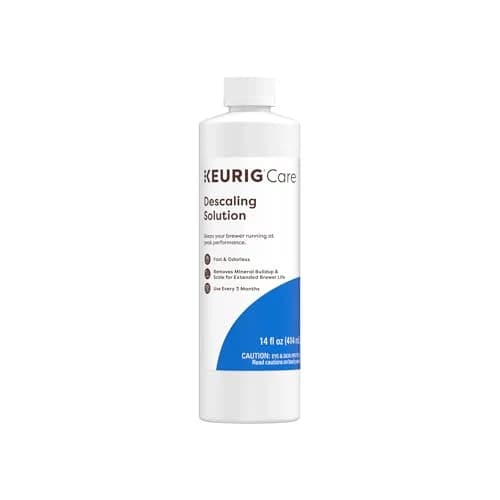
Keurig Descaling Solution
Keurig's own descaler — the one the manual names, for about $7 a descale.
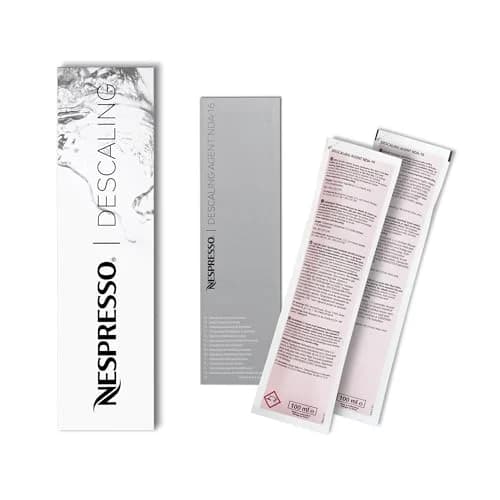
Nespresso Descaling Kit, 2 pack
Nespresso's own two-cycle descaling kit — fits every Original and Vertuo machine, about $5.50 a descale.
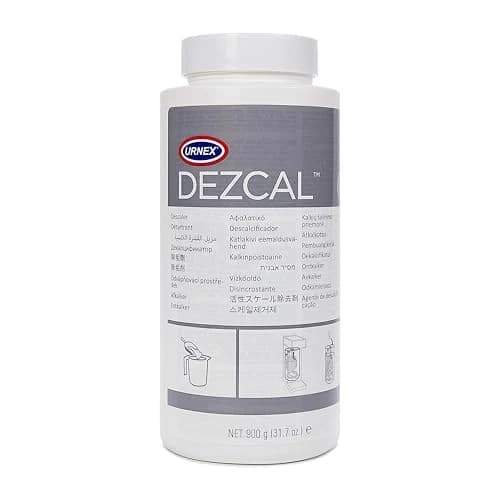
Dezcal Descaler, 900 g
One descaler for espresso machines, drip and pod brewers with steel or brass boilers — and a 900 g tub is dozens of descales.
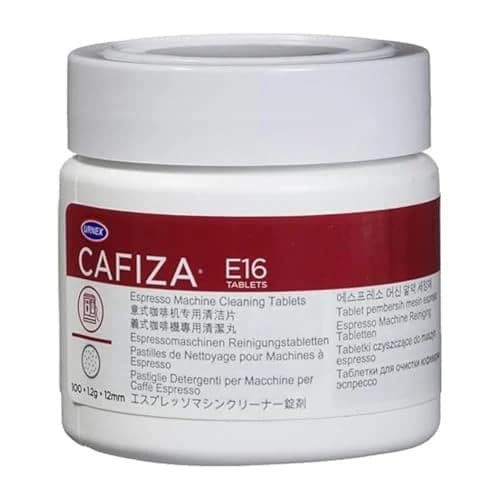
Cafiza Espresso Machine Cleaning Tablets, 100 ct
The backflush tablet every café uses — 100 tablets is a year of weekly cleaning for about 18 cents a go.
BrewSift earns a commission on qualifying purchases made through these links, at no extra cost to you. Prices shown were checked on publication and change often.
FAQ
How often should I descale my coffee machine?
Start with your manufacturer: Keurig says every 3 to 6 months, Nespresso Australia once or twice a year, and Mr. Coffee suggests a monthly vinegar clean for its drip makers. If your manual is silent, every one to three months is a sensible start; aim for the shorter end with hard water or several brews a day. Many machines with a descale light will simply tell you when it is due.
Can I use vinegar to descale instead of a commercial descaler?
For a basic drip coffee maker, white vinegar works if the manual allows it: Mr. Coffee suggests about 1 part vinegar to 2 parts water, and Philips allows 4% household vinegar but not powder descalers or tablets. For espresso machines and super-automatics, a commercial descaler is the safer choice because it is gentler on seals and internal parts and rinses cleaner. Nespresso says never to use vinegar in its machines. Check your manual before deciding.
What is the difference between descaling and cleaning?
Descaling removes mineral scale from the water path using an acidic solution. Cleaning, or backflushing on an espresso machine with a three-way valve, removes coffee oils and grounds from the brew group and portafilter using a detergent. They target different residues, so most machines need both on their own schedules, and a cleaning tablet is never a substitute for descaler.
What happens if I never descale my machine?
Scale builds up until water flows slowly, the machine takes longer to heat, and shots or drips run weaker and can taste flat or metallic. Over time heavy scale can block passages entirely and shorten the machine's life. It is far cheaper to descale on schedule than to replace a clogged machine.
Does using filtered or softened water mean I never have to descale?
It slows scale a lot, but not to zero. A filter that reduces hardness lengthens the gap between descales rather than removing the need. Distilled or fully softened water can descale less often, though some machines are not designed for very low mineral water, so follow the manual.
What does descaling mean on a coffee machine?
It means running an acidic solution through the machine's water path to dissolve limescale, then rinsing thoroughly. Limescale is the chalky crust of calcium and magnesium that comes out of hard water every time the machine heats it, sticking to the boiler, heating element and tubing. Left alone it slows heating and flow, and the coffee turns weak, uneven and slightly metallic.
How do you descale an espresso machine?
Remove any water filter cartridge first, mix the descaler to its stated dosing and fill the tank. Run the solution through in batches, sending some through the group head and some through the steam wand so both circuits get treated, or start the built-in descale program if your machine has one. Then rinse with at least two full tanks of fresh water, reinstall the filter and pull one throwaway shot. Use a commercial descaler here rather than vinegar.
Sources
- Keurig — Descaling (every 3 to 6 months, or when the descale light comes on on select brewers)
- Nespresso Australia — How to clean and descale your coffee machine (descale once or twice a year; never use vinegar)
- Mr. Coffee — How to clean your coffee maker (monthly deep clean, about half as much vinegar as water, sit 15 to 30 minutes, two water-only brews)
- Philips UK — How do I descale my Philips Café Gourmet coffee maker (liquid descaler or 4% white vinegar; no powder descalers or tablets; two fresh-water cycles)
- Urnex — FAQs: cleaning removes coffee oils, descaling removes mineral scale
- Urnex household descaling powder — drip directions: one descaling tank, then three fresh-water tanks
- Breville — cleaning and descaling are separate maintenance processes