Why Your Moka Pot Coffee Tastes Bitter (and the Fix)
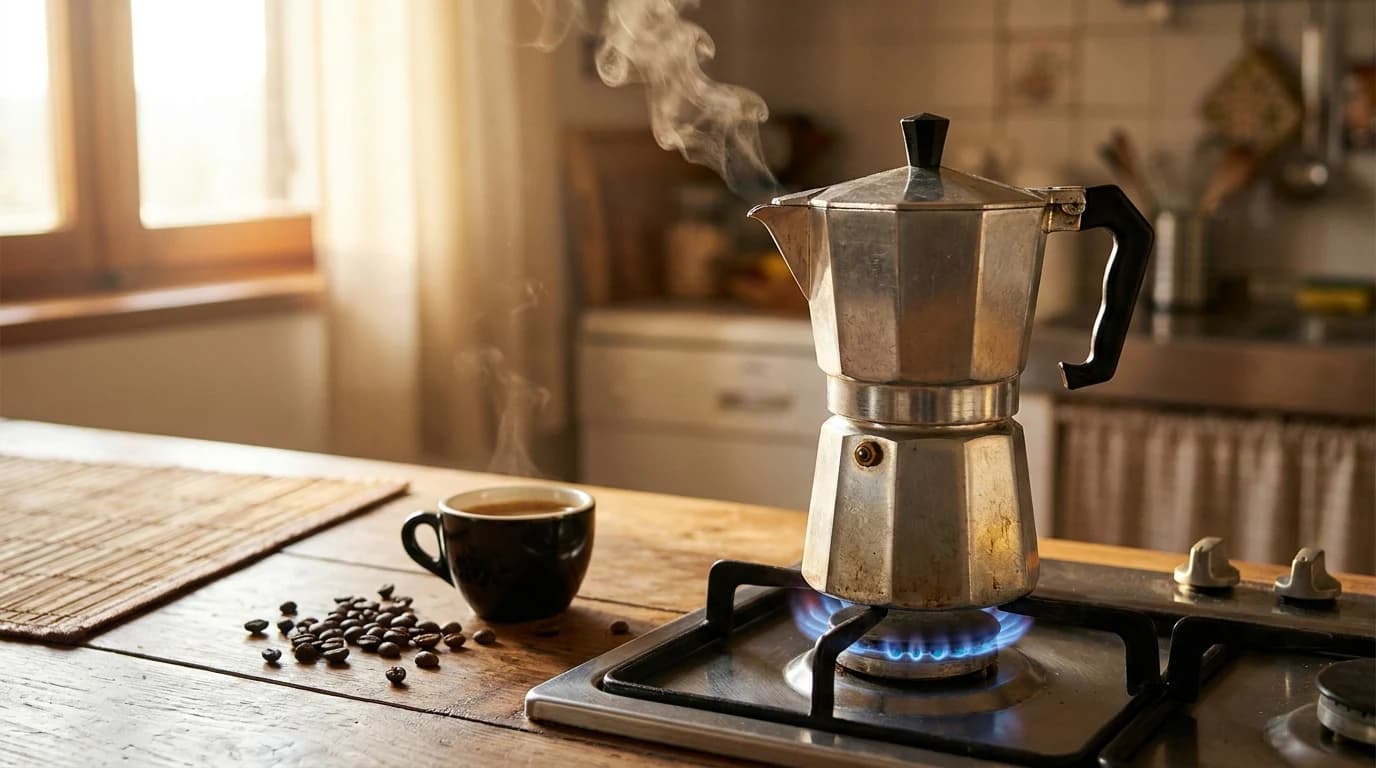
Bitter moka pot coffee is over-extraction, and in a moka pot that is driven far more by heat and timing than by grind. Start with water just off the boil, brew on medium-low heat, and pull the pot the moment it gurgles. Fix the flame before you touch the grinder and most bitter cups disappear.
Key takeaways
- Bitterness is over-extraction; in a moka pot, heat and timing cause it far more often than grind size does.
- Start with water that is already just off the boil and brew on medium-low heat so the grounds spend less time overheating.
- Pull the pot the instant it gurgles, because every extra second on the flame keeps cooking the coffee in the top chamber.
- A moka pot brews at only 1 to 2 bar (versus espresso's 9 bar), so it makes strong, espresso-adjacent coffee, not true espresso, and no real crema without a pressurized valve.
Bitter moka coffee is the most common complaint from people who just bought their first stovetop pot, and the most common fix they are handed, "grind coarser," is usually the wrong one. Bitterness is over-extraction, and in a moka pot over-extraction is driven far more by heat and timing than by grind size. Fix how you run the flame before you touch the grinder, and most bitter cups quietly disappear.
The one number that explains a bitter cup
A moka pot is not an espresso machine, and the gap is the whole story. Espresso is brewed at 9 bar of pressure in roughly 25 seconds; a moka pot works at just 1 to 2 bar, pushing hot water slowly up through the grounds. The water doing the pushing runs hot, near boiling on a strong flame, while coffee actually extracts cleanly only in a narrow band of about 195 to 205F (90 to 96C). Push past that window and you pull the harsh, bitter compounds that come out last.
| Method | Pressure | Strength (dissolved solids) | Brew time |
|---|---|---|---|
| Moka pot | 1 to 2 bar | 3 to 4% | 3 to 5 min |
| Espresso | 9 bar | 9 to 10% | 25 to 30 sec |
| Drip / filter | none | ~2% | 4 to 6 min |
Why in-between strength is the trap
A moka cup sits between drip and espresso in strength, concentrated but not a true shot. That in-between strength is exactly why sloppy heat shows up as bitterness: you are brewing strong, so every extra degree and every extra second is amplified in the cup. A drip brewer run 30 seconds long tastes slightly dull. A moka pot run 30 seconds long tastes scorched.
Rule of thumb: at moka strength, the cup magnifies your mistakes roughly threefold compared with drip. That cuts both ways, which is why the fixes below work so fast.
What most people get wrong: it is the heat, not the grind
The internet's default moka fix is "grind coarser." Grind matters, but it is rarely the main lever. Here is the falsifiable version: keep your grind and beans identical and change only two things, lower the flame to medium-low and pull the pot off the moment it gurgles. A bitter cup gets noticeably smoother. If that single change fixes it, the grind was never your problem.
Why heat dominates
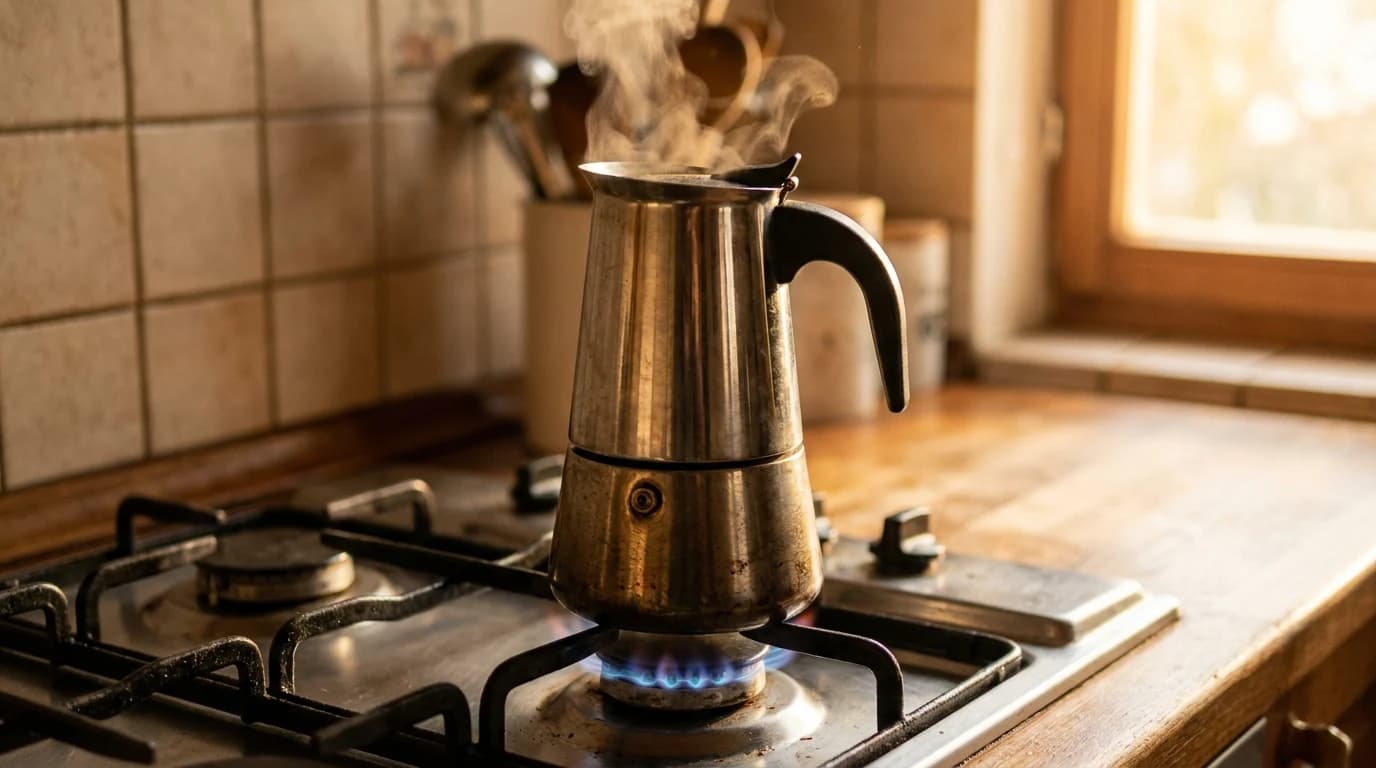
On a high flame the boiler races past the clean-extraction band toward boiling, steam blasts through the coffee bed too fast and too hot, and, the big one, the coffee keeps cooking in the top chamber for as long as the pot sits on the burner. "A coffee boiled is a coffee spoiled" is the old Italian line, and here it is literally true.
What actually moves the needle
What genuinely changes a bitter cup:
- Starting with water already just off the boil
- Dropping to medium-low heat for the whole brew
- Pulling the pot at the first gurgle, not the last
- Cooling the base under the tap to stop extraction dead
What people change first, and shouldn't:
- Grinding coarser (masks the symptom, costs you strength)
- Switching beans (a scorched brew scorches any bean)
- Buying a more expensive pot (the flame is still the variable)
- Tamping the basket (actively makes over-extraction worse)
Start with hot water. Filling the base with water that is already just off the boil roughly halves the time the pot spends on the flame, so the grounds spend far less time being overheated from below. It is the single biggest upgrade to a bitter moka cup, and it takes ten seconds.
Diagnose your cup
Bitterness is not the only off-taste a moka pot throws. Match what you are actually tasting to the real cause before you change anything:
| What you taste | Most likely cause | The fix |
|---|---|---|
| Harsh, burnt, bitter | High heat, or left on the flame past the gurgle | Medium-low heat; pull at the first gurgle |
| Sour, thin, weak | Under-extraction: grind too coarse, or pot not filled | Grind finer (table salt); fill the basket level and full |
| Metallic or tinny | Brand-new aluminium pot, or detergent residue | Brew 2 to 3 throwaway pots to season it; hand-rinse, no soap |
| Spurts violently, muddy | Heat too high; grind too fine and choking | Lower the heat; loosen the grind slightly; never tamp |
| Weak despite a fine grind | Pot too big for the dose (brewed half-full) | Use a pot sized to what you actually drink |
The fix, in order
Work top-down, cheapest changes first:
- Preheat the water to just off the boil before you assemble the pot.
- Set the burner to medium-low and match the flame to the pot's base; a flame licking up the sides scorches it.
- Fill the basket level and full, and never tamp. Tamping restricts flow and forces over-extraction.
- Pull the pot the instant it gurgles. To stop extraction dead, run the base under the cold tap for a few seconds.
- Only now touch the grind. Aim for medium-fine, about the texture of table salt, finer than drip and coarser than espresso. Our grind size guide has the reference, and a burr grinder makes it consistent in a way pre-ground never will.
Dial dose and ratio last. A moka pot brews best near a 1:10 coffee-to-water ratio by weight; our coffee ratio calculator does the math for your pot size.
When it is the pot, not the technique
Some bitterness, and a lot of frustration, is hardware:
- Induction stoves. A classic aluminium pot will not heat on induction at all; you need a stainless model — which is exactly the Moka Express vs Venus induction decision. Our moka pot picks flag which ones are induction-safe.
- No crema, ever. A standard moka cannot make real crema at 1 to 2 bar. If you want it, a pressurized-valve pot like the Bialetti Brikka holds the brew back until the pressure climbs, producing a modest crema layer, the closest a stovetop gets. Whether that is worth giving up volume for is the whole question in Brikka vs Moka Express.
- A clogged safety valve. Check that it is clear. A blocked valve is both a bad-brew and a genuine safety issue.
The one test that settles it
If you have changed the flame, preheated the water, and pulled at the gurgle, and the cup is still harsh, then the grind is finally worth suspecting. Loosen it one notch and brew again. Changing one variable at a time is slower for a morning and far faster over a week.
Get the heat and the timing right first. Nine times out of ten that is the entire fix, no new grinder required.
Your next step
Still fighting your pot? See the ones we rate.
Moka pots we rate, if the pot is the problem
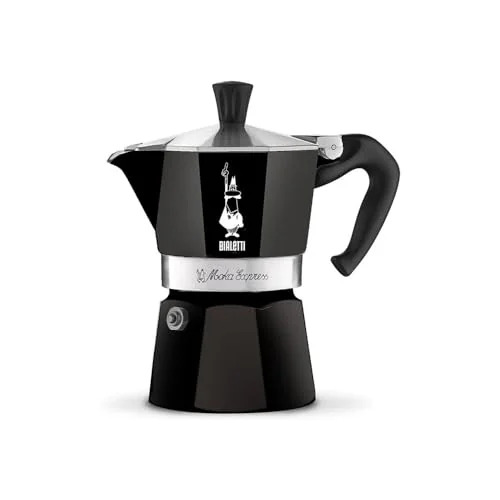
Moka Express 6-Cup
The iconic aluminium stovetop pot — strong, sweet, espresso-adjacent coffee for the price of lunch.
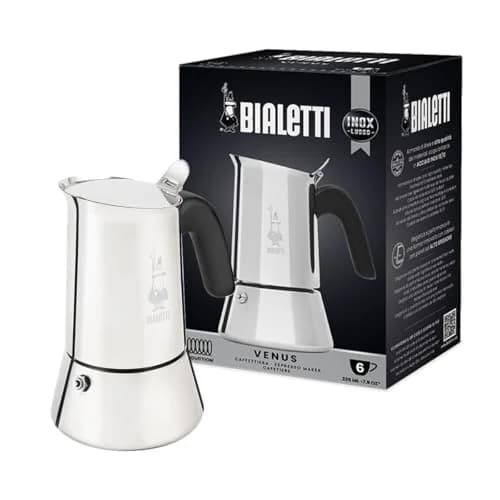
Venus Induction 6-Cup
Bialetti's stainless moka — works on induction, lasts longer, and won't pit like aluminium.
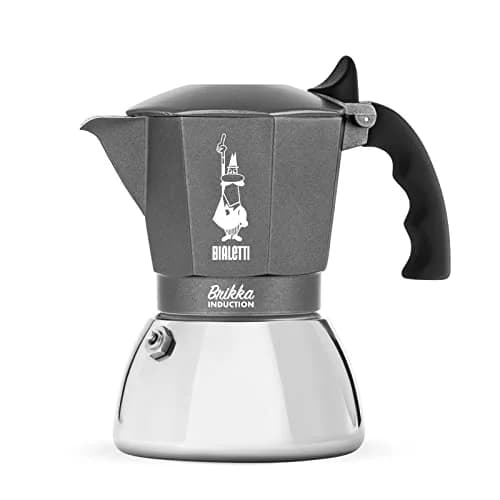
Brikka Induction 4-Cup
A weighted pressure valve builds real crema — the closest a moka pot gets to espresso.
BrewSift earns a commission on qualifying purchases made through these links, at no extra cost to you. Prices shown were checked on publication and change often.
FAQ
Why does my moka pot coffee taste so bitter?
Bitterness is over-extraction. In a moka pot it usually comes from heat and timing rather than grind: a high flame pushes the water past the clean 195 to 205F band toward boiling, and leaving the pot on the burner after it gurgles keeps cooking the coffee in the top chamber. Use medium-low heat and pull it off at the first gurgle.
Should I use hot or cold water in a moka pot?
Preheated water, just off the boil. Starting cold makes the pot sit on the flame much longer, overheating the grounds from below and adding a burnt, bitter edge. Filling with hot water roughly halves the time on heat and is the single easiest upgrade to a bitter cup.
Is moka pot coffee actually espresso?
No. A moka pot brews at about 1 to 2 bar of pressure; espresso standards call for 9 bar. Moka coffee is strong and espresso-adjacent, around 3 to 4 percent dissolved solids versus espresso's 9 to 10 percent, but it is thinner and has no true crema unless you use a pressurized-valve pot like the Bialetti Brikka.
What grind size should I use for a moka pot?
Medium-fine, about the texture of table salt, finer than drip and coarser than espresso. Pre-ground supermarket espresso is often too fine and over-extracts. But fix your heat and timing first; grind is rarely the main cause of a bitter cup.