Burr grinders crush beans to a uniform size for even extraction. Pound for pound, a grinder upgrade improves your cup more than almost any other purchase.
Quick steer — Between a better machine and a better grinder, buy the grinder — and check the maker's own stated range, because a filter grinder will not do espresso.
Top pick: Baratza Encore ESP (8.1/10, Approx. $199.95). The grinder most people should buy first — it does espresso and filter, and Baratza will fix it forever.
Skip this
A grinder chosen without checking whether it reaches an espresso grind
Grind range is a hardware limit, not a setting, and manufacturers state it plainly when a grinder is filter-only. Fellow's own product page for the Ode Gen 2 says the grinder is not intended for espresso and that its burrs and motor are geared to drip and immersion brewing.
Stepless micrometric adjustment on 55 mm flat burrs lets you land between where two clicks would fall and hold that dial-in shot after shot, which a stepped budget grinder cannot do.
The BrewSift Score is a 0–10 weighted average of category-specific sub-scores, built from manufacturer specifications, published reviews and aggregated owner reports — not hands-on testing. In this category it weights grind consistency 28%, espresso range 18% and brew range 15%, plus 4 smaller factors. How we score →
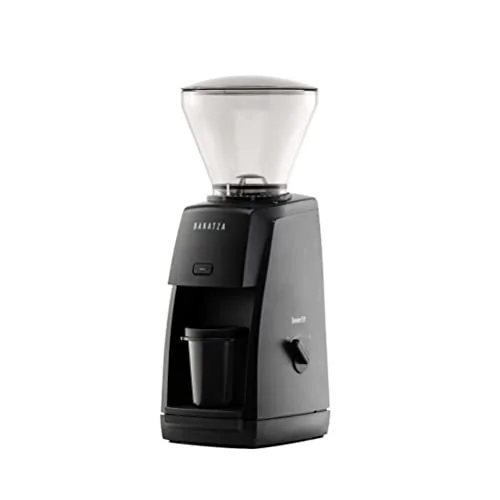
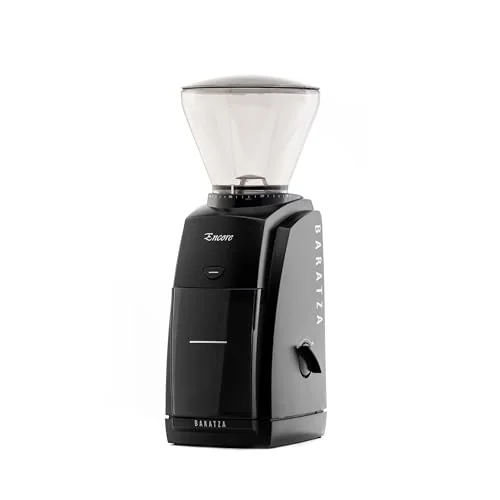
The grinder most people should buy first — it does espresso and filter, and Baratza will fix it forever.
Baratza's espresso-capable version of the Encore. Per Baratza's own spec pages, it shares the classic's 40mm conical burr size, 300 g hopper, 120 g grounds bin and 550 RPM motor. The ESP changes three things: M2 burrs instead of the classic's M3, a quick-release burr mount instead of a threaded one, and a dual-range dial where settings 1 to 20 are micro-steps for espresso and 21 to 40 cover filter, French press and cold brew. It also ships with a 54mm dosing cup and a 58mm adapter. Buy the classic Encore only if you will never pull a shot.
Genuine espresso + filter range
Baratza repair/parts support
Best all-round value
Stepped adjustment (not stepless)
A bit of retention
What owners say — Praised as the grinder you buy once; espresso users sometimes upgrade burrs later.
Fellow's all-rounder, now in its second generation: a wide espresso-to-cold-brew range and a design that earns its counter space.
The Opus 2 replaces the original Opus with larger 48mm conical burrs, 48 settings plus a stepless side dial, auto-stop dosing, and a catch cup that doubles as a 54/58mm portafilter cradle — still spanning espresso to cold brew and still quieter than most. Espresso users can grind fine enough, though dedicated espresso grinders remain more precise at the very fine end.
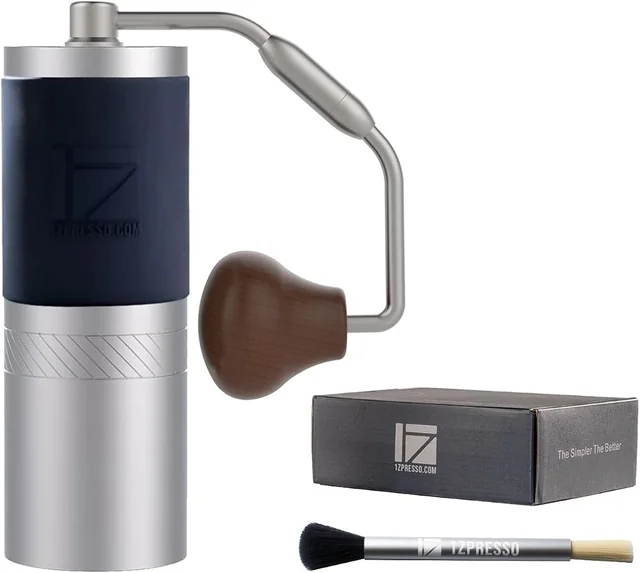
A compact 48mm hand grinder that 1Zpresso builds for pour-over: tool-free cleaning, a folding handle, and a fraction of an electric grinder's price.
The J belongs to 1Zpresso's JX family (JX, JX S and J), which the maker files under pour-over rather than espresso. It uses the same 48mm burr as the JX, set with an internal dial of 30 clicks per turn, holds 30 to 35g of beans, weighs 705g, and adds a folding handle that stores smaller and keeps the grinder from rolling off a table. Like every 1Zpresso, it comes apart for cleaning without tools and without losing calibration. If espresso is the main job, 1Zpresso's own espresso models are the JX-Pro, J-Max and J-Ultra, which move to finer external adjustment; the J is the lighter, simpler choice for filter coffee at home or on the road.
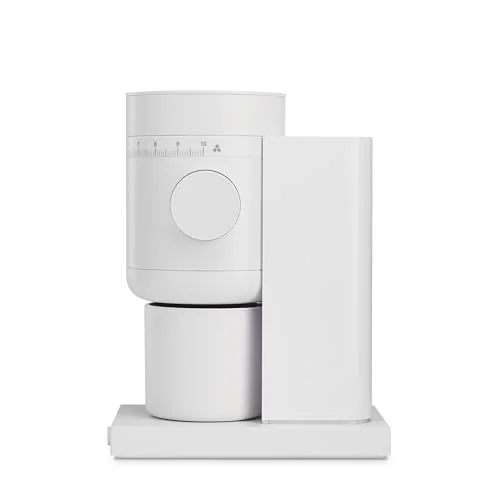
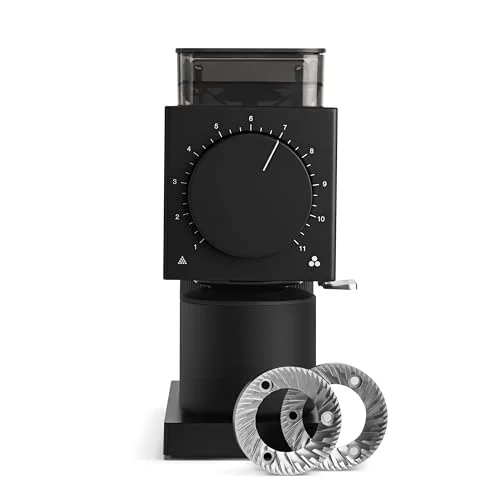
The best filter-only grinder: 64mm flat burrs, near-zero retention, and an exceptionally clean cup.
Can the Ode Gen 2 grind espresso? Fellow's own answer is no. It describes the Ode as designed for brewed coffee only, from AeroPress and pour-over to French press and cold brew, and says its 64mm flat burrs and motor are geared to drip and immersion. For filter, that focus is the reason to buy it: 64mm stainless flat burrs, 11 settings with 31 total steps, a 100 g load, anti-static technology and a built-in knocker to cut leftover grounds, and an auto-stop. If you might pull shots, Fellow points to its Opus grinder instead, and the Baratza Encore ESP covers both for less.
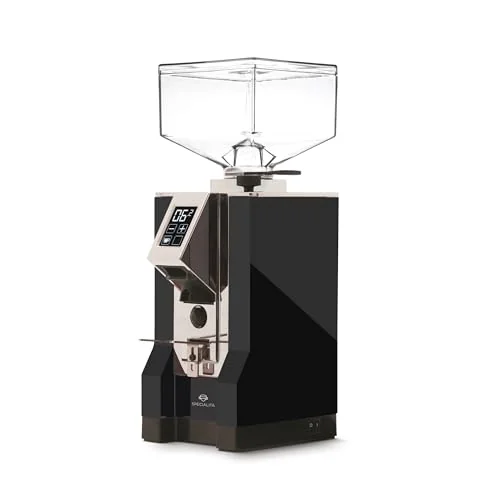
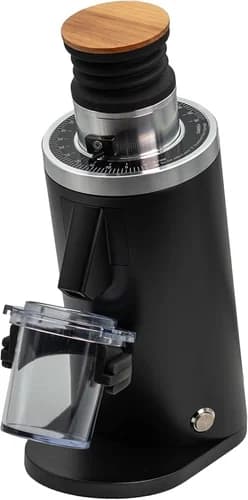
A quiet, stepless, Italian-built espresso grinder that holds a dial-in shot after shot.
55mm flat burrs, truly stepless micrometric adjustment, and impressively quiet operation make this a favorite dedicated espresso grinder. It's filter-capable in a pinch but built for the precision espresso demands; pair it with a Gaggia, Silvia, or any manual machine.
The budget hero — steel burrs and a clean filter grind for the price of a few bags of beans.
Timemore's S2C stainless conical burrs in a grippy aluminium body deliver a surprisingly consistent filter grind for around $60. It can manage espresso in a pinch but shines for pour-over and French press — the best entry into grinding fresh.
Price does not tell you what a grinder can do. The $400 grinder in this ranking is the one its own manufacturer says will not grind espresso, while the $75 hand grinder will, because grind range is set by burr geometry and motor torque rather than by how much the grinder cost.
What owners actually report
r/espressor/Coffeer/pouroverr/JamesHoffmann
Two things recur constantly. The first is that burr grinders are the floor, not the upgrade: blade grinders come up only to be ruled out, because a spinning blade chops rather than mills and cannot hold a particle size. The second is the shape of the roughly $200 decision, which in r/espresso is almost always framed as the Turin/MiiCoffee DF54 against the Baratza Encore ESP. Owners who have used both tend to favour the DF54 on hardware, citing the metal body, flat burrs, lower retention and quieter motor, while the people arguing for the Baratza do so on ownership rather than output: replaceable parts, a support line that answers, and an adjustment range that moves between espresso and filter without a fight. Hand grinders from Timemore and 1Zpresso are the recurring recommendation under about $150, on the grounds that they beat any electric grinder at the same price.
Consistently praised
Turin/MiiCoffee DF54 — The grinder r/espresso reaches for most often around $200: owners moving from conical budget grinders describe a clear jump in uniformity and lower retention, and the metal body and quieter motor come up almost as often as the taste.
Baratza Encore ESP — Recommended less for the grind than for what happens afterwards: owners point to Baratza publishing parts and repair guides, and to the adjustment range being genuinely usable for both espresso and filter, which the espresso-specialist grinders are not.
Hand grinders (Timemore, 1Zpresso) — The consistent under-$150 answer, on the argument that the money goes into burrs and a shaft instead of a motor and a housing, so the grind quality lands well above electrics at the same price.
Consistently warned about
Blade grinders — Ruled out in essentially every thread: the blade chops for as long as you hold the button, so you get boulders and dust at once and cannot repeat a setting. Owners who switched describe it as the single most noticeable upgrade they made.
Cheap grinders with flat plate or block burrs — A specific warning that recurs in r/Coffee: some inexpensive grinders sold as burr grinders use a stamped block rather than proper conical or flat burrs, and the grind quality lands closer to a blade grinder than to the burr grinder on the box.
Filter-only grinders bought for espresso — Owners repeatedly report a filter grinder either failing to reach an espresso grind at all or straining the motor trying, and the burr-swap and stepless-modification path people describe ends up costing more than buying the right grinder.
Baratza's classic filter grinder — 40 settings from fine drip to French press, parts you can replace for years, and the cheaper Encore if you never pull espresso.
The eight grinders BrewSift ranks span $75 to $549, a 7.3x spread, and the $400 one sitting in the middle of that range is the only one whose manufacturer states it will not grind espresso.
The grinder is half the cup — beans are the other half
A grinder upgrade only pays off on fresh beans: anything roasted more than a month ago grinds into flat, stale coffee however consistent the burrs are. Buy beans roasted to order and in small bags — our beans guides list roasters that print roast dates and ship within days, so the grinder has something worth grinding.
Burr, not blade
Blade grinders chop beans unevenly — fines and boulders extract at different rates, muddying the cup. Conical or flat burrs grind to a consistent size. This is non-negotiable for good coffee.
Espresso range vs brew range
Espresso needs a very fine, finely-adjustable grind; filter coffee is coarser and more forgiving. Some grinders do both well; many filter-focused grinders can't go fine enough for great espresso. Buy for what you actually brew — a filter-only grinder like the Fellow Ode is superb for pour-over but won't do espresso, while a Baratza Encore ESP or Eureka Specialità is built to go fine.
What to spend, by tier
Roughly $75 to $150 gets a capable filter grinder (the Timemore C2S hand grinder, the classic Baratza Encore). $150–300 is the sweet spot for a grinder that does both filter and espresso (Encore ESP, DF54). $300+ buys premium flat-burr grinders (Eureka Mignon Specialità for espresso, Fellow Ode Gen 2 for filter), better clump-free workflow, and single-dosing for the espresso-obsessed. Spend the most on the grinder if you pull espresso — grind consistency matters more there than anywhere else.
Baratza Encore or Encore ESP?
They look almost identical and share the 40mm conical steel burrs, 40 settings, 300g hopper and simple on/off-plus-pulse controls, so the choice comes down to what you brew. Baratza's own chart calls the classic Encore brew-focused but espresso-capable: it covers drip, pour-over, AeroPress and French press comfortably and will reach an espresso grind, but it has no dedicated fine adjustment for dialling in shots. The Encore ESP's change is a dual-range adjustment, with settings 1 to 20 as micro-steps for espresso and 21 to 40 as larger steps for filter, plus a burr that releases without tools. Buy the classic Encore if you are sure you will only ever brew filter coffee, and the ESP if espresso is even a possibility, because the adjustment is not something you can add later.
Retention is how much ground coffee stays stuck inside between doses — it goes stale and throws off your dose. Low-retention grinders (DF54, single-dose designs) give you back almost exactly what you put in; classic hoppered grinders hold a few grams. It matters most if you switch beans often or single-dose for espresso.
Electric vs hand
A quality hand grinder (Timemore, 1Zpresso, Comandante) grinds as well as an electric costing far more — you trade a minute of effort per cup. Electric is worth it once you're grinding for more than one or two people, or want espresso without the arm workout of a fine grind.
How to judge a grinder from the spec sheet
Most grinder specs are marketing, and only a few of them predict how the coffee tastes. Burr type and size are the ones worth reading first: larger burrs cut more beans per rotation with less heat and generally produce a tighter particle distribution, and flat burrs tend toward a more uniform grind while conical burrs run cooler and quieter at the same price. After that, look at the adjustment mechanism. Stepless or micrometric adjustment lets you land between two settings, which matters enormously for espresso and barely at all for French press; stepped grinders are easier to return to a known setting. Motor speed and torque are underreported but real — a slow, high-torque motor generates less heat and fewer fines than a fast one straining against a fine setting. The specs that deserve the least weight are the ones brands lead with: the number of grind settings, watt ratings, and hopper capacity. A grinder with 40 usable settings across a filter-only range is less flexible than one with 15 that reach true espresso. Read the range first, the adjustment second, the burrs third, and treat everything else as packaging copy.
What star ratings and reviews actually measure
A grinder's average star rating is a blend of several different things, and grind quality is usually the smallest ingredient. Most owner reviews are written in the first month, when what stands out is noise, static, how much mess lands on the counter, and whether the thing looks good next to the kettle. Durability shows up later — burrs dulling, a gearbox failing, an adjustment collar drifting — and those reviews arrive years after the average has already settled. Ease of cleaning gets weighted heavily because it is felt daily. Grind consistency, the reason you bought a burr grinder at all, is the hardest thing for an individual owner to assess without a comparison sitting next to it, so it tends to be described rather than judged. Two things that genuinely separate grinders are almost never covered: burr alignment, which is how squarely the two burrs sit relative to each other and which varies unit to unit even within a model, and retention, the grounds trapped in the chute between doses. Misaligned burrs produce a wider spread of particle sizes than the burr spec suggests, and retention quietly stales your dose. Read reviews for workflow, noise, and failure patterns. Judge grind quality from burr size, alignment reputation, and range instead.
What a home grinder needs that a cafe grinder doesn't
Commercial grinders are built around throughput: large hoppers, big burrs, motors rated for continuous duty, and a doser designed to keep a queue moving. At home you grind for one to four cups, once or twice a day, and almost none of that helps you. What matters instead is the opposite set of traits. Low retention, because a cafe grinder purges its chute constantly while yours sits overnight with a few stale grams inside. Easy single-dosing or a small hopper, because beans left in a big hopper go flat long before you finish them. Noise, because a 7am grind in a shared apartment is a different problem than one behind a milk steamer. Height, because a lot of capable grinders will not fit under a standard 18-inch upper cabinet. And repairability — Baratza's parts-and-service reputation is a genuine reason to choose an Encore ESP over a cheaper unknown, since a grinder you can fix outlives two you cannot. Home-focused designs like the DF54 and the Fellow Ode Gen 2 optimize for exactly these constraints rather than volume. If you are choosing between a used commercial grinder and a home unit at the same price, the home unit is usually the better daily companion.
Coffee maker with a built-in grinder, or a separate grinder
All-in-one machines that grind and brew in one body come in two shapes: drip brewers with a grinder on top, and espresso machines with an integrated grinder like the Breville Barista Express or DeLonghi La Specialista Arte. Both trade grind quality and flexibility for counter space and a shorter morning routine. The grinder built into a combined unit is generally simpler than a standalone at the same total price — smaller burrs, coarser adjustment steps, and more retention in the path between grinder and basket. You also lose the ability to upgrade either half independently, and when the grinder mechanism fails you have a brewer with a dead limb rather than a $200 replacement decision. Against that, an integrated machine genuinely removes steps, and for espresso specifically a machine like the Barista Express is a well-regarded way to get a complete setup in one purchase and one footprint. Our read is straightforward: if you brew filter coffee, a separate burr grinder plus a good drip maker beats a grind-and-brew combo at the same money by a clear margin. If you pull espresso and space or budget forces one purchase, an integrated machine is a reasonable place to start, and a dedicated grinder is the upgrade you make later.
Single-dose or hopper: choose the workflow first
Grinders split into two ways of working, and it is worth deciding which one suits you before comparing burrs. A hopper grinder holds a supply of beans on top and grinds what you need at the press of a button, which is the fastest routine if you drink one coffee every day: the classic Baratza Encore, for example, has a 300g hopper. A single-dose grinder is designed to be fed one weighed dose at a time and to give back almost exactly that dose, with little left inside: the DF54 is built around this workflow, and Fellow's Ode Gen 2 is designed for near-zero retention. Single dosing suits you if you switch beans often, keep a decaf for the evening, weigh every dose for espresso, or brew too little for beans in a hopper to stay fresh. A hopper suits you if you buy one coffee at a time and want speed. Either can be used the other way, but a grinder built for the workflow you actually follow is the one you will enjoy using every morning.
Your first grinder, by what you brew
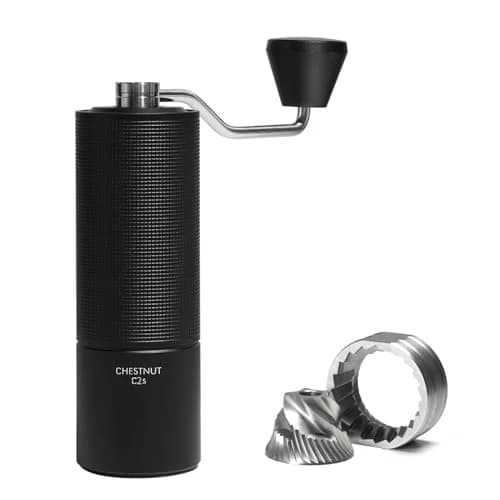
For a first grinder, start from the brew method rather than the budget. If you make French press, drip or cold brew and nothing finer, the classic Baratza Encore is a simple, repairable electric that Baratza itself describes as brew-focused, and the Timemore Chestnut C2S hand grinder is the inexpensive option for filter and French press if you do not mind a minute of cranking. If pour-over is the priority and you will never make espresso, the Fellow Ode Gen 2 is a flat-burr filter grinder built for clarity, and Fellow states plainly that it is not intended for espresso. If you want one grinder that does everything, the Fellow Opus 2 runs from espresso to cold brew and the Baratza Encore ESP covers espresso and filter with separate adjustment ranges for each. And if espresso is the main event, the DF54 is the budget single-dose espresso grinder and the Eureka Mignon Specialità is the dedicated espresso upgrade with stepless adjustment. Buying for the method you actually use is what keeps a first grinder from becoming a first upgrade.
A dedicated espresso grinder or an all-rounder
Espresso asks the most of a grinder: a very fine grind, tiny adjustments between shots, and repeatability from one day to the next. A dedicated espresso grinder is built around that range. The Eureka Mignon Specialità, for example, uses 55mm flat burrs with stepless micrometric adjustment, so you can land anywhere between two points rather than jumping from one click to the next. An all-rounder such as the Baratza Encore ESP, the Fellow Opus 2 or the DF54 covers espresso and filter, which is the right choice if you brew both, with one cost: moving from an espresso setting to a pour-over setting and back means re-finding your espresso setting each time. The Encore ESP softens this with a separate fine-step range for espresso, and a single-dose grinder like the DF54 makes switching beans easy even if it does not remove the re-dialling. If you brew espresso daily and filter only occasionally, a dedicated espresso grinder plus an inexpensive hand grinder for filter is a common and sensible pairing. If you brew both equally, one good all-rounder keeps the counter simpler.
Burr, always, if you care how the coffee tastes. Blades chop unevenly, so fine dust and coarse chunks extract at different rates in the same brew; burrs grind to a consistent size. Our blade-vs-burr post covers what that does in the cup.
Is a hand grinder good enough?
Quality hand grinders (Timemore, 1Zpresso, Comandante) grind as well as electric grinders costing far more — the trade-off is effort and time, especially for fine espresso grinds. Great for one or two cups a day.
How much should I spend on a coffee grinder?
For filter coffee, a good grinder starts around $75–150 (Timemore C2S, the classic Baratza Encore). For espresso, budget $200+ for the fine, precise, repeatable adjustment espresso needs — an Encore ESP, DF54, or Eureka Mignon. If you're splitting money between a machine and a grinder, put more into the grinder: it improves the cup more than a fancier brewer does.
What's the difference between the Baratza Encore and Encore ESP?
Adjustment and price. Both use 40mm conical steel burrs, 40 settings, a 300g hopper and the same on/off switch and pulse button. Baratza describes the classic Encore as brew-focused but espresso-capable, and its own comparison chart lists it with M3 burrs and a threaded burr that needs tools to remove. The Encore ESP adds a dual-range adjustment: settings 1 to 20 are micro-steps for dialling in espresso and 21 to 40 are larger steps for filter, plus a quick-release burr that comes out without tools. If you only brew drip, pour-over, AeroPress or French press, the classic Encore does that job for less; if espresso is anywhere in your plans, the ESP is the one to buy.
Do I need a burr grinder for espresso?
Yes — and specifically one rated for espresso. Espresso lives or dies on a fine, uniform, finely-adjustable grind, which blade grinders and coarse filter grinders can't produce. A stepless or fine-stepped burr grinder (Eureka Mignon, DF54, Encore ESP) is the entry point for pulling real shots.
What should I actually look for when reading coffee grinder reviews?
Read reviews for the things owners can genuinely judge — noise, static and mess, how it fits the counter, how easy it is to clean, and what breaks after a year or two. Those are reliable. Treat claims about grind consistency more cautiously, since almost nobody has a second grinder alongside for comparison. For grind quality, weigh the specs instead: burr size and type, whether the grind range truly reaches espresso, and the adjustment mechanism. Also scan the negative reviews specifically for repeated mentions of a single failure, which usually points to a real design weakness rather than a bad unit.
Why do the same grinders get such different ratings?
Because reviewers are measuring different things under one star score. Someone grinding for French press rarely notices adjustment coarseness that makes espresso users miserable; someone who single-doses cares deeply about retention that a hopper user never thinks about. Unit-to-unit burr alignment varies within the same model, so two owners can honestly report different grind quality from identical grinders. And timing skews everything — early reviews capture noise and looks, late reviews capture durability. Read ratings by use case rather than by average, and find the reviews from people brewing the way you brew.
What is the best coffee grinder for home use?
For most homes, an all-rounder that reaches espresso and filter is the right answer — the Baratza Encore ESP is the common recommendation because it covers both ranges, is widely repairable, and sits at a sensible price. If you only brew filter and want the cleanest cup, a flat-burr filter grinder like the Fellow Ode Gen 2 grinds more uniformly. If you make one or two cups a day, a quality hand grinder such as the Timemore C2S or 1Zpresso JX-Pro matches electrics costing far more. Match the grinder to your brew method and your daily volume before you compare prices.
Are coffee makers with a built-in grinder any good?
They are convenient rather than excellent. The integrated grinder in a combined machine is usually simpler than a standalone at comparable money — smaller burrs, coarser steps, more retention — and you can't upgrade or replace either half on its own. For filter coffee, a separate burr grinder and a good drip maker will beat a grind-and-brew combo at the same total price. For espresso, an integrated machine like the Breville Barista Express is a more defensible choice, since it gets you a complete working setup in one footprint and a dedicated grinder remains an obvious later upgrade.
Do more grind settings mean a better grinder?
No. What matters is where the settings sit and how precisely you can land on one, not how many are printed on the collar. A grinder with dozens of settings spread across a filter-only range still can't pull espresso, while one with fewer but finer steps in the espresso zone will. For filter brewing, stepped adjustment is plenty and makes it easy to return to a known setting. For espresso, stepless or micrometric adjustment is the feature worth paying for, because the difference between a sour shot and a balanced one is often smaller than one step on a stepped grinder.
Which coffee grinder is the most consistent?
Consistency comes down to burr geometry, burr size and how well the burrs are aligned, not to the number of settings. Flat burrs generally produce a narrower particle distribution than conical ones at the same price, which is why the flat-burr grinders we rank are the ones enthusiasts reach for when uniformity is the goal: the 64mm flat Fellow Ode Gen 2 for filter, where Fellow states plainly that it is not intended for espresso, the 55mm flat Eureka Mignon Specialità for a dedicated espresso grinder, and the 54mm flat DF54 for single-dosing on a budget. Larger burrs also cut more of the dose per rotation, which is part of why bigger grinders sound calmer doing the same work. Bear in mind that consistency is a means rather than the goal: past a certain point the grind stops being what limits the cup, and freshness, dose and technique take over.
What is the best coffee grinder for beginners?
The best first grinder is the one matched to your brew method. For drip, French press or cold brew only, the classic Baratza Encore is a simple, repairable electric, and the Timemore Chestnut C2S hand grinder is the inexpensive option for filter. For a beginner who wants espresso as well as filter, the Baratza Encore ESP is the common recommendation, because its adjustment has a fine-step range for espresso and a larger-step range for filter, and Baratza publishes parts and repair guides. Avoid blade grinders at any budget, since they cannot hold a consistent particle size.
What is a single-dose grinder, and do I need one?
A single-dose grinder is designed to be loaded with one weighed dose of beans at a time and to return almost all of it, with very little ground coffee left inside. The DF54 is built around this workflow. You benefit from one if you switch between beans or keep a decaf, weigh every dose for espresso, or brew too little for beans left in a hopper to stay fresh. If you drink the same coffee every day, a hopper grinder such as the Baratza Encore is quicker and perfectly good.
Should I buy a dedicated espresso grinder or an all-rounder?
Buy a dedicated espresso grinder, such as the Eureka Mignon Specialità with its stepless adjustment, if espresso is most of what you make, because it gives the fine, repeatable control shots need. Buy an all-rounder, such as the Baratza Encore ESP, Fellow Opus 2 or DF54, if you brew espresso and filter about equally. The cost of an all-rounder is re-finding your espresso setting every time you switch back from a coarser brew. Many espresso drinkers pair a dedicated espresso grinder with an inexpensive hand grinder for filter.
Should I choose conical or flat burrs?
Both make excellent coffee, and the choice matters less than burr size, alignment and whether the grinder reaches your brew method. Flat burrs generally produce a narrower spread of particle sizes, which many filter drinkers associate with a clearer cup; the flat-burr grinders on BrewSift's list include the Fellow Ode Gen 2, the DF54 and the Eureka Mignon Specialità. Conical burrs tend to run cooler and quieter at the same price and are forgiving across brew methods, as in the Baratza Encore ESP and Fellow Opus 2. Choose the grinder for your method first and the burr shape second.