How to Make a Latte at Home, With or Without a Machine
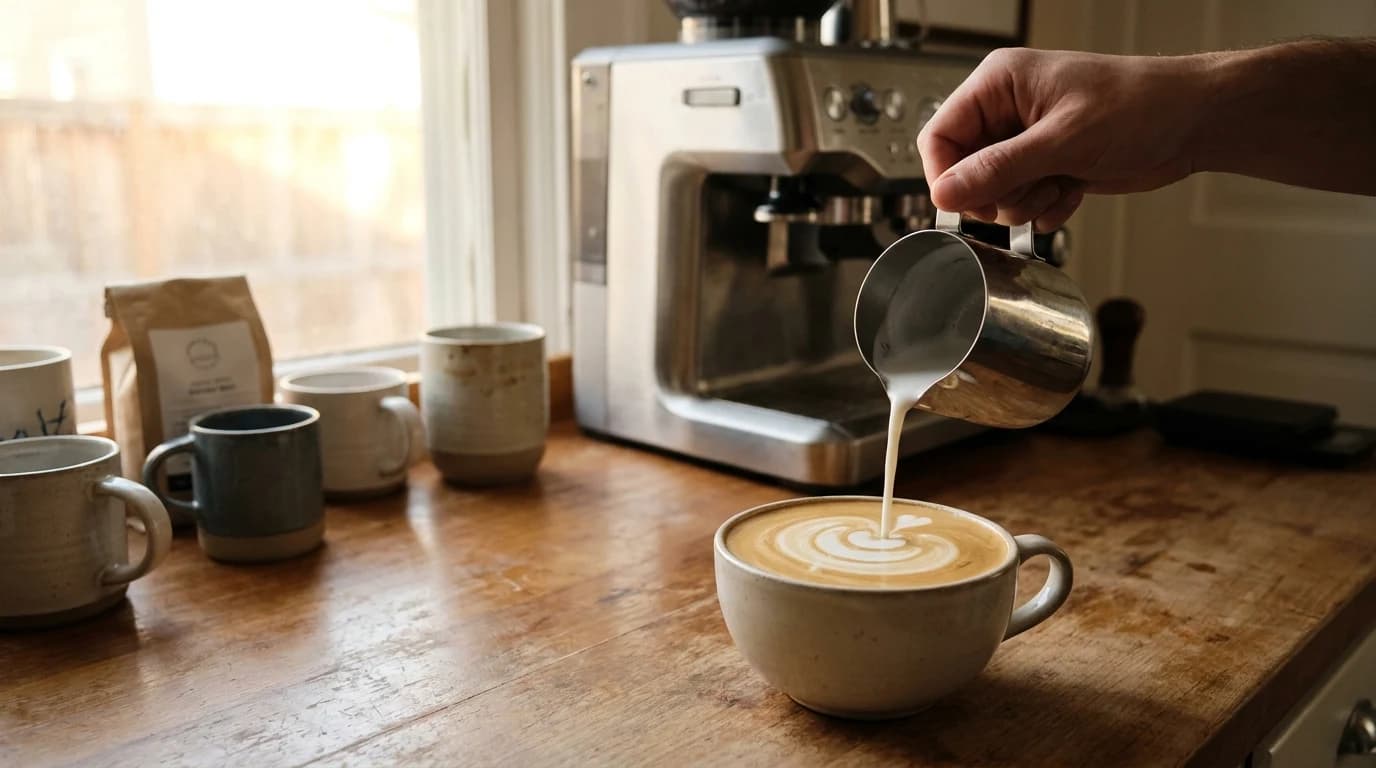
Brew a concentrated base (a double espresso, or an espresso-style AeroPress shot), then heat and aerate milk until it is glossy and roughly 140 to 145°F. Tap and swirl the milk, pour it into the coffee from high then close, and finish with about half an inch of foam. A steam wand gives the smoothest microfoam; a frother, French press, whisk or shaken jar gives a lighter, airier foam that still makes a good latte.
Key takeaways
- A latte is espresso plus steamed milk with a thin layer of microfoam; Breville's recipe aims for about half an inch of foam on top.
- The coffee base has to be concentrated. The SCA definition of espresso is 7 to 9 g of coffee to a 25 to 35 ml drink; ordinary French press coffee runs about 1:15, so it tastes like milky coffee, not a latte.
- Breville's two guides give 140 to 150°F and 140 to 145°F for dairy milk. Stopping near 145°F satisfies both, and above that Breville says milk burns and the foam breaks down.
- For non-dairy milk, Breville advises staying under about 130°F so the milk does not separate or curdle.
- Only a steam wand heats and aerates in one step. Handheld frothers aerate without heat, so warm the milk first; the French press, whisk and jar methods all aim to double the milk's volume.
- Espresso plus automatic milk8.5BrewSift ScoreExcellent~$499.95Buy on AmazonRead review
- Espresso with a manual steam wand8.0BrewSift ScoreExcellent~$299.95Buy on AmazonRead review
- Automatic jug that heats and froths8.5BrewSift ScoreExcellent~$89.99Buy on AmazonRead review
- Budget handheld frother8.5BrewSift ScoreExcellent~$13.99Buy on AmazonRead review
- Premium handheld wand8.2BrewSift ScoreExcellent
Prices are approximate and change often. BrewSift earns a commission on qualifying purchases, at no extra cost to you.
To make a latte at home, brew a small, concentrated coffee base, then heat and aerate milk until it is glossy and about 145°F, and pour it in with a thin cap of foam. You do not need an espresso machine for either half. You do need to treat them as two separate jobs, because the fixes for a weak latte and a bubbly one have nothing to do with each other.
The short version: concentrated coffee, milk stopped near 145°F, tap and swirl, pour high then low, about half an inch of foam.
Job one: a base that survives the milk
Breville's latte recipe describes the drink as steamed milk poured over espresso with a thin layer of microfoam, and it starts from a double shot. The milk outweighs the coffee several times over, so the base has to be strong. Here is how the home options compare on concentration:
| Base | Coffee to water | What you get |
|---|---|---|
| Espresso | 7–9 g to a 25–35 ml drink (SCA definition) | The real thing: dense, syrupy, built for milk |
| AeroPress, espresso-style | 18 g to 100 g water, with the Flow Control cap | A strong concentrate, about 1:5.6 (calculated) |
| French press or drip | Stumptown uses 56 g to 850 g, about 1:15 | Good coffee, but milk drowns it |
The SCA figures come via AeroPress's own espresso explainer, which is refreshingly blunt: only an espresso machine does what an espresso machine does. Its iced latte recipe still uses an espresso-style AeroPress shot as the base, and that is the best no-machine option. A moka pot is the other; if yours tastes harsh, the moka pot bitterness fixes apply before any milk goes in.
Full-strength brewed coffee, at the roughly 1:15 of Stumptown's French press guide, is several times weaker. Add latte quantities of milk and you get a pleasant café au lait, not a latte.
- Own an espresso machine? Pull a double shot.
- Own an AeroPress? Use the espresso-style recipe above. See AeroPress vs French press if you are choosing.
- Only a drip machine or press? Brew at double strength and use less milk.
Job two: texture the milk
Breville's frother vs steamer guide draws the key line. A steam wand heats and aerates at once and makes a denser, smoother foam. Handheld frothers aerate without heat, and automatic jugs heat and froth with presets. The manual methods below come from Starbucks at Home's guides.
| Method | What you need | Key step | Foam you get | Best for |
|---|---|---|---|---|
| Steam wand | Espresso machine, pitcher | Stretch 5–10 s, then spin and heat to about 145°F | Dense, glossy microfoam | Latte art, café texture |
| Automatic jug | Electric frother | Pick a preset; it heats and froths | Consistent, lighter foam | Hands-off mornings |
| Handheld frother | Battery wand, warm milk | Heat the milk first; the wand only aerates | Airy foam | Cheapest upgrade |
| French press | A press, warm milk | Heat to 140°F, plunge 30 s until doubled | Thick, bubbly foam | Larger batches |
| Whisk | Whisk, tall mug | Heat to 140°F, whisk 15–20 s until doubled | Light foam | No gadgets at all |
| Mason jar | Jar with lid, microwave | Half full, shake 20–30 s, lid off, microwave 30–45 s | Loose foam | Emergencies |
Sources: press, whisk and jar steps; wand steps from Breville.
Every method except the wand leaves bigger bubbles, so the tap-and-swirl step below matters more, not less. If you already brew with a press, the French press guide covers the vessel; just rinse it well between coffee and milk.
Where to stop the thermometer
Breville publishes two slightly different numbers. The latte recipe says about 140 to 150°F (60 to 65°C). Its milk steaming guide narrows the ideal to 140 to 145°F and warns that above 145°F the milk burns, the foam breaks down and a sulfurous, bitter taste appears. Too cool, around 86 to 104°F, and the bubbles come out large and uneven.
Stop at about 145°F: the one number both Breville guides agree on. No thermometer? Stop when you can only touch the jug for a moment.
The milk itself changes the target. Breville recommends high-protein milk, since proteins wrap the air bubbles and hold their shape:
- Dairy: 140 to 145°F.
- Soy: similar protein, steams about twice as fast, tolerates up to 150°F.
- Almond: thinner, needs longer stretching and less heat, around 131°F.
- Any non-dairy: Breville's recipe says stay under about 130°F to avoid separating or curdling.
Putting the latte together
- Start with cold milk. Breville fills the jug to the bottom of the spout.
- Make the base straight into a wide cup, so it is ready when the milk is.
- Texture the milk by your method, stopping near 145°F.
- Tap the jug on the counter to pop big bubbles, then swirl until the surface looks glossy.
- Pour from high to blend the milk into the coffee, then bring the jug close to finish.
- Aim for about half an inch of foam. More than that and you are drifting into cappuccino territory.
On size, a latte is roughly one part espresso to three or four parts milk in an 8 to 12 oz cup. Scale the milk to your cup, not the other way round.
What is worth buying
- You want the real drink and room for a machine: the Breville Bambino Plus steams milk automatically, with three temperatures and three texture levels, per Breville. The Breville Bambino has a manual wand you steer yourself.
- No espresso machine, want easy milk: an automatic jug such as the Maestri House frother heats and froths in one go.
- Smallest spend: a handheld wand like the Zulay frother or the Subminimal NanoFoamer, paired with milk warmed on the stove.
Deciding between a manual and a fully automatic machine is its own question; super-automatic vs semi-automatic and pod machine vs espresso machine cover it, and the home coffee setup guide shows where milk gear fits.
Gear for a home latte
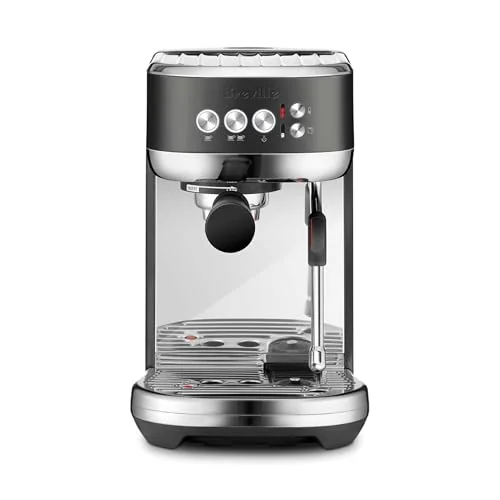
Bambino Plus
The easiest path to genuinely good espresso and hands-free milk in a tiny footprint.
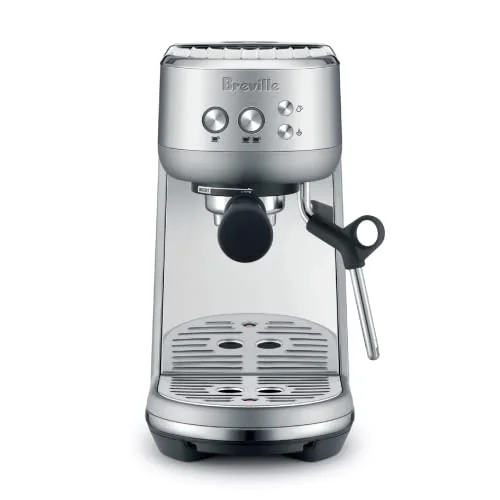
Bambino
The Bambino Plus's cheaper sibling — same fast heat-up and tiny footprint, with a manual steam wand.
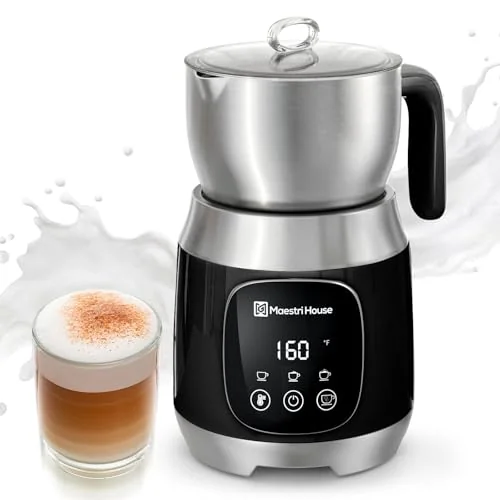
Automatic Milk Frother & Steamer
A one-touch jug that makes hot or cold foam with a dishwasher-safe, induction-heated carafe — a tidy Aeroccino rival.
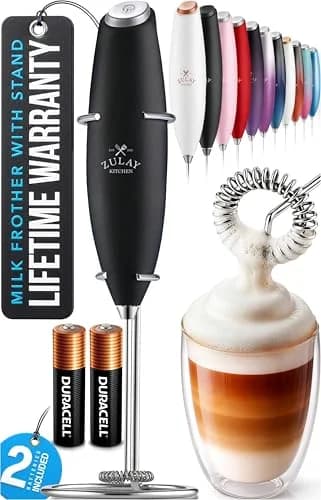
Handheld Milk Frother
A battery whisk that froths milk in seconds for almost nothing — the cheapest way to top a latte.
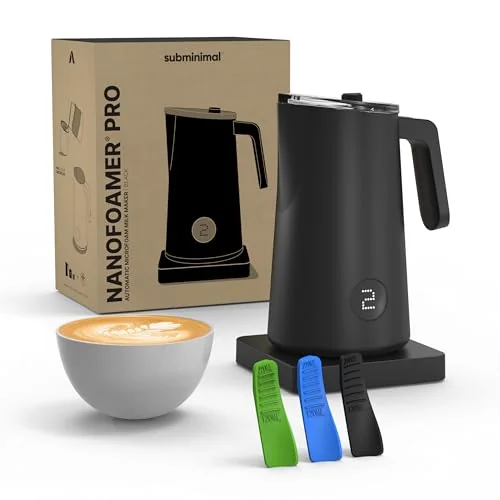
NanoFoamer V2
A handheld wand that makes genuine latte-art microfoam — if you bring the technique.
BrewSift earns a commission on qualifying purchases made through these links, at no extra cost to you. Prices shown were checked on publication and change often.
FAQ
Can you make a latte without an espresso machine?
Yes, as long as the coffee is concentrated. AeroPress publishes an espresso-style recipe of 18 g of fine coffee to 100 g of water with its Flow Control cap, and a moka pot also makes a strong stovetop base. AeroPress itself says only an espresso machine does what an espresso machine does, so expect a close cousin rather than a café copy.
What temperature should milk be for a latte?
Breville's latte recipe says about 140 to 150°F (60 to 65°C), and its steaming guide puts the ideal at 140 to 145°F, warning that milk burns above 145°F. Aim for about 145°F. Without a thermometer, stop when the jug is too hot to hold for more than a moment.
How much milk goes in a latte?
Breville's recipe uses a double shot and steams cold milk poured into the jug up to the bottom of the spout. A latte is mostly milk: roughly one part espresso to three or four parts milk, served in an 8 to 12 oz cup, with about half an inch of foam.
Why is my homemade latte foam big and bubbly?
Usually too much air for too long. On a steam wand, Breville limits the stretching phase to about 5 to 10 seconds, then pushes the tip deeper to spin and heat the milk. With any method, tap the jug on the counter and swirl until the surface looks glossy before pouring.
What milk froths best for a latte?
Breville recommends high-protein milk, because milk proteins surround the air bubbles and hold their shape. Soy steams fast and tolerates up to about 150°F; almond milk needs more stretching and less heat, around 131°F.
Sources
- Breville — Latte recipe (double shot, 140–150°F / 60–65°C, non-dairy under 130°F, about ½ inch of microfoam)
- Breville — How to steam milk: a step-by-step guide (5–10 second stretch, about 145°F, burning above 145°F, milk types)
- Breville — Milk frother vs. steamer: a home barista's guide (handheld frothers aerate without heat; steam makes denser foam)
- AeroPress — How to make espresso-style coffee with your AeroPress (quotes the SCA espresso definition)
- AeroPress — Brown Sugar Vanilla Iced Latte (espresso-style base: 18 g coffee, 100 g water, Flow Control cap)
- Stumptown Coffee Roasters — Brew Guide: French Press (56 g coffee to 850 g water)
- Starbucks at Home — How to froth milk with a coffee press (140°F, plunge 30 seconds)
- Starbucks at Home — How to froth milk with a whisk (140°F, whisk 15–20 seconds)
- Starbucks at Home — How to froth milk with a Mason jar (shake 20–30 seconds, microwave 30–45 seconds)
- Breville — Bambino Plus product page (automatic milk, 3 temperatures, 3 texture levels)