AeroPress Original vs Bodum Chambord French Press
Short answer: For one person, the AeroPress is the better brewer; for two or more mugs of full-bodied coffee, the French press is. Both are cheap immersion brewers, and the filter decides the cup. The AeroPress presses through a paper micro-filter for a clean, low-sediment cup, and AeroPress rates the Original at 10 oz, one or two cups, or up to three espresso-style shots. The Bodum Chambord steeps coarse grounds for about four minutes behind a stainless mesh that lets the oils through for a heavier body, and Bodum rates the 8-cup at 34 oz.
Updated
Part of our guide to the best manual brewers.
Head to headHighest overall score: AeroPress Original (8.9 vs 8.4) — but pick by how you brew.
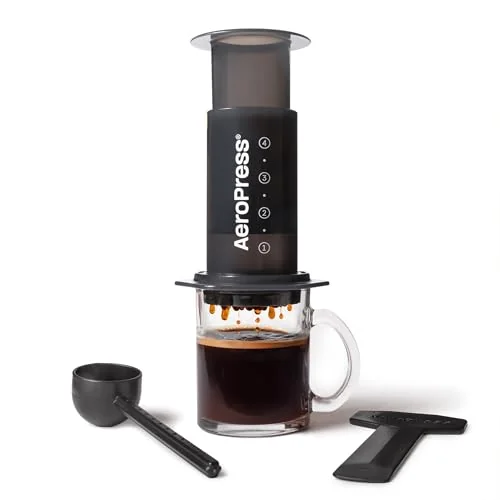 | 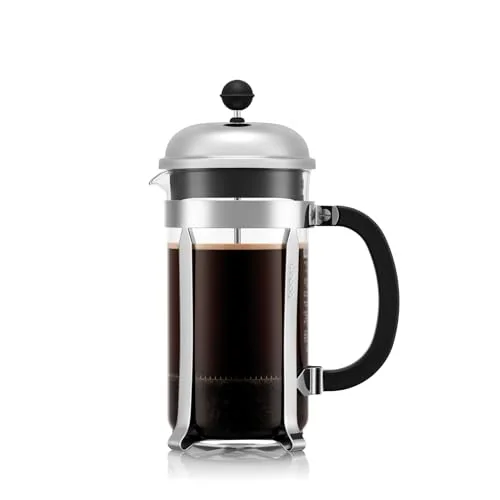 | |
|---|---|---|
| Score | 8.9/ 10 Higher | 8.4/ 10 |
| Price | $29.96approx.Checked 2026-10-09 | $39.69approx.Checked 2026-10-09 |
| Get it for | one person, one cup, cleanest cup, fastest cleanup, travel and durability | serving more than one, full body, no paper |
| Method | Immersion + press | Immersion (press) |
| Brew time | ~1 min | 4 min (Bodum) |
| Capacity | 10 oz, 1–2 cups (AeroPress) | 8 cups, 34 oz / 1.0 L (Bodum) |
| Grind | Medium-fine (AeroPress recipe) | Coarse |
| AmazonFull review of AeroPress Original | AmazonFull review of Bodum Chambord French Press |
Prices are approximate; use the listing for the current offer.
Approximate — verify the latest price
BrewSift earns a commission on some purchases. It never changes our scores. Why you can trust us
Approximate — verify the latest price
BrewSift earns a commission on some purchases. It never changes our scores. Why you can trust us
AeroPress Original vs Bodum Chambord French Press: which wins for you
AeroPress rates the Original at 10 oz, one or two cups, or up to three espresso-style shots: sized for a single drinker.
Bodum rates the 8-cup Chambord at 34 oz (1 litre), several mugs from one brew, while the AeroPress makes one cup (or a concentrate) per press.
The paper micro-filter traps oils and fines for a clean, low-sediment cup; the French press's metal mesh lets both through.
AeroPress's own method ends with the spent coffee puck popping out of the chamber, then a rinse of the filter cap and seal. The French press leaves wet grounds to scoop out of the carafe.
The stainless mesh keeps the oils for a heavier, richer body and means no paper filters to buy.
AeroPress lists the Original at 7.75 oz with its scoop and stirrer; the Chambord's borosilicate glass carafe is the more fragile of the two.
AeroPress Original vs Bodum Chambord French Press: score by dimension
BrewSift sub-scores for manual. The longer bar wins each row; equal scores are both highlighted.
AeroPress Original vs Bodum Chambord French Press: specs side by side
AeroPress Original vs Bodum Chambord French Press: the bottom line
Count the cups. For one clean, low-sediment cup and the fastest cleanup, buy the AeroPress; it also travels. For two or more mugs of heavier, full-bodied coffee from one brew, buy the French press, and grind coarse. If you just want the stronger all-rounder, the AeroPress Original edges it on our overall score (8.9 vs 8.4).
More comparisons in manual brewers
Other matchups we have run side by side, same scoring, same spec sheet.
Common questions
Is AeroPress better than a French press?
For one person, usually yes; for a household, no. The AeroPress makes one clean, low-sediment cup through a paper filter, cleans up by popping out a puck of grounds, and packs for travel. The French press makes several mugs at once with a heavier, oilier body, because its stainless mesh lets oils and fines through. Bodum rates the 8-cup Chambord at 34 oz against 10 oz for the AeroPress Original, by AeroPress's own figure. Decide by how many cups you brew and whether you like a clean or a full-bodied cup.
Who should buy an AeroPress, and who a French press?
Buy the AeroPress if you mostly make one cup, want a clean cup with almost no sediment, dislike fussy cleanup, or travel. Buy the French press if you want a rich, full-bodied cup, regularly brew for two or more, take milk, and do not mind a messier cleanup and some sediment. If the budget allows both, they cover different mornings: an AeroPress for quick solo cups and trips, a French press for slow weekends and a table of people.
What grind do you need for an AeroPress vs a French press?
Coarse for the French press and medium-fine for the AeroPress. The National Coffee Association describes the French press grind as coarse, like rock salt, so fines don't slip through the metal mesh and turn the cup muddy and bitter. AeroPress's own signature recipe calls for a medium-fine grind, which it equates to settings 11 to 13 on a Baratza Encore. Because the AeroPress's paper filter catches fines, an uneven grind shows less in its cup, so a consistent burr grinder matters more for the French press.
What recipe does each one use?
AeroPress's signature recipe is 16 to 18 g of medium-fine coffee, water heated to 185°F (85°C) poured to the 4 mark on the chamber, a 3-second stir, a 30-second wait, then a gentle press until you hear a hiss. For a French press the National Coffee Association suggests a coarse grind, a ratio of 1:10 to 1:16 coffee to water by weight, water at about 93°C (around 200°F), and about four minutes of steeping. Bodum's Chambord instructions also say four minutes.
Does AeroPress or French press make stronger coffee?
Both can make strong coffee, but they get there differently. The French press steeps a large dose in a carafe for a heavy, full-bodied cup, while the AeroPress can brew up to three concentrated espresso-style shots you dilute to taste. For body, the French press feels stronger; for a punchy, adjustable concentrate, the AeroPress wins. Strength comes down to your ratio more than the device.
Which is easier for beginners, AeroPress or French press?
Both are forgiving, in different ways. The French press is the simplest routine: coarse grounds, hot water, wait four minutes, press. The AeroPress has a few more steps but takes about a minute to brew and cleans up in seconds by popping out the puck. If you want the least effort while brewing, start with the French press; if you want fast cleanup and travel-friendliness, start with the AeroPress.
Why is my French press coffee gritty or my AeroPress bitter?
Grit in a French press usually means the grind is too fine, or the bed was stirred up when pouring: go coarser and pour gently off the top. The National Coffee Association also advises serving or decanting right after you plunge, so the coffee stops brewing on the grounds. AeroPress bitterness usually means water that is too hot or a steep that runs too long; AeroPress's own recipe uses 185°F (85°C) water and a 30-second steep before pressing.
AeroPress Original
$29.96