Pod Machine vs Espresso Machine: What Capsules Can't Do
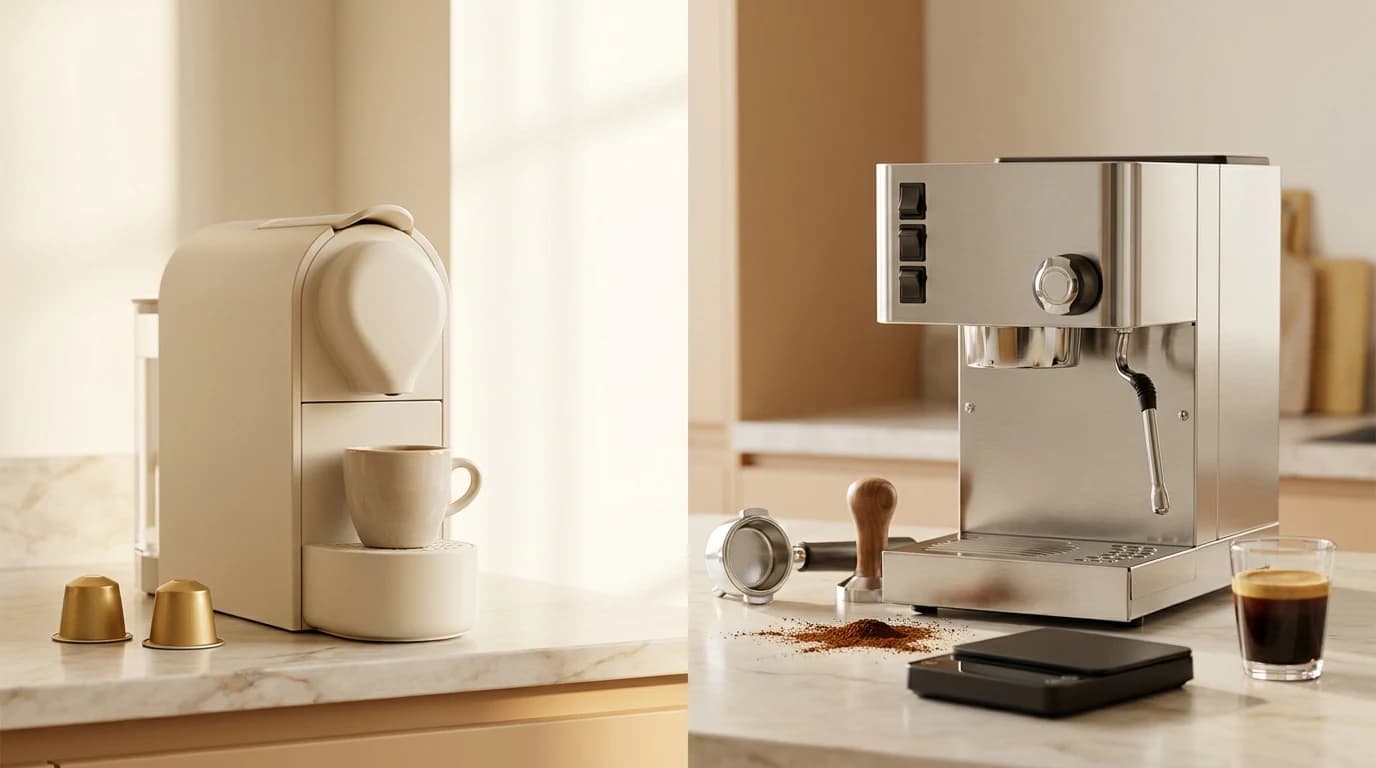
A capsule machine is sealed and pre-dosed, which genuinely solves staleness and cup-to-cup consistency, but it structurally caps extraction control: you cannot change the dose, the grind or the ratio, so you can never dial anything in. Buy the capsule machine if you want a reliable cup with no decisions. Buy the espresso machine, and budget a burr grinder alongside it, only if you actually intend to use the dials.
Key takeaways
- Capsules are sealed and pre-dosed, so they solve staleness and consistency better than most people manage with an open bag of beans.
- The trade is structural rather than a quality judgement: dose, grind and ratio are fixed at the factory, so a disappointing capsule cup cannot be improved.
- Espresso machines hand you Breville's 19 g in, 38 g out, 20 to 30 seconds recipe as a starting point and let you move every part of it.
- An espresso machine paired with pre-ground coffee underperforms a capsule machine; if a burr grinder does not fit the budget, capsules are the honest answer.
- Bean-to-cup super-automatics and reusable pod filters sit in the middle: fresh grinding with far fewer decisions than a portafilter.
The honest version of this comparison is not "pods are bad coffee." A sealed capsule solves two things home brewers genuinely struggle with, staleness and repeatability, and it solves them better than most people manage with a bag of beans. What a capsule cannot do is let you change anything. Every lever a barista reaches for to fix a disappointing cup is sealed shut inside it. That is the whole trade, and it is what should decide which machine ends up on your counter.
Espresso is a set of dials. A capsule has none.
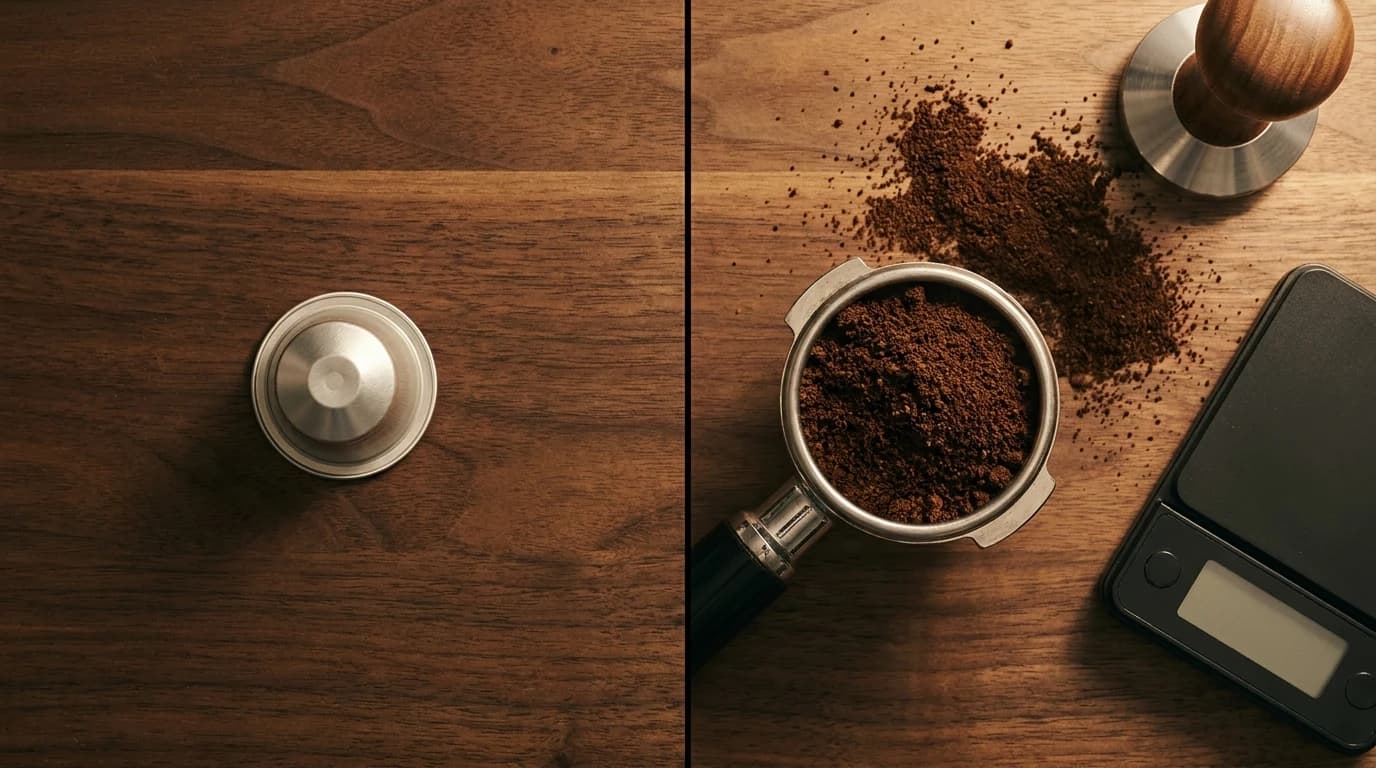
Espresso is a small number of variables you move until the cup tastes right. Breville's own starting recipe is a 19 g dose producing 38 g of liquid in 20 to 30 seconds. Runs fast and sour, grind finer. Chokes and turns harsh, grind coarser. Behind all of it sits pressure: 9 bar became the standard because early spring-lever machines averaged roughly that, and La Marzocco still calibrates every machine leaving its Florence factory to it.
A capsule arrives with the dose sealed in, the grind already chosen, and the water volume decided by the machine. Nespresso rates its Original-line pumps at 19 bar, but the pressure that actually meets the coffee is a product of the capsule's engineered geometry, not of anything you can reach.
The decision matrix
| Variable | Capsule machine | Espresso machine | What it actually controls |
|---|---|---|---|
| Dose | Sealed at the factory | You weigh it, around 19 g | Strength and body |
| Grind | Pre-ground, fixed | Adjusted per bag | Extraction, the master dial |
| Yield in the cup | Preset button sizes | Any ratio you like | Ristretto through lungo |
| Pressure | Capsule geometry plus pump | 9 bar, adjustable on some | Crema and mouthfeel |
| Freshness | Sealed at roast, effortless | Entirely your problem | The most common cause of dull coffee |
| Bean choice | The system's own catalogue | Every roaster on earth | Where the ceiling really sits |
| Time to first cup | About 30 seconds | 1 to 5 minutes with grinding | Whether the machine gets used |
The falsifiable test: name the last time you deliberately changed a grind setting to fix a cup. If you cannot, an espresso machine is selling you control you will never spend. If you can, a capsule machine will feel like driving with the steering column removed.
What the capsule genuinely gets right
Freshness is the strongest argument for capsules, and it is not marketing. Nespresso packs its coffee so that no oxygen reaches it before encapsulation, and states that the hermetically sealed aluminium capsule prevents oxidation in storage. Set that against what is actually on most counters, a half-open bag of pre-ground quietly losing its aromatics by the day, and the capsule is winning the comparison that really happens rather than the one on paper.
The friction argument
- No grinder to buy, which quietly removes the largest hidden cost in a real espresso setup
- Around thirty seconds from cold machine to full cup
- Nothing to purge, tamp, weigh or knock out afterwards
- The same cup on a rushed morning as on a slow one
If your realistic alternative is not brewing at all, or buying two cafe drinks a day, the Essenza Mini or the CitiZ wins on the only measure that counts: what you actually drink. Run your own numbers with the pod vs whole bean cost calculator before deciding on price alone, and browse the field on our pod machine guide.
What that convenience costs
What a sealed capsule fixes for you:
- Stale coffee, with no storage discipline required
- Dose and grind drift between cups
- Every decision before caffeine
What it removes permanently:
- Any way to make a mediocre cup better
- Roasters outside the system, including anything local
- A real strength control (a bigger button means more water through the same fixed dose, so weaker, not stronger)
- Milk texture beyond a bundled frother
Where the machine earns its counter space
Everything a capsule takes away is handed back, and it arrives with a bill attached: money, counter space and a learning curve. That is worth being precise about, because better coffee is not included in the box, only the possibility of it. Our espresso budget calculator prices the honest setup, machine plus grinder together, before you commit to either half.
- Ceiling. Fresh beans ground seconds before brewing are a different drink, and no capsule reaches them.
- Diagnosis. When a shot is wrong you can fix it. Our sour vs bitter guide only works on a machine where grind and dose move.
- Milk. A proper steam wand textures milk in a way an add-on frother does not.
- Cost per cup. Beans beat capsules per gram, and the gap widens with volume.
- Repairability. A Gaggia Classic Pro can be modified and rebuilt for a decade.
Four questions that settle it
- How many cups leave the machine each day? One or two, and convenience usually wins. Four or more, and beans win on both cost and tedium.
- A project or a product? The Barista Express and Bambino Plus are projects with training wheels (compared here). A Vertuo Plus or K-Elite is a product — and if the choice is between those two, our Vertuo Plus vs K-Elite comparison settles it.
- Is a grinder in the budget? An espresso machine paired with pre-ground coffee underperforms a capsule machine. Budget the burr grinder or buy capsules.
- Who else uses it? Shared kitchens punish anything that needs technique at 7am.
| If this is you | Buy | Because |
|---|---|---|
| One cup a day, no interest in fiddling | Capsule machine | The control you give up is control you would never use |
| You want lattes without learning to steam | Bambino Plus | Automatic milk texturing, real espresso underneath |
| You want to learn, one box, one budget | Barista Express | Grinder, dose control and manual wand in one purchase |
| Household of three, all different drinks | Magnifica Evo | Fresh grinding with one-touch operation |
| You enjoy the process and want a ceiling | Gaggia Classic Pro | 58 mm, moddable, repairable indefinitely |
Rule of thumb: skill you intend to acquire is not a feature. Buy for the mornings you will actually have, not the ones you picture having.
The middle ground people forget
Two options sit between the poles. Bean-to-cup super-automatics grind fresh and brew at a button, so you get freshness plus one meaningful dial, grind coarseness, instead of none. And most Keurig machines accept a reusable filter, which hands grind and dose back to you while keeping the workflow. Neither reaches a real espresso machine's ceiling, and both beat a sealed capsule on bean choice. If you have been stuck between the two poles for months, the indecision is itself the answer: you want fresh coffee and you do not want a hobby, so buy the middle.
Pick the failure mode you can live with. A capsule machine fails by never getting better. An espresso machine fails by never getting used.
Your next step
Decided which side you're on?
The machines, and who each one is for
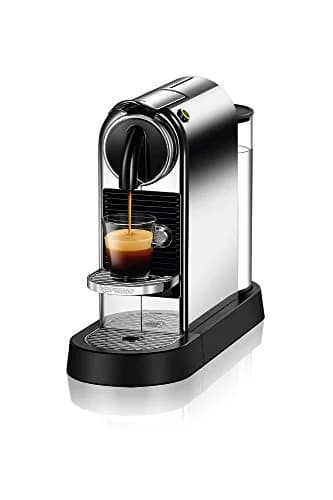
CitiZ
Original-line espresso with a thick crema and the widest third-party pod ecosystem.
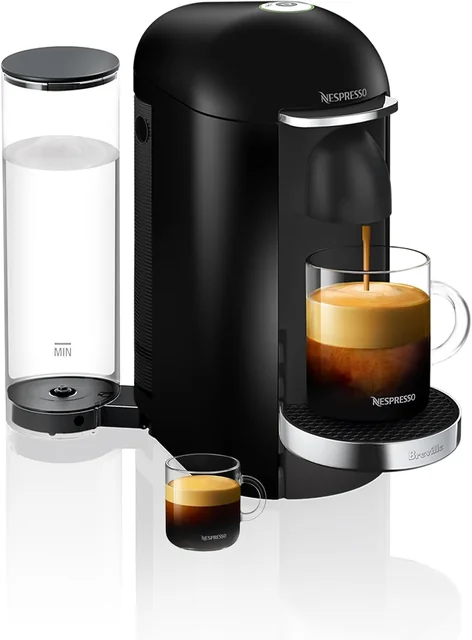
Vertuo Plus Deluxe
The pick for mug drinkers, not espresso: barcoded pods auto-brew everything up to a 14oz cup — priced into Vertuo's costlier capsule system.
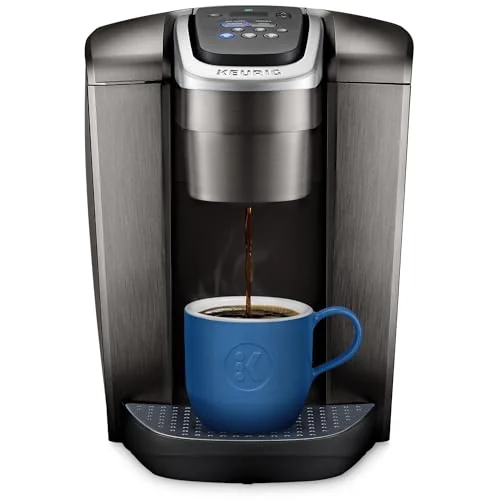
K-Elite
The premium K-cup machine: strong-brew mode, iced setting, big sizes, and a large reservoir.
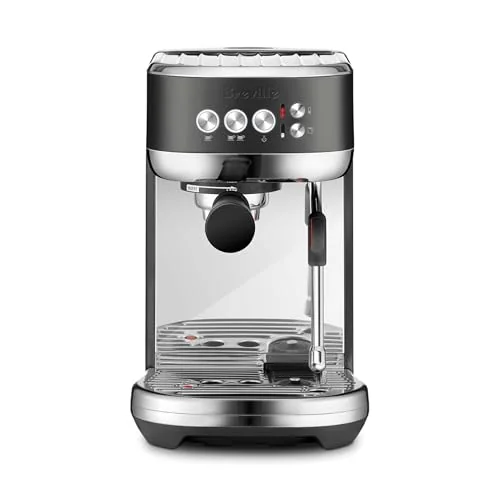
Bambino Plus
The easiest path to genuinely good espresso and hands-free milk in a tiny footprint.
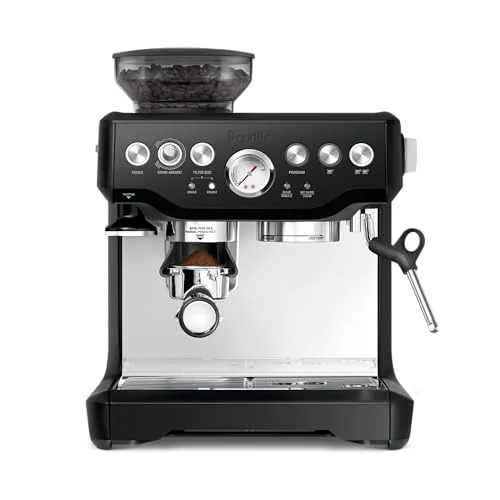
Barista Express
The classic all-in-one: built-in grinder, manual wand, everything you need to start in one box.
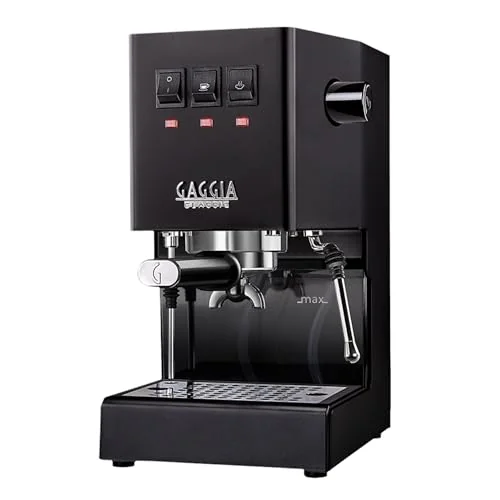
Classic Pro
A 58mm commercial-style machine that teaches real espresso and welcomes modifications.
BrewSift earns a commission on qualifying purchases made through these links, at no extra cost to you. Prices shown were checked on publication and change often.
FAQ
Is capsule coffee real espresso?
It is espresso-style. Nespresso rates its Original-line pumps at 19 bar and the shots come out with crema, but the dose, grind and water volume are all fixed by the capsule and the machine rather than set by you. Traditional espresso is defined as much by the variables a barista controls as by the pressure, and those are exactly what a capsule removes.
Does a capsule machine make worse coffee than an espresso machine?
Not automatically. A sealed capsule beats stale, badly stored pre-ground coffee, which is what plenty of home espresso machines are actually fed. What a capsule cannot do is reach the ceiling of fresh beans ground moments before brewing, and it cannot be corrected when the cup disappoints.
Do I really need a separate grinder for an espresso machine?
Yes, or a machine with a capable grinder built in. Grind is the main extraction control, and espresso needs it fine and consistent. An espresso machine running on supermarket pre-ground coffee gives you all of the work and none of the payoff, and a capsule machine will beat it. Budget the grinder as part of the machine, not as a later upgrade.
Can I use my own coffee in a pod machine?
Partly. Most Keurig machines accept a reusable filter that lets you load your own grounds, which restores the dose and grind controls a sealed capsule takes away. Refillable options exist for Nespresso Original too. You keep the simple workflow, but you also inherit the responsibility for freshness and grind.
What about bean-to-cup machines?
They are the genuine middle ground. A super-automatic grinds fresh beans and brews at the touch of a button, so you get freshness and bean choice for roughly the effort of a capsule machine. You still get only one meaningful dial, grind coarseness, so the ceiling stays below a portafilter machine paired with a good grinder.
What is the difference between a pod espresso machine and a regular espresso machine?
A pod machine arrives with the dose sealed in, the grind already chosen and the water volume decided by the button, so there is nothing left to adjust. A regular espresso machine hands you all three: you weigh the dose, grind to taste and choose the yield. The capsule wins on freshness and on time to first cup; the machine wins on the ceiling, and on being able to fix a cup that disappoints.
Sources
- Breville espresso recipe: a 19 g dose to 38 g out in 20 to 30 seconds
- La Marzocco Home on brew pressure: why 9 bar is the standard and how every machine is calibrated to it
- Nespresso CitiZ machine page (Nespresso US): 19-bar pump specification
- Nespresso on storing pods: hermetically sealed aluminium capsules and oxidation