Standalone frothers texture milk for lattes and cappuccinos without a steam wand. From simple hot-foam jugs to NanoFoamer-style microfoam wands.
Quick steer — Pick by how silky you need the foam: an automatic jug is hands-off and airy, a handheld wand makes better microfoam but asks for technique. Cleaning is what decides whether you keep using it.
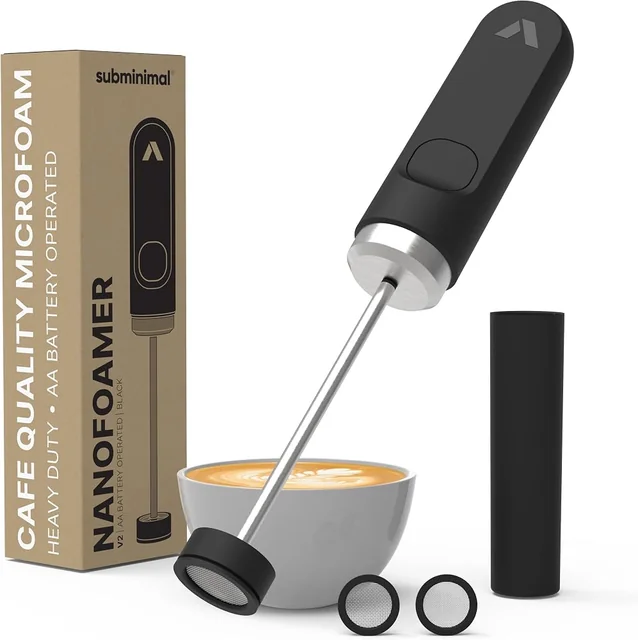
Top pick: Subminimal NanoFoamer V2 (8.2/10, Approx. $37). A handheld wand that makes genuine latte-art microfoam — if you bring the technique.
Skip this
A battery whisk bought in the hope it will make latte art
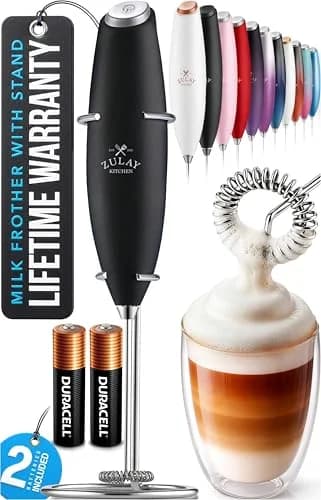
The spinning-whisk wands sold for a few dollars aerate milk into a cap of large bubbles and do not heat it. That is a genuine tool for topping a cappuccino, but microfoam is made by shearing bubbles down rather than whipping air in, which is the job Subminimal describes its NanoFoamer impeller and screens as doing. Buy the whisk knowing its ceiling, or buy the screened wand instead.
The BrewSift Score is a 0–10 weighted average of category-specific sub-scores, built from manufacturer specifications, published reviews and aggregated owner reports — not hands-on testing. In this category it weights foam quality 35%, ease of use 25% and versatility 15%, plus 2 smaller factors. How we score →
A handheld wand that makes genuine latte-art microfoam — if you bring the technique.
Interchangeable NanoScreens and a strong motor let you whip up tight, glossy microfoam good enough to pour latte art, all from a handheld wand and any jug. It rewards practice; beginners get there with a few tries, and the price is a fraction of a steam setup.
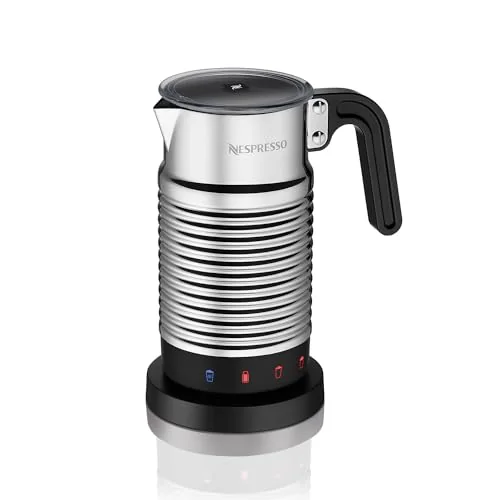
One-button hot or cold milk foam — the easy default for pod and home latte setups.
Pour milk, press a button, and get warm or cold foam at latte or cappuccino density. The foam is good rather than microfoam-silky, but the convenience and consistency make it the standard companion to a Nespresso or any non-steam setup.
The frother is usually not the reason your foam collapses — the milk is. Oatly states plainly that its Barista Edition carries 3% fat and is formulated to perform in hot drinks, which is why the same wand that turns a standard oat carton into a bubbly mess will pour properly with a barista one. Before spending on a better device, spend a few dollars on a different milk.
What owners actually report
r/espressor/Coffeer/baristar/BuyItForLife
Across r/espresso, r/Coffee and r/barista the standing advice is that a standalone frother gets bought for one of two quite different reasons, and buying for the wrong one is the usual disappointment. People who want a hands-off cappuccino are pointed at an Aeroccino-style heated jug, described as one-button, consistent and reliably airy rather than silky. People who want pourable milk for latte art are pointed at a screened handheld wand, with the caveat that it rewards technique and that heating the milk is on you. The other thing these threads return to constantly is that the milk decides more than the device: whole dairy is called the forgiving default, and barista-formulated oat is the plant milk owners say actually holds a foam, with standard cartons blamed for most of the posts that open with a frother apparently being broken. Cleaning is the third recurring theme, and it is the reason owners give for a frother quietly falling out of use rather than for returning it. Longevity is a separate axis, and r/BuyItForLife threads asking for a frother that will not die after a few months have come back to it for years. Cheap battery and rechargeable wands are the most common casualty: owners describe motors giving out within months, whisks that bend out of balance, and sealed rechargeable batteries that stop holding a charge, and the features they ask for next time are replaceable batteries, spare whisk heads and a stainless shaft. The Aeroccino divides these threads, with many owners reporting several years to a decade of daily use and a vocal minority reporting units that failed inside a year, while manual stainless plunger frothers get recommended as the one design with nothing electric left to fail.
Consistently praised
Aeroccino-style heated jugs — The default recommendation for people who want a cappuccino without a project: owners describe them as one-button, consistent and genuinely walk-away, and treat the airier foam as the trade they accepted.
Subminimal NanoFoamer wands — The pick for anyone chasing pourable milk. Subminimal's own description is that a patented impeller and interchangeable NanoScreens shear the bubbles down rather than simply stirring, and owners report the screens are what let them move between flat-white and latte densities.
Barista-formulated oat milk — Recommended more often than any device when a foam keeps collapsing. Oatly states its Barista Edition carries 3% fat and is formulated to work in hot drinks, and owners consistently report it foams where a standard carton will not.
Consistently warned about
Under-$15 spinning-whisk wands — Consistently described as fine for a cap of foam on an instant coffee and hopeless for microfoam. They also do not heat the milk, so a hot latte still needs a separate warming step you were probably not planning on.
Letting a non-stick jug dry dirty — The most repeated failure story in these threads is not a motor but a coating. Milk left to bake on comes off with scrubbing, and scrubbing is what wears away the non-stick surface that made the jug easy to clean in the first place.
Skim and standard plant milks for latte art — Owners report both make large, stiff bubbles that collapse quickly, and the fix that keeps getting recommended is changing the milk before changing the frother.
What we didn't pick
Popular options we looked at and passed on, with the specific reason each one fell short.
They are sized for a household texturing several drinks at once, and foam is at its best used immediately. For the one or two drinks a home setup actually pours, the extra capacity buys nothing and there is proportionally more jug to clean afterwards.
A separate steaming appliance costs roughly what an entry espresso machine with a wand costs, and that machine also pulls the shot. Anyone shopping in that band is better served by the espresso machines guide than by a device that solves half the problem for the same money.
Cordless wands with sealed, non-replaceable batteriesConsidered 2026-09
A whisk motor outlives its cell, and a sealed battery turns a cheap tool into a disposable one. Subminimal's positioning on the NanoFoamer V2 is the opposite — standard AA cells, so the power source is the part you replace rather than the whole device. Source.
The four frothers BrewSift ranks run $13.99 to $119, an 8.5x spread. Two of the four heat the milk and they are the two dearest; the handheld wands, at $13.99 and $37, leave heating the milk to you.
Automatic jug vs handheld wand
Automatic jugs like the Nespresso Aeroccino are one-button and hands-free — you pour milk, press, and walk away — but they tend to make airier, more meringue-like foam rather than tight microfoam. Handheld microfoam wands like the Subminimal NanoFoamer take a little technique and a steady hand, but produce the silky, paint-like milk that pours latte art. Choose the jug for convenience and cappuccino-style foam; choose the wand if pourable microfoam is the goal.
The cheapest option is a battery-powered spinning-whisk frother (the classic under-$15 wand). It aerates milk into a quick cap of foam and is fine for topping a cappuccino, but it can't make true microfoam and won't heat the milk. It's a genuinely useful starter tool; just know its ceiling. If you're chasing café-quality texture, step up to a dedicated microfoam wand or an automatic jug rather than expecting the bargain whisk to get there.
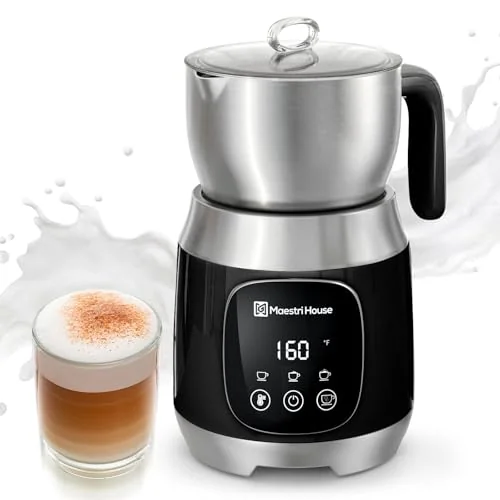
Many automatic frothers heat the milk as they froth, which is what you want for lattes and cappuccinos — but not all of them also do cold foam for iced drinks, which has become the feature people most often overlook. If you drink iced coffee or want the thick cold foam that tops iced lattes, check for an explicit cold-froth setting. A heat-only frother leaves you making cold foam by hand.
Milk choice changes what any frother can do
Foam quality is partly the machine and partly the milk. Whole dairy froths easily and holds structure thanks to its fat and protein; skim makes big stiff bubbles; and plant milks vary a lot — barista-formulated oat and soy (with added stabilizers) foam far better than standard cartons. If your froth keeps collapsing, try a barista-edition milk before blaming the device.
Cleaning is the quiet dealbreaker
Milk residue bakes on fast and sours, so how a frother cleans decides whether you keep using it. Non-stick automatic jugs wipe out but the coating can wear over time; stainless pitchers used with a handheld wand are more durable and often dishwasher-safe. Rinse any frother immediately after use — the difference between a two-minute habit and a crusty, smelly jug is whether you clean it warm or let it dry.
Handheld milk frothers: which kind to buy, and which kind lasts
A handheld milk frother is the cheapest way into café-style milk, and the category splits into three designs that behave very differently. The first is the battery spinning whisk, like the Zulay at about $14: a wire whisk on a motor that whips a quick cap of foam in seconds and is just as useful for matcha. It cannot make microfoam. The second is the rechargeable version of the same whisk, charged by USB; it saves on batteries, but when the sealed battery stops holding a charge the whole wand is finished. The third is the screened microfoam wand, like the Subminimal NanoFoamer V2 at about $37, which runs on two AA cells and pushes the milk through a fine screen to make pourable, glossy milk for latte art. None of the three heats the milk, so warm it first for a hot drink, or froth it cold for iced coffee. Durability is where handheld frothers differ most, and it is the thing owners complain about. Look for replaceable batteries rather than a sealed cell, a stainless shaft, spare whisks or screens, and a head you can rinse under the tap. Subminimal lists a replaceable impeller and a stainless shaft on the V2, although Amazon's summary of owner reviews for that listing still flags reports of the plastic impeller breaking and batteries running down quickly. Whatever you buy, run the whisk in hot water for a few seconds after every use, which is the cleaning step Zulay itself recommends and the habit that keeps milk from souring inside the head.
It depends on the foam you want. For quick foam on a cappuccino, hot chocolate or matcha, a battery whisk like the Zulay does the job for about $15. For pourable microfoam you can pour latte art with, the Subminimal NanoFoamer V2, at about $37, pushes milk through interchangeable fine screens instead of just whipping air in. Neither heats the milk. If you want the milk heated and frothed at one button, you want an automatic jug such as the Maestri House or the Nespresso Aeroccino rather than a handheld wand.
How long do milk frothers last?
Owner reports vary more by design than by brand. Cheap battery and rechargeable wands are the ones most often reported dying within months, usually the motor, a bent whisk or a sealed battery that stops charging. Automatic jugs like the Aeroccino get many reports of years of daily use and a minority of early failures. Manual stainless plunger frothers are the long-lasting option because nothing electric can fail. Replaceable batteries, spare whisks and rinsing the head right after each use are what stretch a handheld's life.
Can a milk frother replace a steam wand?
For foam texture on lattes and cappuccinos, a good frother gets close — a microfoam wand like the NanoFoamer can produce pourable, latte-art-grade milk. What it can't replicate is the espresso itself; a steam wand is attached to a machine that also pulls shots, while a standalone frother only handles the milk. If you already make espresso another way (moka pot, AeroPress, pods) and just want café milk, a frother is a legitimate substitute for the wand you don't have.
Handheld vs automatic frother — which is better?
Automatic jugs (Aeroccino-style) win on convenience: one button, hands-free, and they heat the milk, but the foam skews airy. Handheld wands win on quality: with practice they make tighter, silkier microfoam that pours art, but you hold and guide them and often heat the milk separately. Pick automatic if you value walk-away simplicity and cappuccino foam; pick handheld if you want the best possible texture and don't mind the technique.
What milk froths best?
Whole dairy milk is the most forgiving — its fat and protein build stable, creamy foam with almost any frother. Skim froths into stiffer, larger bubbles that collapse faster. Among plant milks, barista-formulated oat and soy are far better than standard versions because added stabilizers help them hold structure; regular almond and oat cartons often foam thinly. If your foam won't hold, switching to whole or a barista-edition milk usually fixes it faster than switching devices.
Do I need to heat the milk before frothing?
It depends on the frother. Automatic heated jugs froth and warm the milk in one step, so you start with cold milk straight from the fridge. Handheld wands and battery whisks only aerate — they don't heat — so for a hot latte you warm the milk first (microwave or stovetop, ideally to around 140–150°F, not boiling) and then froth. For cold foam on iced drinks, you skip heating entirely and froth it cold.
Why won't my frother make thick foam?
Usually it's the milk or the fill level, not the machine. Low-fat and non-barista plant milks struggle to hold foam; try whole dairy or a barista-edition milk. Overfilling is the other common cause — froth needs headroom to expand, so most jugs have a max-fill line for foam that's below the heating line. Finally, cold, fresh milk froths better than warm or older milk, and a residue-fouled whisk aerates poorly, so keep the device clean.