Turkish Coffee Not Foaming? Fix the Gas, Not the Heat
Turkish coffee foam is carbon dioxide left over from roasting, held up by unfiltered grounds. The powder-fine grind the method requires is also the grind that loses the most gas at the grinder, so freshness matters more here than in any other brew method. Fix the coffee first: a fresh pack or a fresh grind. Then keep the heat low and pull the pot when the foam reaches the neck, before it boils.
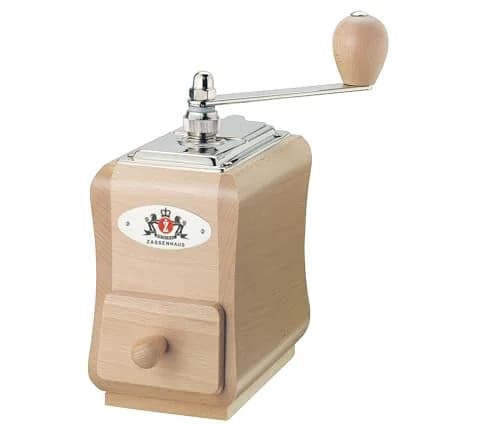
Turkish Coffee Mill
The foam is carbon dioxide, and the powder-fine grind Turkish coffee needs is where most of that gas escapes. Grinding immediately before you brew is the fix with the most leverage in this post — no cezve can put gas back into coffee that has already spent it.
- Reaches true powder-fine grind
- Beautiful, lifetime-quality
- Adjustable
Price is approximate and changes often — check the listing.
Key takeaways
- The foam is carbon dioxide from roasting — the same gas that builds espresso crema — held in suspension by the unfiltered grounds.
- Measured CO2 loss during grinding rises with fineness: roughly 26–30% at coarse, 45–59% at espresso-fine. Turkish is finer still, so it is the most gas-expensive grind in coffee.
- If the bag has been open more than about two weeks, no amount of technique will build a thick foam. Test it by changing only the coffee.
- Heat is the second lever, not the first: low the whole way, and off the flame when the foam reaches the cezve's neck rather than when it boils.
Turkish coffee is the only everyday brew method where the foam is the verdict. A cezve that pours flat reads as a technique failure — heat too high, wrong pot, rushed the pull — so that is what almost every fix list goes after. Often the technique was fine. The coffee simply had no gas left to give.
Foam is a gas budget, not a technique
The tan dome that climbs a cezve is carbon dioxide. Roasting creates it, a roasted bean holds part of it for weeks, and it comes back out as the brew warms. It is the same gas that builds crema on an espresso shot: the gravimetric degassing work by Smrke and colleagues at ZHAW puts trapped CO2 at roughly 1–2% of the weight of freshly roasted coffee, and describes it releasing into the gas phase during extraction, where it forms the crema.
What holds those bubbles up is everything else in the pot. Turkish coffee is unfiltered, so the powder stays suspended and the liquid is thick enough that a new bubble does not pop the instant it arrives. That combination is why a cezve foams and a French press never does.
Rule of thumb: No gas, no foam. Heat, pot and pour only decide how much of the gas you get to keep.
Where the gas actually goes
Grinding is the most violent thing that ever happens to a bean's gas reserve, and the finer you grind the more of it leaves at that moment. Measurements by Wang and colleagues, collected in that same paper, put the loss during grinding at:
| Grind | CO2 lost during grinding | What that leaves you |
|---|---|---|
| Coarse (French press) | about 26–30% | plenty in reserve, but no immersion method uses it |
| Medium (drip) | about 33–38% | irrelevant to foam either way |
| Fine (espresso) | about 45–59% | crema already lives on what survives |
| Turkish (finer than espresso) | not measured — finer than the finest grade tested | the most gas-expensive grind in coffee |
That last row is an extrapolation and worth flagging as one: the published measurements stop at espresso-fine. But the direction of the trend is not ambiguous, and Turkish sits past the end of it.
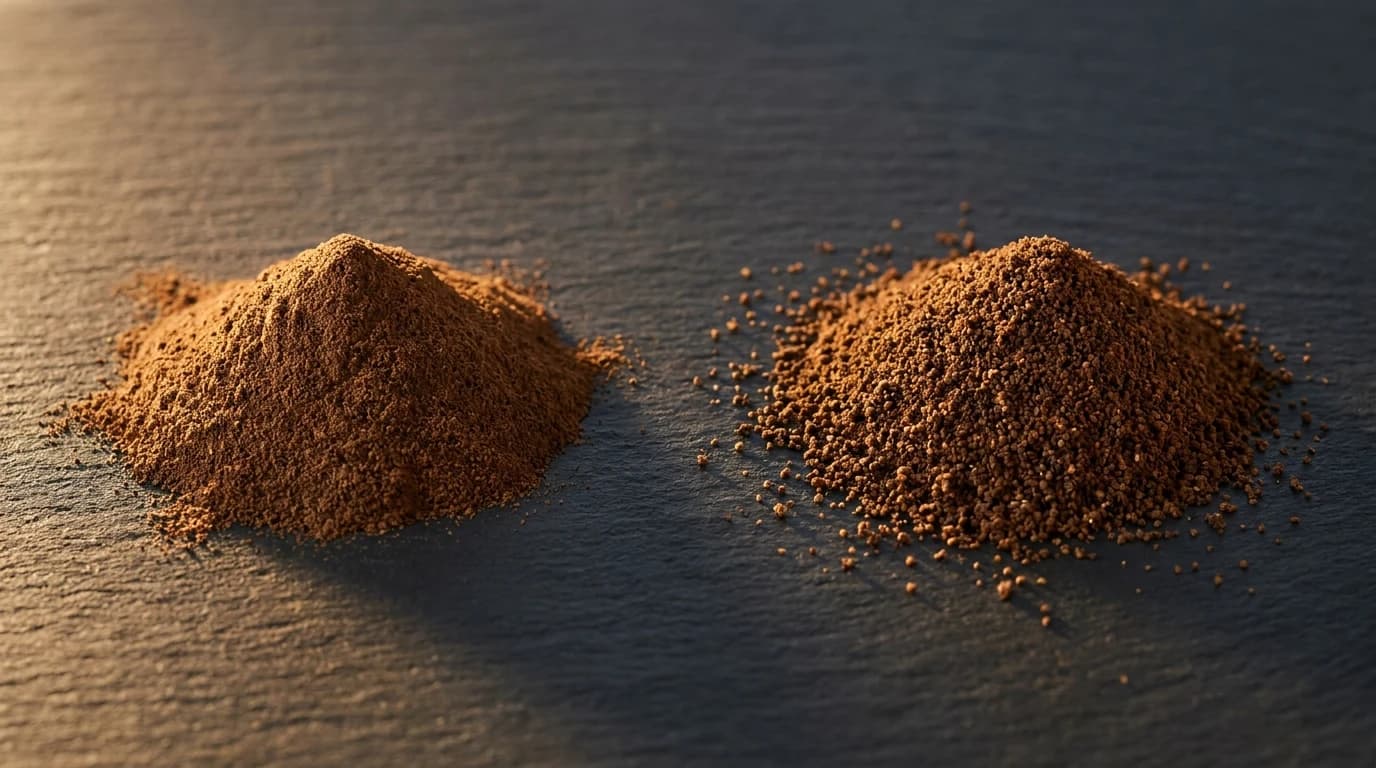
Which sets up the contradiction nobody mentions. The ultrafine grind is not optional — it is what keeps the coffee suspended and gives the drink its body. That same fineness is what vents the gas the foam is made of. Turkish is structurally the most freshness-hungry method there is, and that is a property of the drink rather than a mistake you are making.
Now look at how the coffee is normally bought. Pre-ground Turkish coffee was ground at a factory, which is where the expensive part of the budget was already spent. A sealed, valve-fitted pack preserves what survived that moment, which is genuinely useful — but the clock restarts the second it opens, and ground coffee has no reserve to draw on. Our freshness explainer and the coffee freshness calculator both cover the timeline in more detail.
Here is the falsifiable version, and it is worth actually running: if your bag has been open longer than about two weeks, nothing else in this article will give you a thick dome. Open a fresh pack, or grind immediately before brewing, change nothing else, and brew the same way. If the foam arrives, the technique was never the problem.
Rank the fixes by what they actually move
| What you see | Most likely cause | The fix |
|---|---|---|
| A thin skin that vanishes in seconds | the gas is spent | fresh pack, or grind right before brewing |
| No foam at all, gritty in the mouth | grind is too coarse | go finer than espresso, to flour |
| Foam builds well, then collapses at the end | it reached a rolling boil | pull it at the neck, not at the boil |
| It boils over the rim every time | the cezve is overfilled | fill only to the base of the neck |
| Good foam, weak cup | ratio | one demitasse of water per serving, one heaped spoon of coffee |
Heat: slow is not a refinement, it is the method
The sequence that produces foam is unusually rigid, and most of it is waiting:
- Cold water into the cezve — one demitasse cup per serving, filled no higher than the base of the narrow neck.
- A heaped teaspoon of powder-fine coffee per cup, and sugar now if you take it.
- Low heat. Stir once as it warms to wet the powder, then leave it entirely alone.
- Two to four minutes of nothing visible happening. This is correct, not a stall.
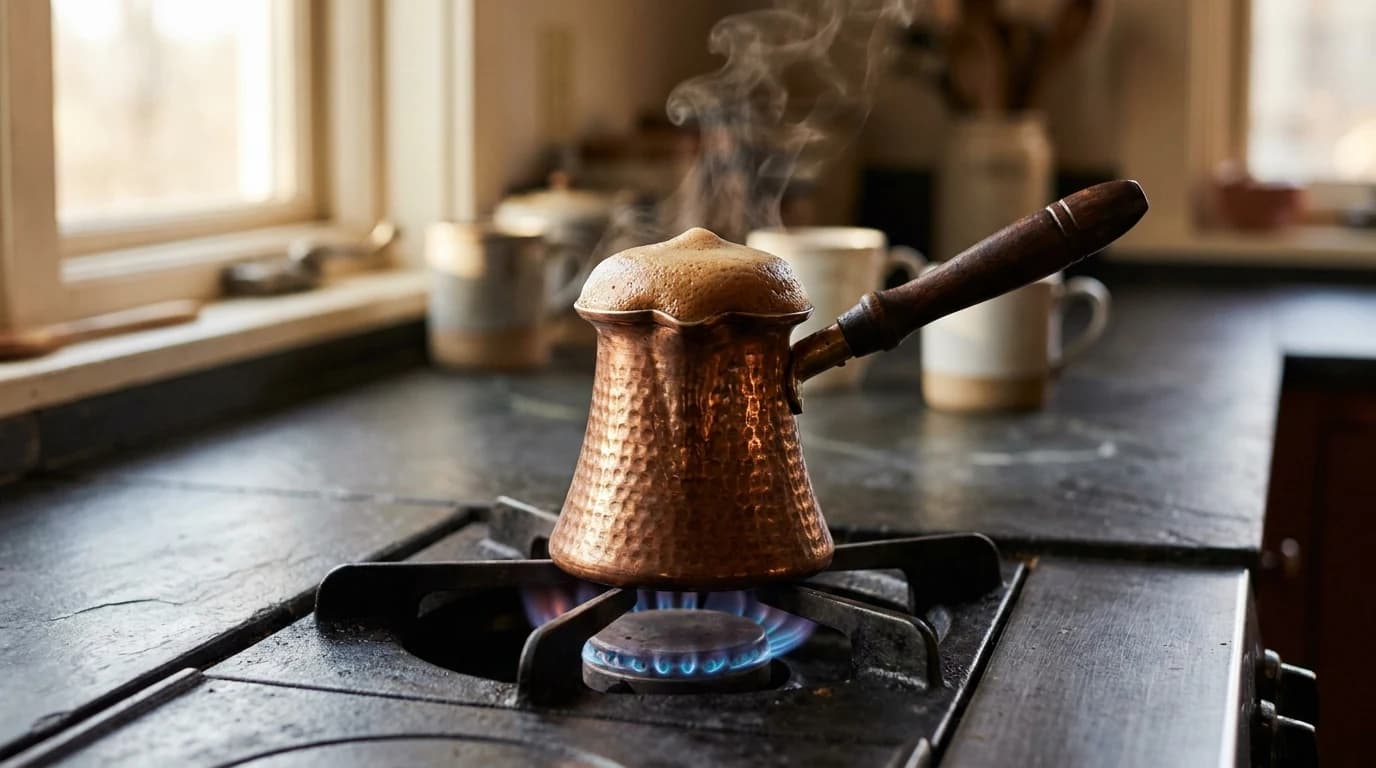
- A dark foam climbs the shoulder toward the neck. The pot comes off the heat before it breaks.
- Spoon foam into each cup, return the pot to the heat for a few seconds, pour.
The moment that matters: the cezve comes off when the foam reaches the neck — not when it starts to move, and definitely not when it breaks.
The one rule every source agrees on is never let it boil, and it is worth being honest that we could not trace that rule to a published measurement of Turkish coffee foam specifically. What is documented is the tradition itself. UNESCO's inscription of Turkish coffee culture describes the ground coffee, cold water and sugar going into the pot together and being brewed slowly to produce the desired foam. Slowness is written into the definition of the drink, not bolted on as an optimisation.
The sugar argument
A popular fix list says sugar suppresses foam, so add it after. The UNESCO description puts sugar in with the cold water at the start. Both cannot be a rule, and we have no measurement either way — so treat it as the cheapest variable you own. Move it, brew twice, decide for yourself. Just do not expect it to rescue a stale bag.
What moves the foam, and what does not
What actually works:
- A fresh pack, or grinding immediately before you brew
- A genuinely powder-fine grind — flour, not espresso
- Low heat all the way through, and pulling the pot at the neck
- Filling only to the base of the neck, so the foam has somewhere to climb
What people try that rarely works:
- Buying a better pot. Copper spreads heat more evenly, which helps the rise stay controlled, but no cezve can add gas that is no longer in the coffee
- Adding more coffee. That makes the cup thicker and stronger, not foamier — the ratio calculator is the sober version of this instinct
- Stirring during the rise, which shears the foam you just built
- A second heating after the foam has already broken. Returning the pot works before the collapse, not after
The grind that makes this drink is the same grind that spends its gas fastest. Buy smaller amounts more often, keep them sealed, and the foam mostly takes care of itself. If you are storing beans badly, the canister guide is the other half of this problem, and grind size by brew method explains where Turkish sits against everything else.
Your next step
The cezve and grinder that make foam easy.
The gear that changes the foam, in order of leverage
Turkish Coffee Mill
A traditional hand mill that grinds finer than espresso — the grind no electric grinder can reach for true Turkish coffee.
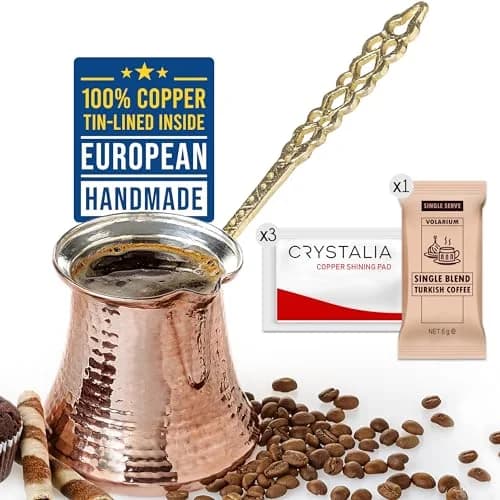
Hammered Copper Cezve
A hand-hammered copper cezve with a tin lining — the authentic way to brew a thick, foamy Turkish coffee.
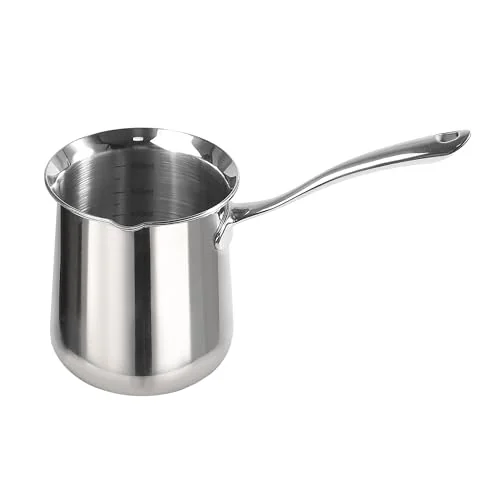
Tri-Ply Stainless Turkish Coffee Pot (20 oz)
A heavy tri-ply stainless cezve that holds 20 oz and that the listing rates dishwasher safe — practical over traditional.
BrewSift earns a commission on qualifying purchases made through these links, at no extra cost to you. Prices shown were checked on publication and change often.
FAQ
Can you get good foam from pre-ground Turkish coffee?
Yes, but the window is short. Coffee loses a large share of its trapped carbon dioxide at the moment it is ground, and the ultrafine Turkish grind loses the most of any grind size. A freshly opened, sealed pack still has usable gas and will foam. The same pack a month after opening usually will not, no matter how carefully you brew it. Buy smaller quantities more often rather than one large tin.
Does a copper cezve actually make more foam than stainless?
It makes the foam easier to control rather than larger. Copper conducts heat quickly and evenly, so the rise is gradual and you get more warning before it breaks, which is the moment that decides whether the foam survives. Stainless heats less evenly and can rush the last few seconds. Neither adds carbon dioxide to coffee that has already gone flat, so the pot is a second-order fix.
Why does my Turkish coffee foam collapse right at the end?
Almost always because it reached a full boil. The foam builds as the brew approaches boiling and breaks apart once it gets there, which is why the traditional method pulls the pot off the heat when the foam climbs toward the narrow neck. If it is collapsing on you, drop the heat and take it off earlier than feels right — the drink finishes building in the cup.
How fine does the grind actually need to be?
Finer than espresso, closer to flour or powdered sugar. Turkish coffee is boiled unfiltered and the grounds stay in the cup, so the particles have to be fine enough to stay suspended rather than settle into grit. Most home grinders, including espresso-capable ones, cannot reach it — a dedicated Turkish hand mill or pre-ground Turkish coffee is the practical route.
Why is my Turkish coffee not foaming?
Nine times out of ten the coffee has no gas left to give. The foam is carbon dioxide held in suspension by the unfiltered grounds, and the powder-fine grind Turkish coffee needs vents that gas faster than any other grind. If the pack has been open more than about two weeks, change only the coffee and brew exactly the same way. If the foam comes back, the technique was never the problem.
Why is my Turkish coffee gritty or full of sludge?
Turkish coffee is never filtered, so the grounds stay in the cup and settle. A thick layer of sediment at the bottom is normal, and you simply stop drinking before you reach it. Grit you can feel on the tongue is a different problem: it means the grind is too coarse. Turkish coffee wants a powder finer than espresso, closer to flour, which sinks instead of scratching.
Sources
- Smrke et al. (2018), Journal of Agricultural and Food Chemistry — Time-Resolved Gravimetric Method To Assess Degassing of Roasted Coffee (CO2 content, crema formation, and measured losses during grinding by grind size)
- UNESCO Intangible Cultural Heritage — Turkish coffee culture and tradition (fine grinding, cold water, and slow stovetop brewing to produce the foam)