Vacuum Sealing Coffee Beans: Sealer, Canister, or Freezer
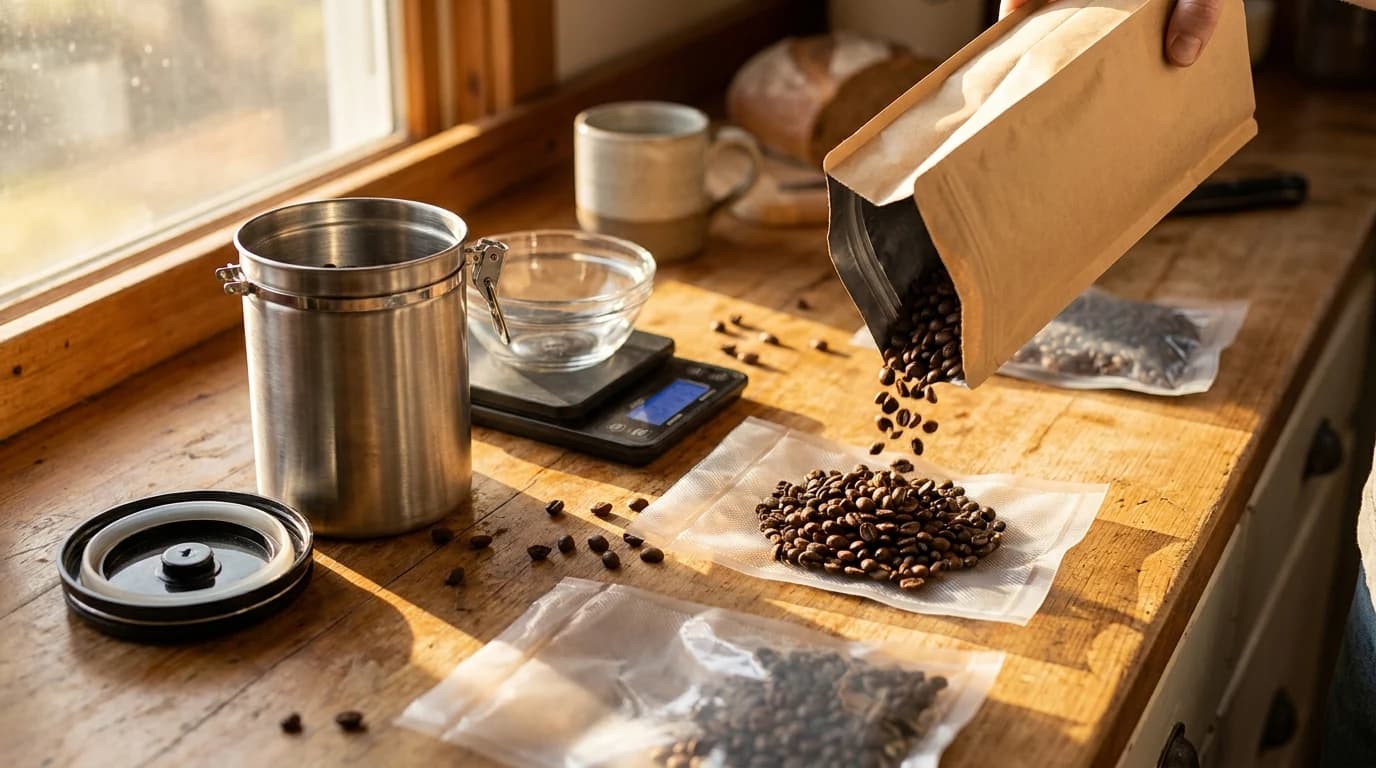
Yes, you can vacuum seal coffee beans, but not straight off the roaster. Whole beans keep venting carbon dioxide for about a month, so a hard vacuum in the first week strips the protective gas the coffee made for itself and pressurises the bag until the seal strains. Rest the beans at least a week, seal them in single-week portions, freeze the portions, and open each one exactly once. For a bag a week, a canister is enough and a sealer is overkill.
Key takeaways
- A vacuum removes oxygen, which drives the oxidation of aromatics and lipids. It does nothing about moisture, temperature swings, or aroma simply evaporating.
- Whole beans release carbon dioxide for roughly a month after roasting, so sealing in the first week both wastes that protective gas and puts pressure on the seal.
- Roasters use one-way valve bags for exactly this reason: CO2 gets out, air stays out. For the first week the bag your coffee came in beats anything you own.
- Buying one bag a week? A pump canister is the right tool. A bag sealer earns its price on bulk buys, portioned by the week and frozen.
Three tools get sold for the same job. A bag vacuum sealer pulls the air out of a plastic pouch and welds it shut. A pump canister lowers the pressure inside a steel tin. The freezer ignores air entirely and slows the chemistry instead. They are not interchangeable, and the move people reach for first — a hard vacuum on beans bought yesterday — is the one most likely to backfire.
The order of operations: rest the beans, seal in single-week portions, freeze the portions, and never open the same seal twice.
What a vacuum removes, and what it cannot touch
A vacuum does one thing: it takes oxygen out of the container. That is worth doing, because oxygen is what turns a bright coffee into cardboard, reacting with the volatile aromatics and the lipids in the bean to produce the flat, papery notes you recognise instantly. A shelf-life model developed at Clemson put a number on the tolerance, defining high, medium and low sensory rigour as an oxygen uptake of 150, 225 and 300 micrograms per gram of coffee. Coffee has an oxygen budget, and a good seal spends it slowly.
Three things a vacuum will not fix
- Moisture. A seal traps whatever humidity was in the bag when you closed it. It does not dry beans out, and it does nothing about the condensation that forms when a cold portion meets room air.
- Temperature cycling. A sealed bag left on a sunny counter or beside the stove still cooks. Storage at 5°C slowed the change in aldehydes, alcohols, pyrazines and furans compared with 20°C in a 2024 study in Foods, and the room-temperature samples drifted toward earthy and smoky notes.
- Evaporation. Aroma compounds are volatile by definition, and lowering the pressure above them is not the condition that persuades them to stay put. No container holds aroma in.
Freshly roasted beans are still making gas
Roasting leaves carbon dioxide trapped in the porous bean. The Coffee Excellence Center at ZHAW puts it at roughly one percent of the weight of freshly roasted coffee, released over about a month from whole beans. A doctoral study at the University of Guelph measured the curve: dark-roasted whole beans took more than 800 hours, about 33 days, to give up around 90 percent of their residual CO2, and a batch roasted lower and slower still held 42 percent back at the same point. Grinding short-circuits it — a fine grind lost 45 to 59 percent of its CO2 during grinding alone and finished degassing within roughly 50 hours.
That gas is not waste. It is a protective atmosphere the coffee builds for itself. The ZHAW group measured the headspace of unopened one-way-valve bags at about 70 percent CO2 and under 0.5 percent oxygen. Your beans arrive in a better seal than you will build on the counter.
Why a hard vacuum on fresh beans backfires
It also explains why a hard vacuum on days-old beans behaves badly. The Guelph thesis states the industrial version plainly: residual CO2 must be degassed adequately before packaging, without which the package will swell, straining the seals and potentially compromising structural integrity. Roasters do not answer this with a stronger vacuum. They answer it with a one-way valve that lets CO2 out and no air back in.
A timeline by roast date
So the sequence matters more than the equipment. Use the roast date, not the purchase date:
- Days 0 to 7. Leave the coffee in the roaster's valve bag, squeeze it down, roll it shut. It is already doing the job.
- Weeks 1 to 3. This is drinking coffee. A canister sized to the bag is enough, and the valve versus vacuum canister decision is the whole choice at this stage.
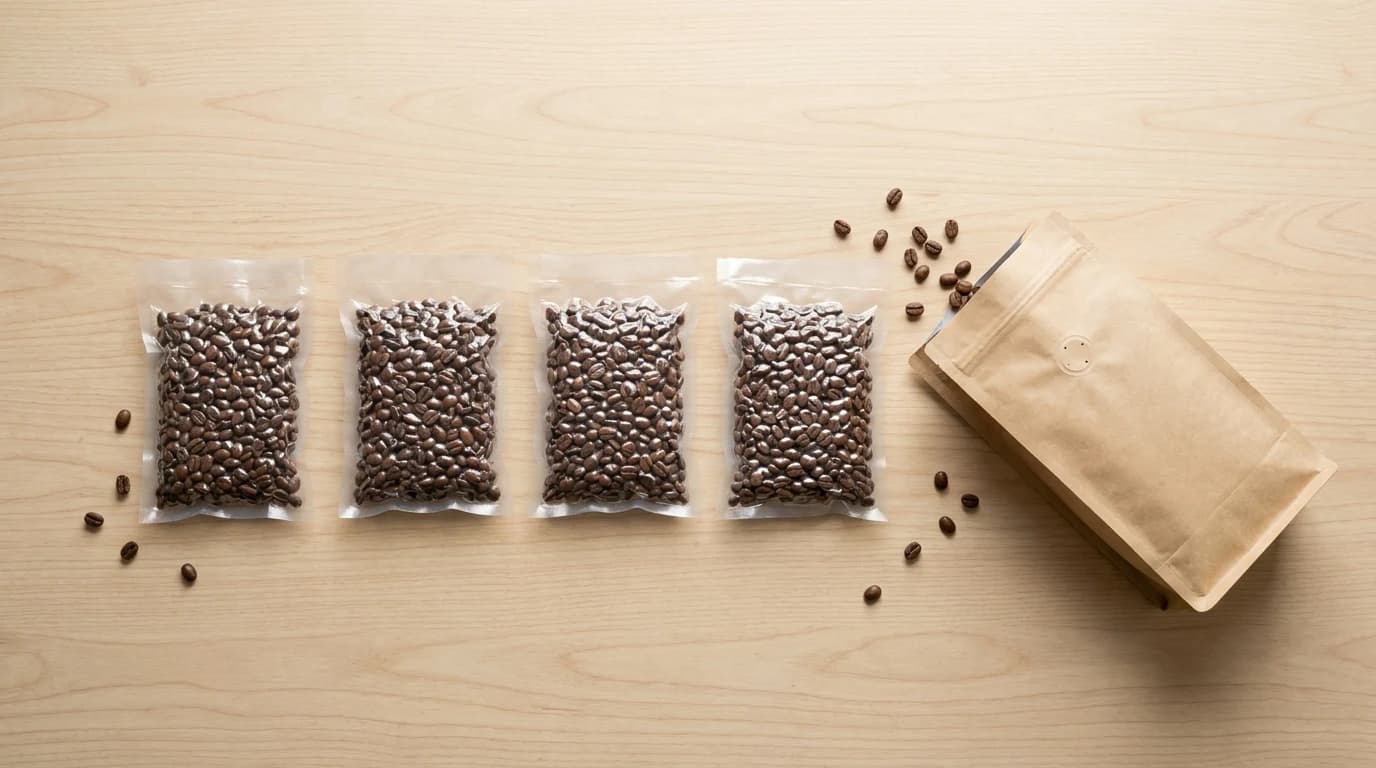
- Past three weeks, or more coffee than you can drink. Now sealing earns its place, and the sealed portions belong in the freezer.
Which method for which situation
| Situation | Best method | Why |
|---|---|---|
| One bag a week, recently roasted | The original valve bag, rolled down | The bag already holds ~70% CO2 and almost no oxygen |
| An open bag you will finish in 2 to 3 weeks | Canister matched to the bag size | Empty headspace is stored oxygen |
| Beans under a week off roast | Anything but a hard vacuum | CO2 is still venting and will strain the seal |
| A bulk sack or a subscription backlog | Bag sealer, single-week portions, frozen | Cold plus low oxygen, opened once |
| A portion you already opened | Canister at room temperature, drink it | Re-sealing and refreezing invites condensation |
| Pre-ground coffee | Buy less of it instead | It degasses and stales far too fast to store well |
Can you vacuum seal ground coffee?
You can, but it buys less. Per the Guelph measurements above, a fine grind loses much of its CO2 during grinding and finishes degassing within roughly 50 hours, so there is little protective gas left to keep. If you must store it, seal single-use portions and freeze them; better, buy smaller bags or grind per brew.
Is a bag sealer overkill?
For most coffee drinkers, yes. If you buy one 12 oz bag a week and finish it, you never reach the point where a sealer earns its keep: the coffee is gone before oxidation is the limiting factor, and a pump canister covers you. A sealer also consumes bags forever, while a canister is bought once.
The calculation flips if you buy in bulk or stock a roast you cannot get year-round, and it flips if the machine is not really for coffee: if you already own one for meat, produce and freezer batching, coffee is a free extra use. If you are weighing one on those grounds, rankings that score vacuum sealers on seal reliability and ongoing bag cost are more useful than the suction figures on the box, since a weld that fails quietly in the freezer costs you the food, not the wattage.
Seal it so the seal is worth having
- Wait. Give whole beans at least a week off roast, ideally two, before anything airtight and rigid.
- Portion by the week. Weigh out what you actually brew in seven days.
- Seal cool and dry. Room-temperature beans, dry hands, dry bag. Do not seal beans that have been anywhere cold.
- Freeze the sealed portions flat. Cold slows the chemistry, and the seal handles the moisture. The full method and the failure modes are worth reading before you commit a bulk buy to the freezer.
- Open each portion once. This is the rule that carries the others.
Storage cue: the seal is only as good as the number of times you break it. One portion, one opening.
Why each portion is opened once
That last one is not a superstition. When ZHAW tracked opened packages, each time coffee was taken out roughly 60 percent of the protective headspace was replaced by air with a screw-cap pack and about 75 percent with a clip, while decanting into a container replaced essentially all of it. Within two weeks the oxygen inside every opened package was within one percent of ambient air. Reopening is the leak. A seal you break and re-run three times is worse than a canister sized correctly, because you paid for a barrier and then defeated it on a schedule.
The bottom line
Vacuum sealing coffee is not a freshness trick. It is a long-term storage tool with an entry condition: the beans have to finish degassing first. Before that, the roaster's valve bag beats you; between one and three weeks a canister is the honest answer; after that, sealed weekly portions in the freezer are the strongest home storage available, opened exactly once.
Our coffee freshness tool and the longer piece on how coffee goes stale map the timeline all of this is fighting.
Canisters for the coffee you keep out of the freezer
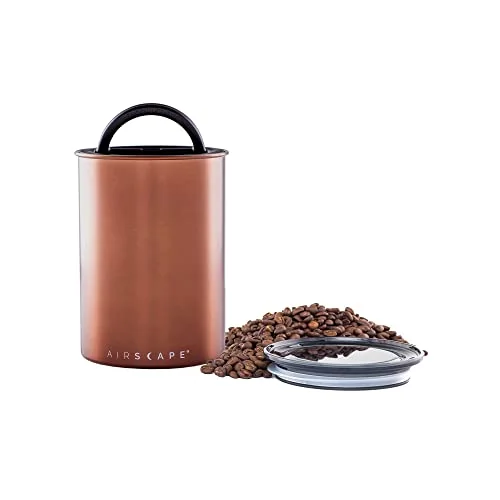
Airscape Coffee Canister
A plunger lid pushes the air out and seals with a satisfying click — simple, effective, no electronics.
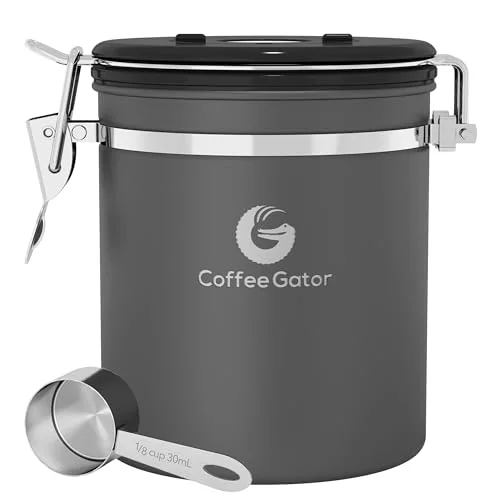
Stainless Canister with CO2 Valve
A one-way CO2 valve lets fresh beans degas without letting oxygen back in — ideal for just-roasted bags.
BrewSift earns a commission on qualifying purchases made through these links, at no extra cost to you. Prices shown were checked on publication and change often.
FAQ
Can you vacuum seal coffee beans?
Yes, as long as the beans have rested. Whole coffee keeps releasing carbon dioxide for about a month after roasting, and sealing in the first days traps that gas, swells the bag and strains the weld. Give beans at least a week off roast, ideally two, then seal in single-use portions.
Can you vacuum seal ground coffee?
You can, but it gains less than it does with whole beans. Ground coffee loses much of its carbon dioxide during grinding and finishes degassing within a couple of days, so there is little protective gas left and far more surface for oxygen to reach. If you must store it, seal single-use portions and freeze them, or simply buy smaller bags.
How long do vacuum sealed coffee beans last?
There is no exact number, because a seal slows oxidation rather than stopping the loss of aroma. Sealed and frozen in portions you never reopen, whole beans hold their character for months rather than weeks. Sealed at room temperature the gain is smaller, and reopening the same bag repeatedly cancels most of it.
Is a vacuum sealer better than a vacuum canister for coffee?
Only for portions you intend to freeze and open once. A canister is designed to be opened daily and sized to a bag, which is what a normal coffee week looks like. A bag sealer is a bulk-storage tool, and it costs bags every time you use it.
Does vacuum sealing keep coffee fresh forever?
No. Aroma compounds are volatile and leave the bean regardless of the container, so every storage method buys time rather than stopping the clock. What a good seal does is slow the oxidation that turns bright coffee flat and papery.
Should I vacuum seal coffee before freezing it?
If you have a sealer, yes, because the main freezer risk is moisture and a sealed portion keeps it out. If you do not, small airtight jars filled close to the top work well. Either way the rule is the same: freeze once, in single-use portions, and grind straight from frozen.
Sources
- Wang (2014), University of Guelph PhD thesis — Understanding the Formation of CO2 and Its Degassing Behaviours in Coffee
- Smrke et al. (2022), Food Packaging and Shelf Life — Effects of different coffee storage methods on coffee freshness after opening of packages
- Baxley, Clemson University thesis — Development of a User-Friendly Shelf-Life Model for Roasted and Ground Coffee Packs
- Gantner et al. (2024), Foods — Effect of Temperature and Storage on Coffee's Volatile Compound Profile and Sensory Characteristics