The cezve (or ibrik) makes one of the oldest coffee styles in the world — extremely fine grounds simmered with water (and often sugar) into a thick, intense, unfiltered cup with a signature foam.
Quick steer — A small cezve and a grind finer than espresso is the whole kit. Size the pot to the cups you actually serve, and check it suits your stovetop before you buy copper.
Skip this
A copper cezve for an induction hob
Induction needs a pan a magnet will stick to, and Bosch lists copper among the materials that will not work unless the base carries a layer of magnetic material. A traditional hand-hammered copper cezve has no such base. If your hob is induction, the options are a tri-ply stainless cezve, an electric Turkish coffee maker, or an induction interface disc — the copper pot belongs on gas, an electric coil, or a bed of sand.
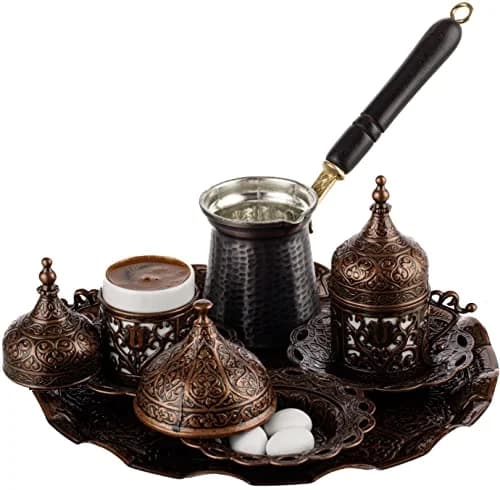
Buy this one if you want the traditional stovetop ritual and you pour for a table: it is hand-hammered, tin-lined copper, and the listing sizes it at 14.4 fl oz serving 4-5. Copper will not work on an induction hob, so go electric if that is your cooktop.
Second on our value score, and it costs more than the Volarium above it. The case for it is size: a 9 fl oz, three-serving pot, where the Volarium holds 14.4 fl oz.
A cezve needs watching — you stand over it and pull it off the heat the moment the foam rises. An automatic maker runs that heat curve for you and stops itself, which is what makes daily Turkish coffee practical. The SAKI is the highest-scoring automatic in this category.
The BrewSift Score is a 0–10 weighted average of category-specific sub-scores, built from manufacturer specifications, published reviews and aggregated owner reports — not hands-on testing. In this category it weights cup quality 30%, build quality 25% and ease of use 20%, plus 2 smaller factors. How we score →
Second on our value score, and it costs more than the Volarium above it. The case for it is size: a 9 fl oz, three-serving pot, where the Volarium holds 14.4 fl oz.
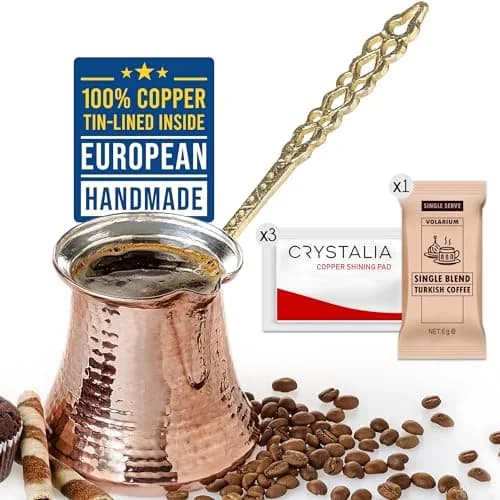
A hand-hammered copper cezve with a tin lining — the authentic way to brew a thick, foamy Turkish coffee.
Copper conducts heat fast and evenly, which is exactly what Turkish coffee needs to build its signature foam slowly. This hand-made, tin-lined cezve with a brass handle is the large size: the listing gives 14.4 fl oz (425 ml) and says it serves 4–5, so it suits pouring for several people more than a single cup. It is a beautiful object in its own right.
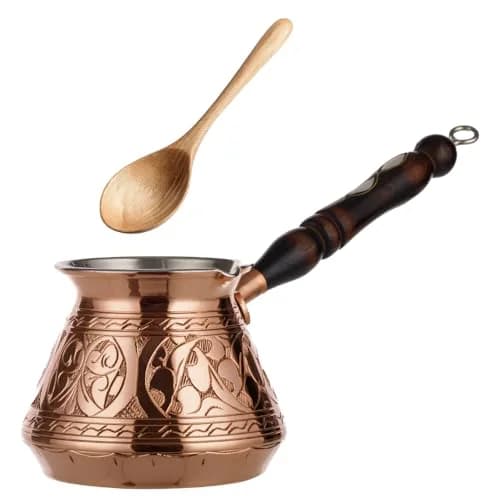
A handmade, hand-engraved copper cezve in a smaller 9 fl oz size with a wooden handle — traditional looks and the even heat Turkish coffee wants.
DEMMEX's cezve is the smaller of the stovetop pots here. The listing gives a 9 fl oz capacity sold as three servings, hand-engraved 1mm copper with a tin lining, a wooden handle and a matching spoon, for gas and electric stovetops. There is no manufacturer page to check those against, so every figure here is the listing's. Copper heats quickly and evenly, which is why it is the traditional material for a cezve, but the tin lining needs gentle cleaning and the pot will not work on induction.
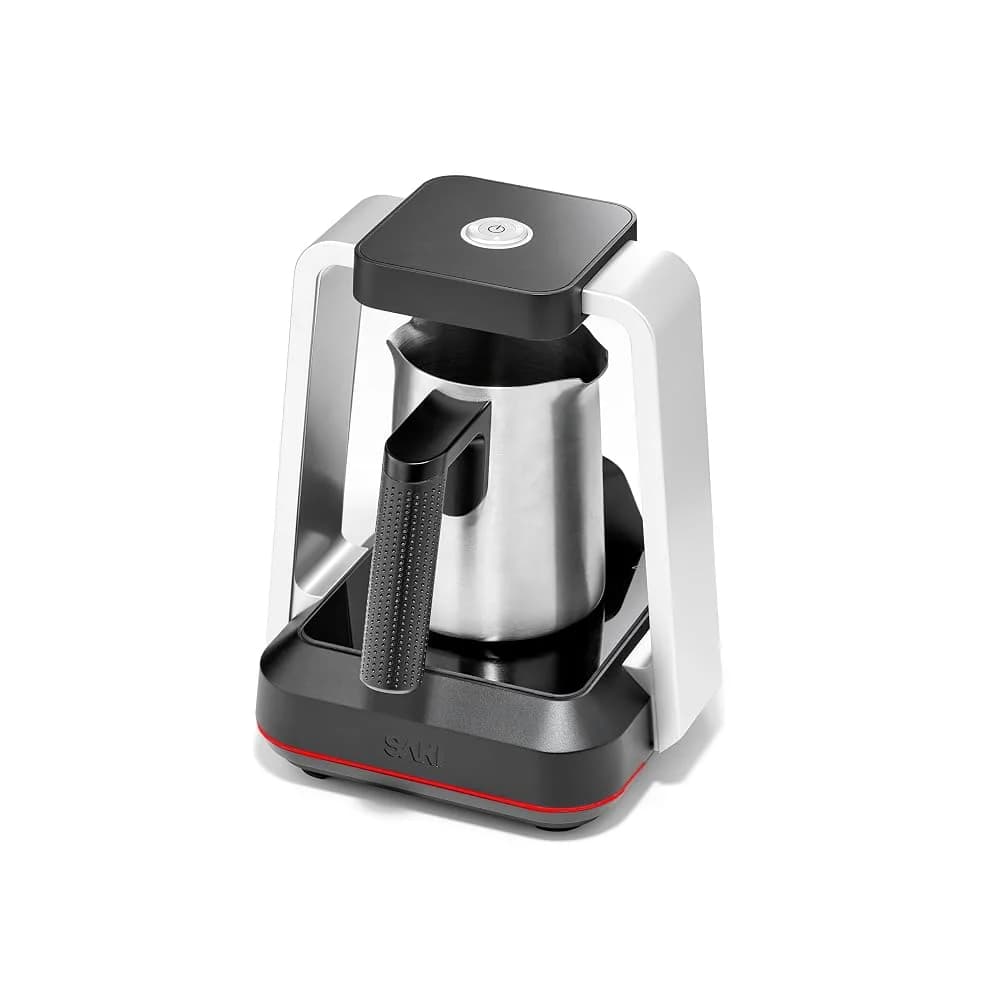
An open-top electric that lets you watch the foam climb, with the only Turkish pot the maker calls fully dishwasher safe.
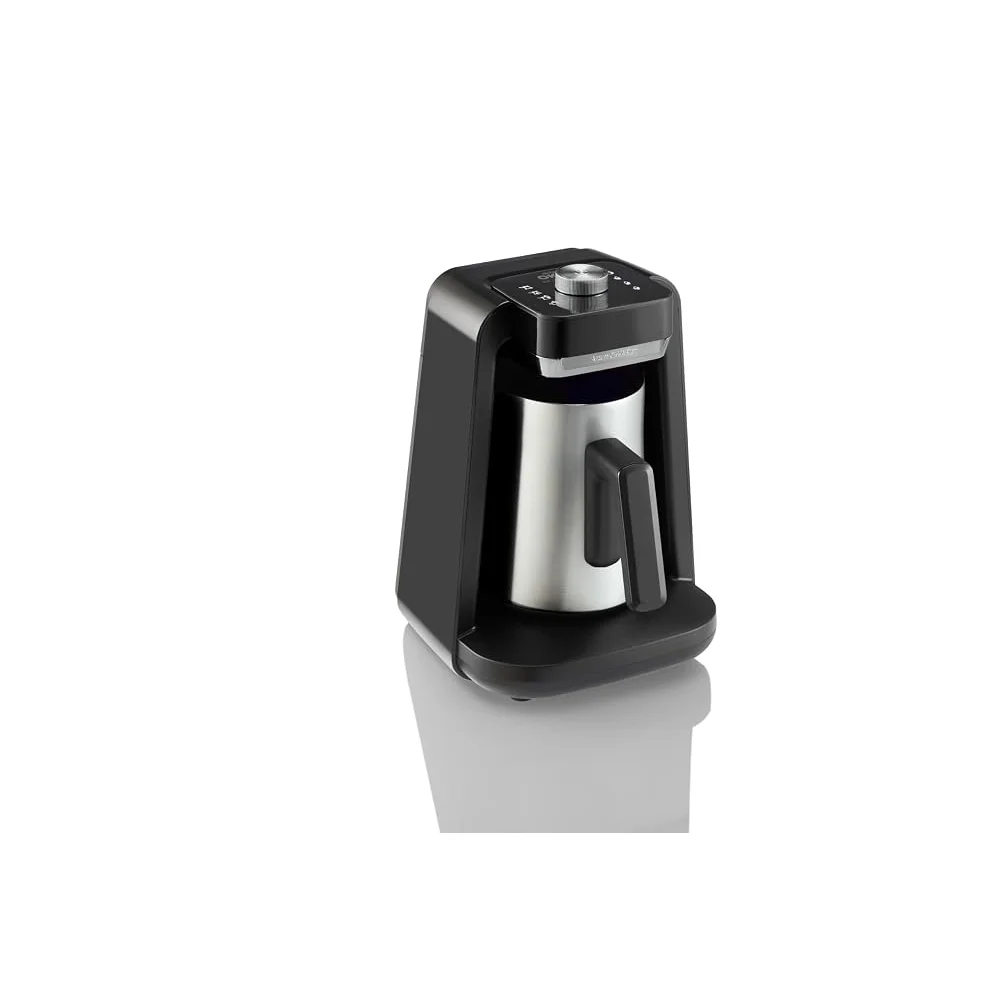
SAKI's open-form maker leaves the stainless pot in view while it brews, so you can watch the foam climb. SAKI calls its heating the SandBrew induction method and describes it as gentle 360-degree heat meant to emulate sand brewing, then lists peak-foam detection that stops heating at the top of the rise, overspill protection, and an empty-pot cut-off against dry boiling. The pot is 304 (18/8) stainless steel with a rubber handle and no plastic lining, and SAKI states it is dishwasher safe. SAKI publishes the pot's total capacity as 350 ml, five Turkish coffee cups, on a 120V, 600W base, and its own store lists a two-year warranty. A measuring spoon and a coffee sample come in the box.
Open top so you can watch the foam rise
Stainless brew path with no plastic lining
Removable pot the maker rates dishwasher safe
Pricier than the copper cezve most people start with
Open design means steam and aroma escape the counter, not the cup
What owners say — Owner reviews report consistent foam and easy cleaning; some note the open design steams the counter more than a closed machine.
The foam is the point, and it is why the pot has to be mostly empty. UNESCO's inscription of Turkish coffee culture describes the method as ground coffee, cold water and sugar brewed slowly in a coffee pot to produce the desired foam, from beans ground to a fine powder. That foam forms in the headspace above the liquid, so a cezve filled past the narrow part of its neck has nowhere to build it — which is why a pot sized for two cups pours better two-cup coffee than a six-cup pot ever will.
What owners actually report
r/Coffeer/espressor/barista
Turkish coffee owners in r/Coffee and r/espresso agree that two things decide the cup: the grind and the heat. Turkish coffee needs a flour-fine powder, finer than espresso, and most burr grinders sold for home espresso cannot reach it, so owners are routinely pointed to a dedicated hand mill that goes that fine or to coffee bought pre-ground. The heat has to be low and slow: the cezve comes off the flame as the foam climbs the neck, before it boils, and the foam is spooned into each cup first. On the pot itself owners are relaxed. Copper heats evenly and looks the part; stainless is easier to live with, and a stainless pot with a flat magnetic base is the stovetop kind that can work on induction. The most repeated warning about copper cezves is the tin lining: owners retire or re-tin a copper pot once its lining wears through.
Consistently praised
Small hand-hammered copper cezves — The traditional pick and the one owners recommend for the way it heats: copper responds instantly to a low flame, which is exactly what the method asks for.
Tri-ply stainless cezves — The recommendation for induction kitchens and for anyone who would rather not think about a tin lining at all; a magnetic stainless base is what an induction hob requires.
Dedicated Turkish coffee mills — The answer these threads keep arriving at, because the grind is finer than most home espresso grinders will go and it is the single variable that decides the cup.
Consistently warned about
Copper on induction — It simply does not heat. Bosch lists copper among the materials that will not work on induction unless the base carries a magnetic layer, and the magnet test settles it in seconds.
Espresso grind — Repeatedly identified as the reason a first attempt tastes thin and refuses to foam. Turkish coffee is a flour-fine powder, not espresso-fine.
Oversized cezves — The foam builds in the headspace above the liquid, so a pot filled past its neck has nowhere to build it. Owners consistently advise buying the smallest size that covers the cups you actually serve.
What we didn't pick
Popular options we looked at and passed on, with the specific reason each one fell short.
Untinned copper cezvesConsidered 2026-09
A traditional copper pot is lined on the inside, and the lining is what keeps the coffee off the copper. A listing that does not state a tin or stainless lining is either omitting the most important thing about the pot or selling a decorative one.
Copper-finish cezves marketed for inductionConsidered 2026-09
These are usually a copper-coloured finish over an aluminium or stainless body, which is fine when the listing says so. The ones we looked at led with the copper and buried the base material, and Bosch's guidance is that only a magnetic base works on induction at all. Source.
Gift sets bundled with cups you would not choose aloneConsidered 2026-09
A set prices the pot and the cups together, and the cups are usually the cheaper half. Where the same maker sells the pot on its own, the set has to justify the difference on the cups rather than on the coffee — and often it does not.
A Turkish coffee setup needs one thing besides the cezve: coffee ground to a powder finer than espresso. The pot is the easy part; the grind decides whether the cup foams, and there are two ways to get it.
The coffee itself
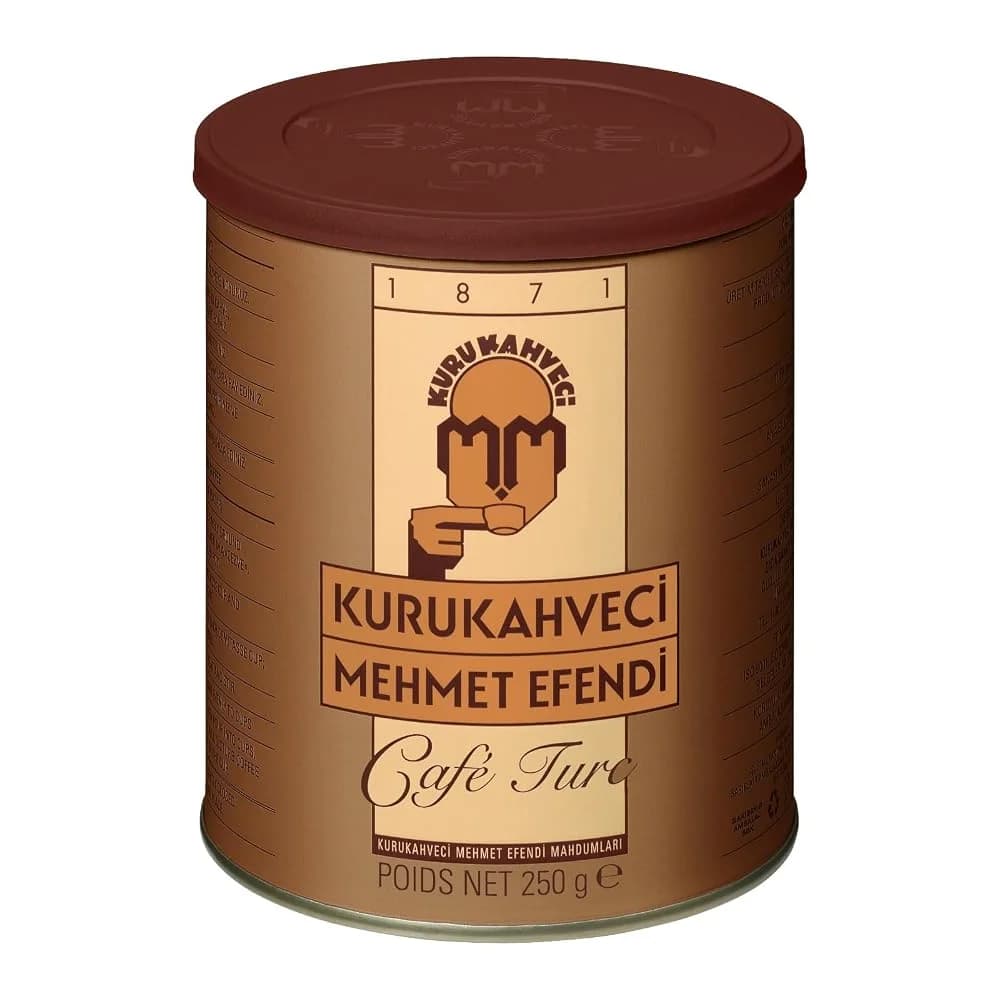
Kurukahveci Mehmet Efendi Turkish coffee comes already ground to Turkish fineness, 100 percent arabica roasted in Istanbul. Buying pre-ground coffee is the simplest way to get the grind right on the first cup, because most home grinders cannot reach that powder.
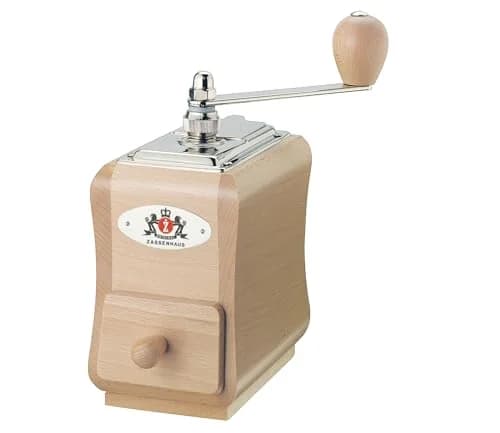
The Zassenhaus Santiago is a beechwood hand mill with a German-made hardened-steel conical burr, and Zassenhaus states it grinds as fine as a Turkish grind. Most burr grinders, good espresso grinders included, stop short of that.
The ten Turkish-coffee entries BrewSift ranks run $14.95 to $219.95, a 14.7x spread, and the dearest item in the category is not a pot at all. It is the grinder, which is the piece the method actually depends on.
Size small, pour foam
A cezve brews 1–4 tiny cups and works best filled to its narrow neck so the foam builds properly. Buy a size close to how many you serve — a too-big cezve won't foam right.
Grind finer than espresso
Turkish coffee needs a powder-fine grind, finer than espresso — most home grinders can't reach it. A dedicated Turkish hand mill (or pre-ground Turkish coffee) is the way in.
Copper vs stainless
Traditional cezves are hammered copper with a tin lining — beautiful, and copper's fast, even heat gives you the most control over the foam. The tin lining does need occasional re-tinning over years of use. Stainless steel is cheaper, dishwasher-friendly, induction-compatible, and nearly maintenance-free; it heats a touch less evenly but is the easier everyday choice.
Check your stovetop
Copper cezves won't work on an induction cooktop unless they have a magnetic base — most don't. If you have induction, buy a stainless cezve or one with an induction plate. Gas and electric coils take any cezve.
Electric vs stovetop cezve
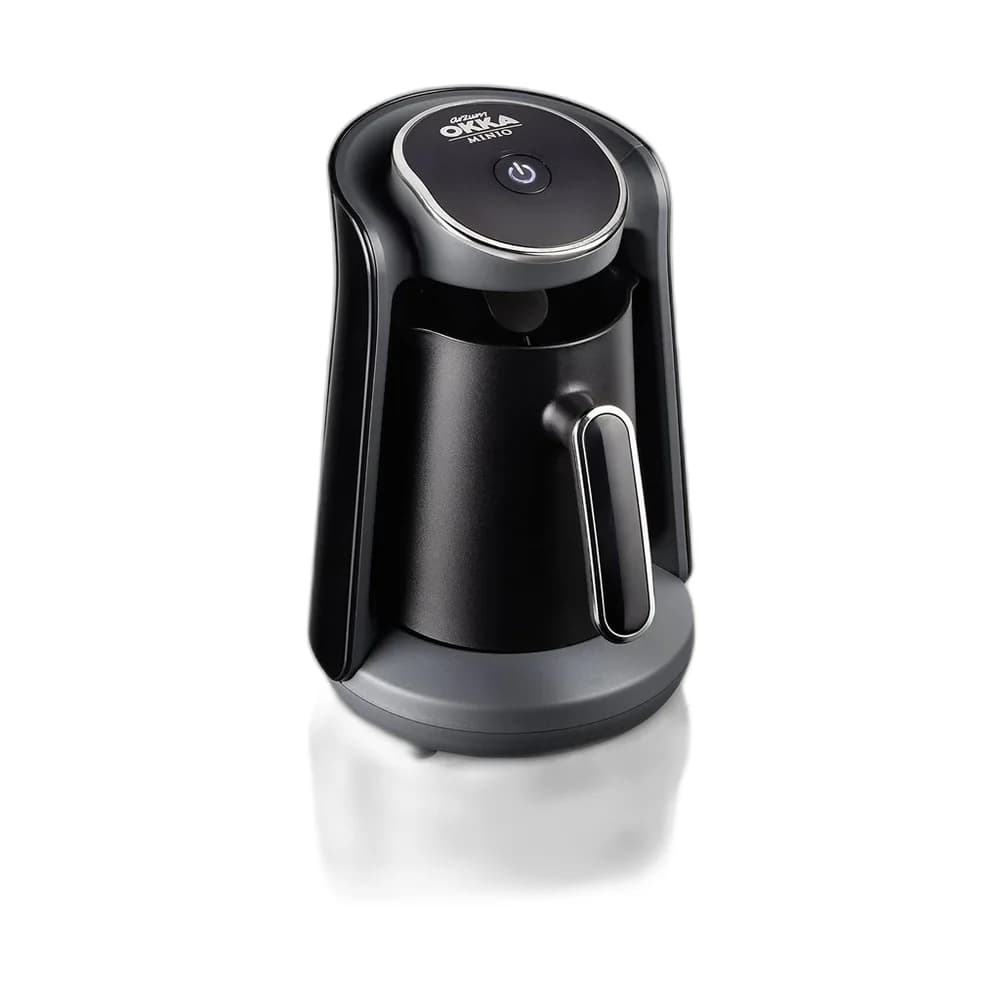
An electric Turkish coffee maker and a stovetop cezve differ in one job: catching the foam before the coffee boils over. With a stovetop cezve you stand over the pot and pull it off the heat as the foam reaches the neck, and one distracted minute means a boiled-over cup with no foam. Electric makers automate that moment. Arzum says the Okka Minio heats slowly and shuts itself off before it overflows, and SAKI says its maker stops heating at the foam peak, so the cup comes out the same whether you watch or not. The electric makers ranked here cost roughly three to five times the Volarium copper cezve and need counter space and an outlet. Buy electric for repeatable weekday or guest coffee; buy a cezve if the making is the point.
Sizing and gifting a set
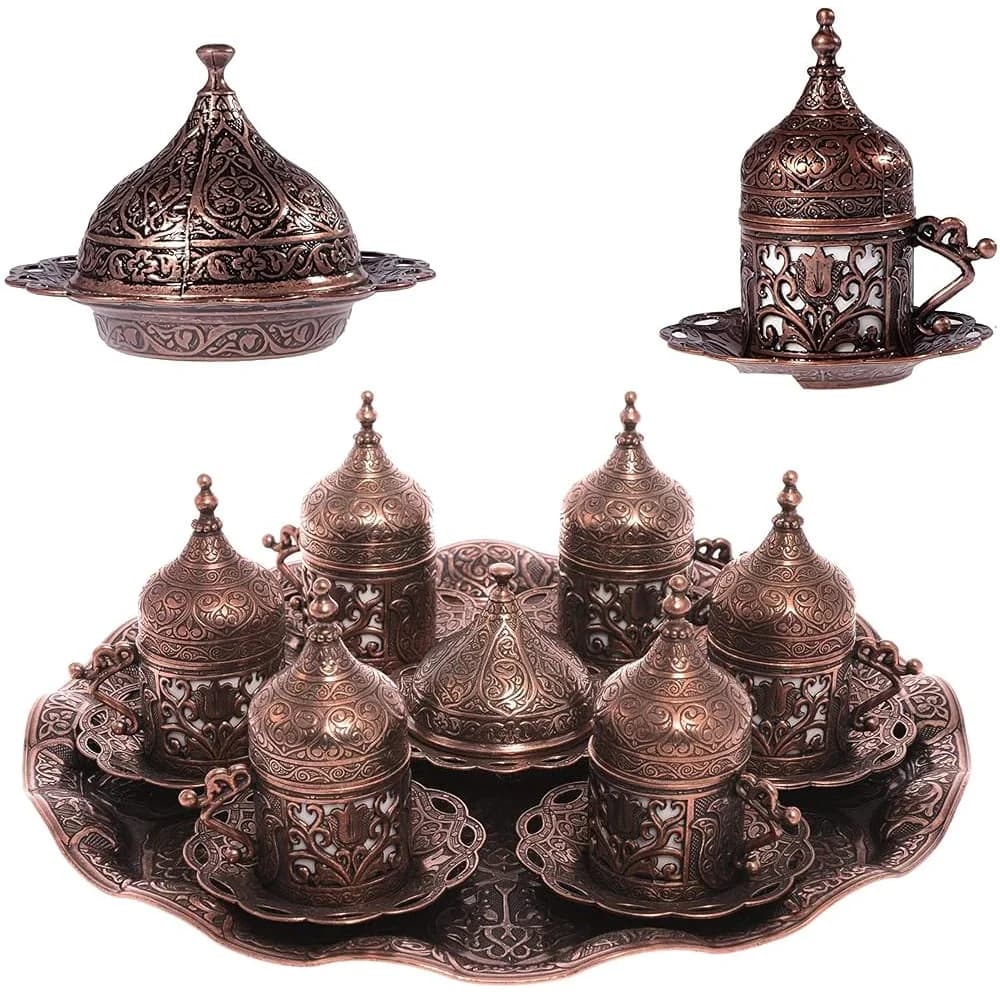
Turkish coffee cups hold about two to three ounces, so a set 'for six' is a set for six tiny cups, not six mugs - match it to how many people you actually serve at once rather than to your dinner-table count. Serving sets and brewing sets are different purchases too: many gift sets are cups, holders, lids, a sugar bowl and a tray with no cezve at all, while others are a cezve alone. If you are giving the whole ritual, check the contents list for a pot before you buy, and expect decorative sets to be hand-wash only - the plating and painted motifs do not survive a dishwasher.
Size the cezve to the cups you actually make
A cezve is sized by how many demitasse cups it pours — two, four or six — and the foam forms properly only when the pot is filled to its intended level. A six-cup pot used for one cup heats too fast and foams poorly; a two-cup pot is useless for guests. Most households want a two-cup for daily use and a larger one for company, which is also why copper sets are sold in pairs.
Turkish coffee pot, percolator or moka pot: they are three different things
Turkish coffee percolator is a phrase that appears in plenty of listings and describes nothing that exists, so it is worth separating the three pots people conflate. A percolator boils water in a base and cycles it repeatedly up a stem and through a basket of coarse grounds, which is why percolator coffee is strong and why it can turn bitter if it runs too long. A moka pot uses steam pressure to push water once through a bed of fine grounds into an upper chamber. A cezve, the Turkish coffee pot, does neither: the powder-fine coffee, the water and any sugar go in together, heat slowly, and are poured unfiltered the moment the foam rises, so the coffee never boils and nothing is recirculated or filtered. The grounds stay in the cup and settle. Electric Turkish makers such as the Arzum Okka Minio and the SAKI are sometimes labelled percolators by sellers, but they simply automate that same single heat-and-rise curve. If percolated coffee is what you actually want, that is a different pot and a much coarser grind.
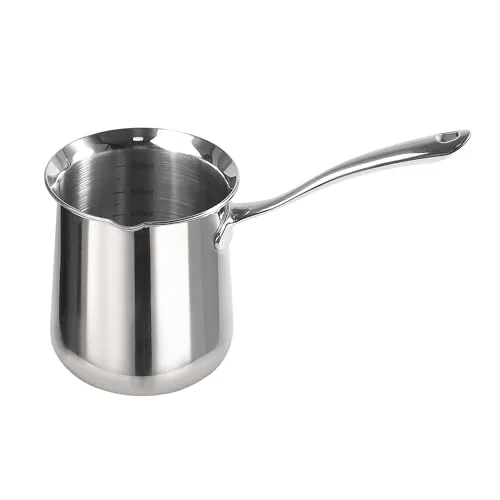
For gas or an electric coil, the best Turkish coffee pot here is the Volarium hammered copper cezve: tin-lined copper that the listing sizes at 14.4 fl oz, serving 4 to 5. For one to three cups, the DEMMEX copper cezve holds 9 fl oz. For stainless with no lining to maintain, the IMEEA tri-ply stainless cezve holds 20 oz and its listing rates it dishwasher safe, though the listing does not confirm induction and warns its 8 cm base may not register on some hobs. On induction, or if you would rather not stand over the pot, buy an electric maker: SAKI says its maker stops heating at the foam peak and rates its stainless pot dishwasher safe, and Arzum rates the Okka Minio for up to four cups with an automatic shut-off before it boils over.
Copper or stainless steel cezve?
Copper conducts heat faster and more evenly, which is why traditional cezves are copper. The pot is lined with tin or stainless steel because bare copper should not touch acidic coffee: the FDA Food Code, which governs food service, bars copper and brass from contact with any food below pH 6 because acid can leach copper into it, and a 2018 Scientific Reports study measured brewed coffee at pH 4.85 to 5.13. That lining wears over years of use. Stainless is slower and less even but needs no lining and no care. If you make Turkish coffee often, copper; if it is occasional, stainless is the easier ownership.
How do you make Turkish coffee in a cezve?
Add cold water to the cezve (one small cup per serving), then one heaped teaspoon of powder-fine coffee per cup and sugar if you want it — don't stir yet. Heat slowly on low; as it warms, stir once to dissolve, then leave it. When a dark foam rises toward the neck (just before boiling), pull it off the heat, spoon foam into each cup, return briefly to build more foam, then pour. Never let it boil over — low and slow is the whole technique.
What grind do I need for Turkish coffee?
The finest grind in coffee — a flour-like powder, finer than espresso. Most burr grinders (even espresso ones) can't reach it, so use a dedicated Turkish mill (Zassenhaus and similar hand mills go this fine) or buy pre-ground Turkish coffee. Too coarse and it won't foam or suspend properly, and you'll get a gritty cup.
Can I use a cezve on an induction stove?
Only if it's induction-compatible. Bosch's induction guidance lists copper and aluminium among the materials that don't work on induction unless the base carries a magnetic layer, so a traditional copper cezve won't heat. Stainless-steel cezves with a flat magnetic bottom work directly; otherwise use a small induction interface disk, brew on gas or an electric coil, or use an electric Turkish coffee maker, which heats its own pot.
Do you drink the grounds in Turkish coffee?
No — Turkish coffee is unfiltered, so the fine grounds settle to the bottom of the cup. Let it rest a minute after pouring so the sediment sinks, then sip and stop before you reach the mud at the bottom. That settled layer is also what's traditionally used for reading fortunes.
Are electric Turkish coffee makers worth it?
They solve one real problem: catching the foam at the exact moment before it boils over. Machines like the Arzum Okka and SAKI heat slowly and cut power when a sensor sees the foam peak, so the cup is consistent whether or not you are standing there, and most brew three to five cups in one run for guests. The trade-offs are price - roughly three to five times a copper cezve - counter space, and losing the hands-on ritual that draws a lot of people to Turkish coffee in the first place. If you brew most mornings or serve guests often, the consistency is worth it; if you brew occasionally and enjoy the process, a copper cezve is still the better buy.
Do you need a cezve if you have an electric Turkish coffee maker?
No - an electric maker has its own pot built in, and that pot is where the coffee actually cooks. Plenty of people own both anyway: the machine for weekday mornings and a copper cezve for when they want the ritual, or for the stove at a friend's house. If you buy electric, check whether the pot is removable and how it must be cleaned; several models are hand-wash only because of the electrical contact under the base, while a few are designed to lift out and go in the dishwasher.
What makes a good Turkish coffee gift set?
The first thing to check is whether a cezve is included, because many attractive sets are serving pieces only - cups, holders, lids, saucers, a sugar or lokum bowl and a tray. A complete gift is a pot plus cups plus a bag of pre-ground Turkish coffee, since the recipient almost certainly cannot grind fine enough at home. After that it is about the details: lidded cups keep the coffee hot while the grounds settle, a tray makes the serving feel like the ritual it is, and a presentation box matters more for a gift than the piece count printed on the label.
Is a Turkish coffee pot the same as a percolator?
No, though sellers sometimes list electric Turkish makers as percolators. A percolator boils water and cycles it repeatedly up a stem and through a basket of coarse grounds. A cezve, the Turkish coffee pot, heats powder-fine coffee, water and any sugar together, is pulled off the heat the moment the foam rises rather than boiled, and is poured unfiltered so the grounds settle in the cup. Nothing recirculates and nothing is filtered. Electric Turkish makers such as the Arzum Okka Minio and the SAKI automate that single heat-and-rise curve; they do not percolate. If percolated coffee is what you want, that is a different pot and a much coarser grind.