Hard Water and Coffee: What Your Hardness Number Means
Look up your water hardness in milligrams per litre as calcium carbonate — your utility publishes it. The SCA brewing standard asks for 50 to 175 ppm, which means water the USGS calls hard, up to 180, is mostly still inside the coffee range. Below 50 the water is a weak solvent and coffee tastes thin; above 180 it mutes flavour and scales your machine fast. Fix chlorine first, then move your number into the window from whichever side you are on.
Key takeaways
- Brewed coffee is roughly 98.5% water: the SCA home brewer standard targets a brew strength of only 1.15 to 1.55% dissolved solids.
- The SCA asks for calcium hardness of 50 to 175 ppm CaCO3, so most of the USGS hard band (121 to 180) is still inside the coffee range — hard water is not automatically the problem.
- Minerals are the extraction mechanism, not a garnish: sodium, magnesium and calcium ions bind coffee's flavour compounds and carry them out, so zero-mineral water is a weaker solvent.
- The taste window and the machine-safety threshold are set by different bodies and do not coincide — you choose a point between them rather than optimising one number.
- The claim that distilled water corrodes a machine traces only to sellers; the one manufacturer that addresses it directly says the opposite for stainless heaters.
- Under 50 ppm, espresso8.9BrewSift ScoreExcellent
- Under 50 ppm, filter8.7BrewSift ScoreExcellent
- Over 180 ppm, strip then rebuild8.3BrewSift ScoreExcellent~$28.99Buy on AmazonRead review
- Chlorine first8.1BrewSift ScoreExcellent~$28.49Buy on AmazonRead review
Prices are approximate and change often. BrewSift earns a commission on qualifying purchases, at no extra cost to you.
Two people brew the same beans, on the same grinder, to the same recipe, in two different cities — and the coffee does not taste the same. The variable neither of them checked is the one that makes up almost the entire drink.
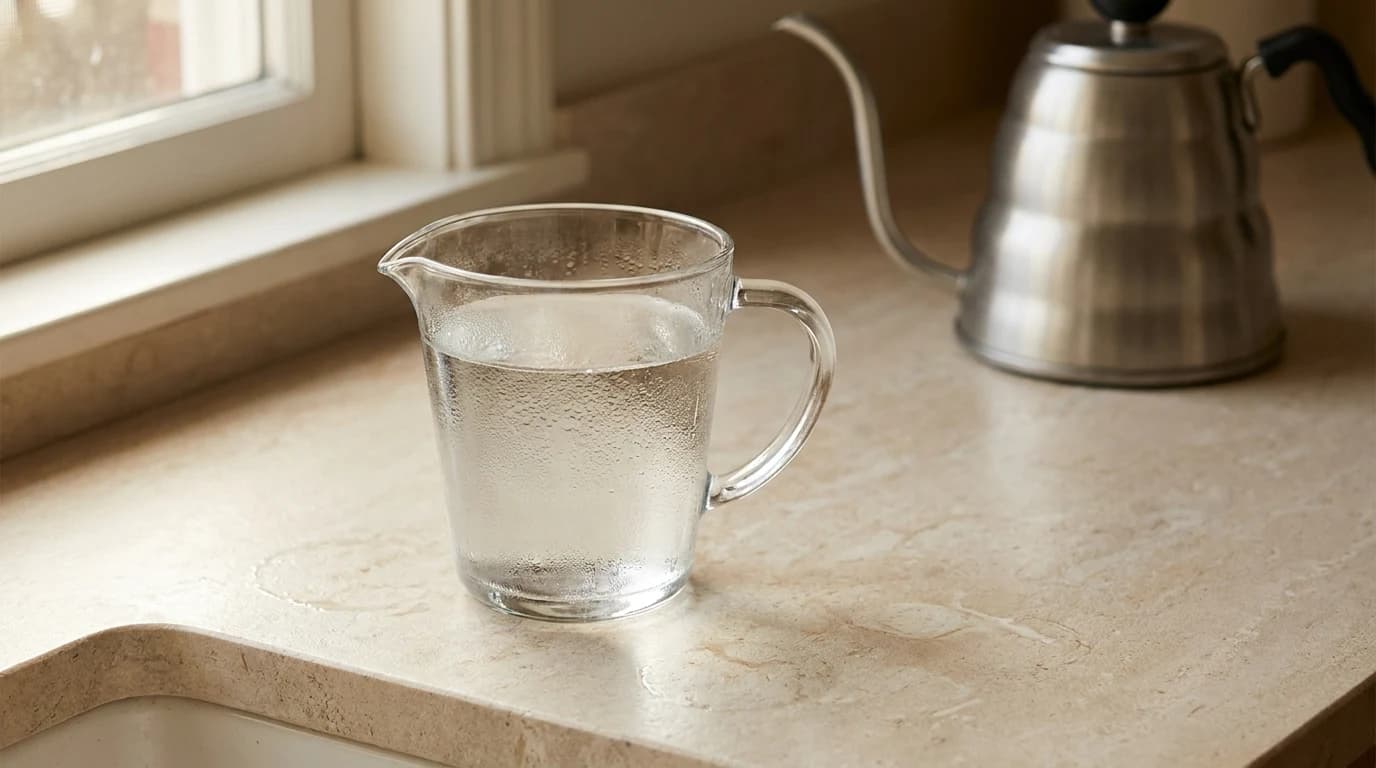
The SCA's home brewer standard targets a brew strength of 1.15 to 1.55% dissolved solids. Everything else in the cup — roughly 98.5% of it — is water, and the minerals dissolved in that water are not passengers. They are part of how the coffee gets extracted in the first place.
Most water advice skips straight to a product. This one starts with a number you already have.
Find your number before you change anything
Hardness is measured in milligrams per litre as calcium carbonate, which is the same thing as parts per million. Getting yours takes about five minutes:
- Ask your water utility, or find the hardness line in its annual water quality report — most publish one.
- If the figure is in grains per gallon, multiply by 17.1 to convert.
- On a well, or if nobody publishes a number, a hardness test strip is the fallback.
Then place it against two scales that are almost never shown together. The USGS classifies water hardness for the whole country, and the SCA's brewing standard specifies a calcium hardness range of 50 to 175 ppm CaCO3 for coffee. Here is what happens when you overlay them.
| Your hardness (mg/L as CaCO3) | USGS class | Inside the SCA range of 50–175? | What it tends to mean in the cup |
|---|---|---|---|
| 0–50 | Soft | Below it | Thin and sharp-edged; acidity reads as sourness |
| 51–60 | Soft | Bottom edge | Clean and bright; flatters light roasts |
| 61–120 | Moderately hard | Comfortably inside | The easy zone — nothing to fix |
| 121–180 | Hard | Mostly inside | Heavier body, quieter acidity; scale starts to matter |
| Over 180 | Very hard | Outside | Muted flavour and fast scaling |
The surprise is in row four. Water your utility calls hard is, for most of that band, still inside the range the coffee standard asks for. Hardness is not the enemy the marketing implies — it is a window, and both walls are real.
Rule of thumb: the point is not soft water. The point is landing between 50 and 175, from whichever direction you are starting.
What the minerals are actually doing
Dissolved minerals are not flavour on their own. They are the mechanism. In The Role of Dissolved Cations in Coffee Extraction (Journal of Agricultural and Food Chemistry, 2014), Hendon and colleagues show that the rate and composition of extraction are governed by the water's dissolved mineral content, because sodium, magnesium and calcium ions coordinate to the sites on coffee's flavour molecules and carry them out of the grounds.
Which reframes the whole idea of pure water. Water with nothing in it is not a neutral starting point — it is a weaker solvent, working against you before the grind size ever gets a say.
Hardness is only half the specification, though. The SCA also asks for alkalinity of 40 to 70 ppm CaCO3, and alkalinity is a different property: it is the water's capacity to neutralise acid. Two numbers, two jobs.
- Hardness — mostly calcium and magnesium; drives how much flavour comes out.
- Alkalinity — mostly bicarbonate; buffers the acids that come out, so brightness gets softened.
- pH 6 to 8 — the standard's range, and the least useful number of the three on its own.
- Odour-free and chlorine-free — not a preference in the standard, a requirement.
The flavour window and the machine threshold are different numbers
This is where water advice quietly contradicts itself, because two separate authorities are answering two separate questions.
What the coffee standard asks for
Odour-free, chlorine-free, calcium hardness 50 to 175 ppm CaCO3, alkalinity 40 to 70 ppm CaCO3, pH 6 to 8. That is the taste specification, published in SCA Standard 310-2021 as the water every certified brew test must run on.
What a machine maker asks for
Decent Espresso publishes descaling thresholds by water instead: under roughly 30 ppm TDS, it says there is no need to ever descale; between 30 and 120 ppm it recommends descaling once a year; and it reports having yet to see a heater fail from scale on machines running under 120 ppm.
Those are not the same scale — a TDS meter reads everything dissolved, while hardness counts only calcium and magnesium — but the direction is unmistakable. Water sitting at the top of the taste window is comfortably above the number a machine maker is relaxed about. There is no setting that maximises both. You pick a point on that line and then descale accordingly, which our descaling guide walks through by machine type.
The claim we could not source
"Distilled water corrodes your espresso machine" is repeated everywhere. We traced it only to retailers and water-product sellers. No machine manufacturer we could find states it — and the one that addresses it head-on says the opposite. Decent designs for unremineralized RO and distilled water, calls them the ideal choices, and puts a number on the corrosion question: roughly a millennium for distilled water to eat through the stainless steel in its heaters.
That may not generalise. Other machines use brass, copper and aluminium where a Decent uses stainless, and we found no manufacturer publishing on that either way. Treat it as unsettled rather than settled in either direction.
There is a real, sourced problem with ultra-pure water, and it is mechanical rather than chemical. Machines that sense water level with a conductivity probe need minerals to see anything at all: service guidance for the La Marzocco Linea Mini notes that pure RO or deionised water will not conduct electricity through the water sensor. And the taste argument stands on its own, because zero-mineral water sits far below the SCA window.
What that changes: remineralize distilled or RO water for extraction and for the level sensor — not because it is dissolving your boiler.
What to do with the number you found
What actually moves the cup:
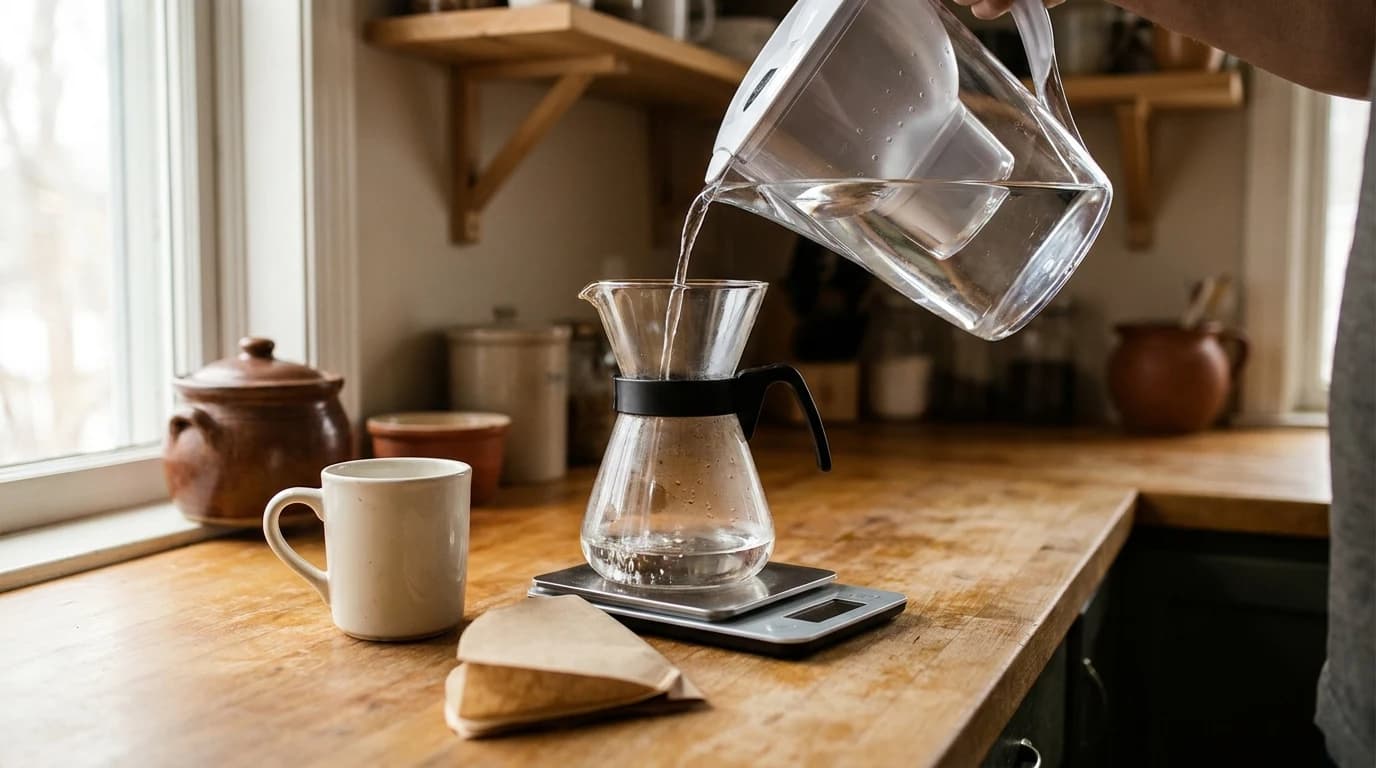
- Chlorine first, always. The standard treats chlorine-free as a requirement, not a refinement, and a basic filter pitcher handles it cheaply, and the water filters roundup covers the rest of the field.
- Over 180 ppm: filter it down or build from scratch. A ZeroWater pitcher strips the tap water to near zero, and a mineral packet then puts a known profile back inside the window.
- Under 50 ppm, or brewing from RO or distilled: add minerals back. Mineral packets exist precisely to land a known profile in the window.
- Between 60 and 175 with coffee you like: change nothing. Descale on schedule and spend the money on beans.
What people try that does not fix water:
- Grinding finer to chase flat coffee. If the water is below the window it is a poor solvent at every grind setting — start with why coffee tastes sour only after the water is inside it.
- Bottled spring water as a consistency plan. Spring water is not a specification; every source has its own mineral profile, so changing brands changes the recipe.
- Plumbing in a whole-house softener for taste. Ion exchange trades calcium and magnesium for sodium. The hardness reading falls, but the cations the standard is actually about leave with it.
Water is the cheapest variable in the hobby and the last one most people touch. Look up one number, and you will know whether it is your problem at all.
Your next step
Fix the water before you blame the beans.
The water fixes, matched to where your number lands
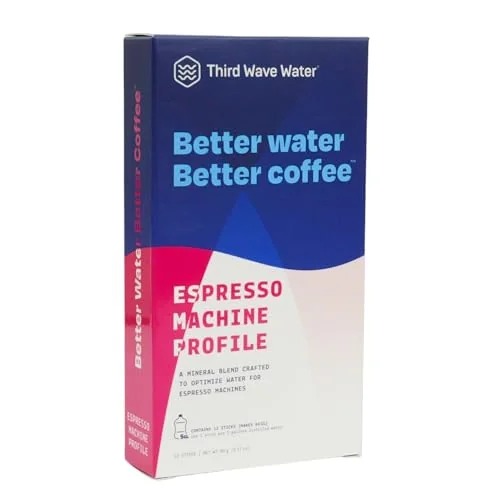
Espresso Profile Mineral Packets
Add one packet to a gallon of distilled water for the exact mineral balance baristas use — a shockingly audible upgrade.
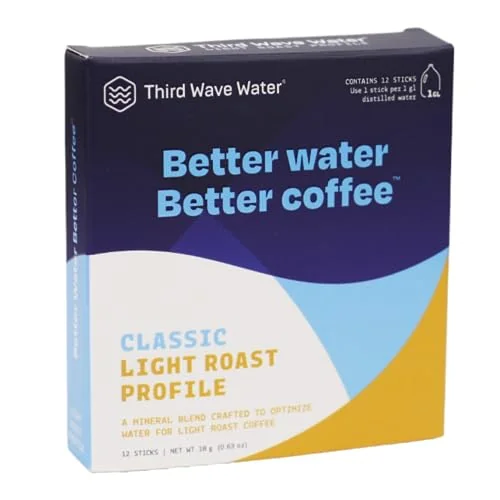
Classic Light Roast Profile Packets
The filter-coffee version — a mineral profile that makes pour-over and drip brighter and more articulate.
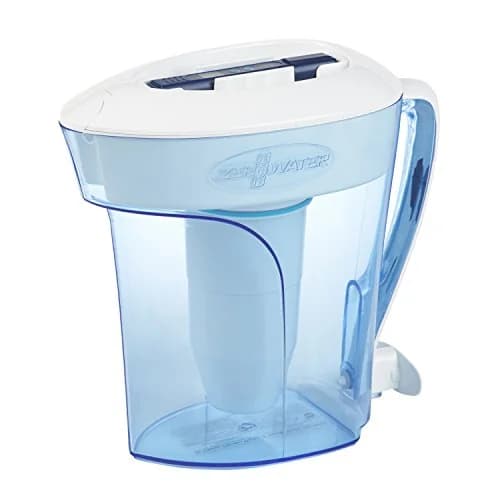
10-Cup Water Filter Pitcher
A five-stage filter that drops total dissolved solids to near zero — a clean blank slate to remineralize or brew from.
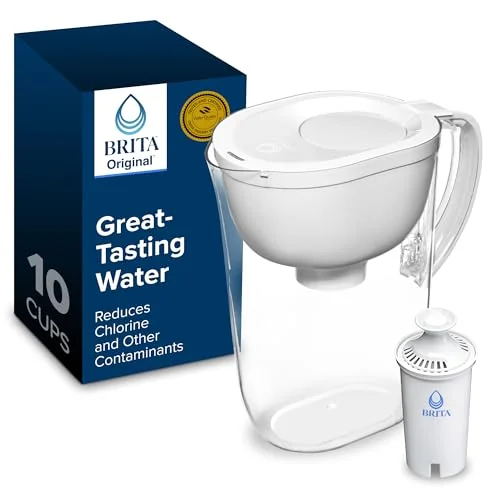
Standard Water Filter Pitcher (10-Cup)
The simplest win for most people — removes chlorine taste and some hardness so your everyday coffee tastes cleaner.
BrewSift earns a commission on qualifying purchases made through these links, at no extra cost to you. Prices shown were checked on publication and change often.
FAQ
How do I find out how hard my water is?
Ask your water utility or read its annual water quality report — most publish a hardness figure in milligrams per litre as calcium carbonate, which is the same as parts per million. If the number is given in grains per gallon, multiply by 17.1. On well water, or where no figure is published, a hardness test strip is the practical fallback.
Is filtered tap water good enough for coffee?
For most people, yes. A basic pitcher filter removes the chlorine that the SCA standard treats as disqualifying, and takes a little hardness out along the way. It is only worth going further if your hardness sits well outside the 50 to 175 ppm range, or if you are chasing repeatability in espresso.
Can I brew with distilled or reverse osmosis water?
Not on its own. Zero-mineral water sits far below the range the brewing standard specifies, and minerals are part of how flavour is extracted, so the cup comes out thin. It also defeats machines that sense water level with a conductivity probe. Distilled or RO water plus a mineral packet is a legitimate and very consistent approach.
Does a home water softener make better coffee?
Usually not. Ion exchange lowers the hardness reading by trading calcium and magnesium for sodium, and those are the cations the brewing specification is actually about. Softened water can read as in range on a hardness test while behaving nothing like the water the standard describes.
If my water is hard, do I have to descale more often?
Yes. Hardness is what forms scale when water is heated, so the harder your water the faster it builds. That is the trade-off at the top of the taste window: the same minerals that carry flavour also plate out on your heating element.
Sources
- SCA Standard 310-2021, Home Coffee Brewers: Specifications and Test Methods (PDF) — §7.1.4 water requirements: odour-free, chlorine-free, calcium hardness 50–175 ppm CaCO3, alkalinity 40–70 ppm CaCO3, pH 6–8; §5 target brew strength 1.15–1.55%
- USGS Water Science School — Hardness of Water (classification: 0–60 mg/L soft, 61–120 moderately hard, 121–180 hard, over 180 very hard; scale forms when hard water is heated)
- Hendon, Colonna-Dashwood & Colonna-Dashwood (2014), Journal of Agricultural and Food Chemistry 62(21) — The Role of Dissolved Cations in Coffee Extraction (Na+, Mg2+ and Ca2+ coordinate to coffee's flavour compounds and govern extraction)
- Decent Espresso — Water recommendations for the DE1 and Bengle (RO and distilled water called ideal; no descaling under ~30 ppm TDS, annually at 30–120 ppm, no observed heater failures under 120 ppm)
- Clive Coffee service guidance — La Marzocco Linea Mini: Testing the Water Sensor (pure RO or de-ionised water will not conduct electricity through the water sensor)