Nespresso, Keurig, and friends — sealed capsules for fast, consistent, no-cleanup coffee. Great convenience; ongoing pod cost is the trade-off.
Quick steer — Pick the system before the machine: Nespresso Original takes cheap third-party capsules, Vertuo does not, and Keurig brews mugs rather than espresso. The capsules, not the machine, are the real cost.
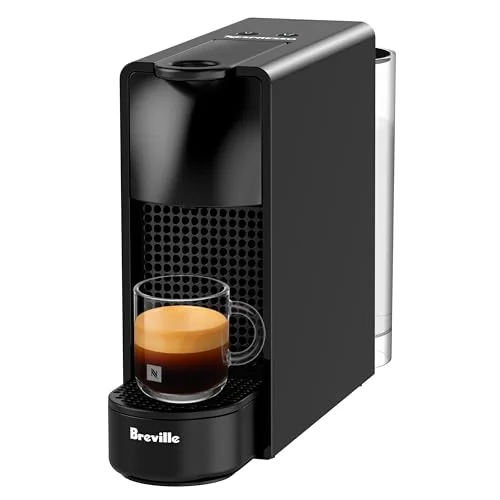
Top pick: Nespresso Essenza Mini (7.9/10, Approx. $179.95). The smallest, cheapest way into Original-line espresso — barely bigger than a mug.
Skip this
Choosing a pod machine on the price of the machine
The machine is bought once and the capsules are bought forever, and the capsule system is fixed the moment you choose the machine. Across the 16 capsule boxes BrewSift tracks, the per-capsule price ranges from $0.32 to $1.62 depending purely on which system the machine locks you into.
The BrewSift Score is a 0–10 weighted average of category-specific sub-scores, built from manufacturer specifications, published reviews and aggregated owner reports — not hands-on testing. In this category it weights drink quality 25%, convenience 25% and pod cost & value 20%, plus 2 smaller factors. How we score →
The smallest, cheapest way into Original-line espresso — barely bigger than a mug.
One of the most compact pod machines made, it still pulls a proper Original espresso and accepts third-party pods. Two cup sizes, a tiny footprint, and a low price make it the dorm/office/second-kitchen default.
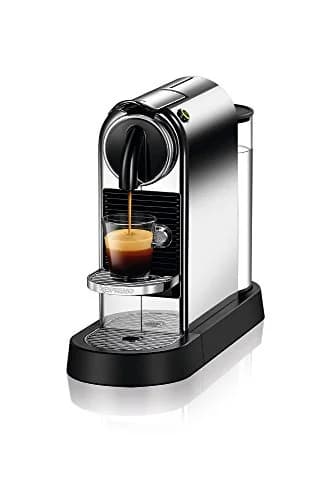
Original-line espresso with a thick crema and the widest third-party pod ecosystem.
The Original system pulls a genuine 19-bar espresso-style shot and works with hundreds of compatible third-party capsules, so you can shop pods on taste and price. The CitiZ is the stylish, compact pick of the line; add an Aeroccino for lattes.
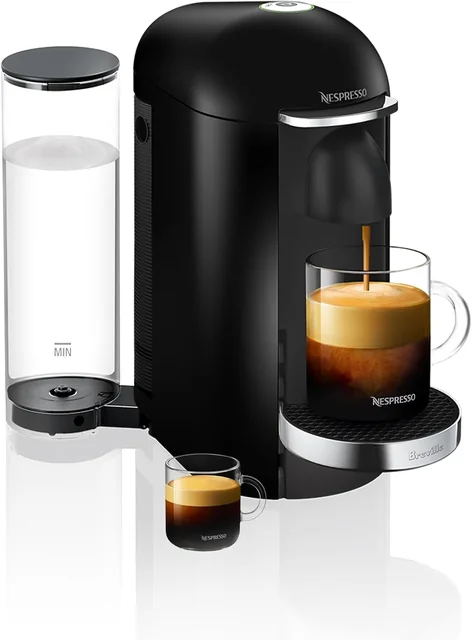
The pick for mug drinkers, not espresso: barcoded pods auto-brew everything up to a 14oz cup — priced into Vertuo's costlier capsule system.
Vertuo reads a barcode on each pod and dials in the right water volume and brew, producing everything from espresso to a 14oz 'coffee' with a signature crema. The trade-off: you're locked to Nespresso's own Vertuo capsules (no third-party ecosystem like Original).
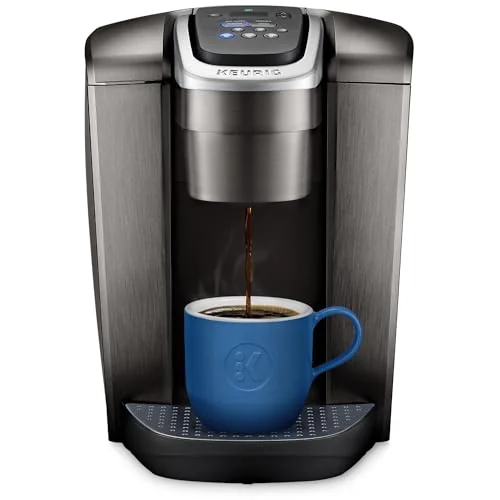
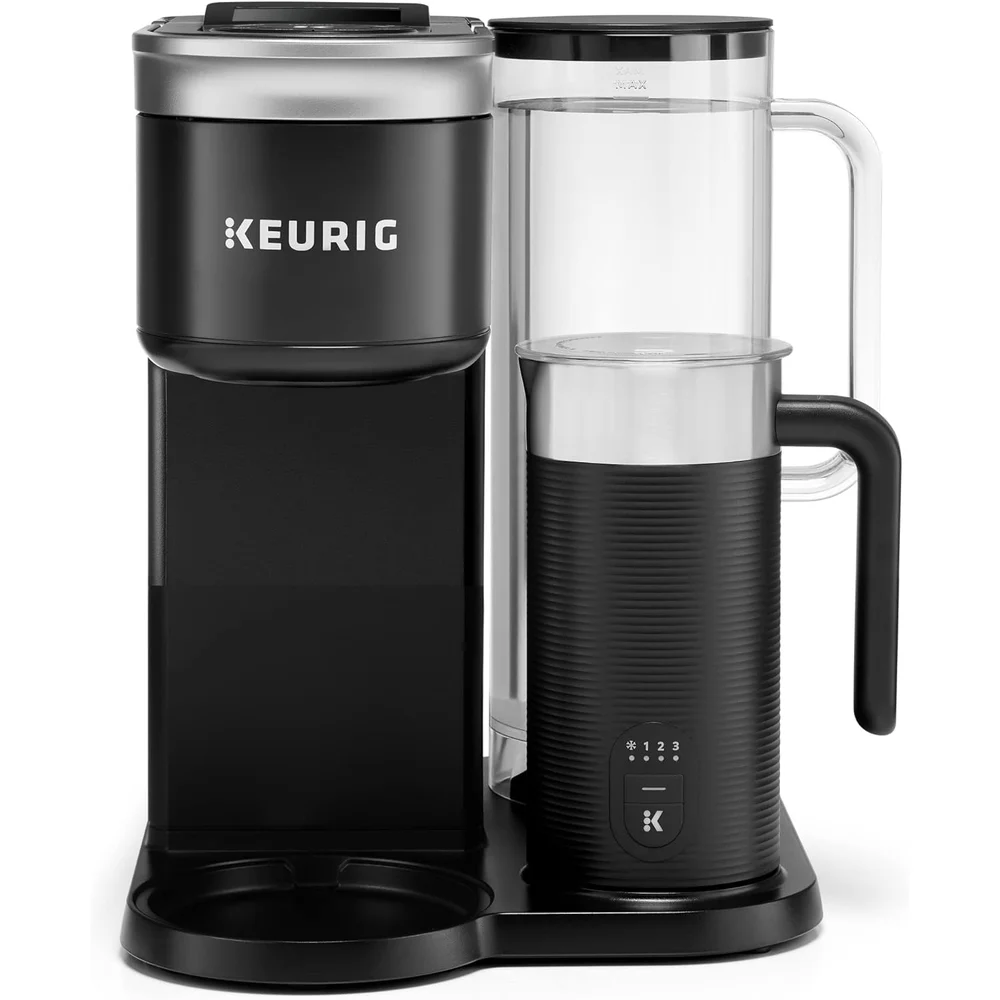
The premium K-cup machine: strong-brew mode, iced setting, big sizes, and a large reservoir.
If your household lives on K-cups, the K-Elite is the nicest way to brew them — a Strong mode, an Iced setting, sizes up to 12oz, hot water on demand, and a 75oz tank. It's about convenience, not specialty flavor; a reusable pod cuts the cost and waste.
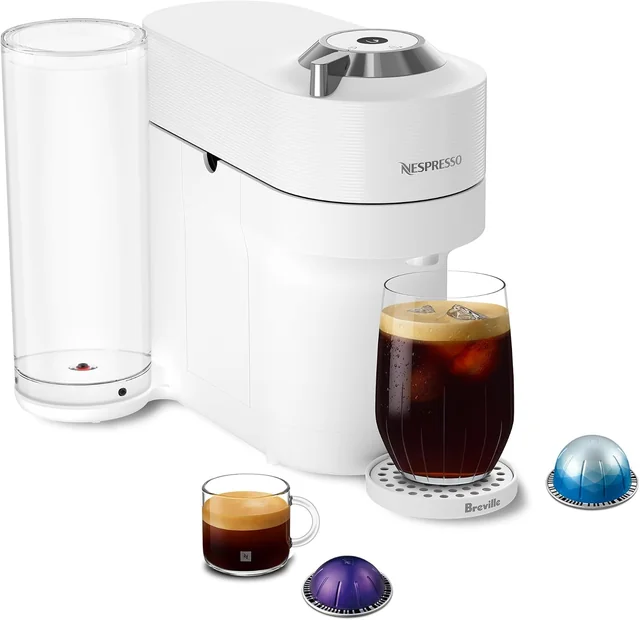
The cheapest current route into Vertuo — five cup sizes, a side-mounted tank, and a footprint built for a small counter.
Same barcoded Vertuo brewing as the Vertuo Plus in a slimmer body: the machine reads each capsule and sets the volume itself, covering single and double espresso plus 5, 8 and 12oz coffees, hot or over ice. The manufacturer rates heat-up at about 30 seconds, the 37oz tank sits at the side so it clears a wall cabinet, and used capsules eject automatically into the bin. You are still locked to Nespresso's own Vertuo capsules, which is the system's real cost.
Lowest entry price on the Vertuo system
Five sizes including iced
Side tank and small footprint
Vertuo capsules only — no third-party market
Mostly plastic build
What owners say — Owner reviews land at 4.4 stars across roughly 1,500 ratings, with the compact shape and one-touch simplicity the recurring praise and capsule price the recurring complaint.
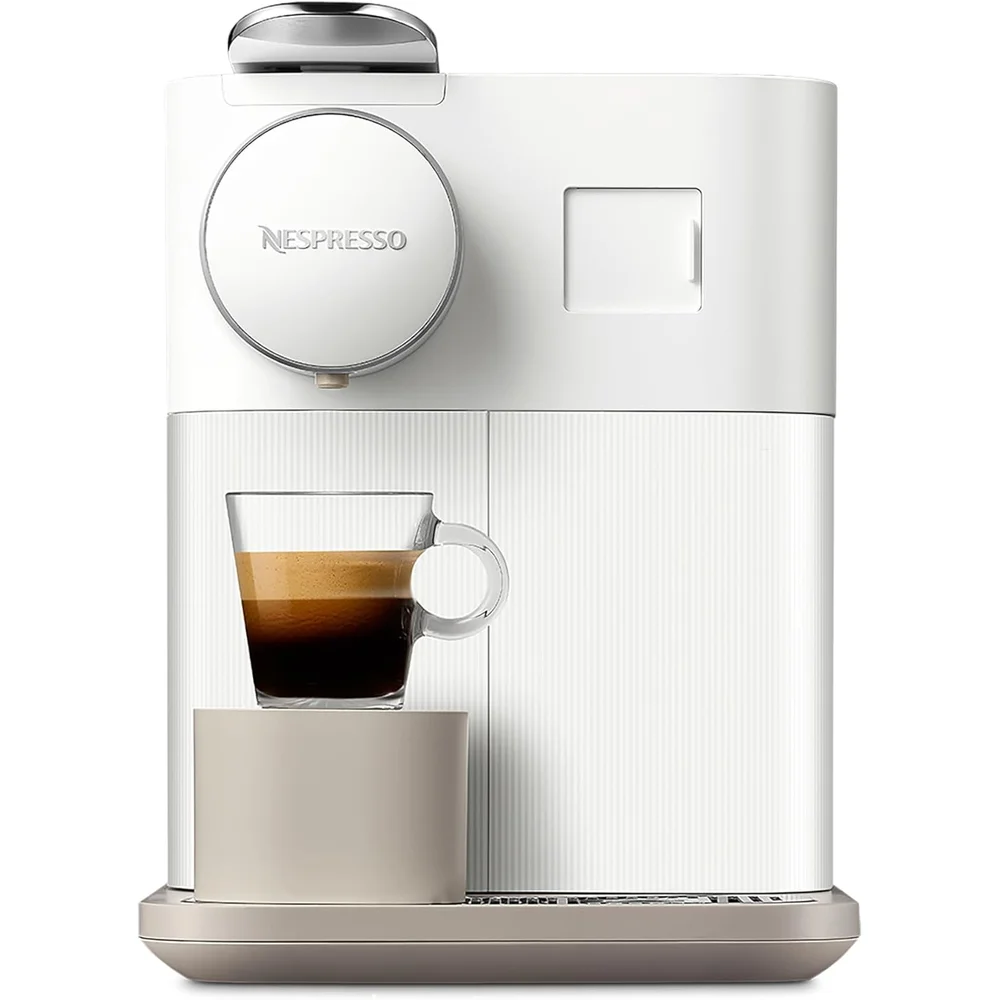
The premium end of the category: an Original-line machine with an integrated milk system that pours nine drinks at one button.
Everything cheaper on this page makes a shot and leaves the milk to you. The Gran Lattissima builds De'Longhi's one-touch fresh-milk system into the machine, so cappuccinos, latte macchiatos and flat-milk drinks pour without a jug or a wand — De'Longhi lists nine one-touch selections: espresso, lungo, ristretto, caffè latte, cappuccino, flat white, latte macchiato, hot milk and warm milk froth. The 16.9 oz milk container detaches and goes in the fridge between uses, the water tank holds just under 44 oz, and De'Longhi rates heat-up at 40 seconds. It takes standard Original capsules, so the wide third-party pod market still applies. What the money buys is milk automation and finish, not a better espresso than a CitiZ pulls from the same capsule.
Nine one-touch drinks including milk recipes
Detachable milk container stores in the fridge
Original capsules, so third-party pods still work
Roughly five times the price of a shot-only Original machine
Milk system adds parts and a cleaning routine
What owners say — Owner reviews average 4.2 stars over a small base of about 137 ratings; Amazon's review summary reports easy operation and good coffee, with the milk frother the most common failure point owners mention.
The machine is the cheap part of a pod setup, and the capsule system it commits you to is the expensive part. Every Vertuo box BrewSift tracks costs more per capsule than every Original-line box, and the machine price gives no hint of that, because the two lines are often sold at similar prices and discounted against each other.
What owners actually report
r/nespressor/keurigr/Coffee
The most repeated story in r/nespresso is buying a Vertuo machine and only afterwards discovering what the capsule side of the decision costs. Owners describe switching from Vertuo to Original far more often than the reverse, and the reasons given are consistent: Original capsules are made by many roasters and can be bought cheaply, Vertuo capsules cannot, and people who drink espresso rather than large cups say the Original shot is the better one. The counter-argument is equally consistent and worth taking seriously: Vertuo exists to make full-size mugs, and owners who mostly drink large coffees rather than espresso are usually happy with it. On the Keurig side, r/keurig's dominant subject is not taste but scale, with the descaling cycle itself coming up over and over as the point at which older machines fail, and filtered water repeatedly recommended as the thing that keeps the machine out of that cycle.
Consistently praised
Nespresso Original-line machines — Recommended over Vertuo whenever the buyer says espresso: owners cite the third-party capsule market, which gives both a much wider choice of roasters and a per-capsule price the Vertuo line has no equivalent of.
Nespresso Vertuo, for large-cup drinkers — The owners who are happy with Vertuo consistently describe drinking mugs rather than espresso; the recurring complaint against it comes from people who bought it expecting a good short shot.
Consistently warned about
Buying Vertuo primarily for espresso — The most common regret posted in r/nespresso. Owners describe the Vertuo double espresso as foam-heavy and prefer the Original shot, and the capsule cost compounds the disappointment because there is no cheaper third-party option to fall back on.
Running a Keurig on unfiltered hard water — Scale is the failure mode r/keurig discusses most, and the threads are full of machines that stopped working during or shortly after a descale. Filtered water is the fix owners repeat, because it prevents the buildup rather than fighting it later.
The machine is the cheap part. Two capsules a day is 730 a year, so the box you re-order decides what the system actually costs — and which system you buy decides which boxes you can use.
Every Keurig we rank brews the licensed K-Cup boxes and the compatibles. Per-pod prices vary severalfold from box to box, so the box matters more than the brewer.
Original machines take third-party capsules, the cheapest per cup; Vertuo machines are locked to Nespresso-made capsules, which cost more per capsule than any Original box. Know which you own before buying a box.
Across the 16 Nespresso capsule boxes BrewSift tracks, the seven Vertuo boxes run $1.24 to $1.62 per capsule and the nine Original-line boxes $0.32 to $0.90 at the October 2, 2026 Amazon prices. The two ranges do not overlap at any point.
Nespresso Original vs Vertuo
Original makes true espresso-style shots at real pressure and has by far the widest third-party pod ecosystem, so you can buy cheaper compatible capsules from many brands. Vertuo uses centrifugal 'Centrifusion' brewing and barcoded pods to make everything from an espresso to a mug-size 'coffee,' but it locks you to Nespresso's own capsules — there's essentially no third-party market. Choose Original for shot quality, milk drinks, and pod freedom; choose Vertuo if you mostly want larger black coffees at the push of a button.
Nespresso vs Keurig — different drinks
These solve different problems. Nespresso makes small, intense, espresso-style shots (and milk drinks built on them); Keurig brews an American-style mug of drip-strength coffee. If you want lattes, cortados, or anything espresso-based, Nespresso is the system. If you want a fast 8–12oz black coffee and love the sheer breadth of K-Cup flavors and brands, Keurig fits better. Don't buy one expecting the other's drink.
Reckon the pod cost before you save on the machine
The machine is the cheap part; the capsules are the running cost — and the three systems price like different markets, not one. At the October 2, 2026 box prices across the catalog, K-Cups ran $0.29–$0.98 a pod and Nespresso Original $0.32–$0.90, while Vertuo ran $1.24–$1.62. The ranges don't overlap: the cheapest Vertuo box costs more per capsule than the dearest box on either open system. At two a day, a typical Vertuo box costs hundreds of dollars a year more than a typical box on either open system — a gap that swallows any machine discount inside a year. That can still beat a daily café, but it's far more than whole beans; the Pod Price Index ranks every box at its current per-pod price, our pod-vs-whole-bean calculator does the math for your habit, and if the number stings, a moka pot or manual brewer plus a grinder pays back fast.
For lattes and cappuccinos you either buy a machine bundled with an automatic milk frother (Nespresso's Lattissima line, or an Original machine sold with an Aeroccino) or pair a shot-only machine with a standalone frother. The bundle is tidier and more automatic; the separate frother is cheaper, easier to clean, and lets you upgrade the milk side independently. Either way, budget for the milk step — a bare pod machine only makes the shot.
Reusable pods and the waste question
Aluminum and plastic single-use capsules are the system's real downside. Nespresso runs a mail-back aluminum recycling program, and refillable stainless steel pods let you use your own ground coffee. Refillables cut waste and cost dramatically but bring back the grinding and dosing that pods exist to avoid, and results vary by machine — they work best on Original-line machines. If convenience is why you bought pods, weigh how much of that you're willing to trade back.
Pod or capsule? The words, and the formats behind them
In American listings the two words are used interchangeably, so a coffee pod machine and a capsule machine usually mean the same appliance. Strictly, though, they describe different physical formats, and knowing which one a machine takes tells you most of what you need to know about it. A capsule is a sealed rigid container, aluminum or plastic, with coffee packed under pressure inside and a foil lid the machine pierces. Nespresso Original and Vertuo, Dolce Gusto, Lavazza A Modo Mio and illy iperEspresso are all capsule systems, and each uses a different shape that fits only its own machines. A pod, in the older sense, is a soft flat disc of ground coffee wrapped in filter paper. The one that still matters is E.S.E., a 44mm paper pod that is an open format rather than one brand's property, so any machine or portafilter basket built for E.S.E. takes anyone's E.S.E. pod. The third format is the K-Cup, a plastic cup with a filter inside that is punctured top and bottom and brewed like drip rather than espresso. So when you compare a pod coffee machine against a capsule espresso maker, you are usually comparing a K-Cup style brewer against a pressurised capsule system, and that is a difference in the drink, not just the packaging.
What actually makes a capsule espresso machine good
Capsule machines are simple enough that the spec sheet only has a few honest signals, and pressure is not really one of them. Almost every Original-style machine advertises 19 bar, and the number is a pump rating rather than a measure of what reaches the coffee, so it does not separate a good machine from a mediocre one. Three things do. First, heat-up time and thermal stability: these machines use a thermoblock, and a well-designed one reaches brew temperature in around 25 to 30 seconds and holds it through back-to-back shots. Owner reviews consistently flag lukewarm second cups as the complaint that spoils a machine day to day. Second, the pod format, because that decides both what the shot can be and what you will pay for it forever. Third, whether the shot volume is programmable, since capsule roasters vary in how much coffee they pack, and being able to save a slightly shorter or longer pull is the only real extraction control you have. Everything else on the box is convenience: tank size, whether the used capsules drop into a container you empty weekly or one you empty every third day, and whether the drip tray folds up for an espresso cup. Judge a capsule espresso maker on temperature behaviour, format, and volume control, and ignore the pressure figure.
Ecosystem lock-in: which systems take third-party capsules
The capsule format you buy into is a longer commitment than the machine, and the systems split cleanly into open and closed. Nespresso Original is the open one: the format is widely cloned, so dozens of roasters sell Original-compatible capsules, supermarkets carry own-brand versions, and competition has pushed the cheapest compatibles well below Nespresso's own price. K-Cup is open in a different way, through a mix of licensed brands and unlicensed compatibles, which is why the flavour range is enormous and the price spread is wide. On the closed side, Vertuo capsules are barcoded and effectively single-source, so you pay Nespresso's price for as long as you own the machine. Dolce Gusto, illy iperEspresso and the various single-brand systems sit somewhere between: compatibles exist for some, but the market is thin and the choice is narrow. The cost of that lock-in compounds quietly. At two capsules a day, a 30 cent gap between a closed system's own capsules and open-format compatibles is roughly $220 a year, which is more than most of these machines cost. That does not make a closed system a mistake, since the barcoded convenience and the drink range are genuinely the point of Vertuo. It does mean the pod aisle, not the appliance aisle, is where you should be comparing prices before you buy.
Espresso shots or full mugs: pick the drink first
The single biggest mismatch in this category is buying a capsule espresso maker when what you wanted was a mug of coffee, or the reverse. Original-line machines like the CitiZ and the Essenza Mini pull espresso and lungo only, roughly 1.35oz and 3.7oz, and no button will turn that into an American-size mug. You can add hot water yourself to make an americano, and plenty of owners do, but the machine was not built for it and the result is a shot diluted rather than a brewed coffee. If your daily drink is 8 to 12oz of black coffee, you want either a K-Cup machine such as the K-Elite, which brews up to 12oz and adds strong and iced modes, or a Vertuo machine, whose barcoded capsules run from espresso up to a 14oz coffee with the crema layer the system is known for. The reason this matters more than it sounds is that the capsule dose is fixed. Stretching a 5g espresso capsule to a mug does not just make it weak, it over-extracts what little coffee is there and turns it thin and bitter. Larger drinks need capsules packed for larger drinks. Decide whether you are buying an espresso machine that takes capsules or a coffee machine with pods, then shop only within that half of the category.
Making refillable pods actually work, and when they pay off
Refillable stainless capsules are worth trying if you already own the machine, and rarely worth choosing a machine for. The practical constraints are worth knowing before you buy a pack. Grind is the whole game: refillables want a fine espresso-range grind, and a blade grinder or supermarket pre-ground will either gush through in four seconds or block the machine entirely. Dose matters nearly as much, since these hold a little more than a factory capsule and want filling to the line and tamping lightly rather than packed hard. Fit is the third variable, and it is why results are so inconsistent across systems. Original-line machines are the most forgiving, because the capsule sits in a chamber and is pierced in a predictable way. Vertuo is a non-starter, since the machine reads a barcode it cannot find on a refillable. K-Cup machines take reusable baskets easily, but because the brew is drip rather than pressurised, the coffee is more forgiving and the gain is mostly about waste and cost rather than flavour. On the money: a refillable set plus decent beans typically brings the per-cup cost down toward what home-brewed coffee costs, so the break-even against capsules arrives within a couple of months of daily use. What you are spending instead is a minute of grinding, filling, tamping and rinsing per cup, which is exactly the minute you bought a pod machine to avoid.
Which capsule machine suits your household
The machine that is right for one person is often wrong for three, and the deciding factor is rarely the coffee. A single drinker who wants one small, intense cup is served by the cheapest Original machine on the page, because a bigger tank and a bigger capsule bin buy nothing when you brew once a day. A two-person household usually splits along drink lines rather than budget: if one of you wants espresso and the other wants a mug, no single capsule fits both well, so buy for whichever drink is the daily one and let the other person add hot water or use a second, cheaper route. Households that mostly drink milk drinks are the case where spending more genuinely changes the outcome, because the milk step is the part that costs time every morning, and an integrated system removes it. Where guests or a household of four are involved, the two specs that actually matter are the water tank and the used-capsule bin: a 25 to 37oz tank and a bin that holds around ten capsules mean refilling and emptying mid-round, while the larger 60 to 75oz machines get through a morning untouched. Count how many drinks the machine has to make before anyone attends to it, and let that number pick the size.
What a $400 capsule machine buys that a $100 one does not
The honest answer is milk and finish, not coffee. Every machine here brews a sealed capsule at pump pressure, and the dose, grind and roast are fixed by the capsule rather than the appliance, so the shot from the most expensive machine here and the shot from an entry-level one using the same Original capsule are far closer than the price gap suggests. What the premium tier adds is the part you would otherwise do by hand. An integrated fresh-milk system pours a cappuccino or a latte macchiato at one button, with the milk container detaching to live in the fridge, and that removes the frothing, pouring and rinsing that a standalone frother adds to every milk drink. Above that sits a small group of machines with a real steam wand, which trade the automation back for control and latte art. The rest of the money goes on materials and interface: glass touch panels, stainless accents, a sliding drip tray that takes a tall glass. Those are real, but they are furniture rather than flavour. The test worth applying is simple. If your daily drink is black, the premium tier has little to sell you and the money is better spent on capsules or on a machine and grinder from a different category entirely. If your daily drink has milk in it, and you make more than one, an integrated system is the one upgrade in this category that changes the morning.
What the capsules cost per cup, by system
On the boxes we track, priced on October 2, 2026, Keurig K-Cups run from about 29 cents a pod in a 100-count house-brand box to nearly a dollar for a premium roast; Nespresso Original capsules run from about 32 cents (third-party, 120-count) to about 90 cents for Nespresso's own; Vertuo capsules run from about $1.24 to $1.62 and have no third-party option. At two cups a day that is roughly $210 a year on the cheapest K-Cups, $237 on the cheapest Original capsules, and $905 on the cheapest Vertuo — a larger spread than the machines themselves. The K-Cup and Nespresso capsule pages rank every box by price per pod.
The best compact coffee pod machine for a small counter
Compact is two measurements, not one, and listings only ever quote the first. Width is what people compare: the Essenza Mini is about 3.3 inches (8.4 cm) across, which is the narrowest machine on this page and the reason it keeps turning up in small-kitchen recommendations. The measurement that actually decides whether a machine fits is the space it needs around itself. A rear water tank has to be reachable, so a machine tucked under a wall cabinet has to be pulled forward every refill unless the tank sits at the side, which is how the Vertuo Pop+ Deluxe keeps its depth down. Check height under the cabinet too, since Keurig-style brewers are tall and need clearance above the lid to open. The trade you make for a small machine is frequency. Small tanks and small used-capsule bins mean refilling and emptying every few days rather than weekly, which is fine for one drinker and irritating for a household. If two or more people brew, a wider machine with a 60 to 75oz tank often feels smaller day to day than a narrow one you are always attending to.
Best budget capsule coffee machine: where the savings actually go
On price alone the cheapest machine here is the Keurig K-Elite at $99.99. The two Vertuos follow at about $160 to $175, while the entry Nespresso Original machine costs a little more up front. That ranking reverses the moment you count the capsules, which is the number that matters. At the October 2026 prices the open systems ran about $0.32 to $0.90 a capsule on Nespresso Original and $0.29 to $0.98 on K-Cup, while Vertuo ran $1.24 to $1.62 with no third-party option at all. At two drinks a day the gap between the cheapest open-system capsule and the cheapest Vertuo one is larger than the price of any machine on this page inside a single year. So the honest budget advice is to buy the system first and the machine second. If you want espresso-style shots cheaply, spend a little more on an Original machine and buy compatible capsules. If you want mugs of black coffee cheaply, a K-Cup brewer plus a 100-count house-brand box is the lowest running cost in the category. Buying the cheapest appliance on a closed system is the one route that saves money today and costs the most every morning after.
Capsule machines for an office or a shared kitchen
An office or a shared kitchen changes the brief for a capsule coffee machine, because the machine gets used by many people who will not look after it. Four things matter more than the cup. Tank size sets how often someone has to refill it: among the machines on this page, the Keurig K-Elite lists a 75 oz reservoir and the Vertuo Plus Deluxe 40 oz, while the Essenza Mini is built for one person and needs refilling far more often. Capsule choice matters because a shared machine has to suit many tastes: K-Cup has the widest range of brands and flavours, and the 100-count house-brand boxes keep the running cost down. Milk systems are a liability in a shared space, since an integrated milk container needs rinsing after every use and someone has to own that job; a shot-only machine with a separate frother, or no milk at all, holds up better. And back-to-back brewing matters more than heat-up from cold, so look at the size of the used-capsule bin as well as the tank. For a busy office of more than a handful of people, both Nespresso and Keurig sell separate commercial ranges, which this page does not cover.
Coffee pod machine brands: who actually makes the machine
The name on the front of a pod machine is often not the company that built it, and that explains why the same machine appears under two names. Nespresso designs the capsule systems and licenses appliance makers to build the machines: the Amazon listings we link sell the Essenza Mini and the Vertuo Plus Deluxe and Pop+ Deluxe as Nespresso by Breville, and the CitiZ and Gran Lattissima as Nespresso by De'Longhi. The two versions of a model brew the same capsules the same way, so choose on price, finish and warranty handling rather than on the maker's badge. Keurig builds its own brewers for the K-Cup system. Beyond those two, the other capsule brands are single-system ecosystems: Nestlé's Dolce Gusto, Lavazza A Modo Mio and illy iperEspresso each use their own capsule shape. If you are looking for a Nespresso alternative, the practical question is not which brand but which capsule format you want to buy for years, since the capsule decides both the drink and the running cost.
Known reliability reports: Vertuo leaks and brew failures
Before spending $150 to $500 on a capsule machine, it is worth knowing what owners report after the first year, and on the Vertuo side that picture is uneven. r/nespresso carries a long-running stream of threads, from several years ago through 2026, about Vertuo machines that leak water or coffee during or after brewing, and machines that stop reading the capsule barcode and refuse to brew. Most of those reports concern the Vertuo Next. Owners regularly describe the Pop and Pop+ as sharing the Next's design and its complaints, while the older Vertuo Plus is the model they most often describe as lasting years of daily use, though it has leak threads of its own. Owners frequently report Nespresso replacing a failed machine under warranty, sometimes with a refurbished unit, and some report replacements or discounts after the warranty ran out. Keep two cautions in mind. A forum is where people go when something breaks, so it overstates how often machines fail, and no failure rate is published. We found no CPSC recall for any Vertuo machine as of September 2026. The practical steps are the same for any capsule machine: buy from a retailer with easy returns, keep the receipt, and descale on the schedule in the manual.
Can a Keurig use Nespresso pods, or the other way round?
No. K-Cups, Nespresso Original capsules and Vertuo capsules are three incompatible formats. Buy the machine for the drink you want, then the pods for that machine.
Which pod system is cheapest to run?
Nespresso Original with third-party capsules, then Keurig K-Cups in 72- to 100-count boxes; both can get under 50 cents a cup. Vertuo is the most expensive per cup because only Nespresso and its licensees make the barcoded capsules.
Nespresso Original vs Vertuo — what's the difference?
Original brews espresso-style shots (espresso and lungo) at high pressure and accepts pods from many third-party brands, so you have cheaper capsule options and better small-shot quality. Vertuo reads a barcode on each pod to auto-select brew settings and spins to produce a range of sizes up to a full mug, but only Nespresso makes Vertuo pods — you're locked to their capsules and prices. Pick Original for espresso, milk drinks, and pod choice; pick Vertuo for effortless larger coffees.
Is pod coffee real espresso?
Nespresso Original and other pressure-based pod machines make espresso-style coffee — they reach espresso-range pressure and produce a shot with crema, so it's genuinely espresso-adjacent and fine as a latte base. Purists will note the dose, freshness, and grind are fixed by the pod rather than dialed in, so it lacks the control and peak quality of a proper machine plus fresh-ground beans. Keurig and other drip-style pod brewers are not espresso at all — they make a mug of American-style coffee.
Are reusable pods any good?
Refillable stainless steel pods work and can noticeably cut both cost and waste, letting you use fresh-ground coffee of your choice. The trade-offs: you're back to grinding, dosing, and tamping — the very steps pods eliminate — and quality depends on grind consistency and how well the pod fits your machine. They tend to perform best on Nespresso Original-style machines and are hit-or-miss elsewhere. Great if you want to reduce waste and cost; not if pure convenience is the point.
How much does pod coffee actually cost per cup?
It depends on the system far more than the brand. At the October 2, 2026 prices, K-Cups ran $0.29–$0.98 a pod, Nespresso Original $0.32–$0.90, and Nespresso Vertuo $1.24–$1.62 — the cheapest Vertuo capsule costs more than the dearest K-Cup or Original. At two a day, a typical Vertuo box costs hundreds of dollars a year more than a typical box on either open system, and the Pod Price Index shows every box at its current per-pod price. Any of them usually undercuts a daily café habit but costs several times more than brewing whole beans at home; run the numbers in our pod-vs-whole-bean calculator before assuming pods are the cheap option.
Do pod machines need descaling?
Yes. Like any machine that heats water, pod brewers build up limescale, and hard water speeds it up — most machines have a descale light or interval in the manual. Descaling with the maker's solution or a diluted descaler keeps temperature and pressure correct, which directly affects shot quality, and neglecting it is the most common reason a pod machine brews weak, cool, or slow over time. It's a five-minute routine every few months, not optional maintenance.
What is the difference between a coffee pod machine and a capsule machine?
In everyday American usage there is no difference, and both phrases describe the same appliance. The distinction that survives is the format inside. A capsule is a sealed rigid aluminum or plastic container the machine pierces, used by Nespresso Original and Vertuo, Dolce Gusto and Lavazza A Modo Mio. A pod, strictly, is a soft paper disc of ground coffee, of which E.S.E. is the one open standard still in use. K-Cups are a third thing again: a plastic cup with a paper filter inside, brewed like drip rather than espresso. If a listing says pod machine, check which format it takes before assuming what drink it makes.
What should I look for in a capsule espresso machine?
Look at heat-up time, thermal stability across two shots, whether the shot volume is programmable, and which capsule format it locks you into. Ignore the 19-bar pressure figure that almost every machine advertises, since it describes the pump rather than what reaches the coffee and does not separate one machine from another. Among the Original-line machines, the CitiZ is the compact, well-built pick with the full third-party capsule ecosystem behind it, and the Essenza Mini is the smallest and cheapest way into the same shots and the same pod choice. Both make espresso and lungo only, so buy one only if small, intense drinks are what you want.
Which pod machines take third-party capsules?
Nespresso Original machines have by far the widest choice, because the Original format is widely cloned and dozens of roasters and supermarket own-brands sell compatible capsules at well under Nespresso's price. Keurig machines also have a broad ecosystem through a mix of licensed K-Cup brands and unlicensed compatibles. Vertuo is the closed one: its capsules carry a barcode the machine reads to set the brew, so there is effectively no third-party market and you pay Nespresso's price for the life of the machine. Dolce Gusto and single-brand systems like illy iperEspresso have compatibles, but the range is thin. Check the capsule aisle before the appliance aisle.
Can I use a pod machine to make a full mug of coffee?
Only if the machine and the capsule are built for it. Original-line Nespresso machines brew espresso and lungo, roughly 1.35oz and 3.7oz, and stretching an espresso capsule to mug size over-extracts the small dose and tastes thin and bitter rather than simply weak. For an 8 to 12oz black coffee, use a machine designed around that size: a K-Cup brewer such as the K-Elite goes up to 12oz with a strong-brew mode, and Vertuo capsules run up to a 14oz coffee. Adding hot water to an espresso shot makes a passable americano, but it is a workaround rather than what the machine does well.
Do refillable pods work in every machine?
No. They work best in Nespresso Original-line machines, where the capsule sits in a chamber and is pierced predictably. Vertuo is incompatible in principle, because the machine looks for a barcode on the capsule rim that a refillable does not have. Keurig machines take reusable baskets easily, though since the brew is drip rather than pressurised, the benefit there is mostly cost and waste rather than a better cup. Wherever you use one, the result depends on grinding fine enough and dosing to the fill line, so a burr grinder is effectively a prerequisite. Also worth noting: some manufacturers exclude damage caused by third-party accessories from warranty cover.
What is the best capsule machine for lattes and cappuccinos?
There are three routes and they cost very different amounts. The cheapest is a shot-only Original machine such as the CitiZ or the Essenza Mini plus a standalone milk frother, which keeps the total low and makes the milk part easy to clean and easy to replace. The middle route, if your household already lives on K-Cups, is a Keurig with a built-in frother such as the K-Café SMART: the milk is handled in the machine, though a K-Cup base tastes milder than an espresso-style shot under the same milk. The premium route is an integrated one-touch machine like the Gran Lattissima, where a detachable milk container pours cappuccinos and latte macchiatos at a single button. Spend up only if milk drinks are your daily habit rather than an occasional one, because that is the only case where the automation earns its price.
How much should I spend on a coffee machine with pods?
Three tiers cover almost everyone. Around $90 to $140 buys a current, full-featured machine on any of the major systems, which is enough for espresso or a 12oz mug depending on which system you pick. Roughly $140 to $300 buys a larger tank, more sizes, a better build, or a built-in frother. Above about $400 you are buying an integrated fresh-milk system and premium materials rather than better coffee, since the capsule fixes the dose and the grind no matter what the machine costs. Keep the running cost in view while you choose: at two capsules a day, the capsules overtake the price of most machines on this page within the first year (the Pod Price Index has the current per-capsule prices), so a $60 saving on the appliance matters far less than picking a system whose capsules you are happy to buy for years.
What is the best compact coffee pod machine?
For width, the Nespresso Essenza Mini, at about 3.3 inches (8.4 cm) across, is the narrowest machine we rank and the easiest to slot into a crowded counter. But compare the whole footprint before deciding, because a rear water tank needs the machine pulled forward at every refill, while a side-mounted tank like the Vertuo Pop+ Deluxe's keeps the depth down and stays reachable in place. Keurig brewers are taller and need clearance above the lid. The real cost of a compact machine is cadence: a small tank and a small used-capsule bin mean attending to it every few days, which suits one drinker and frustrates a household.
What is the best budget capsule coffee machine?
The cheapest machine on this page is the Keurig K-Elite at $99.99. The two Vertuos run about $160 to $175, but the cheapest coffee is not on the cheapest machine. At the October 2026 prices, capsules ran about $0.32 to $0.90 on Nespresso Original and $0.29 to $0.98 on K-Cup, against $1.24 to $1.62 on Vertuo, where no third-party capsules exist. Over a year of two drinks a day, that spread is worth more than any machine here. If you want espresso-style shots on a budget, pay a little more for an Original machine and buy compatible capsules; if you want mugs, a K-Cup brewer and a large house-brand box is the lowest running cost.
What is the best capsule espresso machine?
If espresso is the point, buy a Nespresso Original-line machine rather than a Vertuo: Original pulls short shots at pump pressure and has the whole third-party capsule market behind it, while owners who bought Vertuo for espresso are the most common regret in r/nespresso. The Essenza Mini is the smallest and cheapest way into those shots, the CitiZ is the better-built version of the same idea, and the Gran Lattissima is the one to buy if most of your espresso ends up under milk, since it pours cappuccinos and latte macchiatos at one button. All three make espresso and lungo only.
What is the best capsule coffee machine for an office?
For a shared office kitchen, a K-Cup brewer with a big tank is usually the easiest to live with: the Keurig K-Elite lists a 75 oz reservoir, brews 4 to 12 oz, and K-Cup offers the widest range of brands for a group with different tastes. If the office wants Nespresso coffee in mug sizes, the Vertuo Plus Deluxe has a 40 oz tank, though its capsules cost more per cup than K-Cups. Avoid integrated milk systems in a shared space unless someone owns the cleaning, because the milk container needs rinsing after every use. Large offices should look at the commercial ranges Nespresso and Keurig sell separately.
Which coffee pod machine brands are worth considering?
In the US it mostly comes down to Nespresso and Keurig, and the choice is really between capsule systems. Nespresso machines are built under licence by appliance makers, so the same model is sold as Nespresso by Breville or by De'Longhi and brews identically either way. Keurig makes its own K-Cup brewers. Dolce Gusto, Lavazza A Modo Mio and illy iperEspresso are smaller single-brand systems with a thinner choice of capsules. Pick the capsule format first, because it sets both the drink and what you pay per cup for years.
Are Nespresso Vertuo machines reliable?
Owner reports are mixed and depend on the model. r/nespresso has many threads, running into 2026, about Vertuo Next machines leaking or failing to read capsules, with similar complaints about the Pop and Pop+, while the older Vertuo Plus is the model owners most often describe as lasting for years. Owners often report Nespresso replacing failed machines under warranty. Forums overstate failure rates, no rate is published, and we found no CPSC recall for any Vertuo machine as of September 2026. Buy from a retailer with easy returns and keep the receipt.