Best Descaling Solution for a Keurig (and Is Vinegar OK?)
For a Keurig, the maker's own Keurig Descaling Solution is the straightforward buy: about eight dollars, one bottle per descale, and the product Keurig's own descaling page names. Urnex Dezcal is the same citric-acid job in a 900 gram tub if you also own an espresso or drip machine. Keurig's guidance is to descale every three to six months, or whenever the descale light comes on.
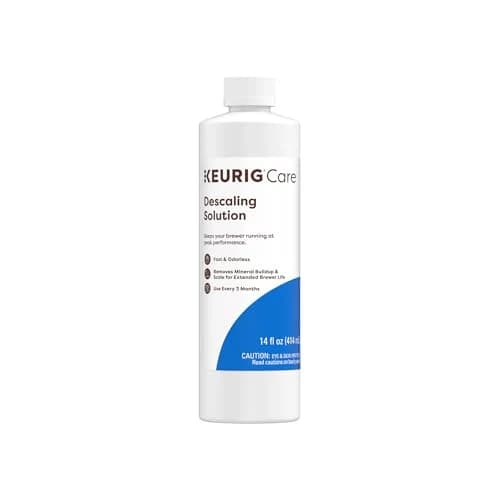
Keurig Descaling Solution
It is the product Keurig's own descaling page names, it costs about eight dollars, and one bottle is sized as exactly one descale, so the step people get wrong with powders does not exist. Buy the tub of Dezcal instead only if a second machine needs descaling too.
- The product Keurig's manual names
- Sized for one cycle — no measuring
- Works on 1.0 and 2.0 brewers
Price is approximate and changes often — check the listing.
Key takeaways
- Keurig Descaling Solution is the default answer at about eight dollars, and one bottle is sized as exactly one descale, so there is no dosing to get wrong.
- Urnex Dezcal is the cheaper choice per cycle in a 900 gram tub, and it is worth it only if you descale a second machine too.
- Cafiza tablets are a detergent for coffee oils, not a descaler. They do nothing to limescale and a Keurig has no backflush circuit anyway.
- Vinegar does dissolve scale, but it rinses out slowly and some manufacturers treat non-approved solutions as a warranty problem, for a saving of a few dollars a year.
- Keurig's own guidance is every three to six months, or when the descale light comes on. Hard water and daily brewing push you to the short end.
- The default for any K-Cup brewer8.6BrewSift ScoreExcellent
- Bulk powder, cheapest per descale8.9BrewSift ScoreExcellent
- Oil cleaner, not a descaler8.9BrewSift ScoreExcellent
Prices are approximate and change often. BrewSift earns a commission on qualifying purchases, at no extra cost to you.
A Keurig that dribbles, runs cool, or takes an age to heat is almost never broken. It is scaled up. Hard water leaves calcium and magnesium behind every time the brewer heats, that crust narrows the water path, and the cup gets weaker and cooler on a slope slow enough that most owners blame the pods.
The fix costs about eight dollars, and the buying decision is smaller than the search results make it look.
What to actually buy
Three products get recommended for Keurig maintenance, and only two of them are descalers at all.
| Product | What it is | Best for | About |
|---|---|---|---|
| Keurig Descaling Solution | Citric-acid descaler, one 14 oz bottle per descale | Any K-Cup brewer, the default answer | $8 |
| Urnex Dezcal, 900 g | Powder descaler, dozens of doses | A Keurig plus an espresso or drip machine | $30 |
| Urnex Cafiza tablets | Detergent for coffee oils, not a descaler | Espresso backflushing, not Keurigs | $18 |
Keurig Descaling Solution is the boring right answer
Keurig's own descaling page names its solution as the product to use, and the bottle is sized as exactly one descale. That matters more than it sounds: dosing is the step people get wrong with powders, and a one-bottle-one-cycle format removes the decision. At roughly eight dollars two or three times a year, the running cost of keeping a brewer alive is smaller than a week of K-Cup pods.
It is also the product the warranty language points at, which is worth something on a machine still inside its coverage window.
Urnex Dezcal is the same job in bulk
Dezcal is a citric-acid descaling powder in a 900 g tub, and it works in a Keurig the same way it works in an espresso machine. Per descale it is dramatically cheaper than single bottles. Buy it if you own more than one machine, or if you descale often enough that restocking bottles annoys you. If the Keurig is your only machine, the tub will likely outlive it.
Cafiza tablets are not descaler
Cafiza is a detergent that strips coffee oils out of a brew group. It is excellent at that and useless against limescale, because oil residue and mineral scale are different problems with different chemistry. A Keurig has no backflush circuit, so Cafiza has no job here at all. It appears in this guide only because it keeps turning up in Keurig cleaning threads, and buying it instead of a descaler leaves your brewer exactly as scaled as it was.
Rule of thumb: descaling dissolves minerals from the water path. Cleaning removes coffee oils. A Keurig needs the first one.
Is vinegar safe in a Keurig?
White vinegar is an acid, so it does dissolve scale, and plenty of owners report doing it for years without incident. The honest position is that it works and carries two costs: it rinses out slowly enough that the next several cups can taste of it, and some manufacturers treat non-approved solutions as grounds for refusing a warranty claim.
What actually clears the scale:
- A citric-acid descaler run through the full water path, then rinsed hard
- Diluted white vinegar, if you accept the taste and the warranty risk
- Repeating on a schedule rather than waiting for symptoms
What people try that does not work:
- Cafiza or any oil-cutting detergent, which does nothing to minerals
- Wiping the reservoir out, when the scale is inside the boiler and tubing
- One rinse tank, which leaves enough residue to flavour the next brew
- Bottled spring water as a substitute for descaling, since it still carries minerals
Our general descaler versus vinegar guide walks through the trade-off across machine types. For a Keurig specifically, the price gap between a bottle of the official stuff and a jug of vinegar is a few dollars a year, which is a thin reason to argue with the manufacturer.
How often to descale a Keurig
Keurig's guidance is every three to six months, or whenever the descale light comes on. Your water decides where you land in that range.
| Your water | Light use | Daily use |
|---|---|---|
| Soft or filtered | Every 6 months | Every 4 months |
| Moderate | Every 4 months | Every 3 months |
| Hard | Every 3 months | Every 2 months |
A descale indicator overrides the table. Newer brewers count brew cycles rather than measuring scale, so the light can arrive early or late, but it is still a better prompt than memory. Signs you are already overdue:
- The cup comes out short, cool, or slower than it used to
- The pump sounds louder or strains before it flows
- White chalky deposits appear around the reservoir or the needle
- The descale light stays on after you dismiss it
The cycle, briefly
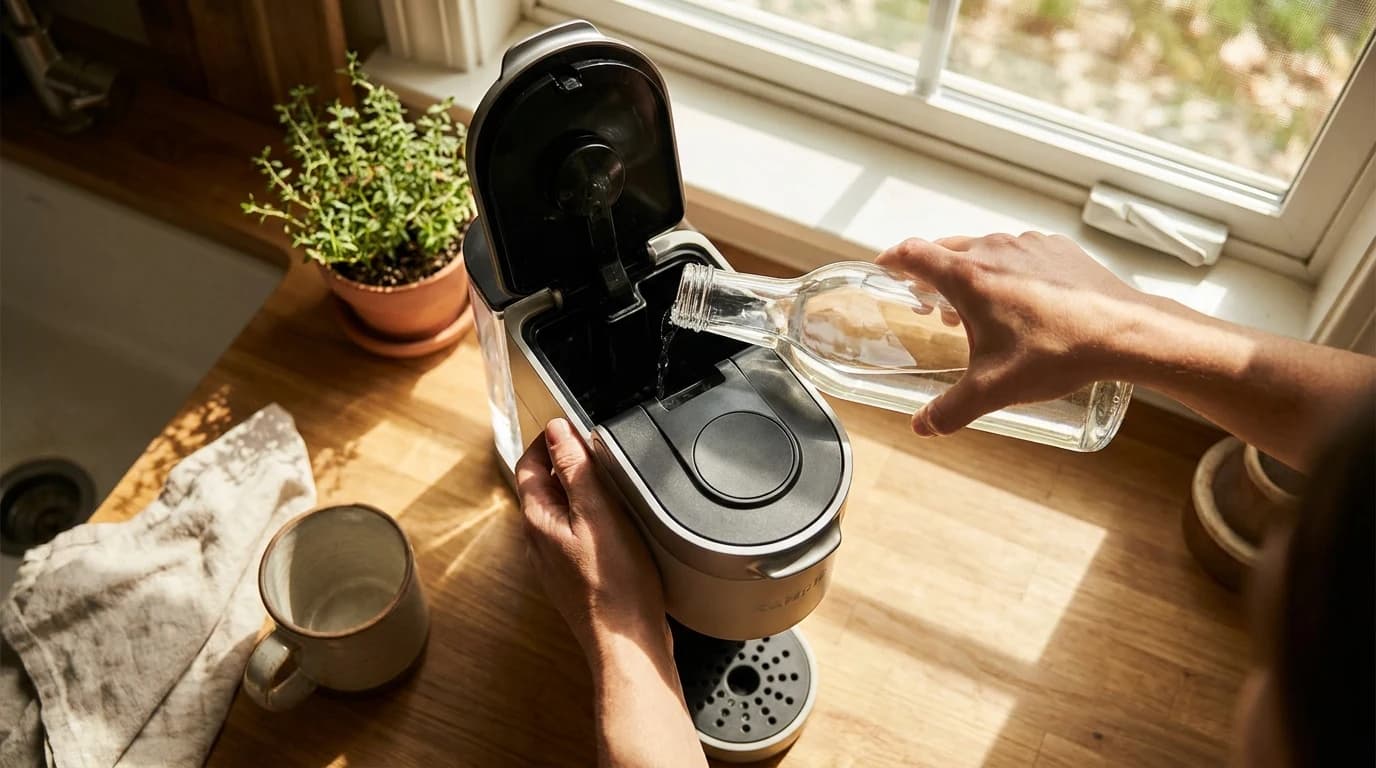
- Empty the reservoir and remove the water filter cartridge. Descaler destroys charcoal filters.
- Pour in the full bottle of solution, then refill the empty bottle with water and add that too.
- Run brew cycles with no pod into a large mug, emptying it between cycles, until the reservoir is drained.
- Let the brewer stand for the time the bottle specifies so the acid can work.
- Rinse with at least two full reservoirs of fresh water, running cycles until each is empty. Reinstall the filter and discard the first cup.
That is the shape of it. Follow the instructions printed on your bottle and in your model's manual, because tank sizes and button sequences differ across K-Classic, K-Elite, K-Supreme and Vertuo-adjacent designs.
Rule of thumb: the rinse is the step people skip, and one tank is not enough. Two full reservoirs, minimum.
If it still runs slow afterwards
Descaling clears the boiler and tubing, not the exit needle. A clogged needle is a separate five-minute job with a paperclip and the reservoir removed, and it produces the same short, slow cup that scale does. Heavy scale can also need a second consecutive descale, which is normal on a brewer that has never had one.
Softer water means fewer descales
Scale is dissolved minerals coming out of solution, so the real lever is what goes into the tank. A water filter that reduces hardness stretches the gap between descales, though it never removes the need. Distilled water is not the answer either, since most brewers are not designed for it.
Descaling is the cheapest maintenance in coffee. If you want to see what the brewer itself is costing you per cup, the pod price index puts the eight dollars in context.
Your next step
Choose a compatible descaler from the guide above. For prevention, check water hardness before buying a filter; pod price does not diagnose scale.
Descalers for a Keurig, and one thing that is not one
Keurig Descaling Solution
Keurig's own descaler — the one the manual names, for about $7 a descale.
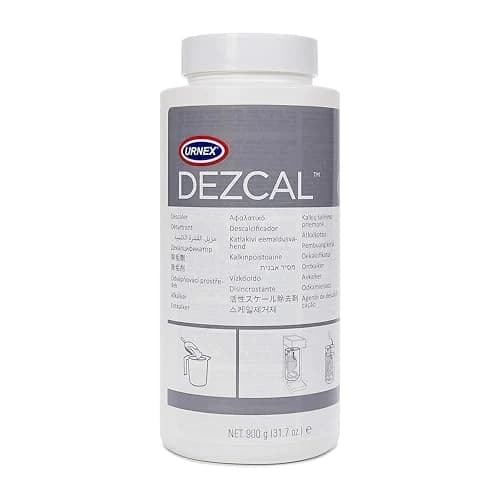
Dezcal Descaler, 900 g
One descaler for espresso machines, drip and pod brewers with steel or brass boilers — and a 900 g tub is dozens of descales.

Cafiza Espresso Machine Cleaning Tablets, 100 ct
The backflush tablet every café uses — 100 tablets is a year of weekly cleaning for about 18 cents a go.
BrewSift earns a commission on qualifying purchases made through these links, at no extra cost to you. Prices shown were checked on publication and change often.
FAQ
What is the best descaling solution for a Keurig?
Keurig Descaling Solution, the brand's own citric-acid product, is the safest default. Keurig's descaling page names it directly, it costs about eight dollars, and one bottle is a single descale so there is nothing to measure. If you also own an espresso or drip machine, a 900 gram tub of Urnex Dezcal does the same job for far less per cycle.
Can I use vinegar to descale a Keurig?
It works, because vinegar is an acid and scale is a mineral deposit. The two costs are taste and warranty: vinegar rinses out slowly enough that the next few cups can carry it, and some manufacturers treat non-approved descaling agents as grounds for refusing a claim. Given that a bottle of the official solution is around eight dollars two or three times a year, the saving is thin.
How often should I descale my Keurig?
Keurig's own guidance is every three to six months, or whenever the descale light comes on. Hard water and daily brewing put you at the three-month end; soft or filtered water with light use stretches toward six. The indicator light overrides any schedule, though it counts brew cycles rather than measuring actual scale.
Are Cafiza tablets a descaler?
No. Cafiza is a detergent that dissolves coffee oils out of an espresso brew group, which is a different residue with different chemistry. It will not touch limescale, and a Keurig has no backflush circuit for it to work in. If your Keurig is slow or cool, you need a descaler, not a cleaning tablet.
My Keurig is still slow after descaling. What now?
Descaling clears the boiler and internal tubing but not the exit needle, which clogs with coffee grounds and produces the same short, slow cup. Clean the needle with a paperclip with the brewer unplugged and the reservoir removed. A brewer that has never been descaled can also need a second consecutive cycle.