Brewed coffee is almost entirely water, so the water you brew with hugely shapes the taste. Remineralizing packets and coffee-specific filters give you the mineral balance that makes flavors pop — and protect your machine from scale.
Quick steer — The cheapest upgrade in the hobby: fix the water before you blame the beans. Filter to strip chlorine and scale, or build to a mineral recipe if you want full control.
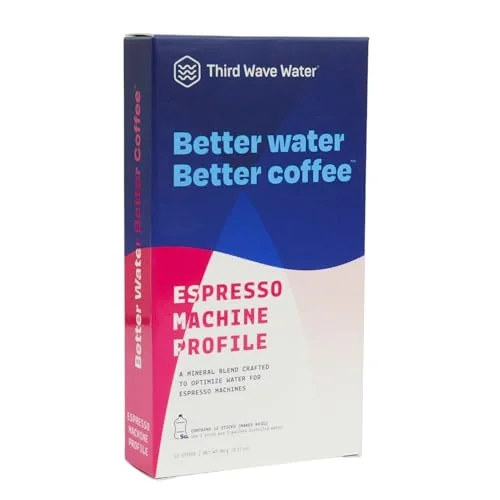
Top pick: Third Wave Water Espresso Profile Mineral Packets (8.9/10, Approx. $29). Add one packet to a gallon of distilled water for a mineral profile Third Wave Water designed for espresso — a noticeable upgrade.
Skip this
Brewing with distilled or zero-TDS water straight from the jug
Water with nothing in it has nothing to carry flavour out of the coffee, and the National Coffee Association's drip guidance says to use cold, filtered water and to avoid distilled or softened water. Distilled and reverse-osmosis water are a starting point rather than an answer: Third Wave Water's own instruction is to add a mineral stick to distilled or RO water before brewing, which is the entire point of the product.
The BrewSift Score is a 0–10 weighted average of category-specific sub-scores, built from manufacturer specifications, published reviews and aggregated owner reports — not hands-on testing. In this category it weights taste improvement 40%, ease of use 20% and capacity / yield 20%, plus 1 smaller factor. How we score →
Add one packet to a gallon of distilled water for a mineral profile Third Wave Water designed for espresso — a noticeable upgrade.
Brewed coffee is almost entirely water, and most tap or distilled water is wrong for it. Third Wave Water's packets dissolve into distilled or RO water to hit a precise mineral profile tuned for espresso — better extraction, clearer flavor, and no scale to ruin your machine. The cheapest upgrade that genuinely changes the cup.
The filter-coffee version — a mineral profile that makes pour-over and drip brighter and more articulate.
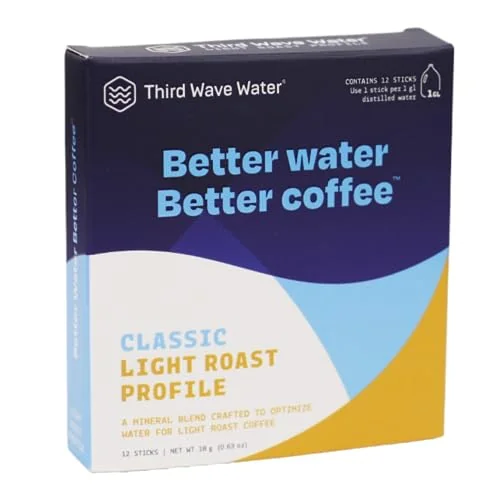
Third Wave Water's Classic Light Roast Profile is a mineral recipe rather than a filter: you add one stick to a gallon of distilled or reverse-osmosis water, shake, and brew with it. The maker lists magnesium sulfate, calcium citrate and sodium chloride as the ingredients, says the profile is formulated to the SCA's water standards, and pitches it at light-roast coffee from drip machines to AeroPress, Chemex and V60. The catch is the base water: it only works as designed on blank distilled or RO water, so it adds a jug-buying routine on top of the packets.
A filter that removes everything is not the goal. Third Wave Water publishes its recipes at roughly 150 mg/L TDS — magnesium sulfate, calcium citrate and potassium bicarbonate in the espresso profile — and asks you to add them to distilled or reverse-osmosis water, because those minerals are what extraction works on. The National Coffee Association likewise tells drip brewers to use filtered water and to avoid distilled or softened water. A zero-TDS pitcher is excellent at protecting a boiler and a poor place to stop if you care how the coffee tastes.
What owners actually report
r/espressor/pouroverr/Coffee
Water is the upgrade r/espresso and r/pourover say people put off longest and regret putting off. The split in these threads is between protecting the machine and improving the cup, and owners are clear that those are different problems. For espresso machines the recurring advice is to get the hardness down, because scale is the failure mode that ends machines, and blank water plus a mineral recipe is the standard answer. For filter brewing the advice is gentler: a carbon pitcher that strips the chlorine is most of the win, and mineral packets are a refinement rather than a requirement. The two points the subs agree on are that a mineral recipe works out cheaper per litre than it looks once you stop buying bottled water, and that it is nonetheless a chore — people who abandon it always cite the mixing ritual rather than the result.
Consistently praised
Mineral packets in distilled or RO water — The standard recommendation for espresso owners who want a known, repeatable water. Third Wave Water publishes its profiles at around 150 mg/L TDS and directs you to add a stick to distilled or RO water.
Plain carbon pitcher filters — The honest cheap answer for filter brewing: owners say removing the chlorine is most of the improvement and that everything after it is a refinement.
Adjustable filter jugs — Liked by people who want a dial rather than a recipe, because the brewing water comes out of one jug instead of out of a mixing routine.
Consistently warned about
Brewing with distilled or zero-TDS water as-is — Consistently reported as flat and hollow, and the NCA's drip guidance is explicit about avoiding distilled and softened water.
Ignoring hardness on an espresso machine — Scale is the most cited cause of a dead machine in these threads, and descaling is the maintenance job owners admit to skipping.
Choosing bottled water by brand name — Mineral content varies widely between brands and between bottling sites, so the recurring advice is to read the analysis printed on the label rather than trust the word spring.
What we didn't pick
Popular options we looked at and passed on, with the specific reason each one fell short.
Reverse-osmosis systems bought purely for coffeeConsidered 2026-09
RO produces excellent blank water, and blank water is not brewing water: you still have to add the minerals back. For a household brewing a few litres a day, a jug of distilled and a box of mineral sticks reaches the same place without plumbing anything in.
Softener-only pitchers sold as coffee waterConsidered 2026-09
Ion-exchange softening swaps hardness for sodium. That protects a boiler, and it does not give you the magnesium the extraction wants — the National Coffee Association specifically advises against brewing with softened water. Source.
Bottled water bought by the case for brewingConsidered 2026-09
It is the most expensive way to get a known water, the mineral content is rarely published to the precision the coffee argument needs, and the cost of shipping water around is hard to justify when a mineral stick and a jug of distilled does the same job.
The seven water entries BrewSift ranks run $14.98 to $62, a 4.1x spread, and they split three ways rather than into good and better: two mineral recipes you add to blank water, three filters that take things out, and two maintenance kits for one specific brewer.
What the best water for coffee actually is
The SCA's target is roughly 150 mg/L total dissolved solids (a workable range is about 75–175 mg/L), near-neutral pH around 7, and low-to-moderate hardness with some bicarbonate to buffer acidity. In plain terms: not distilled-flat, not tap-hard — clean water with a balanced pinch of minerals. Hit that and flavors get more distinct and sweeter.
Minerals make flavor
Distilled or very soft water makes flat coffee; very hard water mutes it and scales your machine. Remineralizing packets (added to distilled/RO water) hit the sweet spot baristas chase — and the results are genuinely audible in the cup.
Filtered vs bottled vs built water
Filtered tap (a pitcher or inline filter) removes chlorine and softens hardness — the cheap, easy win for most people. Bottled spring water is inconsistent bottle to bottle and can be quite hard; avoid distilled or 'purified' bottled water on its own (too flat). Built water — distilled or RO plus a remineralizing packet like Third Wave Water — is the most consistent and the gold standard for espresso and serious filter brewing.
Filter or build
A simple pitcher filter removes chlorine and some hardness — a cheap, easy win for most people. For espresso and competition-level filter, building water from packets gives full control and protects an expensive machine from scale.
Choosing a water filter for coffee, and what a filter cannot do
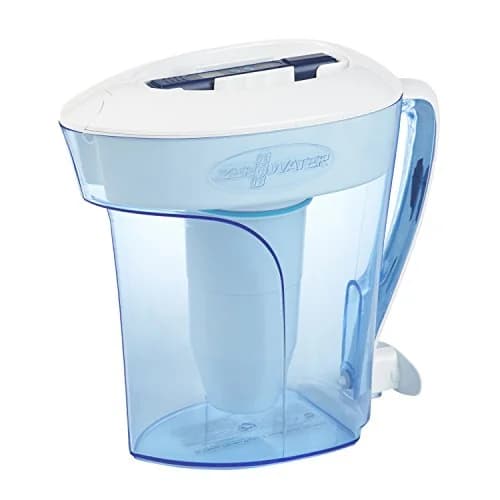
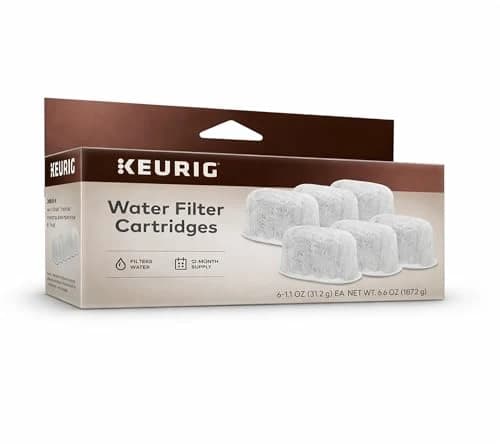
Filters do two different jobs and the pitchers on the shelf are not interchangeable. A carbon filter, which is what a standard Brita pitcher and the charcoal cartridges Keurig sells for its own reservoirs use, removes chlorine and the taste it carries. That is the single cheapest improvement most tap water needs, and it is why coffee brewed on filtered tap water usually tastes cleaner immediately. What carbon does not do is remove much hardness, so it does not protect a machine from scale. An ion-exchange pitcher such as ZeroWater strips almost everything, which is a different proposition: the output is close to flat, so treat it as a base to build on with a mineral packet rather than as finished brewing water. The SCA's target of roughly 150 mg/L of dissolved solids is a reminder that the goal is balanced water, not empty water. Two practical notes. Cartridges have a service life, and Keurig's own guidance for its reservoir filters is every two months or 60 tank refills. And if your water is genuinely hard, a filter alone will not save a boiler, so descaling stays on the calendar.
Clean, filtered water with a balanced mineral content — the SCA target is around 150 mg/L total dissolved solids, near-neutral pH, and low-to-moderate hardness. Filtered tap water gets most people there cheaply; for the most consistent results, use distilled or RO water plus a remineralizing packet built to that spec. Avoid brewing with distilled water alone (flat) or hard, chlorinated tap (muted and scaling).
Can I use tap water for coffee?
If your tap water tastes good to drink and isn't very hard, filtering out the chlorine (a pitcher or faucet filter) is usually all you need. If it's hard, heavily chlorinated, or off-tasting, it will dull your coffee and scale your machine — switch to a filter, or to built water from packets for espresso.
Is bottled or distilled water better for coffee?
Neither is ideal on its own. Distilled and purified water is stripped of the minerals coffee needs to taste full, so it brews flat. Bottled spring water varies a lot batch to batch and is often too hard. The most reliable option is distilled or RO water with a remineralizing packet added, which lands exactly in the flavor sweet spot every time.
Does water hardness affect espresso machines?
Yes — hard water deposits scale (limescale) inside boilers and lines, which hurts temperature stability and eventually damages the machine. Softening the water with a filter or using low-hardness built water both improves the shot and dramatically cuts descaling and repairs.
How often should you replace a water filter for coffee?
Follow the maker's interval for your cartridge, and go sooner if your water is hard. Brita says to replace its Original (Standard) pitcher filter every 40 gallons, about every two months, and its Elite filter every 120 gallons, about six months, and notes hard water may mean changing more often. ZeroWater ties replacement to the meter that comes with the pitcher: change the filter when filtered water reads 006 or higher, which comes sooner on high-TDS tap water. Keurig's guidance for its reservoir cartridges is every two months or 60 tank refills.
Does a Brita filter make coffee taste better?
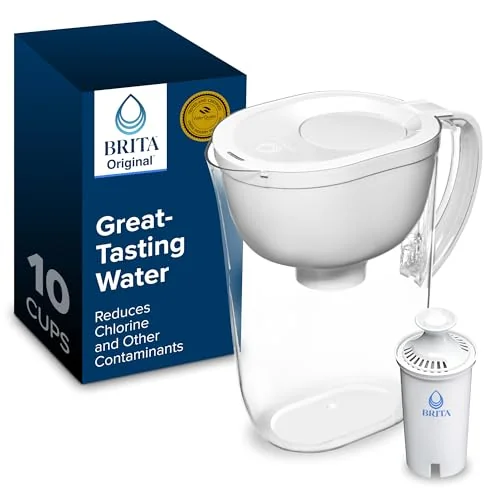
Usually, if chlorine is what you taste. Brita states that all its filters are certified to reduce chlorine taste and odor, and stripping chlorine is the single cheapest improvement most tap water needs. What a pitcher does not do is set your mineral content: Brita describes its Original filter as preserving certain minerals rather than adding any, so the brewing water still sits wherever your tap water does against the SCA's target of roughly 150 mg/L dissolved solids. If your tap is very hard or very soft, a carbon pitcher leaves that unchanged, so check your hardness before deciding a pitcher is enough.
Is a filter pitcher or mineral packets better for coffee?
They solve different problems. A carbon pitcher takes chlorine out of tap water that is otherwise fine, which is most of the win for drip and pour-over. An ion-exchange pitcher such as ZeroWater strips almost everything, so its output is close to flat and works best as a base for minerals. Mineral packets build water to a known recipe: Third Wave Water's sticks go into distilled or RO water and land around 150 mg/L TDS. Use a pitcher if your tap tastes of chlorine and its hardness is reasonable; build water if you pull espresso, have very hard tap water, or want the same water every day.