Variable-temperature gooseneck kettles give you the slow, precise pour that pour-over and Chemex need — plus exact water temperature for every brew method.
Quick steer — A gooseneck is essential for pour-over and optional for everything else. What you are paying for is flow control and a temperature the kettle will hold.
Top pick: Fellow Stagg EKG Pro (8.8/10, Approx. $179.95). The benchmark electric gooseneck — to-the-degree control, a PID that holds it, and a counterbalanced handle.
Skip this
Temperature control bought expecting a better cup
It is a convenience upgrade, not a quality one. The National Coffee Association's pour-over guidance says plainly that if your kettle has no built-in thermometer you should have one on hand, which is the same water at the same temperature for a fraction of the money.
The BrewSift Score is a 0–10 weighted average of category-specific sub-scores, built from manufacturer specifications, published reviews and aggregated owner reports — not hands-on testing. In this category it weights pour control 30%, temperature accuracy 25% and heat-up speed 15%, plus 2 smaller factors. How we score →
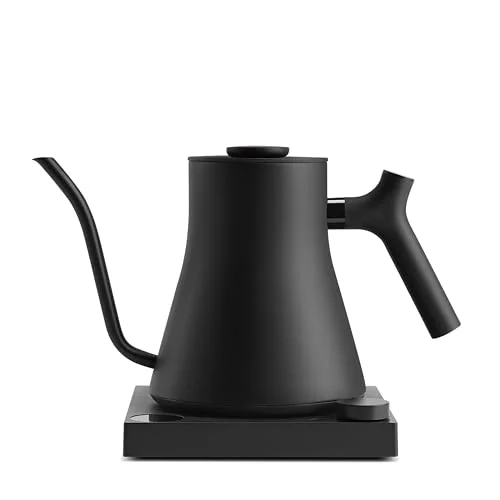
The benchmark electric gooseneck — to-the-degree control, a PID that holds it, and a counterbalanced handle.
To-the-degree temperature across the full brewing range, a PID that holds the set point, and a weighted, counterbalanced handle that makes a slow, controlled pour effortless. The Pro adds a colour LCD, a built-in brew stopwatch, saved presets and scheduling over the original EKG, which Fellow has now superseded — the Pro is the model Amazon actually stocks. The default recommendation for pour-over, and a beautiful object besides.
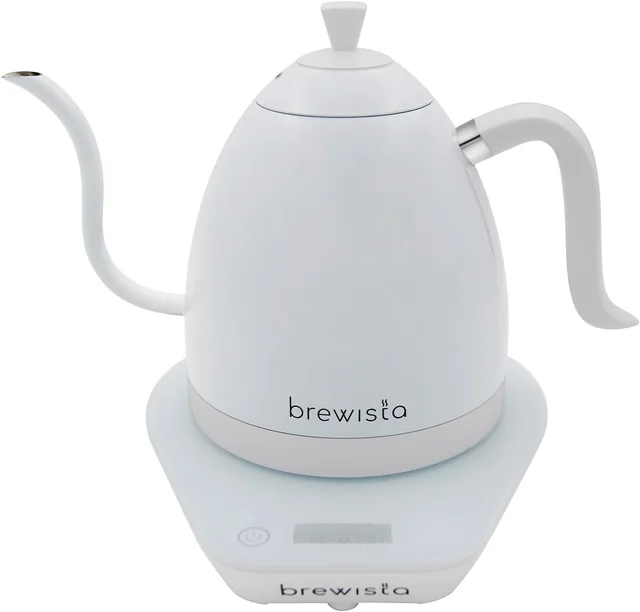
The nearest substitute for a Stagg from another brand — one-degree steps, a real gooseneck, and a full liter.
Brewista sets temperature in 1°F steps on an LCD console, adds a flash-boil setting to cut the wait and a keep-warm mode to hold the target, in a 1L body — more water than the Stagg's 0.9L. The 1000W element means it is not the quickest kettle on this page, and the spout is a touch wider than a Stagg's, but for pour-over control a step below flagship money it is the closest like-for-like alternative.
Temperature in 1°F increments
Full 1L capacity with a genuine gooseneck
Flash-boil setting plus keep-warm
1000W heats slower than the 1200–1500W rivals here
Still premium money
What owners say — Amazon owners average 4.4 stars across 183 ratings — a thin base next to the mainstream kettles here, so read the consensus as less settled rather than as a negative.
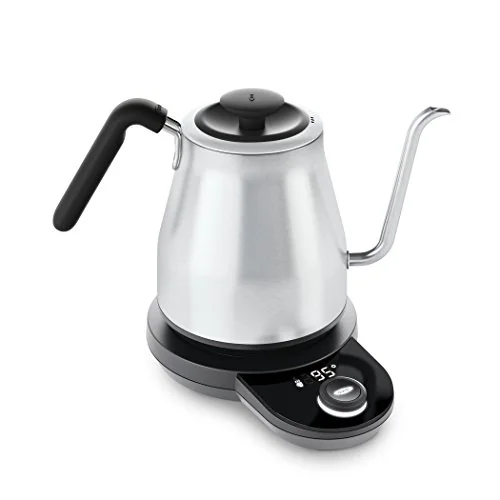
Variable-temp gooseneck pouring for a third less than a Stagg, with a larger capacity.
A real gooseneck spout, variable temperature, hold mode, and a 1L capacity at a friendlier price. The pour control isn't quite Stagg-tier, but for most home pour-over it's all you need — and it heats a bigger batch.
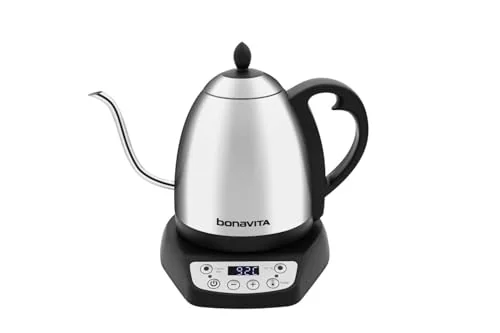
A long-favorite budget gooseneck many consider the best cheap pour for Chemex.
A genuine gooseneck with variable temperature at the lowest credible price. The handle and pour are well-regarded for the careful, slow streams that Chemex and V60 reward, making it a perennial budget recommendation.
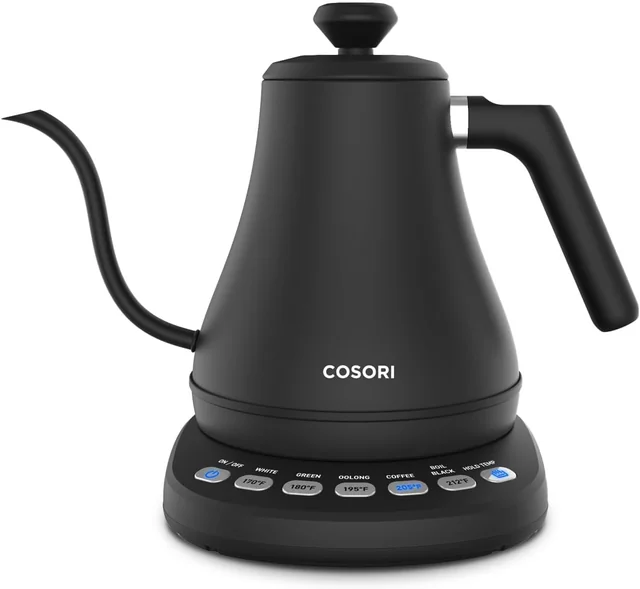
The budget gooseneck to start with — five presets, a genuine gooseneck spout, and by far the biggest owner base in the category.
Cosori's 0.8L kettle is the default cheap gooseneck. It runs five one-touch presets rather than to-the-degree control, and Cosori rates the hold as within 5°F of the target, so precision is a clear step below a Stagg or a Bonavita. What you get instead is a real gooseneck spout, a counterbalanced handle, a 304 stainless interior, lid and spout with no plastic touching the water, 1200W heating and a 60-minute keep-warm — at roughly a third of flagship money.
The cheapest credible gooseneck here
1200W through a small 0.8L body heats fast
Stainless interior, lid and spout — no plastic in the water
Five presets, not to-the-degree control
Cosori rates the hold only within 5°F
What owners say — Amazon owners average 4.6 stars across 19,532 ratings — the largest and highest-rated owner base of any kettle on this page.
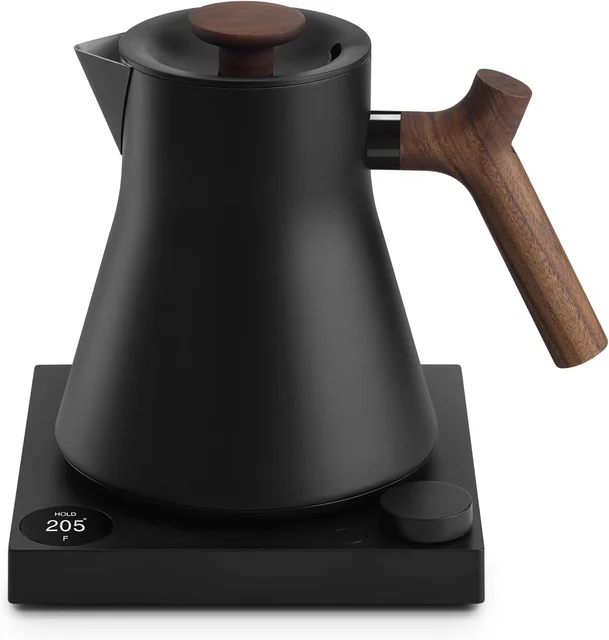
Stagg-grade temperature control behind a wide spout — the Fellow to buy for French press and tea rather than pour-over.
Mechanically this is the Stagg EKG Pro's sibling: to-the-degree control, a colour LCD, guide-mode presets, hold mode, a brew stopwatch and scheduling, in a 304 stainless body. The difference is the spout. Corvo pours wide and fast, which is what a French press, an immersion brewer or a teapot wants and precisely what pour-over does not — so it scores lower in a category where pour control carries the heaviest weight. Buy it for everything except the V60.
To-the-degree temperature control
Wide spout fills a press or teapot quickly
Colour LCD, guide mode, brew stopwatch and scheduling
Not a gooseneck — a poor fit for pour-over
Premium price
What owners say — Amazon owners average 4.5 stars over just 49 ratings; the Pro revision is a young listing, so the sample is thin beside the Stagg's.
The gooseneck is the requirement and the thermostat is the luxury, which is the reverse of how these kettles are marketed. Owners who moved from a stovetop gooseneck and a thermometer to a temperature-controlled electric consistently describe the gain as workflow and enjoyment rather than a better cup.
What owners actually report
r/pouroverr/JamesHoffmannr/Coffee
r/pourover separates the two features that get sold together. The gooseneck spout is treated as the actual requirement, because it is what lets you control flow rate and placement; temperature control is treated as a workflow convenience that owners like a lot and repeatedly say does not change the coffee, on the grounds that a plain gooseneck kettle plus a thermometer reaches the same water at the same temperature. The premium electric kettles draw a persistent value argument, with owners who have used both a generic gooseneck and a flagship saying the difference is real but far smaller than the price gap, alongside owners who have had a flagship replaced under warranty and stayed loyal. The specific warning that recurs is that some inexpensive kettles with temperature presets read inaccurately, which is worse than no temperature control at all because you trust the number.
Consistently praised
Fellow Stagg EKG — Owners cite the slow, controllable flow rate as the thing that actually improves their pours, and several report Fellow replacing a failed kettle without argument, which is the counterweight to the recurring reliability complaints.
A plain gooseneck kettle plus a thermometer — The recurring budget answer, and the one people who later upgraded still say produced the same coffee: the spout does the work, and a thermometer covers the temperature.
Consistently warned about
Cheap kettles with temperature presets that read inaccurately — The specific failure owners post about: the display shows a target the water never reached, so brews drift for reasons the brewer cannot see. An honest kettle with no temperature control is easier to work with than a dishonest one that has it.
Short-spouted kettles used for pour-over — A wide or short spout pours fast and is hard to place, which is exactly the control pour-over depends on. This is the one feature the method genuinely requires.
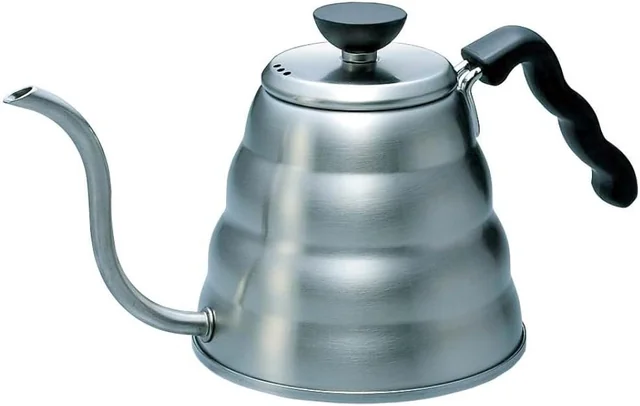
The eight kettles BrewSift ranks run $53.95 to $199.95, a 3.7x spread. Six of them are goosenecks, and the cheapest of those, the Hario Buono stovetop, is the only kettle on the page with no temperature control at all.
Gooseneck vs standard spout
A gooseneck spout delivers a slow, thin, controlled stream of water — exactly what pour-over methods like V60, Kalita, and Chemex need to saturate the grounds evenly and hit the right pour rate. A standard wide spout dumps water too fast and unevenly for pour-over, channeling the water and giving you a weak, sour brew. For immersion methods where the water just goes in the vessel — French press, AeroPress, cold brew — you don't need a gooseneck at all; you only need accurate temperature. Buy a gooseneck if pour-over is in your future, and skip it if it isn't.
Temperature precision and hold
Variable-temperature control lets you set the exact water temp, which matters because different coffees and teas want different heat. Look for 1°F or 1°C increments and, ideally, a PID controller that holds the set point rather than just heating to it and drifting. A hold or keep-warm function that maintains temperature for several minutes is genuinely useful for pour-over, where you brew in stages. Cheap kettles that only offer a few coarse presets are fine for one brew method but limiting if you make both light-roast coffee and green tea.
What temperature to actually use
As a rule, light roasts want hotter water (about 200–205°F) to extract fully, medium roasts sit around 195–200°F, and darker roasts and delicate teas want cooler (185–195°F, and lower still for green and white tea). The SCA brew window is 195–205°F, so if you only ever set one temperature, 200°F is a safe all-rounder for coffee. Being able to nudge it a few degrees is where a variable-temp kettle earns its price — hotter to boost extraction on a flat cup, cooler to tame bitterness.
Build, capacity, and speed
Stainless steel interiors are the safe default; some drinkers prefer to avoid plastic anywhere the hot water touches, so check where the water contacts. A 0.8–1L kettle suits pour-over and one or two cups; larger kettles suit tea and multiple mugs but heat slower and are heavier to pour steadily. A well-balanced kettle with a comfortable handle and a spout that doesn't dribble makes controlled pouring far easier — pour control is a real, tactile difference between a cheap gooseneck and a good one like the Fellow Stagg EKG Pro.
Extras: app control, counterweight, and looks
Higher-end kettles add app or Bluetooth control, scheduling, a real-time temperature readout, and a weighted, ergonomic handle for a more controlled pour. These are conveniences, not necessities — the core job is accurate, stable temperature and a good pour. A quality variable-temp gooseneck without the app does everything the coffee needs; pay up for the extras only if the counterweighted pour balance or the built-in brew timer genuinely fits how you brew, not for the touchscreen alone.
Fellow Stagg alternatives: what else buys the same pour
The Stagg EKG Pro is the kettle most people arrive here having already seen, and the honest position is that its advantages are real but sit above the part that changes your coffee. The pour is done by the gooseneck spout, and the temperature is done by variable control, and every electric gooseneck we rank has both. The Brewista Artisan is the closest like-for-like: a 0.9L gooseneck with to-the-degree setting and a hold function at a lower price, which makes it the first place to look if the Stagg is the benchmark. The OXO Brew Adjustable Gooseneck holds a litre against the Stagg's 0.9, keeps a hold function, and is the value pick for someone who wants controlled pouring without paying for the interface. The Bonavita Variable Temperature Gooseneck is the cheapest way onto the same two features and is a long-standing favourite for Chemex-sized pours. What the Stagg adds is workflow and finish: to-the-degree setting, presets, scheduling, a 60-minute hold, a built-in brew timer and a counterweighted handle that genuinely feels different in the hand. Whether that is worth the difference depends on how often you brew and how much you enjoy the object. The cheapest credible alternative of all is a stovetop gooseneck plus a thermometer, which the National Coffee Association's own pour-over guidance treats as normal practice.
Choosing a kettle for French press, where a gooseneck is optional
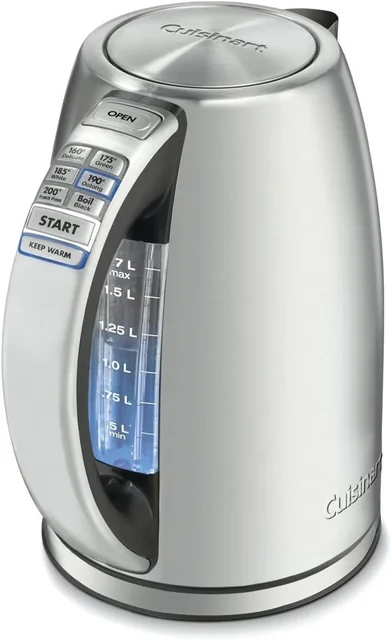
French press asks nothing of the spout. The water goes into a carafe in one pour, gets stirred, and steeps, so flow control does no work and a gooseneck is a convenience rather than a requirement. Two other things do matter. Capacity is the first, and it is the specification most people get wrong: a standard 8-cup press takes roughly a litre of water, so a 0.9L kettle like the Stagg EKG Pro will not quite fill one in a single boil, while the 1L OXO Brew and Bonavita kettles will. Temperature is the second. The SCA brew window is 195 to 205F, and French press sits comfortably in it, so a variable-temperature kettle lets you set 200F and stop guessing. If you have no temperature control, boiled water rested for 30 to 45 seconds lands close enough. Buy a gooseneck anyway if pour-over is anywhere in your future, since it costs little more at this level and the press does not mind. Buy a plain variable-temperature kettle with a large capacity if the press is genuinely all you brew: the Fellow Corvo EKG Pro is the Stagg's wide-spout sibling for exactly this, and the 1.7L Cuisinart PerfecTemp fills any press in one boil for less.
The best electric gooseneck kettle for your budget
Most people looking for the best electric gooseneck kettle are really choosing how much temperature control to pay for, because the spout does the same job at every price. The kettles on this page fall into three tiers. At the bottom, the Cosori 0.8L gives you a genuine gooseneck with five one-touch presets rather than to-the-degree control, and Cosori rates its hold as within 5°F of the target; for a first pour-over kettle that is enough, and it has the largest owner base of any gooseneck here. The Bonavita Variable Temperature Gooseneck adds adjustable temperature in a 1L body and has long been the budget recommendation for Chemex pours. In the middle, the OXO Brew Adjustable Gooseneck adds a hold function and a litre of capacity, and the Brewista Artisan sets temperature in 1°F steps with a keep-warm mode, which makes it the closest thing to a flagship without flagship money. At the top, the Fellow Stagg EKG Pro adds to-the-degree control with a PID that holds the set point, saved presets, scheduling, a brew timer and a counterweighted handle. What rises with price is precision, hold and workflow. What barely changes is the pour itself, which is why the stovetop Hario Buono and a thermometer remain a legitimate way to skip the electronics altogether.
Is a gooseneck kettle worth it if I only make pour-over occasionally?
If you pour over at all, yes — the thin spout is what lets you wet the grounds evenly and control the flow, and that is most of what makes pour-over taste good. If you only use a French press or an AeroPress, a regular kettle with temperature control is the better buy.
Do I need a gooseneck kettle?
Only if you brew pour-over. Methods like V60, Kalita Wave, and Chemex depend on a slow, precise, controllable stream to saturate the grounds evenly, and a gooseneck spout is the only practical way to get that — a normal kettle pours too fast and channels the water, giving weak, uneven coffee. If you only make French press, AeroPress, drip, or cold brew, where the water just goes into a vessel, you don't need a gooseneck at all; you only need accurate temperature. Buy the gooseneck for pour-over, skip it otherwise.
What temperature should water be for coffee?
The SCA brew window is 195–205°F (about 90–96°C), and 200°F is a reliable all-rounder if you only set one temperature. Within that range, use hotter water (200–205°F) for light roasts to extract them fully, mid-range (195–200°F) for medium roasts, and cooler (around 185–195°F) for dark roasts to avoid pulling out bitterness. If you don't have a variable-temp kettle, boiling water rested for about 30–45 seconds lands roughly in the coffee range.
Is a variable-temperature kettle worth it?
For most people who care about their coffee, yes — being able to set an exact temperature is the difference between guessing and brewing to spec, and it lets one kettle serve light-roast coffee, dark roast, and different teas that each want different heat. A PID that holds the temperature is a real upgrade over a kettle that just heats and drifts, especially for staged pour-over. If you only ever make one thing and don't mind resting boiled water, a plain kettle can get by — but the precision is genuinely useful and inexpensive to add.
Can I use a regular kettle for pour-over coffee?
You can, but the results are compromised. A wide-spout kettle pours too much water too quickly to control the bloom and the pour rate that pour-over depends on, which tends to channel the water and produce weak, sour, uneven coffee. In a pinch you can slow the pour and manage the temperature by resting boiled water, but if you brew pour-over regularly, a variable-temp gooseneck is the single tool that most improves the cup. For immersion methods, a regular kettle is completely fine.
Are electric gooseneck kettles better than stovetop ones?
For coffee, electric variable-temp gooseneck kettles are generally more convenient because they let you set and hold an exact temperature, which stovetop kettles can't do without a separate thermometer. Stovetop goosenecks are cheaper, have nothing electronic to fail, and pour just as well, but you're guessing at temperature or checking it manually. If precise, repeatable temperature matters to you — and for light roasts it does — the electric version is worth it; if you just want a controlled pour and will rest boiled water, stovetop is fine.
What is a good alternative to the Fellow Stagg EKG?
Every other electric gooseneck we rank does the two things that change the coffee. The Brewista Artisan is the closest like-for-like, with temperature in 1-degree steps and a full litre. The OXO Brew Adjustable Gooseneck gives you the same gooseneck pour and variable temperature with a litre capacity and a hold function, and it is the value pick. The Bonavita Variable Temperature Gooseneck is a long-standing budget route onto the same pair of features, and the Cosori is cheaper still if five presets are enough. What you give up against the Stagg EKG Pro is workflow rather than water: to-the-degree setting, presets, scheduling, a 60-minute hold, a brew timer and the counterweighted handle. Cheapest of all is a stovetop gooseneck plus a thermometer, which the National Coffee Association's pour-over guidance treats as ordinary practice.
What kettle is best for French press?
Capacity and temperature, not the spout. A standard 8-cup French press takes roughly a litre, so a 1L kettle like the OXO Brew or the Bonavita fills one in a single boil while a 0.9L kettle does not quite. Set 200F if the kettle allows it, which sits in the middle of the SCA's 195 to 205F window; without temperature control, boiled water rested 30 to 45 seconds is close enough. A gooseneck is optional here because the water goes into the carafe in one pour, but it costs little at this level and is worth having if you might brew pour-over later.
What is the best cheap gooseneck kettle with temperature control?
The Cosori 0.8L is the cheapest electric gooseneck we rank and the one to start with: a real gooseneck spout, a stainless interior with no plastic touching the water, five one-touch presets and a 60-minute keep-warm. The trade is precision, since Cosori rates its hold only within 5°F and you cannot set an exact degree. If you want to dial in a specific temperature, the Bonavita Variable Temperature Gooseneck is the step up. If you would rather spend nothing on electronics, the Hario Buono stovetop kettle and a thermometer give you the same controlled pour for less.
Which kettle is best for a Chemex or an AeroPress?
For a Chemex, a gooseneck with some capacity. Chemex is a pour-over, so it needs the slow, aimed stream only a gooseneck gives, and a full carafe takes more water than a single cup, which favours the 1L kettles: the Bonavita Variable Temperature Gooseneck has long been the budget favourite for Chemex, and the OXO Brew Adjustable and Brewista Artisan also hold a litre against the Stagg's 0.9. For an AeroPress the spout barely matters, because the water goes straight into the chamber; what helps is being able to set the temperature your recipe calls for, so any variable-temperature kettle on this page works, including the wide-spout Fellow Corvo.