Best Automatic Espresso Machines (Super-Automatic)
Bean-to-cup machines that grind, dose, brew, and (often) froth milk at the push of a button. Café variety with near-zero technique.
Quick steer — Buy here when the machine has to serve people who will not dial in a grinder. You trade the learning curve for a daily cleaning routine, not for zero maintenance.
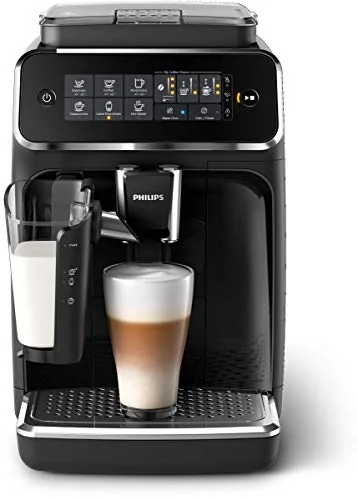
Top pick: Philips 3200 Series LatteGo (8.3/10, Approx. $500.04). The value bean-to-cup pick: one-touch milk drinks and the easiest milk system to clean.
Skip this
A super-automatic bought expecting espresso-bar shot quality
The machine grinds, doses, tamps and brews to a fixed recipe, which is the entire point and also the ceiling. Owners who wanted the shot rather than the convenience consistently report ending up with a semi-automatic and a separate grinder instead, which is a more expensive way to arrive at the same place.
The extra money buys a wider drink list and a 13-setting steel burr behind a removable brew group — the same one-touch idea with more recipes and more adjustment.
The BrewSift Score is a 0–10 weighted average of category-specific sub-scores, built from manufacturer specifications, published reviews and aggregated owner reports — not hands-on testing. In this category it weights drink quality 25%, ease of use 20% and drink variety 15%, plus 3 smaller factors. How we score →
The value bean-to-cup pick: one-touch milk drinks and the easiest milk system to clean.
The LatteGo carafe is two snap-apart parts with no tubes — rinse in seconds — and the removable brew group keeps long-term maintenance simple. Five one-touch drinks, a ceramic burr grinder, and reliable results make it the default first super-automatic.
The most affordable name-brand bean-to-cup that still does the basics well.
A removable brew group, a 13-setting conical burr grinder and, on the LatteCrema trim linked here, an automatic milk carafe with seven one-touch recipes: espresso, coffee, cappuccino, latte macchiato, iced coffee, hot water and a savable My Latte. It won't match a Jura on polish, but it delivers reliable espresso and milk drinks at the lowest credible super-automatic price.
The most affordable way to get a one-touch latte from whole beans, with the easy-clean LatteGo carafe.
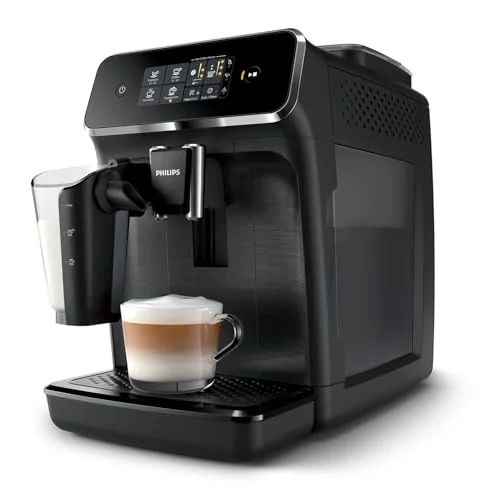
A step below the 3200 — three one-touch drinks (espresso, coffee and cappuccino) against the 3200's five, on a touch display — but it keeps the no-tubes LatteGo milk carafe and removable brew group that make Philips machines so easy to live with. The cheapest credible bean-to-cup that still froths milk at the touch of a button.
The step up from the 3200: twelve one-touch drinks including iced, and Philips' quieter SilentBrew grinder.
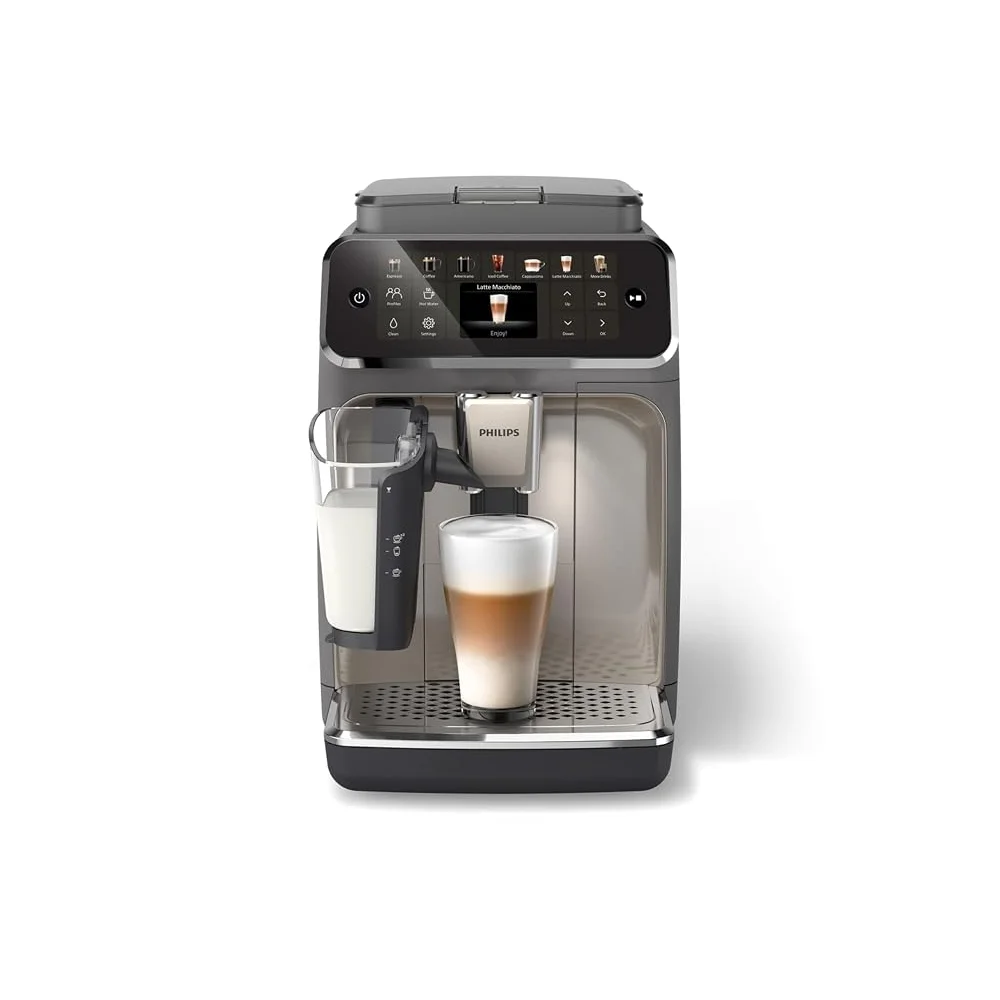
Philips positions the 4400 above the 3200 with twelve hot and iced pre-sets rather than five, a quick-start routine, and SilentBrew noise reduction on the grinder. It keeps the two-part LatteGo carafe and the removable brew group that make the range easy to live with, so the extra money buys menu breadth and quieter operation rather than a different cup.
12 hot and iced one-touch drinks
LatteGo carafe still cleans in two parts
SilentBrew grinder runs quieter than the 3200
Costs meaningfully more than the 3200 for a similar cup
Plastic-forward build at this price
What owners say — Amazon owners average 3.9 stars across 582 ratings; the recurring praise is the iced-coffee presets and easy milk cleanup, and the recurring complaint is reliability variance on a machine at this price.
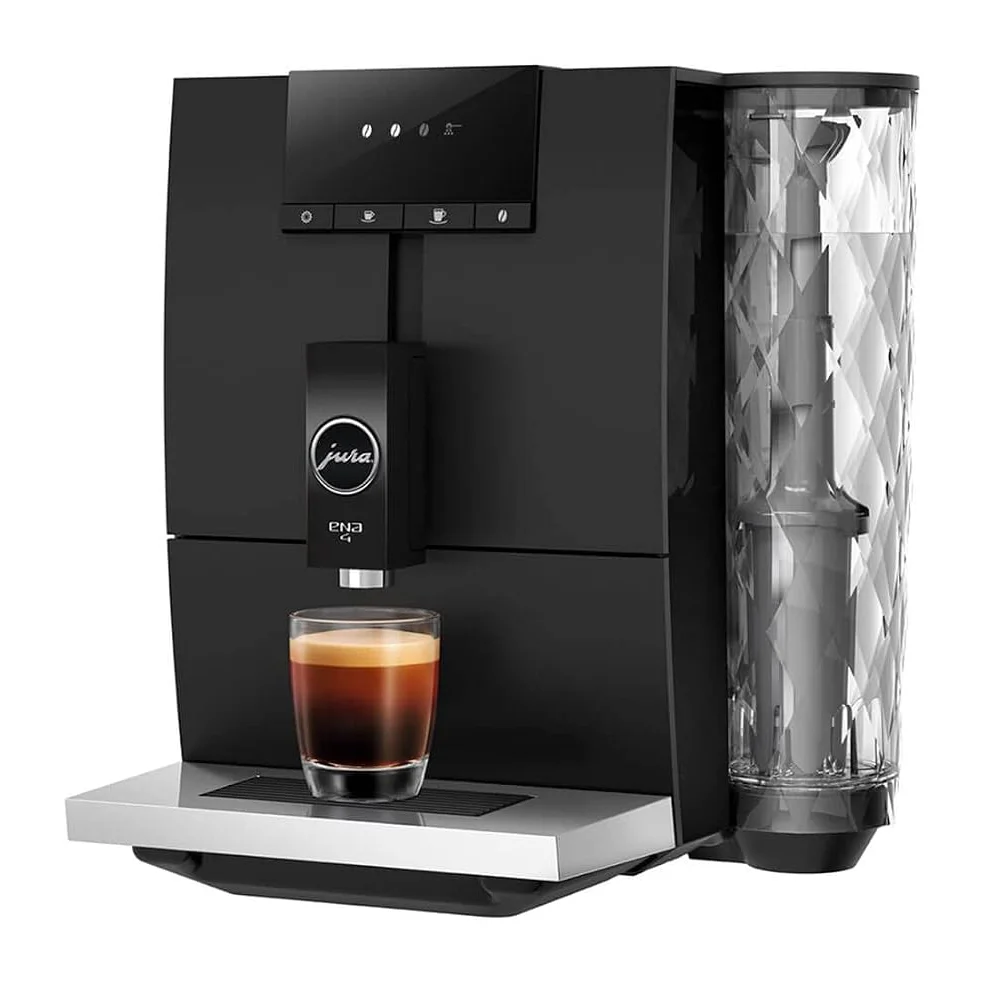
JURA's smallest bean-to-cup: a narrow, beautifully built machine for people who drink espresso and coffee, not lattes.
The ENA 4 is deliberately narrow and deliberately simple - JURA specifies grinding, tamping and brewing a cup in under a minute, with two drink specialties and no milk system at all. That makes it the wrong machine for a latte household and the right one if you want JURA's build, grinder and brew unit without paying for a milk carafe you would never use.
Genuinely compact footprint for a bean-to-cup
Swiss build and a serious grinder at the price
Cup brewed in under a minute per JURA
No milk system - espresso and coffee only
Expensive for two drink specialties
What owners say — Amazon owners average 3.9 stars over 294 ratings; owners consistently praise the size, looks and black-coffee quality, and the criticism is that a machine at this price has no milk function and a sealed brew unit.
The axis owners actually argue about in this category is not coffee, it is how many parts the milk system has and whether they go in the dishwasher. That is the feature that decides whether a machine still gets used for lattes a year later.
What owners actually report
r/superautomaticr/Coffee
In r/superautomatic the argument almost never lands on the coffee first, it lands on the milk system. Philips LatteGo is the machine people recommend to anyone whose priority is not cleaning: owners describe it as two dishwasher-safe parts that snap together, with no internal hoses and no monthly milk-circuit program, and that specific point is close to unanimous. De'Longhi is recommended by owners who care more about the shot, with repeated reports that the same beans come out with more body and strength than on a comparable Philips, and Philips shots described as thin or watery by owners who have run both. Reliability comes up on the De'Longhi side of the ledger too, with several owners citing the longer warranty and posting Philips repair experiences. Jura is admired and consistently talked out of on price, usually with some version of the observation that you can replace a mainstream machine several times over for the difference.
Consistently praised
Philips LatteGo milk system — The most consistently praised single feature in the category: two parts, no tubes, dishwasher safe, and no scheduled milk-circuit cleaning cycle, which is exactly the chore that makes owners of other systems stop using the milk function.
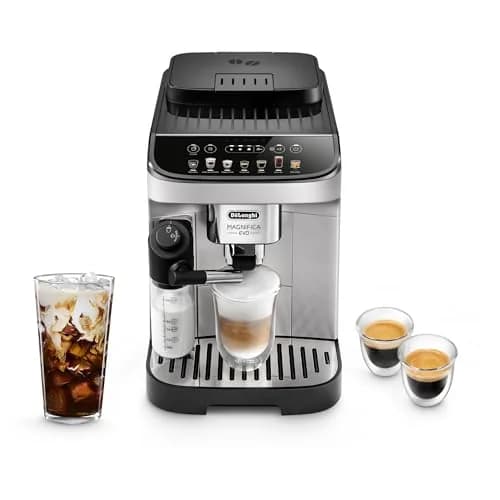
De'Longhi Magnifica Evo — Owners who have run both brands repeatedly report a stronger, fuller shot from the De'Longhi with the same beans, and the longer warranty comes up often enough to read as a real part of the recommendation rather than a spec-sheet detail.
Consistently warned about
Milk systems built around internal hoses and a carafe — The recurring failure mode is not breakage but abandonment: owners describe the scheduled cleaning program and the fiddly disassembly as the reason they stop using the automatic milk function within months.
Assuming a higher price buys a better shot — Owners who have tasted across price bands repeatedly report that a mid-priced machine holds its own against machines several times dearer, and frame the premium as build, interface and drink presets rather than extraction.
The five super-automatics BrewSift ranks run $349 to $1,199, a 3.4x spread across machines that all perform the same automated sequence: grind, dose, tamp, brew and steam.
Milk system: carafe vs steam wand
One-touch milk carafes make lattes and cappuccinos completely hands-free — the machine draws, heats, and froths the milk for you — but they add parts to clean and the foam tends to be airier than a barista's. A manual steam wand is more work and takes a little practice, but it textures milk better, is far easier to keep clean, and doesn't harbor milk residue. If milk drinks are the whole reason you're buying a super-auto, decide which trade-off you'd rather live with every morning.
Maintenance is the hidden cost
Super-automatics grind, brew, and dump a wet puck into an internal bin every shot, so they need regular upkeep to keep tasting good: emptying the grounds container, descaling on a schedule, and cleaning the brew group and (if fitted) the milk system. Removable brew groups — the norm on Philips and DeLonghi machines — pop out for a rinse under the tap and are far easier to keep sanitary than the sealed groups on Jura and some Saeco models, which rely on cleaning tablets run through the machine. Factor the cleaning routine in before you buy; a neglected super-auto makes stale, muddy coffee.
Nearly every super-auto has a built-in burr grinder, but they vary in how finely you can dial the grind and how much you can tune each drink — dose strength, water volume, temperature, and milk ratio. Entry machines give you a couple of preset buttons; mid and higher-tier machines let you save custom profiles per user. If you care about shot quality, look for adjustable grind, an adjustable dose, and at least some temperature control, since these are the levers that separate a decent bean-to-cup coffee from a flat one.
A super-auto buys you convenience and repeatability, not peak espresso quality. Because the machine tamps with a fixed mechanism and pulls to a program, you can't fine-tune extraction the way you can on a semi-automatic with a separate grinder — the ceiling on shot quality is lower. What you get in return is a genuine café menu at the touch of a button with zero technique and near-zero mess. If a reliable daily latte matters more to you than chasing the perfect shot, that's exactly the right trade.
What to spend, by tier
Entry super-automatics cover espresso and a basic milk drink with a manual wand and limited adjustment. The mid tier adds a one-touch milk carafe, more drink presets, saved user profiles, and finer grind control — the sweet spot for most households. The top tier brings dual grinders, touchscreens, app control, and better milk texturing, but you're paying largely for convenience and build, not a dramatically better cup. Spend for the milk system and adjustability you'll actually use rather than the number of preprogrammed drinks on the display.
Automatic, superautomatic, fully automatic: what the names actually mean
The vocabulary here is genuinely confusing, and most of it comes down to marketing rather than engineering. Super-automatic, superautomatic (one word), fully automatic, automatic espresso machine and bean-to-cup all describe the same thing: a machine that grinds whole beans, doses and tamps them internally, brews the shot, and usually froths milk, all from one button press. Manufacturers pick whichever label they prefer, so a Philips listing may say fully automatic while a DeLonghi listing says super-automatic for a machine that works the same way. The one word that means something different is automatic in the narrow espresso sense: on a traditional pump machine, automatic describes volumetric dosing, where the machine stops the shot at a programmed volume but you still grind, tamp, and steam yourself. Semi-automatic means you start and stop the pump manually. So if a product is described as an automatic espresso machine but costs under two hundred dollars and has a portafilter you fill by hand, it is not a bean-to-cup machine. The quick test: if there is a bean hopper on top and no portafilter handle, it is the fully automatic, grind-to-cup category this page covers. If there is a portafilter, you are looking at a semi-automatic and you will be doing the work.
Automatic coffee machine or automatic espresso machine? Sort yourself first
People searching for an automatic coffee machine are often after one of three quite different products, and buying the wrong one is an expensive mistake. If you mostly drink mugs of black coffee and want a pot ready when you wake up, you want a programmable drip brewer, not a bean-to-cup machine. Drip costs far less, brews a full carafe, and an SCA-certified model makes better black coffee than the long-coffee setting on most superautomatics. If you want lattes, cappuccinos, flat whites and espresso from whole beans without any technique, a fully automatic espresso machine is the right category. If you want the smallest possible daily effort and do not care that the coffee comes pre-portioned, a pod machine is cheaper up front, though the per-cup cost is higher and you cannot use your own beans. There is a fourth group worth naming: people who want good black coffee from fresh beans but no carafe. A superautomatic will do that, since most have an americano or long coffee button that pulls espresso and adds hot water, but you are paying bean-to-cup money for something a drip machine plus a grinder does at least as well. Decide whether milk drinks are the point before you spend anything.
The built-in grinder: what actually varies between machines
Every fully automatic espresso machine has a grinder built in, so searching for an automatic espresso machine with grinder will return the whole category rather than a subset. What is worth comparing is how the grinder is built and fed. Burr material is the first split: ceramic burrs, used across the Philips LatteGo range, run cooler and stay sharp against normal beans, while hardened steel burrs, as on the DeLonghi Magnifica Evo, are more forgiving of the occasional stone or very hard bean. Neither is clearly better for flavour at this price level. Second, look for a bypass chute, sometimes called a pre-ground doser: a small opening that lets you drop in ground coffee for one drink without emptying the hopper. It is how you make a single decaf in the evening, and machines without one force you to run the hopper dry to switch beans. Third, count the grind settings and check whether they are adjusted with the grinder running, which is normal and protects the burrs. Twelve to thirteen steps is typical in the mid range and enough for everyday work. Finally, note that a separate standalone grinder is not required or even usable with these machines; the grinder is part of the sealed brew path, so the one in the box is the one you live with.
How to decide which one is best for your household
Best in this category depends almost entirely on the shape of your mornings, so answer four questions in order rather than shopping by feature count. First, how many milk drinks per day, and made by how many people? One person making one flat white can live happily with a manual wand; three people making six milk drinks before work will resent it, and a one-touch carafe pays for itself in patience. Second, do different people want different drinks? Saved user profiles are only worth paying for if more than one person is fussy about strength and volume. Third, where will it live? Superautomatics are deep and tall, need clearance above the hopper to refill beans, and pull out at the front for the drip tray and brew group, so measure under-cabinet height before anything else. Fourth, how hard is your water? Hard water shortens the life of every machine in this class, so budget for a filter or commit to a strict descaling schedule from day one. Once those are settled, the remaining differences are mostly finish and display. A well-specified mid-range machine such as the Philips 3200 LatteGo covers most households, and the 2200 LatteGo covers a one or two person home that still wants one-touch milk without paying for extra drink presets.
Most have a bypass chute for a single dose of pre-ground, meant for decaf or a guest's beans. It is a convenience, not the way to use the machine day to day.
Are super-automatic espresso machines worth it?
For the right person, yes. If you want lattes and cappuccinos on demand with no grinding, tamping, or milk-steaming technique — and you value that convenience over squeezing out the best possible shot — a super-auto earns its keep every morning. If you enjoy the craft, want maximum shot quality, or are on a tight budget, a semi-automatic machine plus a good separate grinder will make better espresso for the money. The deciding question is whether you're buying convenience or control.
How much maintenance does a super-automatic machine need?
More than people expect. Daily, you empty the grounds bin and drip tray and rinse the milk system if it's a carafe. Weekly-ish, you clean the brew group and run a milk-circuit cleaning cycle. Descale when the machine prompts you or on the interval in its manual, sooner with hard water. Machines with a removable brew group (Philips, DeLonghi) are much easier to keep clean than sealed ones. Skipping this routine is the fastest way to stale, bitter coffee and expensive repairs.
Do super-automatic machines make real espresso?
They make genuine pressurized espresso from freshly ground beans, so it's a real shot with crema — not pod coffee. But because the grind, dose, and tamp are handled by fixed internal mechanisms, you can't fine-tune extraction the way you can on a semi-automatic, so the quality ceiling is lower. For most people the everyday cup is very good; enthusiasts chasing café-competition shots will still prefer a manual machine and a dedicated grinder.
Can I use my own beans, and should I avoid oily dark roasts?
Yes — use whole beans in the hopper for the freshest results. Very oily dark roasts are the one thing to be cautious with: the oils can gum up the grinder and brew group over time and cause clumping or clogs. Medium roasts run cleanest through a super-auto. If you love dark roast, wipe the hopper regularly and clean the grinder area more often to keep things flowing.
How long do super-automatic machines last?
A well-maintained mid-tier super-auto typically lasts several years of daily use; descaling on schedule and cleaning the brew group are the biggest factors in longevity. The brew group, grinder burrs, and seals are wear parts — machines with a removable, serviceable brew group are easier and cheaper to keep running long-term than sealed designs, which often need a service visit. Hard water that isn't filtered or descaled away is the number-one killer of these machines.
What is the difference between an automatic and a super-automatic espresso machine?
In everyday use they mean the same thing, but strictly they do not. Super-automatic, superautomatic and fully automatic all describe a bean-to-cup machine that grinds, doses, tamps, brews and often froths milk at one button press. Automatic, used precisely, describes a traditional pump machine with volumetric dosing: it stops the shot at a set volume, but you still grind, tamp and steam yourself. The reliable visual check is the front of the machine. A bean hopper on top and no portafilter handle means bean-to-cup. A portafilter you lock in by hand means you are doing the work.
Do all automatic espresso machines have a built-in grinder?
Yes. A built-in burr grinder is part of the definition of a fully automatic machine, so you never need to buy a separate grinder for one, and you cannot substitute a better one either. What varies is burr material, the number of grind settings, and whether there is a bypass chute for pre-ground coffee. That chute is more useful than it sounds: it lets you make one decaf or one different roast without emptying the hopper. If a listing describes an automatic espresso machine with no hopper and a portafilter in the box, it is a semi-automatic and you will need a grinder separately.
Can a fully automatic espresso machine make regular black coffee?
Yes, though it is not what the category is best at. Most superautomatics have an americano or long coffee button that pulls espresso and adds hot water, and the result is fresh, strong and perfectly good in a mug. What they cannot do is brew a carafe, and the long-coffee setting rarely matches a proper drip brewer for a clean, balanced black cup. If black coffee is most of what you drink and milk drinks are occasional, a good drip machine plus a separate grinder makes more sense for the money. Buy bean-to-cup when the milk drinks are the reason.
What is the best automatic espresso machine for a beginner?
Look for one-touch milk, a removable brew group and a simple display, since those three things decide whether you keep using the machine. The Philips 3200 LatteGo is the common default: five one-touch drinks, a ceramic burr grinder, and a milk carafe that snaps into two parts with no tubes to clean. The 2200 LatteGo is the same easy-clean approach with fewer preset drinks and a lower price, which suits a one or two person household. Owner reviews consistently point at milk-system cleaning as the thing that makes or breaks daily use, so weight that above drink count.
What is the best budget super-automatic espresso machine?
Budget is relative in this category, since the entry point is roughly where a good semi-automatic and a separate grinder together would land. The cheapest route to genuine one-touch milk among the machines we rank is the Philips 2200 LatteGo, which keeps the ceramic burr grinder, the removable brew group and the tube-free milk carafe of its more expensive siblings and gives up drink presets and iced options rather than build quality. Spending more mainly buys menu breadth and a display. What is not worth saving on is water treatment: hard water shortens the life of every machine in this class, so budget for a filter or a strict descaling routine from day one.