SCA Certified Coffee Makers: What the Badge Tests
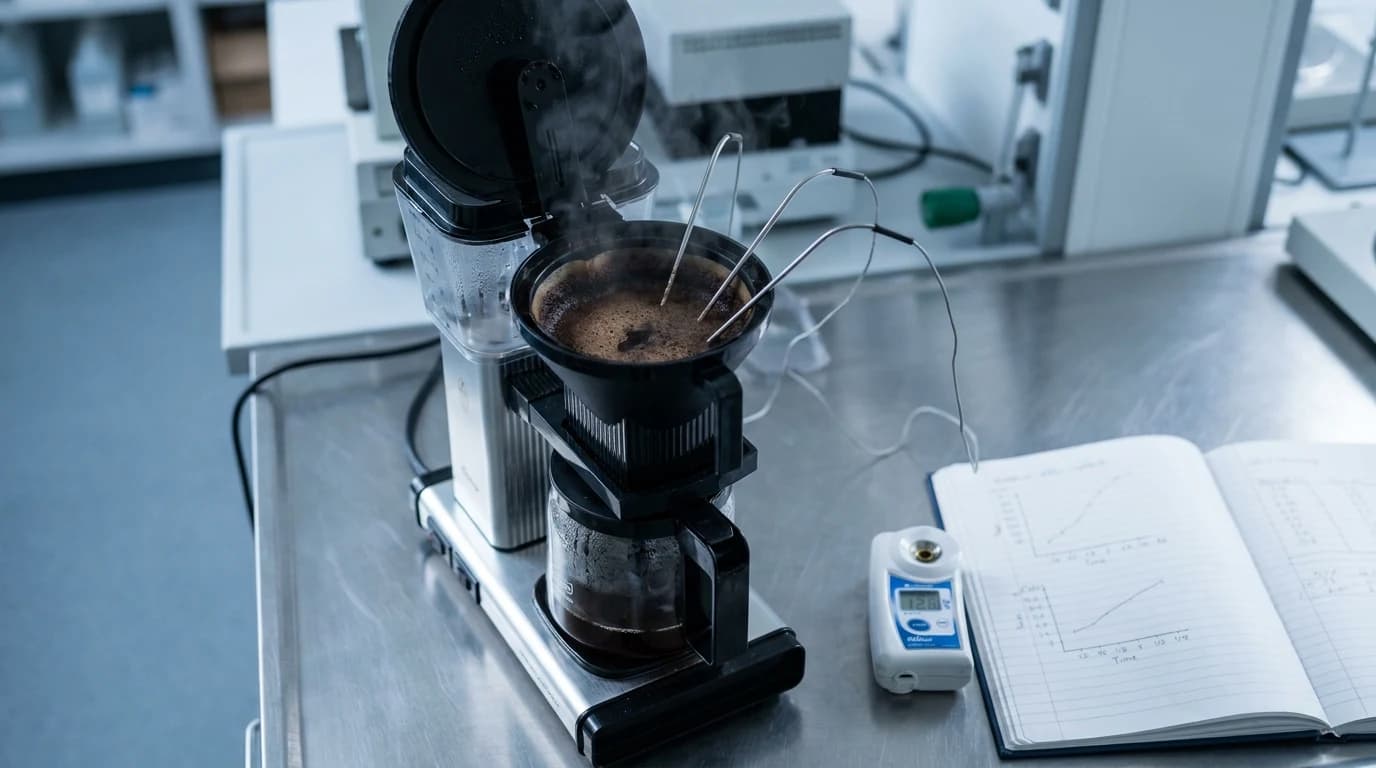
SCA certification tests the machine, not the coffee. To carry the badge a home drip brewer has to hold its brew water between 90 and 96 °C, land the finished cup inside a defined strength window, extract the bed evenly, and repeat that across three units and five cycles each. It says nothing about your beans, grinder or tap water, and it cannot apply to espresso machines, pod machines, French presses or pour-over cones — the standard excludes them by scope. It is also a paid, renewable licence, so absence from the list is not a failing grade.
Key takeaways
- SCA Standard 310-2021 sets seven requirements for a home drip brewer, and every one is about water delivery: temperature, evenness, repeatability, basket volume, carafe holding temperature and what the manual has to tell you.
- During testing the laboratory adjusts the grind to bring a brewer into the target window, so certification proves the hardware can hit that window once someone dials the grind — a job that falls to you at home.
- There are two rosters. The SCA's own list held sixteen models when we read it on 21 August 2026; ECBC, the Oslo laboratory the SCA sends equipment to, publishes a separate approved list carrying Moccamaster, Melitta and Wilfa. Only Aarke and Braun appear on both.
- The two published pass windows differ: brew strength 1.15–1.55% at the SCA against 1.30–1.55% at ECBC, and ECBC additionally caps sediment and fixes a four-to-six-minute brew time the SCA does not specify.
- Certification is a paid, renewable licence — SCA company membership plus a USD 5,000 annual fee on a three-year term — so a model's absence is a commercial decision at least as often as a technical one.
Every drip-machine roundup reaches for the same shortcut: look for the SCA badge. Reasonable advice, and almost nobody says what the badge is a badge of. The certification has a published specification, a named laboratory, a price list and a roster you can read in a minute — and reading all four changes the shape of the shortcut.
What the badge actually certifies
The document is SCA Standard 310-2021, Home Coffee Brewers, and its preface says it was derived from the minimum certification requirements for the SCA's Certified Home Brewer programme. Table 1 lists seven requirements. Read them together and the pattern is hard to miss.
| § | The requirement | What it is really measuring |
|---|---|---|
| 6.1 | Brew basket volume | A full-capacity dose can swell without overflowing |
| 6.2 | Brewing temperature | Slurry at 90–96 °C by the time a third of the water has sprayed, held there after |
| 6.3 | Resulting brew | The finished cup lands inside the target strength window |
| 6.4 | Uniformity of performance | Three separate units, five cycles each, all inside it |
| 6.5 | Uniformity of extraction | An evenness rating of 60 or better on a 0–100 index |
| 6.6 | Holding receptacle | A heated carafe holds 80–85 °C for thirty minutes, never hotter |
| 6.7 | The manual | Must state a grind, a 55 g/kg ratio, a filter type and cleaning steps |
Not one is about coffee. Every one is about how the machine moves hot water through a bed of grounds and what it does with the result — precisely the part of a drip brewer you cannot inspect in a shop.
What the badge is: a statement that the hardware delivers water correctly and repeats it. Nothing in the specification touches your beans, your grinder or the water in your tap.
The grind is dialled in for you
One clause reframes the whole thing. When a submitted brewer misses the target strength, the procedure does not fail it there. Step 4 has the laboratory adjust the grind — inside the particle limits of Table 2 — until the machine reaches the window, retrying on a second and third unit before anything is called non-compliant.
So certification proves the hardware can hit the window once the grind is right. At home, the person setting the grind is you. Our pour over variables piece reaches the same place from the other direction — the standard's own method treats grind as the dial and holds everything else fixed. A certified machine fed by a blade grinder is a certified machine making bad coffee, which is why the grinder usually deserves the money first.
Two lists, one laboratory
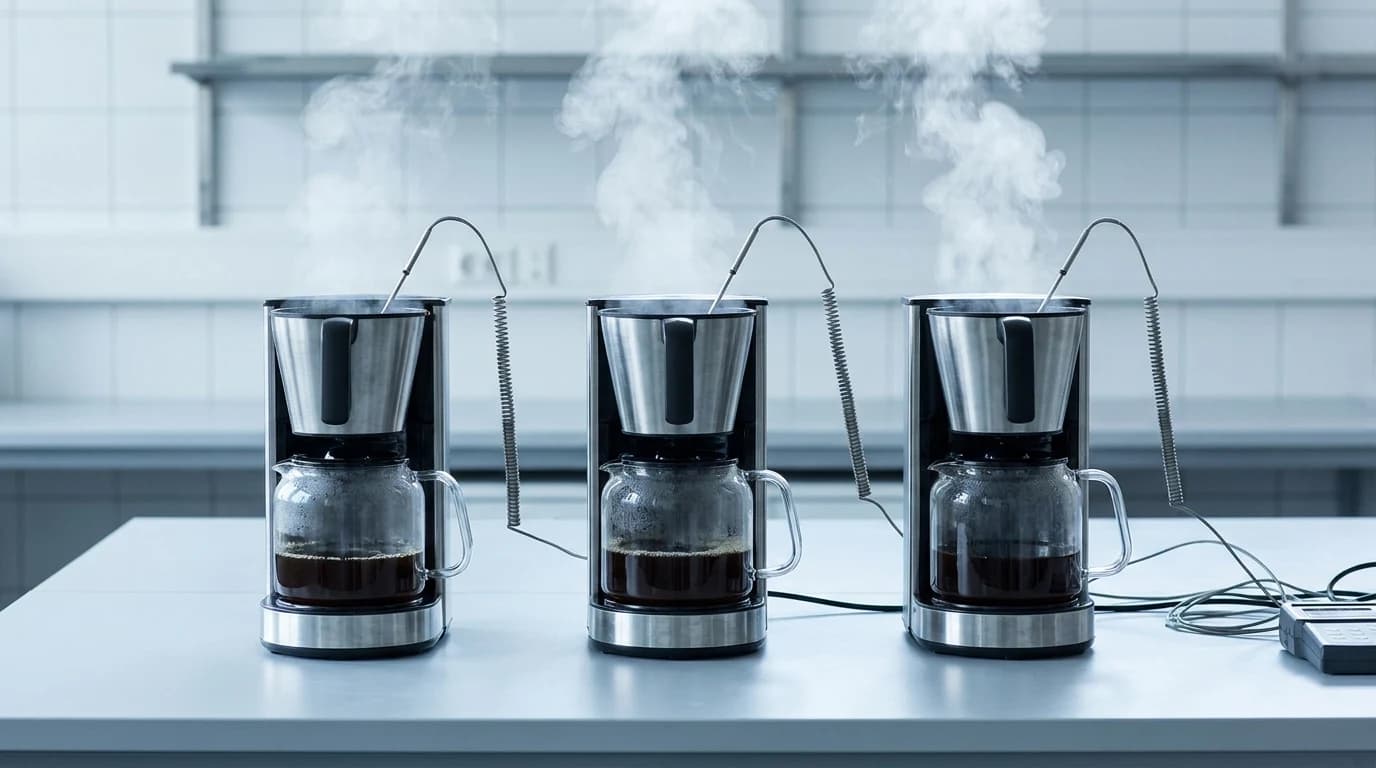
The SCA does not run the tests itself. Its programme page names the European Coffee Brewing Centre in Oslo — founded in 1971 by the Norwegian Coffee Association — as the third-party centre where equipment is evaluated. ECBC has been approving brewers to its own Gold Cup standard the whole time, and publishes a separate list. The two rosters barely touch.
| Named on the list as | SCA certified list | ECBC approved list |
|---|---|---|
| Moccamaster | not listed | all models |
| OXO Brew 8-Cup and 12-Cup | certified 2025 and 2023 | not listed |
| Sage Precision Brewer SDC450, SDC400 | not listed | listed |
| Braun MultiServe | Plus with Cold Brew, 2024 | KF9170 and KF9050 |
| Aarke Coffee Maker | certified 2025 | listed |
| Fellow Aiden, Zwilling Enfinigy, Mr. Coffee Perfect Brew | certified 2024 | not listed |
| Melitta, Wilfa, Electrolux, AEG, De'Longhi Clessidra | not listed | listed |
Read on 21 August 2026, the SCA's own home-brewer roster held sixteen models. Two names appear on both lists: Aarke and Braun. The Moccamaster, whose models ECBC lists without exception, is absent from the SCA roster entirely.
The two windows are not the same window
Same laboratory, two specifications, and they do not line up.
- Strength. The SCA's target window is 1.15–1.55% dissolved solids. ECBC's is 1.30–1.55%. A brew at 1.20% clears one and misses the other.
- Temperature. The SCA wants 90–96 °C by the time a third of the water is through. ECBC wants the brew basket at 92 °C inside the first minute and never above 96 °C.
- Extras. ECBC also caps sediment at 75 mg per 100 ml and chooses a grind for a four-to-six-minute brew. The SCA's Table 1 sets no brew-time requirement at all.
Neither is lax. They were written by different bodies for different markets, and a machine sitting comfortably in one window can sit at the edge of the other.
What the badge costs
Both programmes are paid, renewable licences priced in opposite directions. The SCA asks for company membership plus a USD 5,000 annual licensing fee on a three-year term. ECBC charges a test fee of roughly one to two thousand euros, then a licence invoiced quarterly against units sold, over five years ending in a retest.
A flat annual fee is rounding error for a brand shipping a hundred thousand machines and a real line item for one shipping three thousand; a per-unit royalty is the reverse. Neither is wrong. They select for different manufacturers — a better explanation for two divergent lists than one set of machines being better.
What a missing badge does tell you:
- Nobody is currently paying that body to list that model.
What it does not tell you:
- That the machine failed. ECBC states that results stay confidential unless the manufacturer says otherwise or signs the licensing agreement, so failures are never published.
- That the model was ever submitted.
- That the brand rejects the standard. OXO, Ratio, Breville, De'Longhi and Bonavita all had representatives in the expert group that wrote SCA 310-2021, and they are not all on the list.
Where we cannot see: neither body publishes why a manufacturer is or is not enrolled, and ECBC's roster skews European while the SCA's skews North American — so market footprint is tangled up with fee structure in a way the public documents do not separate.
What neither badge can cover
Both standards exclude the same categories in near-identical wording: manual pour-over devices, non-filter brewers such as the French press, home espresso machines, pressurised brewing devices, and pod and capsule machines. Any of those advertised as SCA certified is a category error rather than a stretch.
Certification is per model and time-boxed — three years at the SCA, five at ECBC before a retest — so a badge quoted in an old review may describe a lapsed licence.
Using it when you shop
- Treat the badge as a floor, not a ranking. Sixteen certified models are not the sixteen best machines; they are the ones whose makers hold a current licence.
- Check both lists before concluding anything is uncertified. Several drip machines routinely called uncertified sit on the other roster — our Moccamaster vs OXO Brew 9-Cup comparison puts one from each list side by side.
- Put the marginal money into the grinder, then into water — the tests themselves run on water held to a specification, which is a hint about what moves the cup.
- Starting from nothing? The ordering in our home coffee setup guide is unchanged, and our ratio calculator converts 55 g/kg to whatever dose your carafe takes.
Rule of thumb: a certified brewer guarantees the water. The grind is still the dial, and the dial is still yours.
Your next step
Shopping for the machine itself?
Three drip brewers, and what our guide says about each
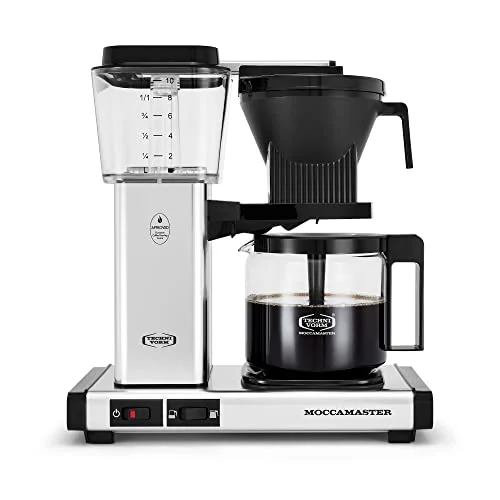
Moccamaster KBGV Select
The icon: SCA-certified brewing, a copper heating element, and a machine you'll keep for a decade.
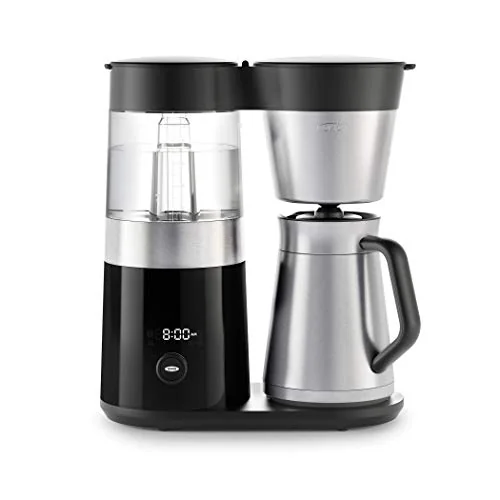
Brew 9-Cup
SCA-certified brewing and a thermal carafe for well over $100 less than a Moccamaster.
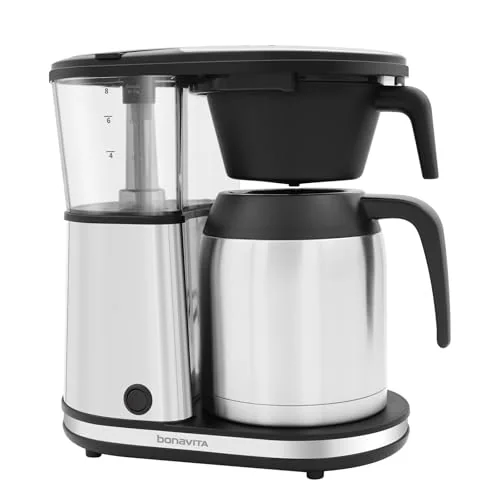
Connoisseur 8-Cup One-Touch Coffee Maker
The Bonavita coffee maker to buy: SCA-certified brewing with one button and a thermal carafe — no menus, no fuss.
BrewSift earns a commission on qualifying purchases made through these links, at no extra cost to you. Prices shown were checked on publication and change often.
FAQ
Is an SCA certified coffee maker worth paying more for?
It is worth treating as a floor rather than a ranking. Certification means the machine held 90 to 96 °C through the brew, produced a cup inside the target strength window and repeated that across three units and five cycles each — the things a cheap brewer usually fails at and you cannot check in a shop. It does not mean the machine is better than an uncertified one, because the badge is a licence a manufacturer buys and many good machines are not enrolled.
Why is the Moccamaster not on the SCA certified list?
Neither body publishes why a given manufacturer is or is not enrolled, so any specific answer would be a guess. What is public: ECBC, the Oslo laboratory the SCA uses for its own testing, lists all Moccamaster models as approved, and the two programmes charge very differently — a flat USD 5,000 annual fee at the SCA against a per-unit royalty at ECBC. Absence from one roster is not evidence a machine failed anything.
Can an espresso machine or a pod machine be SCA certified?
No. The scope of SCA Standard 310-2021 covers filter coffee electrical brewers for home use at atmospheric pressure, and it explicitly excludes manual pour-over devices, non-filter brewers such as the French press, home espresso machines, pressurised brewing devices and pod or capsule brewers. ECBC's standard uses almost identical wording. A certification claim on any of those categories is describing something else.
What is the difference between SCA certified and ECBC approved?
Same testing laboratory, two separate programmes with different published windows. The SCA accepts a brew strength of 1.15 to 1.55% dissolved solids and asks for 90 to 96 °C by the time a third of the water has sprayed. ECBC accepts 1.30 to 1.55%, wants the brew basket at 92 °C within the first minute, caps sediment at 75 mg per 100 ml and selects a grind for a four-to-six-minute brew. Licences run three years at the SCA and five at ECBC.
Which coffee makers are SCA certified?
The SCA publishes its own roster of certified home brewers, which held sixteen models when we read it on 21 August 2026 and includes the OXO Brew 8-Cup and 12-Cup, Aarke, Fellow Aiden and the Braun MultiServe Plus. ECBC, the Oslo laboratory the SCA sends equipment to, publishes a separate approved list carrying Moccamaster, Melitta and Wilfa. Only Aarke and Braun appear on both.
Sources
- SCA Standard 310-2021, Home Coffee Brewers: Specifications and Test Methods (PDF) — §02 scope excludes pour-over, French press, espresso, pressurised and pod brewers; Table 1 lists the seven specifications (§6.2 brewing temperature 90–96 °C by 33% of water sprayed, §6.4 three units × five cycles, §6.5 uniformity of extraction rating ≥60, §6.6 heated carafe 80–85 °C for 30 minutes); target extraction parameters of 1.15–1.55% brew strength at the 55 g/kg standard ratio; §7.1 step 4, grind adjusted within Table 2 to reach the window
- Specialty Coffee Association — SCA Certified Home Equipment: the current certified home-brewer roster (sixteen models when read on 21 August 2026), ECBC named as the third-party testing centre, active SCA company membership required, three-year licensing period and a USD $5,000 annual licensing fee
- European Coffee Brewing Centre — Approved Home Brewers: the full approved list, including Moccamaster (all models), Sage Precision Brewer SDC450 and SDC400, Braun MultiServe KF9170 and KF9050, De'Longhi Clessidra, Melitta, Wilfa, Electrolux, AEG and Aarke
- European Coffee Brewing Centre — Certification Standards, Brewers: identical category exclusions; brew basket 92–96 °C reached within the first minute and never above 96 °C; solubles concentration 1.30–1.55%; solubles yield 18.0–22.0%; grind chosen for a 4–6 minute brew; uniformity of extraction index with 60 as the pass mark; sediment limit of 75 mg per 100 ml; results confidential unless the manufacturer instructs otherwise or signs the licensing agreement
- European Coffee Brewing Centre — Prices: home brewer test fee of 1,000–2,000 euro, licence fee invoiced quarterly and calculated on approved units sold, five-year licence agreement ending in a retest