Is Percolator Coffee Actually Good? Percolator vs Drip, Honestly
Percolator coffee can be genuinely good, but the machine is unforgiving: it boils water by design (above the 93±3°C band the SCA specifies and the NCA recommends for brewing) and recirculates finished coffee back through the grounds with no defined stopping point. Brew it like the manufacturers of good percolators say — coarse grind, moderate heat, pull it promptly — and you get the hotter, fuller cup its fans can't get from drip. Let it roll unattended and you get the burnt cliché.
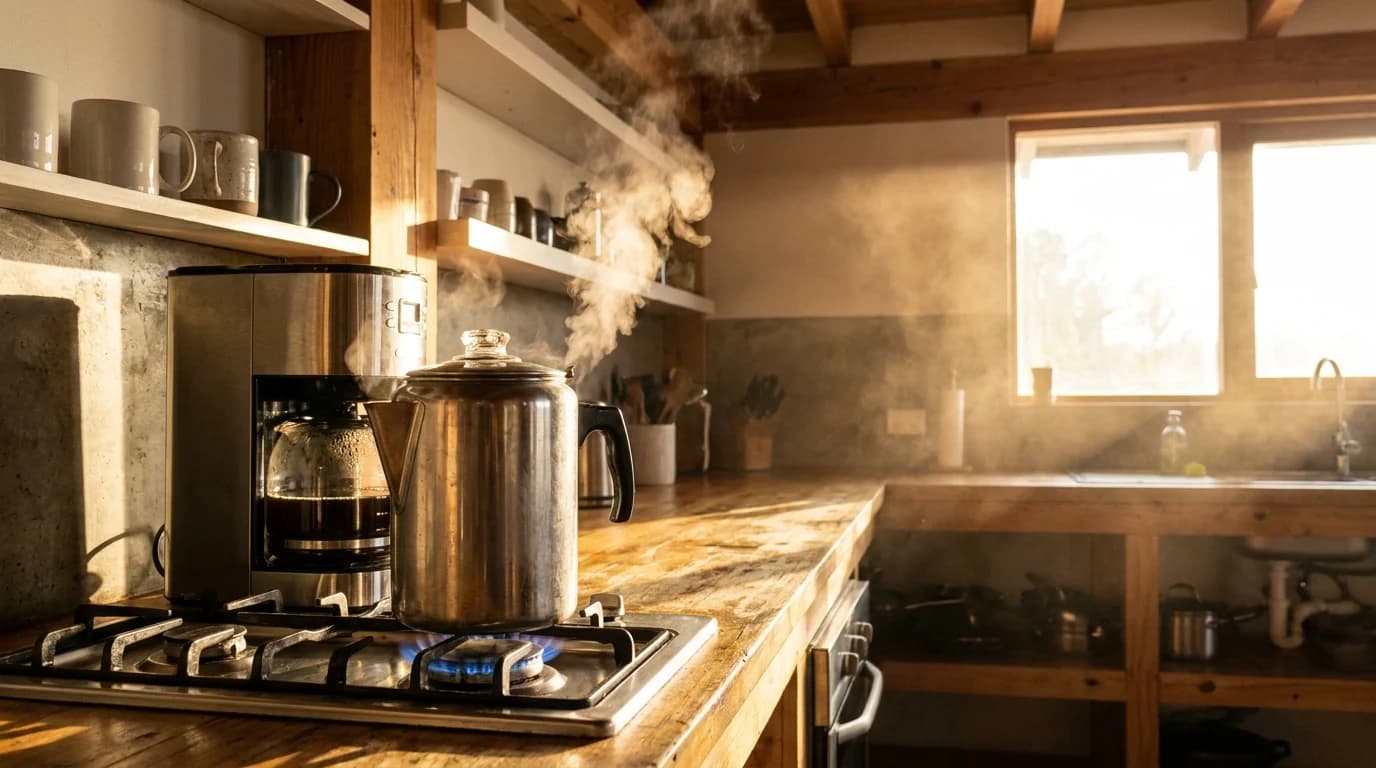
Key takeaways
- The professional criticism is structural, not snobbery: percolators boil water (the SCA-specified band tops out at 96°C) and re-pass already-brewed coffee through the grounds — Presto's own copy says coffee 'percolates through the grounds multiple times.'
- No percolator manufacturer publishes a brew temperature — Presto, Hamilton Beach, Farberware, COLETTI and GSI all omit it — so any specific figure you read elsewhere is invented.
- Percolator 'cups' are about 5 oz per the manufacturers' own manuals, so a 12-cup pot is roughly four to five real mugs.
- The defenders' case is real too: electric percolators hold coffee 'piping hot' by design, and heat plus volume plus campfire-durability is exactly what drip machines don't deliver.
- Good percolator technique per COLETTI's own instructions: coarse French-press-style grind, about a tablespoon per cup, medium-low heat once perking, 7–10 minutes, then a minute's rest — though the community pulls it earlier, at roughly 3–6 minutes.
- Stovetop vs electric is a control question: a stovetop pot lets you cut heat the moment it's done; an electric one decides for itself and then sits on the warming element.
- Electric, runs itself8.1BrewSift ScoreExcellent
- Campfire, no electronics8.7BrewSift ScoreExcellent
- Stovetop, for the kitchen8.9BrewSift ScoreExcellent
- The drip alternative8.6BrewSift ScoreExcellent
Prices are approximate and change often. BrewSift earns a commission on qualifying purchases, at no extra cost to you.
Both sides are describing the same machine
Few pieces of coffee gear split a room like the percolator. To most of r/Coffee it's the worst mainstream way to brew; to its owners it makes the only coffee hot enough to bother drinking. Here's the thing: both camps are being accurate. They're just weighing different properties of the same mechanism.
What a percolator is
A percolator is a coffee pot that brews by recirculation, either on a stove or on its own electric base. It heats water in its base until pressure forces it up a central tube, where it showers over a basket of grounds and drains back down — and then does it again, and again. That's not a critic's caricature; it's Presto's own marketing for its 12-cup electric: coffee "percolates through the grounds multiple times." The water is at or near boiling because boiling is what drives the pump. And there is no defined end point — the pot perks until you stop it.
That one sentence produces both the case against and the case for. Set the two brewers side by side on the properties the mechanism decides:
| Percolator | Drip | |
|---|---|---|
| Brew water | boils by design, above the top of the 93±3°C band | temperature-controlled |
| Stopping point | none — the pot perks until you stop it | self-terminating |
| Holding heat | electric models hold coffee piping hot while plugged in | not the reason people buy one |
| Volume | a 12-cup pot is about 60 fl oz at the makers' 5 oz cup | the safer default for everyday batches |
| Off-grid | 18/8 stainless, no electronics, works over a campfire | needs power |
Rule of thumb: the percolator has no built-in stopping point, so you are the stopping point.
The case against, with the actual numbers
The professional criticism isn't snobbery. It reduces to two citable facts about the mechanism.
Temperature
The Specialty Coffee Association's published standard specifies brew water at 93±3°C — a band that tops out at 96°C — and the National Coffee Association applies that figure to home brewing, telling you to let boiled water rest a minute before it meets coffee. A percolator, boiling by design, operates above the top of that band, not at its edge.
What temperature does the water actually reach the basket at? Nobody publishes it. Not Presto, not Hamilton Beach, not Farberware, not COLETTI, not GSI — none of the five manufacturers we checked states a brew temperature, so we won't pretend to know one. Any specific figure you read elsewhere is invented.
Recirculation
Already-extracted coffee keeps passing back through the bed, so extraction climbs for as long as the pot runs, and the pot doesn't decide when to stop. That's the structural path to bitterness, and it's why unattended percolator coffee earned its cliché.
One more honest correction while we're here: a percolator "cup" is about 5 ounces in the manufacturers' own manuals. A 12-cup Presto makes around 60 fl oz — four to five real mugs, not twelve.
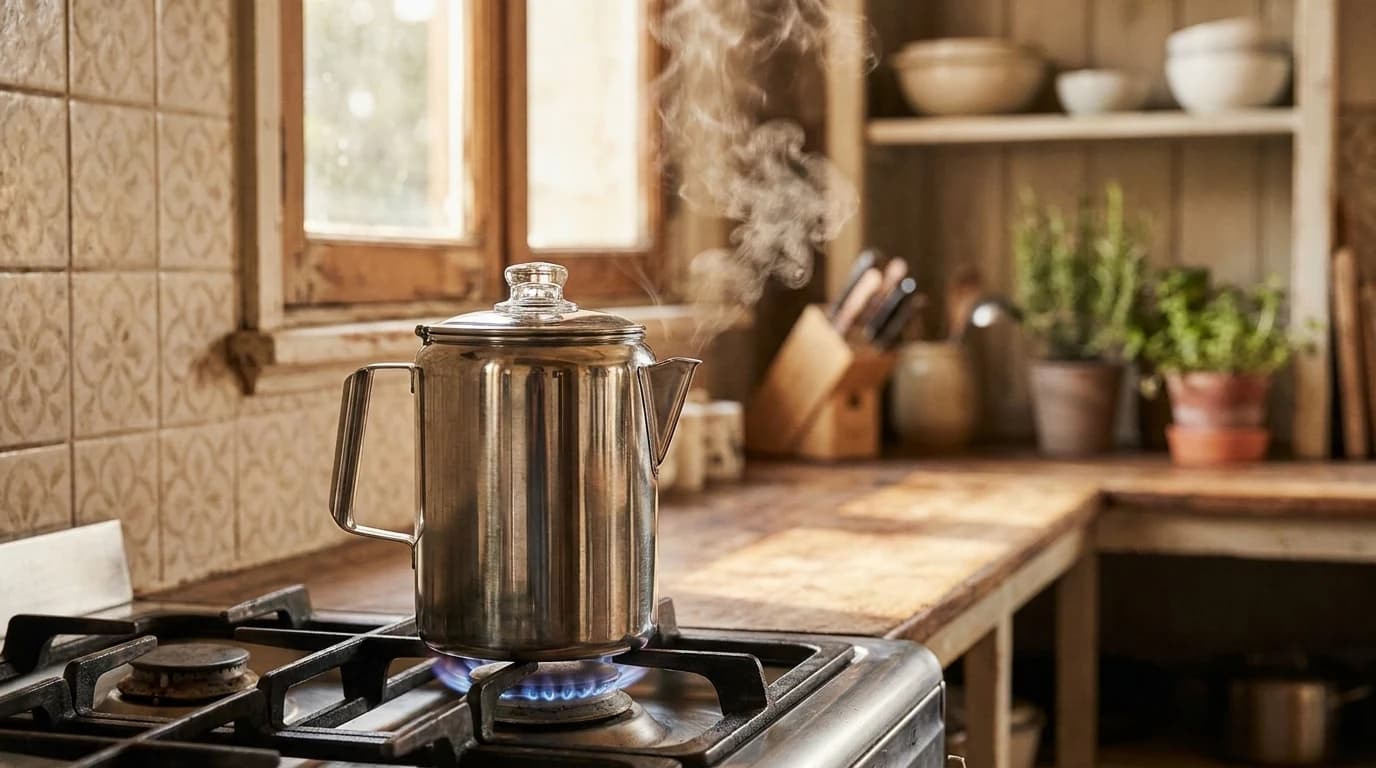
The case for, which drip can't answer
The defenders don't actually dispute any of that. They argue different ground, and the split between a good pot and the burnt cliché is not subtle.
What makes percolator coffee good:
- Heat — an electric percolator holds finished coffee piping hot for as long as it's plugged in, and Presto and Hamilton Beach both say so explicitly.
- Volume — one pot covers a big household, at roughly a cup a minute on the Presto.
- Durability — an 18/8 stainless pot with no electronics works over a campfire, which is the entire design brief of the COLETTI Bozeman.
- Theatre — the glass knob starting to blup is a thing no drip machine offers.
What makes it the burnt cliché:
- Stale pre-ground dark roast, which the recirculating water strips further with every pass.
- Too much of it, ground too fine, so fines sneak through the basket.
- A hard rolling boil instead of a gentle perk.
- Ten unattended minutes, because nothing in the pot will stop it for you.
That scalding cup is the specific thing perc loyalists say no drip machine gives them, and heat plus volume plus campfire-durability is exactly what drip doesn't deliver. It's a machine people keep for reasons a spec sheet can't capture.
The bridge position: percolators aren't bad, they're unforgiving. The same pot, run with intent, makes coffee that surprises people.
How to run one with intent
The best percolator makers publish real instructions, and COLETTI's are the most complete:
- Grind coarse, like French press.
- Dose about a tablespoon per cup — our coffee ratio calculator will scale that to whatever pot you own.
- Bring it to the first perk, then drop to medium-low so the cadence stays gentle.
- Percolate 7–10 minutes.
- Rest a minute off the heat before pouring.
Where the community disagrees
The r/Coffee percolator crowd runs essentially the same recipe with one disagreement: they pull the pot earlier, around 3–6 minutes at a gentle one-to-two-blups-per-second cadence. We won't average two sourced numbers into a fake third one. Start at the short end, taste, and lengthen until it's yours.
Grind is the variable that decides it
The grind matters more than anything else here — too fine and the recirculating water strips it bitter while fines sneak through the basket. Our grind size guide covers the coarse end, and the grind size tool will place a percolator against the methods you already brew. If your cup tastes burnt anyway, drop the heat before you blame the pot.
Stovetop or electric
This is a control decision, not a quality one:
| Stovetop | Electric | |
|---|---|---|
| Who stops it | you, the second the knob looks right | the machine, then it holds |
| Where it works | stove or campfire, no cord to fail | wherever there's an outlet |
| Trade | attention required | convenience gained, control lost |
A stovetop pot — the Farberware Yosemite for the kitchen, the Bozeman for camp — obeys your flame. An electric pot runs itself at about a cup a minute and then parks the coffee on a warming element. If that trade bothers you, the electric percolator's honest competitor isn't the stovetop pot at all — it's a good drip machine. Both run unattended; the difference is that the percolator boils and recirculates, while drip controls its water temperature and stops on its own.
The verdict
Is percolator coffee better than drip?
Not better, different. When owners say percolator coffee tastes better, they are usually describing heat: a hotter cup, held hot on the base, in a pot big enough for the whole house. Drip, the machine most kitchens simply call the coffee pot, wins on consistency, because it controls temperature and ends the brew for you. A percolator can win for you if you want that heat and will stand by the pot; drip wins if you want the same cup every morning without watching it.
Who should buy which
Drip is the safer default: temperature-controlled, self-terminating, forgiving of inattention. The percolator is for three people:
- The drinker who wants a hotter cup than drip physics allows.
- The household that empties a 60-ounce pot.
- The camper who needs coffee from a machine with no cord to fail.
If that's you, buy stainless, grind coarse, stand near the stove, and pull it early. The full lineup lives in our percolators category.
Your next step
Pick the pot, or skip to drip
Percolators, matched to how you actually brew
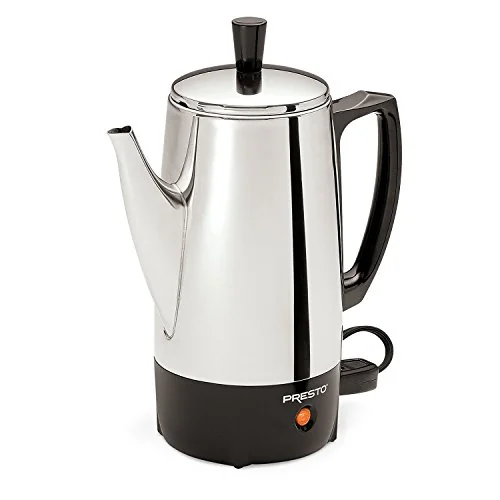
02811 12-Cup Stainless Steel Electric Percolator
A sturdy stainless electric percolator with a fast brew and a signal light — a reliable party pot.
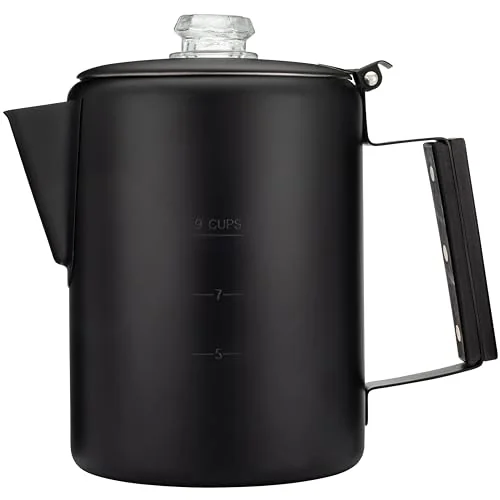
Bozeman Camping Percolator 9-Cup
A rugged camp percolator that ships with paper filters for a cleaner, grit-free cup over the fire.
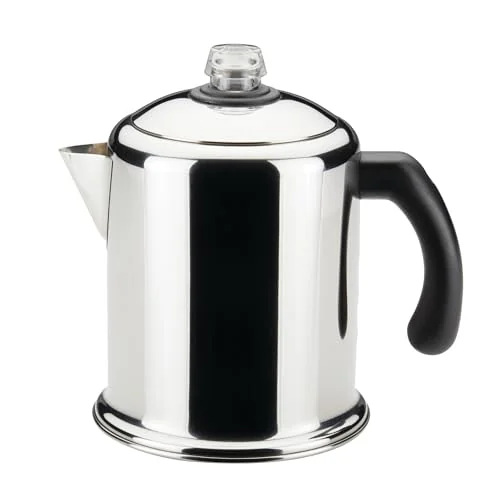
Yosemite 8-Cup Stainless Percolator
The classic stovetop percolator — strong, hot, nostalgic coffee in durable stainless for very little money.
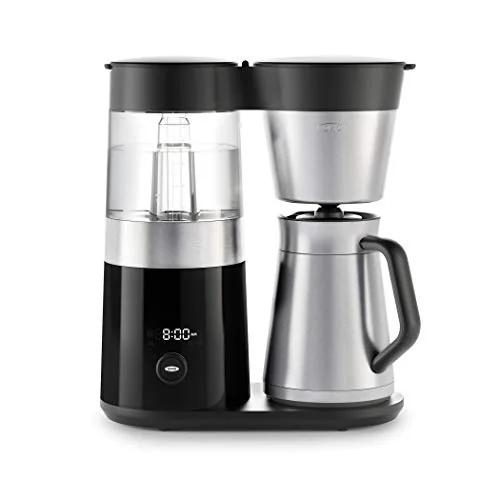
Brew 9-Cup
SCA-certified brewing and a thermal carafe for well over $100 less than a Moccamaster.
BrewSift earns a commission on qualifying purchases made through these links, at no extra cost to you. Prices shown were checked on publication and change often.
FAQ
What is a percolator?
A coffee pot that brews by recirculation, on a stove or on its own electric base. Water heated in the base is pushed up a central tube, showers over a basket of grounds and drains back down, again and again, until you take a stovetop pot off the heat or an electric one ends its cycle and switches to keeping the coffee hot.
Why do coffee people say percolators are bad?
Two mechanical reasons. Temperature: the SCA's published standard specifies brew water at 93±3°C — topping out at 96°C — and the NCA applies that to home brewing, advising you let boiled water rest before it touches grounds; a percolator boils by design. Recirculation: the brewed coffee is repeatedly forced back through the same grounds with no defined end point, so extraction keeps climbing the longer it runs.
Is percolator coffee better than drip?
Not better, different. Owners who prefer it are usually describing heat and volume: a hotter cup held hot on the base, from a pot that serves a whole household. Drip wins on consistency because it controls water temperature and stops the brew on its own.
What temperature does a percolator brew at?
Honestly, nobody publishes it — not Presto, Hamilton Beach, Farberware, COLETTI or GSI. What's certain is that the mechanism boils water in the base, which places it above the top of the recommended band. We won't print a made-up basket temperature.
Is percolator coffee hotter than drip?
The holding half is manufacturer-verified: Presto says the pot keeps coffee piping hot automatically for as long as it's plugged in, and Hamilton Beach makes the same claim. That heat is the single most-cited reason owners keep percolators. No measured cup-temperature comparison exists that we could verify, so we won't quote a degrees-hotter figure.
How do I make percolator coffee that doesn't taste burnt?
Follow the makers of good pots: COLETTI's instructions call for a coarse, French-press-style grind, about one tablespoon per cup, dropping to medium-low heat once it starts perking, 7–10 minutes of gentle percolation and a minute's settle off the heat. The r/Coffee crowd runs the same recipe but pulls the pot earlier — around 3–6 minutes at a gentle perk cadence. The shared fundamentals: coarse grind, moderate heat, and never an unattended rolling boil.
How much coffee does a 12-cup percolator really make?
About 60 fl oz — manufacturers define a percolator cup as roughly 5 ounces (Presto's manual is explicit, and COLETTI's stated capacities work out the same), so 12 cups is four to five actual mugs.
Should I get a stovetop or electric percolator?
Stovetop gives you control — you set the flame and pull the pot the moment it's done — and camp-grade stainless pots like the COLETTI Bozeman and GSI Glacier work over a fire. Electric pots like the Presto 02811 run themselves at about a cup a minute and then hold the coffee hot, which is convenience gained and control lost.
Sources
- SCA Standard 102-2024 — sample preparation (water at 93 ± 3°C)
- National Coffee Association — brewing guidance applying the SCA temperature band to home brewing
- Presto — 02811 12-cup percolator (recirculation mechanism, cup-a-minute rate, ~5 oz cup definition, keeps-hot behavior, 800 W)
- COLETTI — Bozeman percolator (capacities at 5 oz/cup; the manufacturer's own brewing instructions)
- Farberware — Classic Yosemite stovetop percolator (stainless, permanent basket, not induction-compatible)
- GSI Outdoors — Glacier Stainless percolator (campfire-rated 18/8 stainless, Perc-View dome)
- r/Coffee — percolator thread (the mechanical critique, paraphrased)
- r/Coffee — percolator defenders thread (heat, volume and campfire case, paraphrased)