Siphon Coffee, Explained: How It Works and Who Should Bother
A siphon brews full-immersion coffee at an unusually stable high temperature, then filters it on the way back down — the r/Coffee consensus is that the cup is genuinely excellent and the cleanup is genuinely the worst of any common brewer. Buy one if you'll enjoy the ritual: the Hario Technica is the classic, the Yama runs on your stovetop with no burner to manage, and Bodum's ePEBO makes it push-button electric. Skip it if you just want good coffee fast — that's what pour over is for.
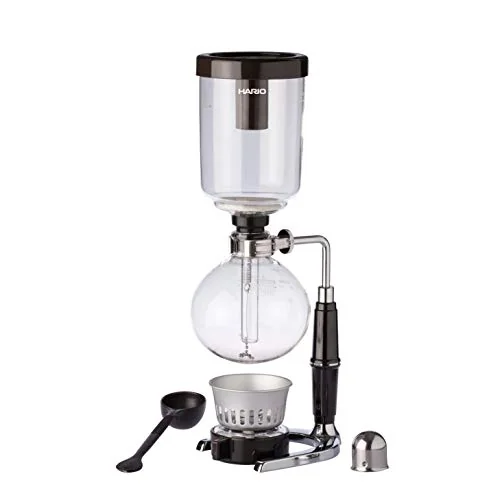
Technica 5-Cup Syphon
The post's own framing: this is the classic, the reference siphon — 600 ml of Japanese borosilicate with the alcohol lamp and a cloth filter in the box. Treat the butane burner as part of the purchase, because the included alcohol lamp is the most-complained-about component in the category. If that already sounds like work, the ePEBO's electric base or the Yama's stovetop design remove the burner question entirely.
- Clean, aromatic cup
- Mesmerizing to watch
- Quality Hario glass
Price is approximate and changes often — check the listing.
Key takeaways
- The physics most blogs print is wrong: the drawdown isn't capillary action — heating the sealed lower bowl raises pressure and pushes water up, and cutting the heat cools and contracts the trapped gas, pulling the brew back down through the filter.
- The method's real advantage is full immersion at a stable high temperature with filtration at the end — astrophysicist Jonathan Gagné measured 23–24.6% extraction on his own siphon brews with a clean, particle-free cup.
- Cloth filters demand a lifestyle: Hario's own care instruction is to wash after every use and store the filter clean and wet in the fridge — it can't be dried and forgotten in a drawer.
- The included alcohol lamp is the most-complained-about part of siphon ownership: community consensus treats it as underpowered and soot-prone, with a small butane torch as the standard upgrade.
- Siphon 'cups' are small and inconsistent across brands — Hario's 5-cup Technica is 600 ml — so compare milliliters, not cup counts.
- The brewer never died in Japan: kissaten culture kept it alive precisely because the bubbling glassware is part of the service.
- The classic8.9BrewSift ScoreExcellent
- Classic, modernized8.1BrewSift ScoreExcellent
- No burner to manage8.5BrewSift ScoreExcellent
- Push-button electric8.7BrewSift ScoreExcellent
- The centerpiece8.3BrewSift ScoreExcellent
Prices are approximate and change often. BrewSift earns a commission on qualifying purchases, at no extra cost to you.
The prettiest physics in coffee — usually explained wrong
The siphon (or vacuum brewer) is two glass bowls, a tube, and a heat source, and it dates to 1827 — it spent a century as a mainstream brewer, prized for the clarity of its cup, before mid-century convenience culture judged it too fussy and the drip machine won.
Here's the part most explainers get wrong: the drawdown is not capillary action. What actually happens is pressure.
The three stages, in order
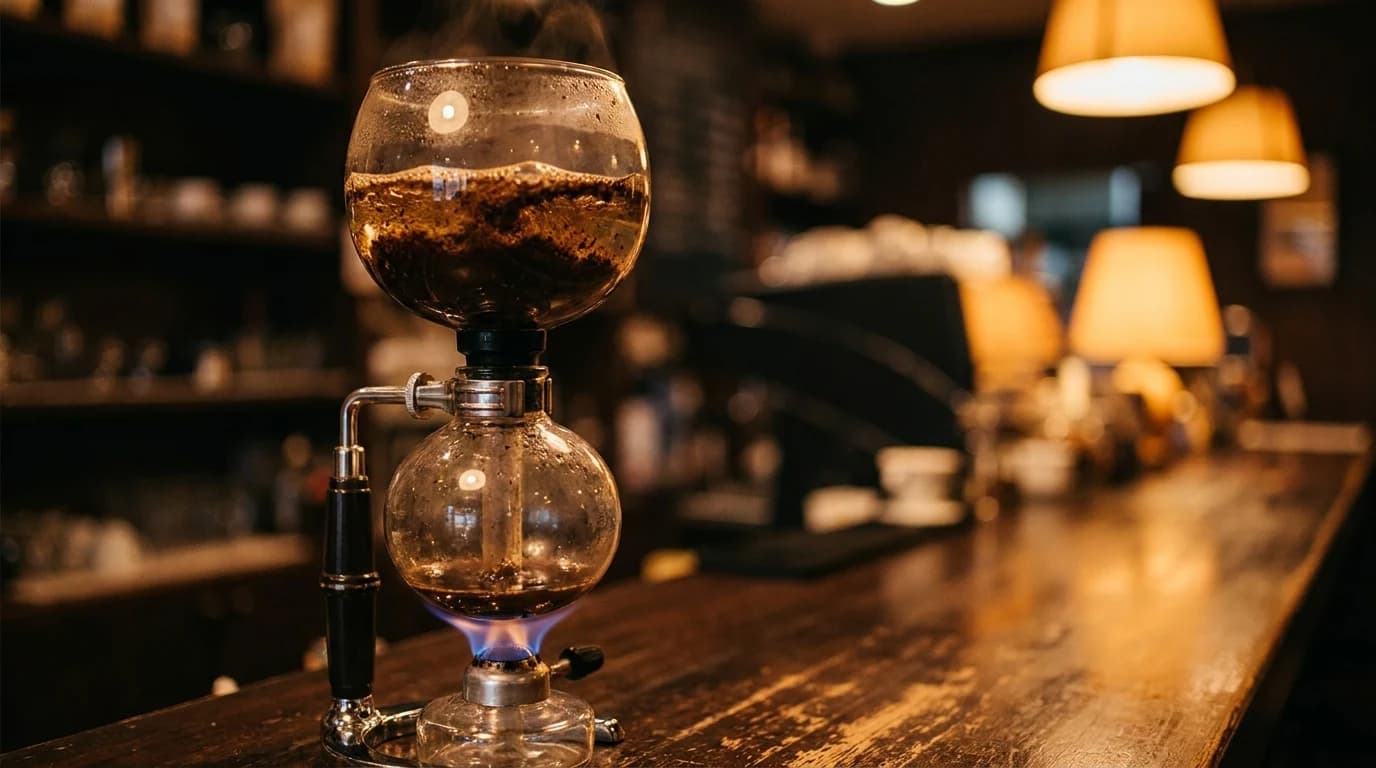
Heat the sealed lower bowl and the trapped air plus water vapor push the pressure above atmospheric, forcing hot water up the tube into the upper bowl, where it steeps with the grounds as a full immersion — burner still on, temperature unusually stable. Cut the heat and the gas in the lower bowl cools and contracts; that pressure difference pulls the finished brew back down through the filter, leaving the bed of grounds stranded above.
Rule of thumb: up by expansion, down by contraction. No capillaries involved.
What the theatre actually buys you
Strip away the glassware and the siphon delivers a combination no other manual method quite does:
- Immersion contact — every ground sits in water for the whole steep, evenly and completely.
- A filtered finish — the brew passes through cloth, paper or metal on the way back down, so it arrives clear rather than silty.
- A temperature that doesn't sag mid-brew — the heat never leaves while the coffee steeps.
The best-documented account comes from astrophysicist Jonathan Gagné, author of The Physics of Filter Coffee, who brews at around 94°C and reports extraction yields of 23.2–24.6% on his own siphon brews — unusually high — in a cup he describes as free of oils and fine particles. That's his measurement on his recipe, not a law of nature, but it matches what r/Coffee owners keep saying in their own words: the cleanest cup their kitchen produces, without reading thin. Total brew time is shorter than the ritual suggests — Gagné's recipe targets under three minutes end to end.
The cost is entirely in the handling
The same community is equally unanimous about what you pay for that cup, and none of it is about flavour: a wide, wet, grounds-coated glass bowl is the worst cleanup in home coffee, the glassware is fragile and awkward to store, and the classic filter is a maintenance commitment all its own.
The cloth filter question
Cloth is the traditional siphon filter, and it genuinely divides people. Hario's own framing is the fairest: cloth gives a cleaner, lighter body; stainless gives fuller mouthfeel. And there's a credible dissent — Gagné rejects cloth entirely, arguing it develops off-flavors quickly, and brews on paper instead.
| Filter | What the sources say about the cup | What it asks of you |
|---|---|---|
| Cloth | Hario: cleaner, lighter body — the traditional choice | Washed after every use, stored clean and wet in the fridge |
| Stainless | Hario: fuller mouthfeel | Rinse it; no storage routine |
| Paper | Gagné's own route — he says it avoids the off-flavors cloth develops | Nothing; you throw it away |
If you go cloth, go in knowing
The maintenance reality is what decides it for most buyers. One widely shared community routine adds boiling the filter periodically to strip oils.
Before you buy cloth: Hario's own care instruction is to wash the filter after every use and store it clean and wet in the fridge. It cannot be dried and tossed in a drawer.
If the fridge-pet lifestyle isn't for you, buy toward stainless or paper from the start. Hario's Next is the hedge: the same 600 ml body with both a cloth and a stainless filter in the box, plus a better handle, so you can try each route without buying twice.
(You may read that cloth filters last "50–100 brews." We couldn't trace that number to any manufacturer, so we won't repeat it as fact.)
Heat sources, from ritual to push-button
The burner is the biggest usability decision. The alcohol lamp that ships with most siphons is the most-complained-about component in the category — slow, underpowered, and prone to sooting the glass — and the community's standard upgrade is a small butane burner. Halogen beam heaters, the glowing café centerpiece, are beautiful and expensive. Two designs sidestep the question entirely: stovetop siphons run on the burner you already own, and electric ones build it in.
Pick the flame first, and the siphon follows
- The reference machine — the Hario Technica: 600 ml of Japanese borosilicate with the alcohol lamp and a cloth filter in the box. Assume the butane upgrade is part of the purchase.
- The classic, modernized — the Hario Next: the same 600 ml, both cloth and stainless filters included, better handle.
- No burner to manage — the Yama 5-cup stovetop: hand-blown glass that goes straight onto gas or electric, wire diffuser included.
- Push-button — Bodum's ePEBO: an electric base runs the whole cycle, which makes it the lowest-friction way into the method.
- The centerpiece — the Diguo balance siphon: the brass-and-glass see-saw, where a counterweight rather than you triggers the drawdown.
One sizing note that trips everyone
Siphon "cups" are small and inconsistent across brands. Hario's 5-cup Technica and Next are 600 ml total — call it two to three real mugs — so compare milliliters, never cup counts. Once you know your brewer's real volume, our coffee ratio calculator turns that number into a dose.
Who should actually buy one
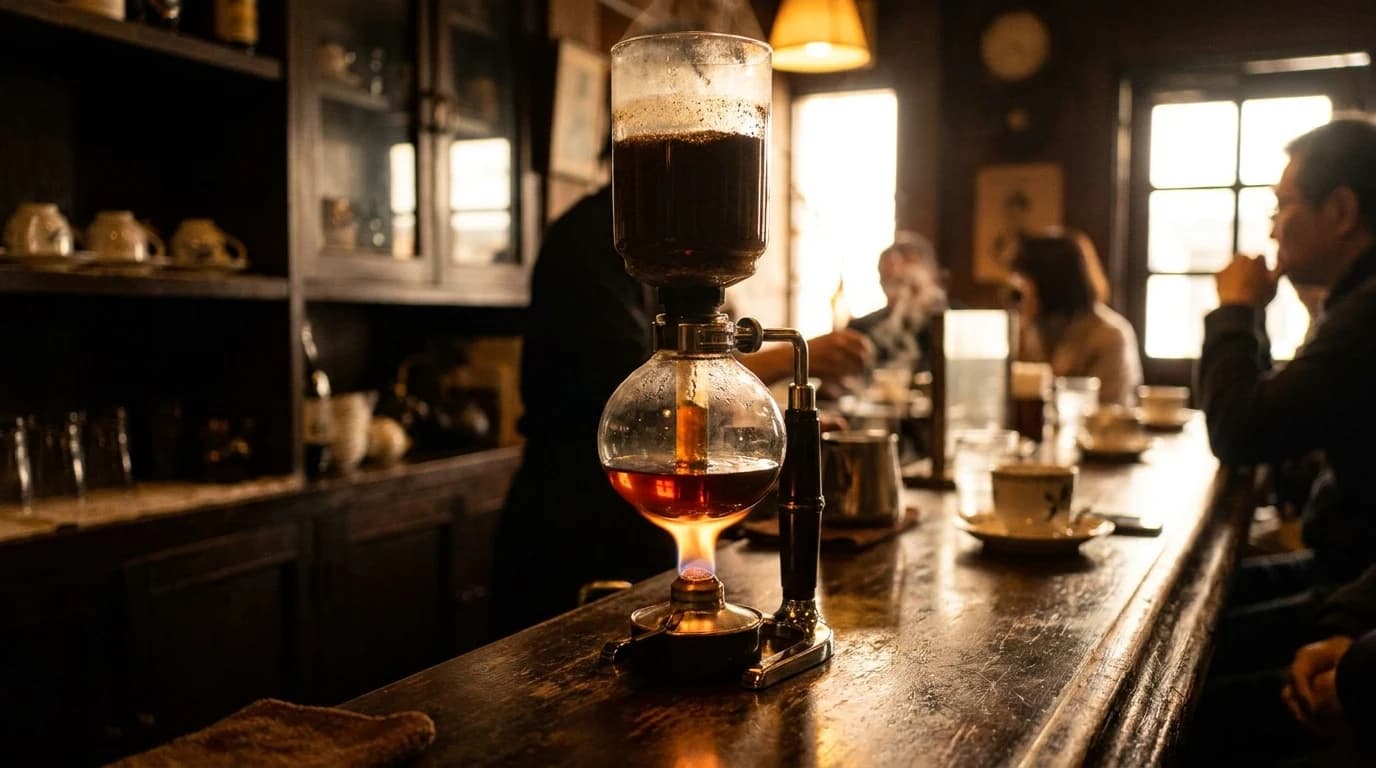
The siphon never died in Japan, and the reason is instructive: in kissaten — the country's old-school coffee houses — the bubbling glassware is part of the service, visible craft performed by the shop's master. That's the honest test for your kitchen too.
Buy a siphon if:
- Brewing-as-ritual appeals — guests watching the water climb, the golden brew falling back.
- You want what owners describe as the cleanest cup their kitchen makes, and the show along with it.
- You'll keep up with the cloth filter's routine, or you'll buy toward stainless or paper from day one.
Skip it if:
- You want excellent coffee with minimal ceremony at 7am.
- The worst cleanup in home coffee sounds like the thing that would end the habit.
- Fragile, awkward-to-store glassware is a problem in your kitchen.
If that second list is you, a pour over setup gets you most of the clarity with a fraction of the cleanup.
Grind matters here as everywhere — siphon sits in the medium band. Our grind size chart covers dialing it in by taste, and the grind size tool gives you a starting point to adjust from. The current lineup lives in our siphon brewers category.
Your next step
Ready to pick a siphon?
Five siphons, one per route into the method
Technica 5-Cup Syphon
The benchmark glass siphon — a clean, aromatic, tea-like cup and a brewing show that draws a crowd.
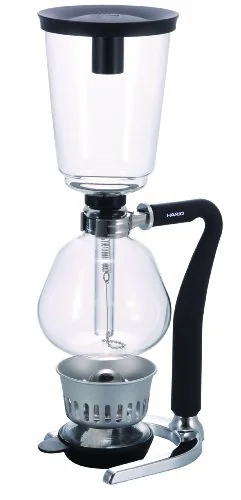
Next Syphon (Portable)
Hario's modernized tabletop siphon — 600 ml, better grip, and both cloth and stainless filters in the box.
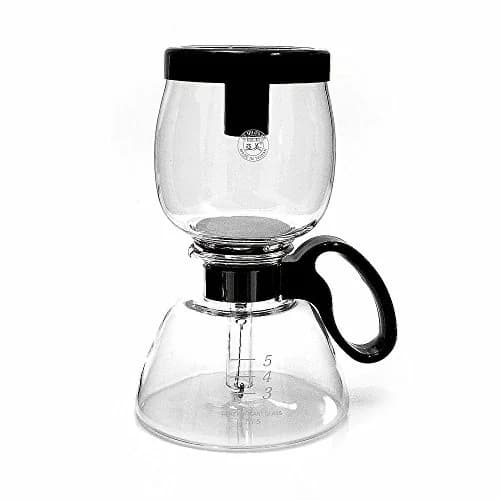
Stovetop Siphon 5-Cup
A well-priced borosilicate siphon you can run on a stovetop with a wire diffuser — clean cup, lower cost.
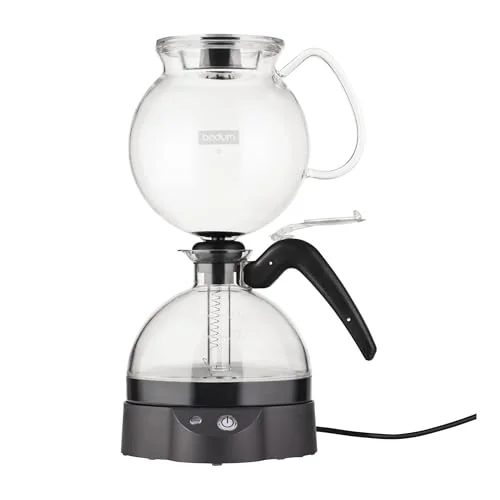
ePEBO Electric Vacuum Coffee Maker
Siphon coffee made push-button — the electric base automates the whole vacuum cycle and keeps it warm.
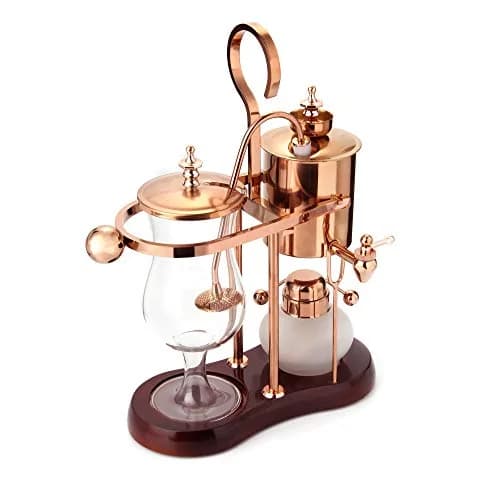
Belgian Royal Balance Siphon
A balance siphon — the brass-and-glass see-saw contraption that's as much sculpture as coffee maker.
BrewSift earns a commission on qualifying purchases made through these links, at no extra cost to you. Prices shown were checked on publication and change often.
FAQ
How does a siphon coffee maker actually work?
Three stages. Heating the sealed lower bowl raises the pressure of the trapped air and water vapor above atmospheric, pushing hot water up the tube into the upper bowl. The coffee then steeps as a full immersion while the burner holds temperature. When you remove the heat, the gas in the lower bowl cools and contracts, and that pressure difference pulls the brew down through the filter — leaving the spent grounds behind. It is not capillary action, whatever the blogs say.
What does siphon coffee taste like?
We don't test, so here's what sources actually support: the device was historically prized for producing a clear brew, Hario describes the result as clean and balanced, and Jonathan Gagné measured 23.2–24.6% extraction with a cup he describes as free of oils and fine particles — high extraction without immersion's usual muddiness. Owners on r/Coffee consistently describe it as the cleanest cup any of their brewers makes.
Cloth, paper, or metal filter?
Hario's own framing: cloth for a cleaner, lighter body; stainless for fuller mouthfeel — its Next model ships with both. The dissent is real: Gagné rejects cloth because it develops off-flavors quickly and brews on paper instead. The deciding factor for most people is maintenance — cloth must be washed after every brew and stored wet in the fridge, per Hario's own instructions.
Do I really have to keep the cloth filter in the fridge?
Per Hario, yes: wash it thoroughly after each use and store it clean and wet in the refrigerator to prevent it going bad. If that sounds like owning a small pet, the stainless or paper filter routes exist for exactly that reason.
What's the best heat source for a siphon?
The included alcohol lamp is the weak link — the community's standard complaint is that it's slow, underpowered and soots the glass, and the standard fix is a small butane burner. Halogen beam heaters are gorgeous café furniture but expensive. Stovetop models like the Yama skip the question entirely, and Bodum's electric ePEBO builds the heat source into the base.
How much coffee does a siphon make?
Less than the cup number suggests — siphon cups are small. Hario's 5-cup Technica and Next are both 600 ml total. Check the milliliters on whatever you buy, and treat a '5-cup' siphon as two to three real mugs.
Sources
- Jonathan Gagné (Coffee ad Astra) — siphon recipe and measurements (mechanism, 94°C brew, 23.2–24.6% extraction, paper-filter case)
- Wikipedia — vacuum coffee maker (mechanism, 1827 origin, mid-century decline, continued popularity in Japan and Taiwan)
- Hario USA — Coffee Syphon Technica (600 ml, alcohol lamp and cloth filter included)
- Hario USA — Coffee Syphon Next (600 ml, ships with both cloth and stainless filters)
- Hario UK — syphon cloth filters (wash after every use; store clean and wet in the fridge)
- Yama Glass — 5-cup stovetop siphon (gas and electric ranges, wire diffuser, cloth filter)
- JAPAN HOUSE Los Angeles — kissaten brewing culture (the siphon as visible craft in Japanese cafés)
- r/Coffee — 'do siphons have any real benefits' thread (the great-cup, worst-cleanup consensus)