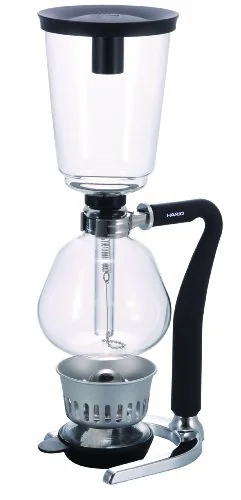
Half coffee maker, half chemistry set. A siphon (vacuum pot) uses vapor pressure and a gentle simmer to brew an exceptionally clean, aromatic, full-flavored cup — and it's mesmerizing to watch.
Quick steer — The cleanest cup and the worst cleanup in home coffee. The heat source is the real decision: an alcohol lamp for the ritual, stovetop or electric to skip the fuss.
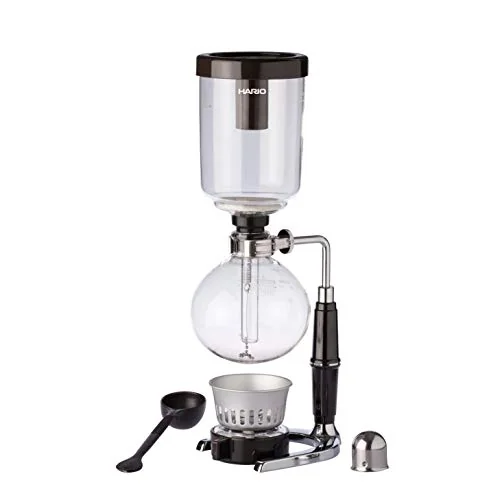
Top pick: Hario Technica 5-Cup Syphon (8.9/10, Approx. $94.5). The benchmark glass siphon — a clean, aromatic, tea-like cup and a brewing show that draws a crowd.
Skip this
Buying a siphon as a daily driver
A siphon is a two-piece glass assembly with a filter, a seal and a burner, and every part of it needs washing and drying after a single brew. The cup it makes is genuinely clean and aromatic; the routine around it is the longest in home coffee. If you want that character without the ritual, a pour-over gets most of the way there in a fraction of the time.
The BrewSift Score is a 0–10 weighted average of category-specific sub-scores, built from manufacturer specifications, published reviews and aggregated owner reports — not hands-on testing. In this category it weights cup quality 35%, ease of use 20% and build quality 20%, plus 2 smaller factors. How we score →
The benchmark glass siphon — a clean, aromatic, tea-like cup and a brewing show that draws a crowd.
Hario's Technica is the siphon most people start with: heat-resistant glass, an alcohol burner, and a cloth filter that yields an exceptionally clean, articulate cup. It's involved and theatrical — the brewer you make when you want to show off.
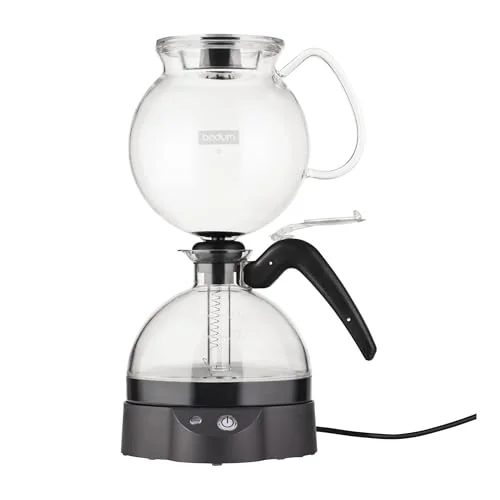
Siphon coffee made push-button — the electric base automates the whole vacuum cycle and keeps it warm.
Bodum's ePEBO takes the vacuum-pot routine and automates it on an electric base. Bodum describes a fully automated cycle with precise temperature control: heated water rises into the borosilicate glass funnel, brews with the grounds for about four minutes, then drains back into the jug, and a warming function holds the coffee at temperature for up to 30 minutes. The filter is built in, so there are no paper filters to buy. Bodum rates it at 1 litre (34 oz), eight cups, on a 1,000 W base, and lists the funnel, lid and filter as dishwasher safe; the jug is wipe-clean only.
The filter is not always cloth any more, and that changes both the cup and the chore. Hario's current Technica listing specifies a stainless steel filter rather than the cloth the method is associated with, which means nothing to soak, boil or keep wet between brews — and slightly more body in the cup, because metal passes oils and fines that cloth holds back. If you have read that siphon coffee is tea-like and crystal clear, that description was written about a cloth filter.
What owners actually report
r/Coffeer/pouroverr/JamesHoffmann
Siphon threads in r/Coffee and r/pourover are unusually consistent: everyone agrees the coffee is excellent and clean, and almost everyone admits they use theirs less than they expected to. The reasons given are always the same two, cleaning and the glass. Owners describe the cleanup as the real cost of the method and the upper bowl as the part they eventually broke. The heat source is the decision the subs actually argue about — an alcohol burner is the traditional and prettiest option and also the slowest and fussiest, a butane or halogen beam is faster, and an electric siphon removes the question entirely at the cost of the show that made people want one. The people who love theirs describe it as a weekend brewer and something to make in front of guests, and the general advice is to buy it on that basis rather than as a replacement for the morning routine.
Consistently praised
Hario Technica — The reference siphon in these threads. Hario publishes it as 600 ml with borosilicate upper and lower bowls, a stainless steel filter and an alcohol burner, and owners describe it as the one that taught them the method.
Electric siphons — Recommended for people who want the cup rather than the ceremony: the heat is controlled for you and there is no burner to fill, light or shield from a draught.
Metal filters over cloth — The recurring practical vote. Owners say a cloth filter has to be kept wet or frozen between uses and that switching to metal removed the one maintenance job that was making them stop brewing.
Consistently warned about
Treating it as a morning brewer — Near-universal in these threads: the cleanup takes longer than the brew, and the owners selling theirs on are the ones who bought it as a daily driver.
Alcohol burners, if you want speed — Described as atmospheric and slow in equal measure, and many owners add a butane or halogen source later. Hario notes that alcohol itself is not included with the Technica.
Storing the glass assembled — The upper bowl is the most commonly broken part in the category, and threads consistently blame storage and knocks rather than thermal shock.
What we didn't pick
Popular options we looked at and passed on, with the specific reason each one fell short.
Siphon bowls sold without a stand or burnerConsidered 2026-09
The brewer is only half the equipment: a siphon needs a heat source and a stable stand, so a listing that omits both is quoting a price against a set you cannot actually use. Hario's Technica listing includes the stand and burner holder and says plainly that the alcohol is not included, which is the level of clarity we want before ranking one. Source.
Vintage second-hand vacuum potsConsidered 2026-09
Glass is the consumable in this category, and replacement upper bowls for discontinued models are largely unobtainable. A vintage vacuum pot is a lovely object and one knock away from being purely ornamental.
Siphons with proprietary, non-replaceable filtersConsidered 2026-09
The filter is the part you replace, and a design that ties you to one seller's cloth or screen turns a simple brewer into a standing subscription. A standard spring-and-screen assembly keeps the pot serviceable for as long as the glass survives.
The five siphons BrewSift ranks run $63 to $149.99, a 2.4x spread, and the money does not buy a better cup so much as a heat source: the cheapest is a bare stovetop pot and the dearest has the element built in.
Heat source
Classic siphons use an alcohol or butane burner, which is inexpensive and portable but slower and a little finicky to regulate. A halogen beam heater is precise and dramatic to watch but adds real cost. Electric models like the Bodum ePEBO automate the whole vapor-pressure cycle and remove the flame entirely, heating the water and drawing the brew back down on their own. Beginners do best with the automated electric route or a stable butane burner; the alcohol lamp is the most traditional but the hardest to dial in.
It's a clean, bright cup
A siphon combines full immersion with a filter, and the result is a distinctively clean, aromatic, tea-like cup with more clarity than a French press and more body than a pour-over. The gentle simmer and even immersion pull out delicate aromatics that other methods lose. Expect an articulate, layered coffee that flatters light and medium roasts — and a brewer you'll genuinely want guests to watch.
Filter type shapes the cup and the cleanup
Siphons take a cloth, glass, or metal filter, and the choice is a real trade-off. Cloth gives the cleanest, silkiest cup but has to be rinsed, kept wet in the fridge between uses, and replaced periodically or it sours. Glass rod filters and reusable metal discs need no upkeep and never sour, but let through a touch more body and fine sediment. Cloth for the purest cup if you'll maintain it; glass or metal for the lowest fuss.
Size and material
Siphons are sold by the cup, typically 3 to 5 small cups, and like most immersion brewers they work best brewed near capacity rather than half-full. The globes are borosilicate glass — heat-resistant but breakable, so handle the seals and stand carefully and keep spare seals and a spare lower bulb on hand. A 3-cup suits one or two drinkers; a 5-cup covers a small group but is overkill for a solo cup.
Know what you're signing up for
This is the most involved everyday method on the site — there's assembly, a heat source to manage, a filter to prep, and glassware to clean, all for one round of coffee. That ritual is the entire point for people who love it, but it's not a grab-and-go. If you want café-quality coffee with less ceremony, a pour-over or a good drip maker gets you most of the way. Buy a siphon because you want the process and the show, not just the cup.
Siphon, syphon, vacuum pot: one brewer, several names
The same method is sold under a surprising number of names, which is part of why comparing siphons is confusing. Siphon and syphon are simply two spellings; Hario, the best-known maker, uses syphon. Vacuum coffee maker, vacuum brewer, vacuum pot and vac pot all describe the same thing, named after the partial vacuum that pulls the brewed coffee back down at the end. A balance siphon, also called a Belgian or Royal siphon, is the same principle arranged side by side instead of stacked. The reliable way to recognise one is the construction rather than the title: two chambers, a tube running from the upper one down into the lower one, and a filter sitting between them, with a heat source underneath. Some listings borrow the word syphon for brewers that work nothing like this, so check for those two chambers before assuming a product belongs in this category. Everything on this page, from the Hario Technica to the Bodum ePEBO, is a true vacuum brewer.
Stovetop siphons on gas, electric and induction
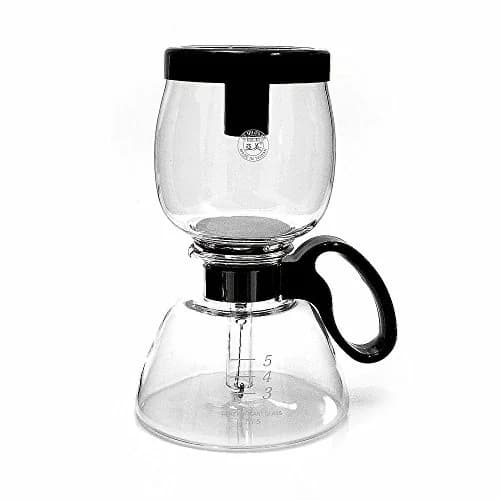
A stovetop siphon puts a glass lower bowl directly over your hob, and how well that works depends on the kind of hob you have. On gas or a coil or radiant electric element, a wire heat diffuser between the burner and the glass spreads the heat and protects the bowl, which is why the Yama stovetop siphon we rank calls for one. Induction is different in principle: an induction hob heats only magnetic cookware, and borosilicate glass is not magnetic, so a glass siphon will not heat on induction at all. If you cook on induction, your options are a siphon that brings its own heat source, such as an alcohol lamp or a butane burner, or an electric siphon like the Bodum ePEBO, whose base heats the water and runs the whole cycle. On any hob, keep the heat moderate once the water has risen, since a hard boil in the lower bowl is what pushes grounds and bubbles through the upper chamber and makes the brew harder to control.
Upright siphon or Belgian balance siphon
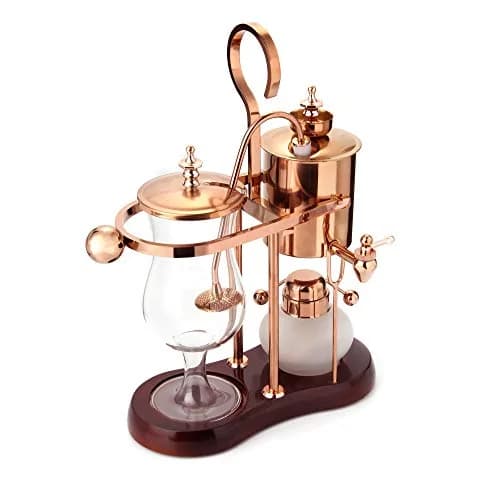
Most siphons are upright: one glass bowl stacked on another, with the heat underneath. The balance siphon, often sold as a Belgian or Royal siphon, sets the two vessels side by side on a see-saw. Water is heated in a metal kettle on one side, vapour pressure pushes it through a tube into a glass chamber holding the coffee on the other side, and as the kettle empties it becomes light enough for the balance to tip, which closes the cap over the burner and puts the flame out. As the kettle cools, the vacuum draws the coffee back across, and it is served from a tap on the kettle. The Diguo Belgian Royal Balance Siphon we rank is this design, in glass and brass with an alcohol burner. It is the most theatrical brewer on the page and a genuine conversation piece, and also the fiddliest to set up and clean, so it suits someone who wants the object and the show more than a daily routine.
Which siphon to buy, by how you will use it
Match the siphon to the part of the method you care about. If you want the classic experience that most guides and recipes assume, the Hario Technica 5-cup is the reference upright siphon, with a stand and a burner. If you want the same cup for less and you cook on gas or electric, the Yama 5-cup stovetop siphon runs over your hob with a wire diffuser. If you want the cup without managing a flame, the Bodum ePEBO is electric: its base runs the vacuum cycle, it has a keep-warm mode and a permanent filter, and it is the easiest way into the method for a beginner. If you want to brew at the table rather than the stove, the Hario Next Syphon is a modernised tabletop design that ships with both cloth and stainless filters, though its alcohol lamp is slow. And if the siphon is as much about display as coffee, the Belgian balance siphon is the showpiece. All five make the same clean, aromatic immersion cup; the money buys the heat source and the ritual.
If you value ritual and a distinctive cup, yes; if you want speed, no. A siphon makes an exceptionally clean, aromatic, tea-like coffee that many people find hard to get any other way, and the brewing itself is genuinely mesmerizing to watch. The trade-off is effort: assembly, a heat source, a filter to maintain, and fragile glass to clean, all for a single brew. It's a wonderful weekend-and-guests method and a poor choice for a rushed weekday morning.
How does a siphon brewer work?
It's driven by vapor pressure. You heat water in the lower glass globe; as it warms, the expanding vapor pushes the water up a tube into the upper chamber, where it mixes with the coffee grounds and steeps by full immersion. When you remove the heat, the lower globe cools and the pressure drops, creating a partial vacuum that pulls the brewed coffee back down through the filter, leaving the spent grounds above. The clean coffee collects in the lower globe ready to pour — hence the name vacuum pot.
Is siphon coffee hard to make?
It's more involved than most methods but not truly difficult once you've done it a few times. The variables to manage are grind (medium, similar to drip), your immersion time, and the heat — and an automated electric model like the Bodum ePEBO handles the heat and timing for you, which flattens the learning curve a lot. The fussier parts are really the assembly, keeping the seal seated, prepping a cloth filter, and cleaning fragile glass. Expect a couple of practice brews to get a feel for it, then it becomes a reliable ritual.
What grind and ratio should I use for a siphon?
A medium grind, roughly the same as drip coffee — finer than French press, coarser than espresso. Too fine can clog the filter and over-extract; too coarse brews weak and sour. A good starting ratio is around 1:15 coffee to water by weight, adjusting to taste, with a total immersion time of about 60 to 90 seconds once the water has risen. Stir gently to wet all the grounds evenly, and use a scale rather than eyeballing it — siphon brewing rewards consistency.
What kind of filter does a siphon use?
Most siphons come with a cloth filter, and many owners also buy reusable glass or metal filters. Cloth produces the cleanest, silkiest cup but must be rinsed after each use, stored wet in the fridge so it doesn't dry out and taint the next brew, and replaced every so often before it sours. Glass rod and metal disc filters need no maintenance and never spoil, at the cost of letting a little more body and fine sediment through. Pick cloth for the purest cup if you'll maintain it, glass or metal for convenience.
Is an electric siphon coffee maker worth it?
It depends on which part of siphon brewing you like. An electric model such as the Bodum ePEBO heats the water and runs the vapour-pressure cycle itself, so there is no flame to regulate and no burner to buy fuel for, and the brew is repeatable in a way an alcohol lamp is not. That makes it the easiest route into the method and the sensible one if you want the cup rather than the ritual. What you give up is control over the heat, which is the variable an experienced siphon brewer uses, and the theatre of an open flame under glass, which for a lot of owners is the actual reason to own one. Stovetop and burner models cost less and keep both.
Is a vacuum coffee maker the same as a siphon?
Yes. Siphon, syphon, vacuum coffee maker, vacuum brewer and vac pot are all names for the same method: water heated in a lower chamber rises into an upper chamber holding the grounds, steeps, and is drawn back down through a filter as the lower chamber cools and forms a partial vacuum. Syphon is simply Hario's spelling. A balance or Belgian siphon uses the same principle with the two vessels side by side on a see-saw instead of stacked.
Can I use a siphon coffee maker on an induction or electric stove?
On a coil or radiant electric stove, and on gas, yes, with a wire heat diffuser under the glass bowl to spread the heat and protect it. On induction, no: induction heats only magnetic cookware and borosilicate glass is not magnetic, so a glass siphon will not heat. Induction cooks should choose a siphon with its own heat source, such as an alcohol lamp or butane burner, or an electric siphon like the Bodum ePEBO, which heats the water in its own base.
What is a Belgian balance siphon?
It is a vacuum brewer with its two vessels side by side on a balance instead of stacked. Water heats in a metal kettle on one side and vapour pressure pushes it into a glass chamber holding the coffee on the other. When the kettle empties, the balance tips and caps the burner, putting the flame out, and as the kettle cools the brewed coffee is drawn back across and served from its tap. It is the most theatrical siphon design, and the fiddliest to set up and clean.
What is the best siphon coffee maker?
It depends on how you want to heat it. The Hario Technica 5-cup is the reference upright siphon, with an alcohol burner and a cloth filter, and the one most recipes assume. The Bodum ePEBO is the electric pick: its base heats the water and runs the vacuum cycle for you, which makes it the easiest to start with. The Yama 5-cup is the value stovetop siphon, run on gas or a coil electric hob with a wire diffuser. The Diguo Belgian balance siphon is the showpiece, a side-by-side brass-and-glass brewer that tips and caps its own burner when the kettle empties. The Hario Next is a modern tabletop take with both cloth and stainless filters in the box.
What is the best siphon coffee maker for a beginner?
An electric siphon such as the Bodum ePEBO is the easiest start, because its base heats the water and runs the vacuum cycle, so the variable beginners find hardest, managing the heat, is handled for you. If you want to learn the traditional way, the Hario Technica 5-cup is the reference upright siphon that most recipes assume. Either way, start with a medium grind, about 1:15 coffee to water, and a short steep of roughly a minute to a minute and a half once the water has risen.