How to Make Cold Brew Coffee at Home (Concentrate Method)
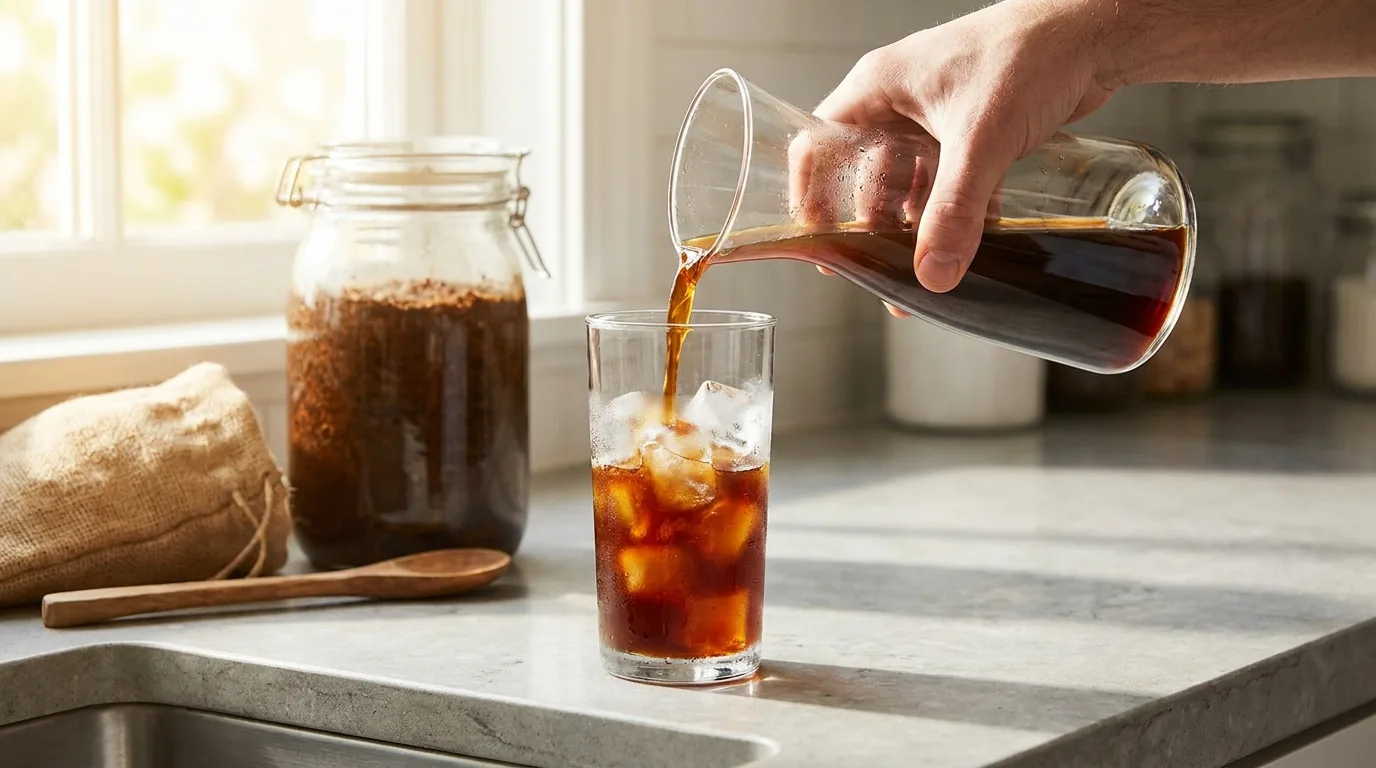
Cold brew concentrate is cold brew made strong enough to dilute. Steep coarse-ground coffee in cold water at about 1:8 by weight (100 g coffee to 800 g water; the National Coffee Association goes as strong as 1:4 to 1:5) for 12 to 18 hours in the fridge, strain, and dilute each glass about 1:1 with water or milk. Strength comes from the ratio, not extra hours: past about 18 hours it mostly turns bitter.
Key takeaways
- Cold brew has only two variables that really matter: the coffee-to-water ratio and the steep time. Everything else is forgiving.
- Brew a concentrate (about 1:8, or the NCA's 1:4 to 1:5), steep 12 to 18 hours in the fridge, then dilute roughly 1:1 to taste.
- Strength comes from the ratio, not from extra time. Over-steeping past ~18 hours adds woody bitterness rather than strength, so it ruins more batches than under-steeping.
- A diluted 16 oz cold brew is about 200 mg of caffeine (vs ~165 mg for iced coffee), and it is smoother but not dramatically lower in acid: hot and cold pH measure comparably.
- Cheapest tidy option8.9BrewSift ScoreExcellent
- Most fridge-flexible8.3BrewSift ScoreExcellent
- Pour-and-go8.5BrewSift ScoreExcellent
- Mason jar kit, dirt cheap8.1BrewSift ScoreExcellent
Prices are approximate and change often. BrewSift earns a commission on qualifying purchases, at no extra cost to you.
Cold brew has a reputation for being fussy, and it is the exact opposite. It is the most forgiving coffee you can make: you cannot scorch it, there is no pour technique, and no thermometer. You steep coarse grounds in cold water, wait, and strain. The only two things that decide whether a batch is great or watery-and-bitter are the two most people never actually measure, the ratio and the steep time. Nail those and everything else is margin.
This is the concentrate method: brew it strong, keep it in the fridge, and dilute each glass to taste. It is the most flexible and space-efficient way to do it, and it is how most bottled cold brew is made.
The only recipe you need
Two roads lead to the same glass. Brew a concentrate and dilute it later, or brew it ready-to-drink and pour it straight. The concentrate route wins on flexibility and fridge space, so start there.
| Concentrate (recommended) | Ready-to-drink | |
|---|---|---|
| Coffee : water | 1:4 to 1:8 | 1:12 to 1:15 |
| A simple start | 1:8 (e.g. 100g : 800g) | 1:15 |
| After brewing | Dilute ~1:1 with water or milk | Drink as is |
| Keeps | Longer (less water) | Shorter |
The National Coffee Association points to roughly 1 gram of coffee to 4 to 5 grams of water for a strong concentrate; 1:8 is a gentler starting point that still dilutes down nicely. Whatever you pick, weigh it, because a scoop lies. Our cold brew ratio calculator turns any ratio into exact grams for your jar size.
The dial-in matrix
Here is the part most how-tos skip: ratio and time are two separate knobs, and you can steer the result on purpose. Read this as what happens when you turn each one:
| Steep time (fridge) | At 1:8 | At 1:5 |
|---|---|---|
| 12 hours | Bright, lighter concentrate | Strong, balanced |
| 16 to 18 hours | Balanced and sweet, the sweet spot | Rich, bold |
| 24 hours | Deeper, heavier | Risk of woody, over-extracted |
The NCA notes cold brew typically needs about 12 hours of contact, and that times run 12 to 18-plus hours overnight. Past roughly 18 hours in a strong ratio you start pulling woody, papery notes. Colder water extracts more slowly, so a fridge steep wants the full window; room temperature is faster but less clean.
What most people get wrong: it is time and ratio, not the beans
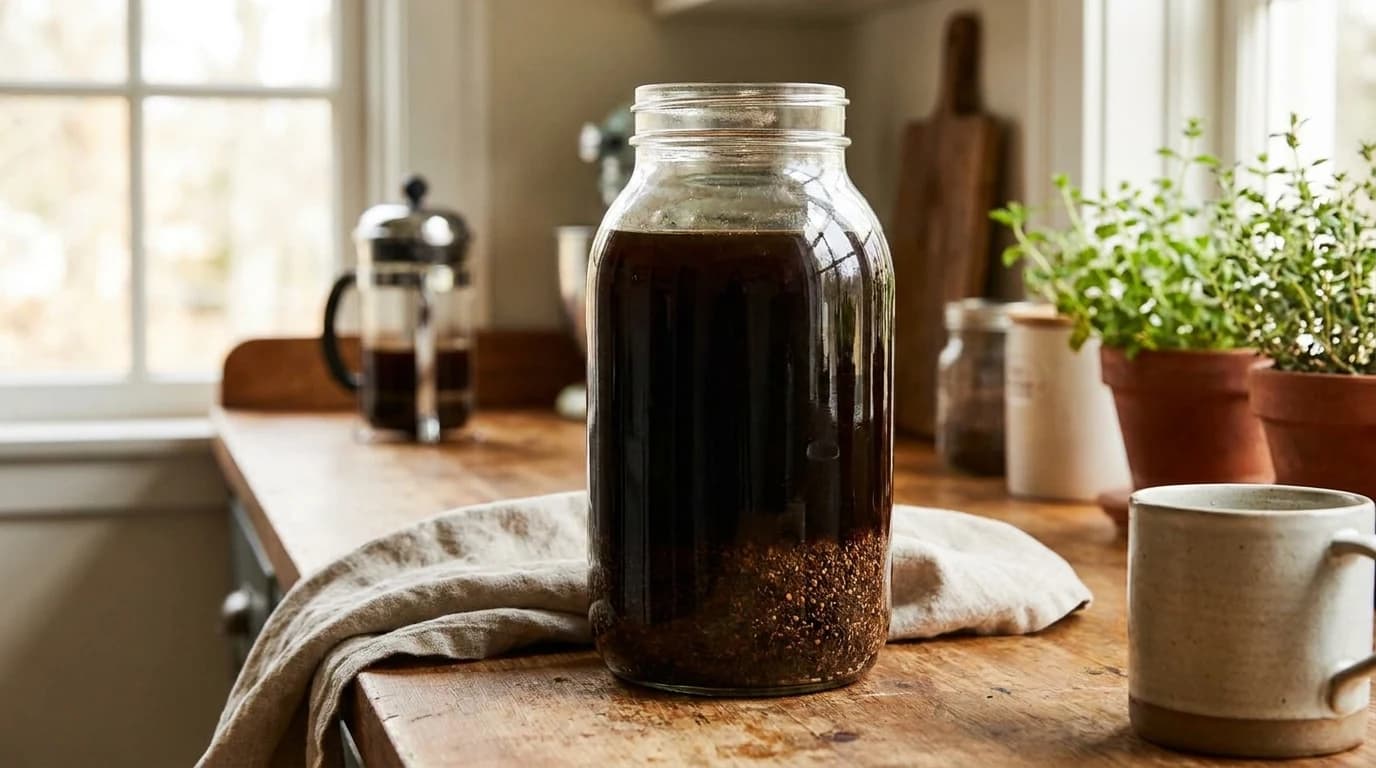
Here is a claim you can test this week. If your cold brew is disappointing, do not change beans first, change the ratio and the clock. Over-steeping ruins more batches than under-steeping, because people leave the jar in the fridge "a bit longer to make it stronger." Strength comes from the ratio, not from extra hours; extra hours past the window mostly just add bitterness and a dry, woody edge.
The two-jar test: keep your beans identical and brew two jars at the same 1:8 ratio, pulling one at 16 hours and one at 28. The 28-hour jar will not be stronger, it will be more bitter. The bean was never the problem.
Which knob to turn
Weak, thin brew — turn the ratio:
- Move from 1:8 toward 1:5
- Dilute less at the glass
- Do not add hours; hours add bitterness, not strength
Bitter, woody brew — turn the clock:
- Pull at 16 to 18 hours instead of 24-plus
- Check the grind is genuinely coarse
- Do not reach for a coarser grind before fixing the time
Step by step
- Grind coarse, like rock salt, the same as French press. Fine grounds slip through the filter and over-extract into mud. A burr grinder keeps the grind even.
- Combine and stir. Add the grounds to your jar or cold brew maker, pour in cold filtered water, and stir until every ground is wet, since dry clumps brew unevenly.
- Steep in the fridge, 12 to 18 hours, covered. Set a timer so an overnight steep does not quietly become a 24-hour one.
- Strain once, cleanly. Lift out the filter basket, or pour through a fine mesh (add a paper filter if you want it crystal clear). Do not squeeze the grounds, which presses bitterness back in.
- Bottle the concentrate and refrigerate it.
- Dilute to taste, about 1:1 with water or milk over ice. Start there and adjust.
Troubleshooting
Match what you actually taste to the real cause before you blame the beans:
| What you taste | Cause | The fix |
|---|---|---|
| Weak, watery | Ratio too lean, or over-diluted | More coffee (toward 1:5); dilute less |
| Bitter, woody, dry | Over-steeped, or grind too fine | Pull at 16 to 18h; grind coarser |
| Sour, thin | Under-steeped | Give it the full 12 to 18h |
| Muddy, gritty | Grind too fine, or squeezed the grounds | Coarse grind; strain gently, add a paper filter |
| Flat, dull | Stale beans or old concentrate | Fresh beans; drink within the week |
Storage, serving, and caffeine
Keep the concentrate sealed in the fridge and it stays good for up to two weeks, the figure cold brew maker Toddy gives for its own concentrate; once you dilute a portion, it is best within a few days. Because it is cold and low in the acids hot water pulls out, it is fairly stable, but it does slowly fade, so brew what you will actually drink.
On strength and acidity
Cold brew is often assumed to be a caffeine bomb. A properly diluted 16 oz cup lands around 200 mg of caffeine, versus roughly 165 mg for the same-size iced coffee, and that gap comes from the strong ratio and long steep, not from the cold water (which actually extracts caffeine less efficiently). Undiluted concentrate is far stronger, which is exactly why you dilute it.
One thing cold brew is not: dramatically lower in acid. A 2018 study found the pH of hot and cold brews comparable; cold brew tastes smoother because hot water extracts more of the sharp acid compounds, not because the pH is far lower. It is mellow, not acid-free. We dug into that in cold brew vs iced coffee.
Gear and beans
You do not need much. Any jar with a fine strainer works, but a purpose-made maker removes the mess:
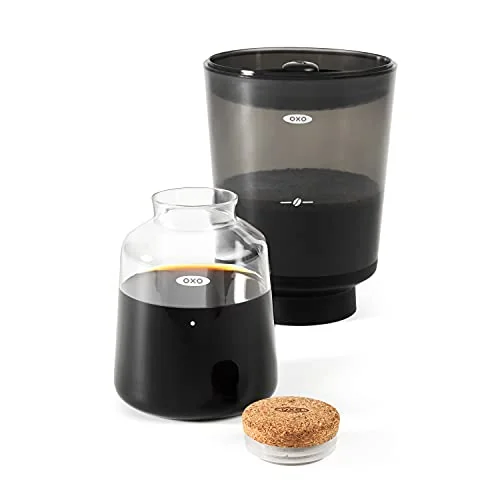
- Cheapest tidy option: the OXO Compact Cold Brew drains the concentrate off the grounds by itself when you set it on its carafe.
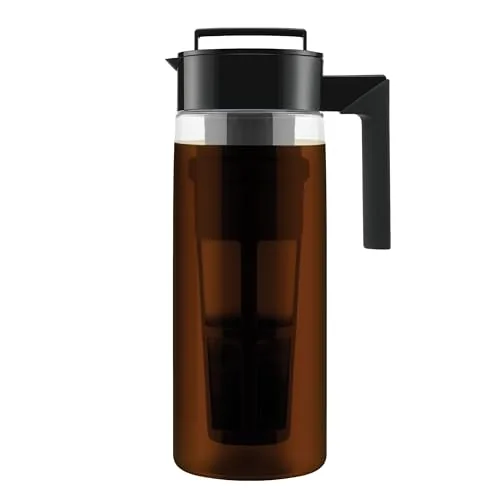
- Most fridge-flexible: the Takeya Deluxe is leak-proof and steeps on its side. See how the two stack up in our Takeya vs OXO head-to-head.
- Pour-and-go: the Hario Mizudashi lives in the fridge door.
- Dirt cheap: a mason jar kit.
For beans, cold brew rewards bold, chocolatey, dark-to-medium roasts, and our best beans for cold brew has the picks. Browse the full lineup on our cold brew makers guide.
Get the ratio and the clock right and cold brew is nearly impossible to mess up. Everything else is just your taste.
Your next step
Make it easier with a dedicated brewer.
The brewers this recipe works in
Compact Cold Brew Maker
The tidiest immersion brewer — it drains itself when you set it on the carafe, and it fits in the fridge door.
Patented Deluxe Cold Brew Maker
An airtight, leak-proof pitcher you can steep on its side to save fridge space and shake to brew faster.
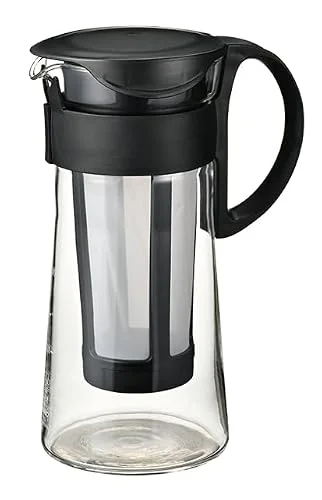
Mizudashi Cold Brew Pot 600ml
A slim glass pitcher with a built-in filter — pour-and-go cold brew with nothing extra to clean.
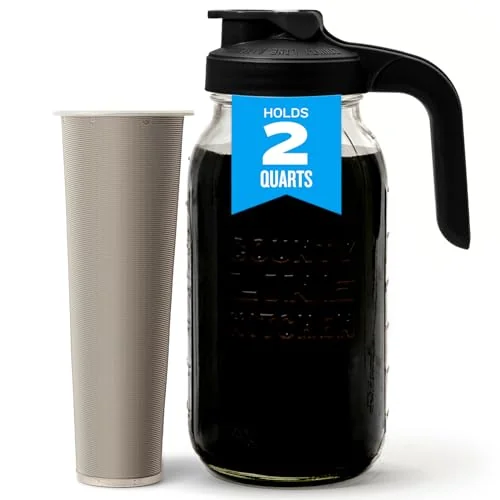
Cold Brew Mason Jar 64oz
A heavy glass mason jar with a stainless filter — big, sturdy, and great value for batch brewers.
BrewSift earns a commission on qualifying purchases made through these links, at no extra cost to you. Prices shown were checked on publication and change often.
FAQ
What is the best coffee-to-water ratio for cold brew?
For a concentrate you will dilute, use 1:4 to 1:8 coffee to water by weight; the National Coffee Association points to about 1:4 to 1:5, and 1:8 is a gentler start. For ready-to-drink cold brew you pour straight, go 1:12 to 1:15. Weigh it rather than scooping, then dilute a concentrate roughly 1:1 with water or milk to taste.
How long should cold brew steep?
About 12 to 18 hours in the fridge. Twelve hours gives a brighter, lighter concentrate; 16 to 18 hours is the balanced sweet spot for most people. Past roughly 18 hours in a strong ratio you start pulling woody, over-extracted notes, so longer does not mean stronger, it mostly means more bitter. Room temperature steeps faster but less cleanly.
Why is my cold brew bitter or weak?
Bitter, woody cold brew is almost always over-steeped or ground too fine; pull it at 16 to 18 hours and grind coarser. Weak, watery cold brew is a lean ratio or too much dilution; use more coffee, toward 1:5, rather than steeping longer. Change the ratio and the clock before you change beans, because those two variables cause most bad batches.
How long does homemade cold brew last in the fridge?
Sealed concentrate stays good for up to two weeks, the figure cold brew maker Toddy gives for its own concentrate, because it is cold and lower in the acids hot water extracts. Once you dilute a portion with water or milk, drink it within a few days. It slowly fades either way, so brew only what you will get through, and keep it covered so it does not pick up fridge odors.
What grind should I use for cold brew?
Coarse, like rock salt or French press grind. A coarse grind steeps evenly over the long soak and strains cleanly, while fine grounds slip through the filter and over-extract into a muddy, gritty concentrate. A burr grinder set coarse is the single biggest upgrade to a clean cup; if you only have finer pre-ground coffee, strain through a paper filter to catch the sediment.
Sources
- Cold brew ratio (1:4 to 1:5), ~12 hour steep, coarse grind (National Coffee Association)
- Cold brew caffeine ~200 mg per 16 oz vs ~165 mg iced coffee (Healthline)
- pH of hot and cold brew comparable (4.85 to 5.13); hot brew higher in titratable acids (Rao & Fuller, 2018)
- Flash-brew method for iced coffee, 1:17 with part of the water as ice (Counter Culture Coffee)
- Toddy — Cold Brew System instruction manual (coffee concentrate stays fresh for up to 2 weeks in the refrigerator)