Cold brew is low-acid and high-extraction by nature, so it rewards bold, chocolatey, dark-to-medium roasts that bring sweetness and body without bitterness. Skip delicate light roasts — their nuance gets lost in the long steep.
Look for: dark or medium roast, chocolate & caramel notes, full body.
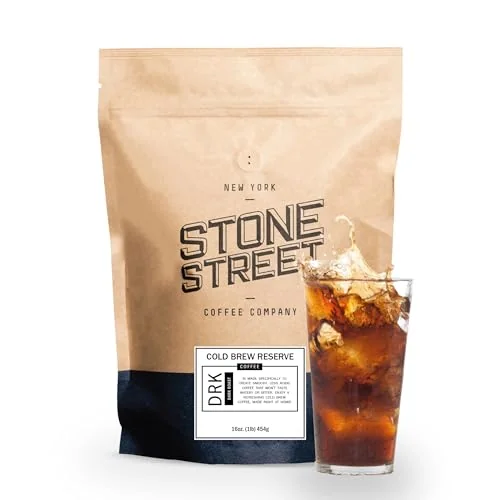
A coarse-ground dark roast built specifically for smooth, chocolatey, low-acid cold brew.
ChocolateBoldSmoothLow-acid
Acidity
Mild
Body
Heavy
Sweetness
Balanced
Brews: Cold brew · French press
Why this one: Stone Street's Cold Brew Reserve is a coarse-ground dark roast built specifically for cold brew, with chocolate notes, a full body (5/5), and low acidity (2/5) that steeps into a smooth, sweet concentrate. Because it's designed for the long cold steep, it delivers exactly the bold, chocolatey character the method rewards. The only catch is that it's a single-purpose coffee — great cold, not what you'd reach for as a bright pour-over.
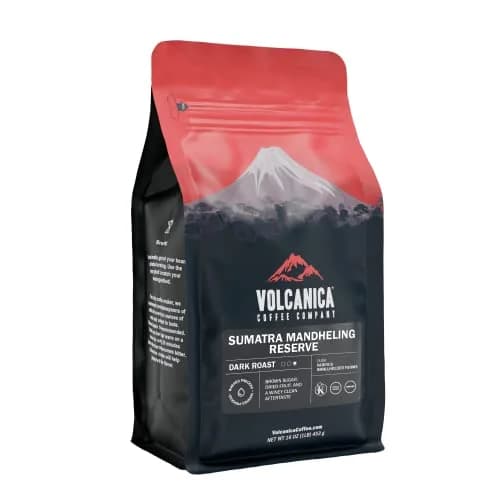
Big, earthy, and full-bodied with almost no acidity — the classic Sumatra profile.
EarthyDark chocolateCedarHerbal
Acidity
Mild
Body
Heavy
Sweetness
Balanced
Brews: French press · Espresso · Cold brew
Why this one: Sumatra Mandheling brings earthy dark chocolate, cedar, and a massive body (5/5) with almost no acidity (2/5) — a profile that turns into an exceptionally smooth, rich cold brew. Its dark, wet-hulled character stands up to the long extraction without turning thin or sour. That deep, earthy flavor is a feature for cold brew fans but can read as heavy if you prefer something cleaner and brighter.
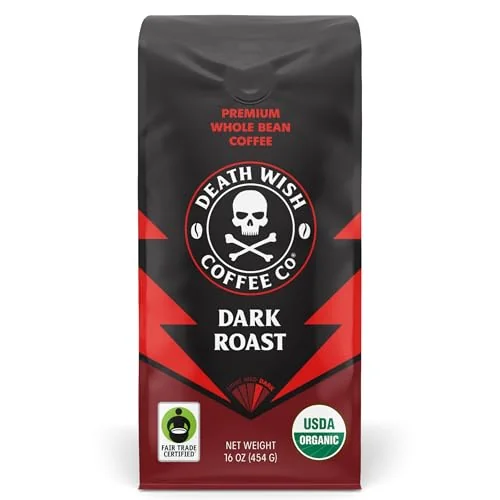
Marketed as the world's strongest coffee — a bold, low-acid dark roast with a big caffeine hit.
BoldSmokyCherryLow-acid
Acidity
Mild
Body
Heavy
Sweetness
Balanced
Brews: Drip · French press · Cold brewOrganic
Why this one: Death Wish is a bold, smoky, low-acid dark roast with a big caffeine hit and full body (5/5) — and cold brew is one of its listed brew methods. Since cold brew already extracts efficiently over many hours, this bean produces a punchy, high-caffeine concentrate that stays smooth. It's the pick if you want your cold brew strong; it's more intensity than most people need for a casual iced cup.
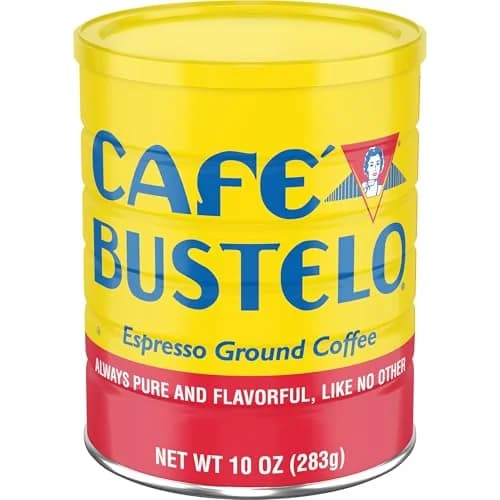
A Latin-style dark roast that's a remarkable bargain for bold, no-fuss espresso and moka.
BoldMolassesSmoky
Acidity
Mild
Body
Full
Sweetness
Balanced
Brews: Moka pot · Espresso · Drip
Why this one: Café Bustelo is a Latin-style dark roast with bold, molasses, and smoky notes, a solid body (4/5), and low acidity (2/5) — a remarkable bargain for cold brew. It steeps into a strong, no-fuss concentrate that takes milk and sugar well. It's pre-ground fine for espresso and moka, so you'll get some sediment; a paper filter or a coarser whole-bean alternative cleans that up.
Ready-made concentrate costs more per cup than brewing your own, but there is no 18-hour wait and no straining.
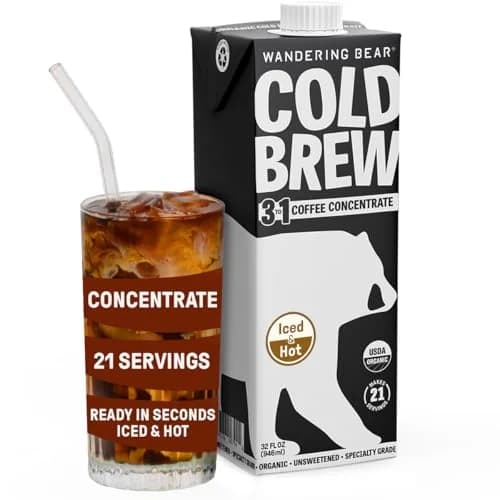
Wandering Bear
Organic Cold Brew Concentrate, 32 fl oz Box
Medium dark roast
A shelf-stable carton with a spout the brand states dilutes one to three for about 21 servings, which makes it the low-effort route to daily iced coffee.
Steep-at-home pouches of coffee, chicory and spices that the brand states make about 12 drinks per box, giving a New Orleans style concentrate without buying equipment.
Use a coarse grind and a 1:8 coffee-to-water ratio, steep 12–18 hours in the fridge, then dilute the concentrate to taste with water, milk, or ice.
Why cold brew rewards bold, dark roasts
Cold brew steeps coffee in cold water for 12 to 18 hours, a long, gentle extraction that pulls out sweetness and body while leaving behind much of the acidity and bitterness. That naturally smooth, mellow result means delicate light-roast nuance largely disappears, while bold, chocolatey, dark-to-medium roasts shine — their caramel and cocoa notes concentrate into exactly the rich, sweet cup the method is famous for.
Grind and ratio basics
Use a coarse grind — similar to French press — so the long steep doesn't over-extract and turn muddy or bitter, and so the grounds strain out cleanly. A 1:8 coffee-to-water ratio by weight is a reliable starting point for a concentrate; steep it 12 to 18 hours in the fridge, then strain through a fine mesh or paper filter. Finer grinds and longer steeps make it stronger but also grittier and more prone to bitterness.
Concentrate vs ready-to-drink
Brewing at a strong ratio like 1:8 gives you a concentrate you dilute to taste with water, milk, or ice — convenient, space-efficient, and it keeps in the fridge for up to two weeks. Brewing at a weaker ratio (around 1:15) makes a ready-to-drink batch you can pour straight over ice, but it doesn't keep as long and takes more fridge space. Most people prefer the concentrate for flexibility.
What a cold brew maker's own recipe looks like
Toddy, whose original cold brew method dates to 1964, publishes a simple house recipe in its brewing guide: 12 ounces of coarse-ground coffee to 8 cups (64 fluid ounces) of filtered water, steeped at room temperature for 8 to 24 hours, then drained into the decanter. It recommends starting with 1 part concentrate to 2 parts water or milk and says the concentrate stays fresh for up to two weeks in the fridge. That is a stronger brew than the 1:8 starting point above, which is why Toddy dilutes it further. Either works; the maker's number is simply a stronger concentrate.
Both are legitimate. Toddy's guide steeps at room temperature for 8 to 24 hours; the fridge method used in this guide's brew tip runs 12 to 18 hours because cold water extracts more slowly. Room temperature gets you to a finished batch sooner. The fridge is more forgiving if you forget about it and keeps the whole process cold from start to finish. Whichever you choose, move the strained concentrate into the fridge once it is done.
Cold brew vs iced coffee: which beans for which
Iced coffee is hot-brewed coffee that is cooled or poured over ice, so it keeps the acidity and aromatics that heat extracts. Cold brew never touches hot water, which is exactly why it tastes rounder, sweeter and less acidic. That difference should drive bean choice. For cold brew, the dark, chocolatey, low-acid beans on this page are the safe bet. If you love a bright Ethiopian or Kenyan, brew it hot, directly onto ice, where its fruit and florals survive, rather than steeping it cold for hours.
Pre-ground or whole bean?
Grind size matters more in cold brew than in almost any other method, because the grounds sit in water for many hours. Stone Street's Cold Brew Reserve is sold already coarse-ground for exactly this reason. Most other pre-ground coffee is ground for drip, and espresso grinds like Café Bustelo's are finer still, which pushes the steep toward bitterness and leaves sediment. If you buy whole bean, set your grinder to a French press setting; if you use a finer pre-ground coffee, shorten the steep and strain through paper.
When you buy through links on BrewSift, we may earn an affiliate commission. This is how we fund independent research — it never influences our scores or which products we recommend. How we score & stay independent →
Not sure which is right for you?
The taste quiz narrows it to three picks matched to exactly how you brew and what you like.
Bold, dark-to-medium roasts work best. Cold brew's long, low-acid extraction mutes delicate flavors, so chocolatey, full-bodied roasts like Stone Street Cold Brew Reserve, Volcanica Sumatra, or Café Bustelo deliver the sweet, smooth cup the method is known for. Bright light roasts tend to taste thin and lose their nuance.
Can you use regular coffee for cold brew?
Yes — any coffee can be cold brewed, and you don't need a bean labeled 'cold brew.' The main things that matter are a coarse grind and a bold, lower-acid roast. A dark roast like Café Bustelo or Peet's works beautifully; the 'cold brew' label mostly signals a coarse grind and a suited roast, both of which you can achieve yourself.
How long should cold brew steep?
12 to 18 hours in the fridge is the sweet spot. Shorter steeps taste weak and underdeveloped; much longer than 18 hours risks over-extraction and bitterness, especially with a finer grind. Steep at room temperature and it extracts faster, so shorten the time — but the fridge gives a cleaner, safer result.
How long does cold brew last in the fridge?
Cold brew concentrate keeps well for up to about two weeks refrigerated, since the cold, low-acid brew is fairly stable. Diluted, ready-to-drink cold brew is best within a few days. Store it sealed and keep it cold; if it smells sour or flat, it's past its best.
What grind should I use for cold brew?
A coarse grind, similar to what you'd use for French press. Coarse grounds extract slowly and evenly over the long steep and strain out cleanly, avoiding the muddy, over-extracted bitterness a fine grind causes. If your only option is finer pre-ground coffee, strain through a paper filter to catch the sediment.
Should cold brew steep in the fridge or at room temperature?
Either. Toddy's own brewing guide steeps at room temperature for 8 to 24 hours; in the fridge, plan on 12 to 18 hours because cold water extracts more slowly. Room temperature is faster, the fridge is more forgiving. Refrigerate the concentrate once it is strained.
How much coffee do I need for a big batch of cold brew?
Toddy's recipe for its home system is 12 ounces of coarse-ground coffee to 8 cups (64 fluid ounces) of water, which makes a strong concentrate you dilute about 1 to 2 with water or milk. For a lighter, ready-to-drink batch, use less coffee for the same water, closer to 1:15 by weight.
Can you use light roast or Ethiopian coffee for cold brew?
You can, but you lose most of what makes it special. A long cold steep mutes the bright acidity and floral aromatics of light roasts, so they tend to taste thin. If you want an iced bright coffee, brew it hot directly onto ice instead and save cold brew for darker, chocolatey beans.
What is the difference between cold brew and iced coffee?
Iced coffee is brewed hot and then chilled, so it keeps more acidity and aroma. Cold brew is steeped in cold or room-temperature water for many hours, which gives a smoother, sweeter, lower-acid cup and suits darker roasts.