Steep coarse grounds in cold water for 12–24 hours and you get a smooth, less tangy, naturally sweet concentrate that keeps for a week. Cold brew makers just make the steep-and-strain tidy.
Quick steer — Immersion for simplicity, slow-drip for clarity, and the filter type is what you are really buying. Size it to your fridge shelf, and brew concentrate if you want it to stretch.
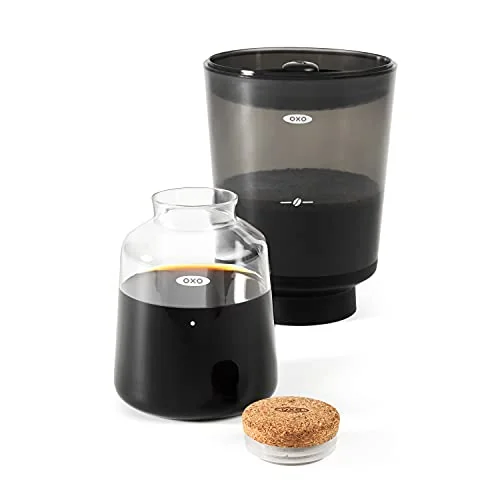
Top pick: OXO Compact Cold Brew Maker (8.9/10, Approx. $39.92). The tidiest immersion brewer — it drains itself when you set it on the carafe, and it fits in the fridge door.
Skip this
A large-capacity maker for a one-person household
Cold brew fades after about a week in the fridge, so a two-litre batch for one drinker is either stale by the end or a standing obligation to drink it.
The BrewSift Score is a 0–10 weighted average of category-specific sub-scores, built from manufacturer specifications, published reviews and aggregated owner reports — not hands-on testing. In this category it weights brew quality 30%, ease of use 20% and value 20%, plus 2 smaller factors. How we score →
The tidiest immersion brewer — it drains itself when you set it on the carafe, and it fits in the fridge door.
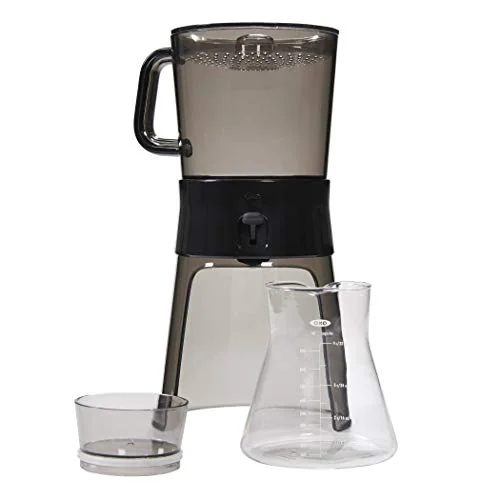
OXO's compact maker fixes the messiest part of cold brew: you steep, then set the brewing container on the glass carafe and the concentrate drains into it automatically, leaving the grounds behind; a brew-release switch stops the flow if you need to. Makes a clean, strong concentrate with almost no cleanup.
A slim glass pitcher with a built-in filter — pour-and-go cold brew with nothing extra to clean.
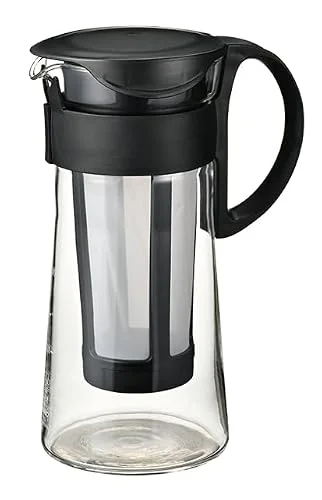
Hario's Mizudashi is about the simplest cold brew setup there is: put ground coffee in the fine mesh basket, fill the pot with water and leave it in the fridge. This is the 600 ml size, model MCPN-7-B, a heatproof borosilicate glass pot about 21 cm tall with a polypropylene lid and strainer frame, and a polyester mesh filter that lifts out for cleaning. Hario suggests grinding coarser for a lighter, more delicate cold brew and finer for more body and strength. It is made in Japan.
Cold brew is not lower in caffeine than hot coffee — per serving it is usually higher, because concentrate starts at roughly twice the coffee-to-water ratio and people under-dilute it.
What owners actually report
r/coldbrewr/Coffee
The most common answer in r/coldbrew and the cold brew threads in r/Coffee is that you do not need a dedicated maker at all: a French press or a wide-mouth mason jar with a filter bag gets you there, and what a purpose-built brewer sells is filtration and a clean way to drain, not a better extraction. Among the makers people do buy, the split is consistent. Toddy is praised for the cleanest cup, credited to its filter bags, and for the yield from a single batch; OXO is praised for simplicity, for needing no paper filters and for the company's customer service, but it also collects the category's most specific complaints, about leaking around the base valve and a fussy filtering step. Making concentrate rather than ready-to-drink is the near-universal habit, on the grounds that it stores better and means brewing less often.
Consistently praised
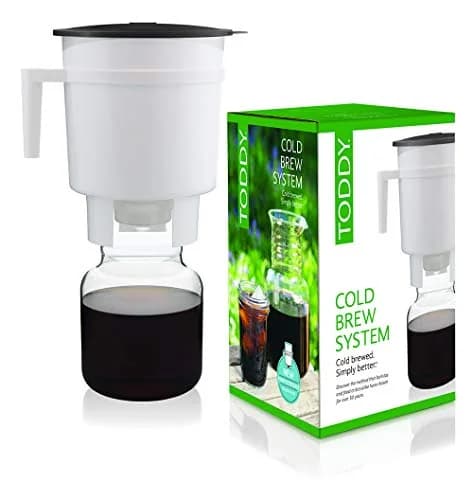
Toddy Cold Brew System — The recurring pick when the priority is a clean cup: owners credit the filter bags with removing sediment that mesh systems let through, and several describe using the same brewer for a decade. It has had no reliable Amazon listing on our recent checks, so we do not currently point readers to it.
OXO cold brew makers — The recurring pick when the priority is not fussing: no paper filters to buy, a simple drain, and repeated praise for OXO replacing parts without argument when something fails.
A wide-mouth mason jar and a filter bag — The answer experienced cold brewers give most often to beginners, on the grounds that immersion brewing needs only a container and a filter, and that jars and bags are cheap enough to test the habit before buying a system.
Consistently warned about
Expecting a maker to improve the taste — Owners who have run jars, French presses and dedicated systems side by side generally report the same cup; what changes is the effort of filtering and pouring. Buying a maker to fix bitter cold brew usually leaves the actual cause, grind and steep time, untouched.
Mesh-only filtration with a fine grind — The complaint behind most sludgy-cold-brew threads. A metal mesh passes fines that a cloth bag or a paper filter holds back, so a grind that is too fine shows up as sediment and a heavy, muddy cup.
The six cold brew makers BrewSift ranks run $16.40 to $49.99, about a 3x spread, on a method whose required equipment is a container, a filter and time.
Immersion vs slow-drip
Immersion brewers (a pitcher with a filter basket) are simple, forgiving, and what most people want. Slow-drip towers look spectacular and make a brighter brew, but they're fussy and expensive.
Concentrate vs ready-to-drink
Most makers produce a concentrate you dilute 1:1 with water or milk — efficient and flexible. A few brew ready-to-drink strength. Concentrate is the better value and keeps longer.
Filter type is what you're really buying
The filter decides the cup and the cleanup. Fine stainless mesh (OXO, Takeya) lets through a little sediment for more body and rinses in seconds. Cloth or felt (Toddy) gives the smoothest, cleanest concentrate but needs proper drying between brews or it sours. Nylon mesh sits in between and is the most common.
Size it to your fridge, not your ambition
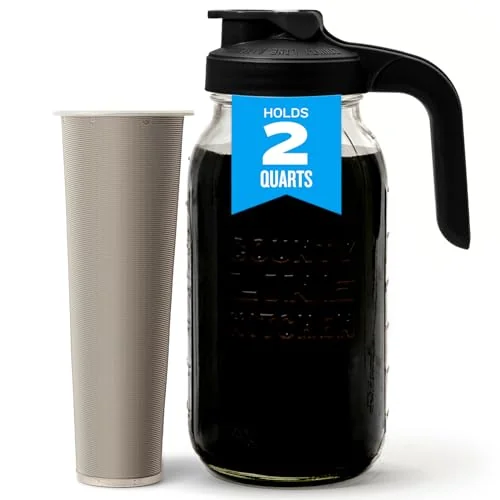
A cold brew maker only helps if it fits on a shelf. Compact pitchers like the 600ml Hario Mizudashi and the OXO Compact tuck into a door; big-batch vessels like the County Line half-gallon jar need real space but brew a week of concentrate at once. Measure your shelf before you buy the biggest one.
Electric cold brew machines vs passive steeping
Every maker on this list is passive: you add grounds and cold water, wait, and strain. Electric cold brew coffee makers take a different route, using vacuum, pressure, or agitation to force extraction in minutes rather than hours. They are a genuine product category, not a gimmick, but the trade-offs are worth being clear about. First, price. The immersion pitchers here run about $16 to $50; a countertop electric machine is typically several times that. Second, flavor. The long cold soak is what produces the mellow, less tangy, faintly sweet profile people associate with cold brew, and rapid extraction methods produce something closer to a chilled concentrate with more of the brightness a slow steep leaves behind. Whether that is worse depends entirely on what you like. Third, footprint and failure modes. A glass pitcher has nothing to break but the glass. A machine needs counter space, a plug, and has a pump or motor that can fail out of warranty. The honest split is this: if you decide you want cold brew at 4pm and refuse to plan ahead, an electric machine solves a problem no pitcher can. If you drink cold brew most days, a passive brewer batched once or twice a week is cheaper, quieter, and gives you the classic profile.
Thinking in batches: what a cold brew system really has to keep up with
People searching for a cold brew system usually mean the same thing: enough coffee that they never run out. That is a math problem, not a product problem. Work backwards from your daily habit. The OXO Compact yields around 16oz of concentrate; diluted 1:1 that is roughly four 8oz drinks, so a two-a-day drinker re-brews every other day. Toddy's own guide puts its yield at about 45oz of concentrate, or roughly eleven drinks diluted, which covers most of a work week in one steep. The County Line 64oz jar sits in similar territory. If your batch runs out mid-week, you are not steeping in the background, you are rationing. Two habits fix this without buying a bigger brewer. Decant as soon as the steep finishes: pour the finished concentrate into a sealed bottle and the brewer is free to start the next batch immediately, which also stops the grounds from continuing to extract. And stagger, rather than scale. Two cheap 1L pitchers running on alternating days give you a continuous supply and better fridge packing than one large vessel that dominates a shelf. Concentrate holds well sealed and cold, which is what makes this cadence work at all.
Making cold brew at home without buying anything
You can make good cold brew coffee at home tonight with a mason jar and a strainer. Coarse grounds, cold water at about 1:5 by weight for concentrate, a lid, 18 hours in the fridge, then strain through a fine mesh sieve lined with a paper filter or a clean cloth. A French press works the same way, using the plunger as the strainer. The coffee this produces is not meaningfully worse than what a dedicated maker gives you, and it is worth trying before you spend anything. What you are actually buying with a dedicated maker is separation. In a jar, the grounds stay in contact with the liquid until you get around to straining, so the brew keeps changing after it is done. Straining a half-gallon of sodden grounds through a sieve is genuinely messy, and a French press mesh passes enough fines that the last inch of the carafe is silt. A maker with a lift-out basket or a drain valve removes the grounds in one clean motion, every time, with nothing to pour and nothing to wipe up. At about $16 to $50, roughly the price of a handful of café cold brews, that convenience pays for itself quickly if you brew weekly. If you brew twice a summer, the jar is fine.
Reading owner reviews without being misled by them
Cold brew makers attract a specific set of recurring complaints, and knowing which ones point at the product tells you a lot. Clogged filters are the most common, and they are usually a grind problem rather than a defect. Blade-ground or drip-ground coffee is full of fines that pack against fine mesh and stall the drain; the same brewer with a proper coarse burr grind runs clean. Treat a wave of clogging complaints as a signal that the filter is unforgiving, not that it is broken. Take leaking and dripping valves more seriously, since that is a seal design issue you cannot work around. Breakage reports on glass models mostly reflect shipping, not daily use, so read whether the reviewer got a cracked box. Retained odor in plastic brewers is real and permanent, worth weighing if you also brew flavored coffee. The one specification that trips people up most is capacity. A listed 1L or 64oz figure is the vessel's total volume, not how much finished coffee you get. Grounds absorb a meaningful share of the water and the basket displaces more, so real yield lands well below the number on the box, especially at concentrate ratios. Compare stated yields where a brand publishes them, and assume the headline capacity is the ceiling rather than the output.
Cold drip coffee makers are a different machine to a cold brew maker
Cold drip, sometimes sold as Kyoto-style or a cold drip tower, works by letting cold water fall drop by drop through a bed of grounds over several hours, so the coffee is brewed once by fresh water rather than steeped in a static bath. The result is usually described as brighter, cleaner and more tea-like than immersion cold brew, which is smoother and rounder. It is also a considerably fussier object: the drip rate has to be set and checked, the towers are tall and glass, and they cost several times what a pitcher does. Every maker BrewSift ranks is an immersion brewer, which is a deliberate omission rather than an oversight, because immersion is what suits a household making cold brew in a fridge. It is worth knowing that many listings use the phrase cold drip coffee maker loosely for any cold brew pitcher, so read the mechanism rather than the name: if the description mentions steeping for 12 to 24 hours, it is an immersion brewer whatever the title says. If it describes a drip rate in drops per minute, it is the real thing.
Glass, Tritan or stainless: the vessel matters more than it looks
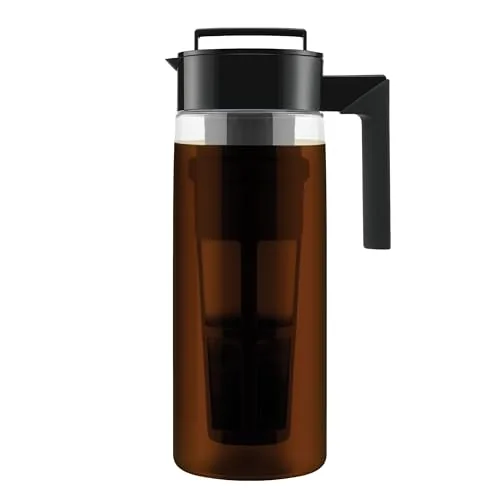
A cold brew maker spends most of its life full and in the fridge, so the material of the vessel shapes daily use more than the listing suggests. Glass, as on the Hario Mizudashi, the County Line mason jar and the carafe that comes with the OXO Good Grips maker, does not hold on to odours or stains and lets you see the brew, but it is heavier and it breaks if it is dropped on a tiled floor. Tritan plastic, which the Takeya Deluxe uses, is light and shatter-resistant, and the Takeya's airtight lid makes it the one to carry or lay on its side, but plastic can keep the smell of a flavoured coffee between batches. Stainless mesh filters, which most of these makers use, rinse clean in seconds but pass a little more sediment than cloth or paper. If you brew one unflavoured coffee and keep the maker at home, glass is the low-maintenance choice. If it rides in a bag, goes to the office, or lives in a fridge door that gets slammed, Tritan earns its place.
Iced coffee maker or cold brew maker?
Iced coffee and cold brew are different drinks, and you may not need a cold brew maker at all if iced coffee is what you want. Iced coffee is brewed hot and then cooled, usually by brewing directly over ice, so it keeps the brighter acidity of hot coffee and is ready in minutes. Several machines already on BrewSift do this: Keurig's K-Elite has an Iced button that brews hot over ice, and the Philips 4400 LatteGo has iced drink presets. Cold brew is steeped in cold water for many hours, which gives the smoother, rounder, less tangy cup people associate with it and needs planning a day ahead. So if you want a cold coffee at short notice and like the brightness of hot coffee, an iced setting on a machine you own is the quicker route. If you like the mellow, chocolatey character of cold brew and drink it most days, a cold brew maker batched once or twice a week is the better fit. Plenty of people keep both habits for different moods.
Pick the maker for the way the coffee actually leaves the fridge. If you drink cold brew ready to pour and live alone, the Hario Mizudashi is a small glass pot built for ready-to-drink strength that fits a fridge door. If you prefer concentrate that you dilute with milk or water, the OXO Compact brews about 16 ounces of concentrate in a fridge-friendly footprint and is the easiest to live with day to day. If you want a week of coffee from one steep for a household, the County Line 64-ounce mason jar is the largest vessel we rank. If the cold brew travels with you or needs to lie flat, the Takeya Deluxe is airtight and made of Tritan. And if you like pouring from a separate carafe once the grounds are out, the OXO Good Grips maker drains its concentrate into an included glass carafe. The Toddy system still has loyal owners, but it has had no reliable Amazon listing on our recent checks, so we do not point you to it here.
Concentrate uses roughly twice the coffee per litre and gets diluted to taste, which is the flexible choice if the household drinks it different ways. Ready-to-drink is simpler and takes up more fridge space per cup.
How long should cold brew steep?
12–24 hours is the range. Twelve hours in the fridge gives a bright, lighter concentrate; 18 hours is the sweet spot for most people; 24 hours maximizes strength and sweetness but can turn woody past that. Steeping at room temperature is faster but less clean — the fridge is worth the wait.
What's the best coffee-to-water ratio for cold brew?
For a concentrate you'll dilute, use 1:4 to 1:8 (coffee to water) by weight — around 1:5 is a reliable start. For ready-to-drink cold brew, go 1:12 to 1:15. Use our cold brew calculator to get exact grams for your jar size.
How long does cold brew last in the fridge?
Undiluted concentrate keeps 7–10 days sealed in the fridge. Once you dilute it with water or milk, drink it within 2–3 days. Always store it sealed — an open pitcher goes flat and picks up fridge odors.
Is cold brew less acidic than iced coffee?
Somewhat, though less than the marketing suggests. A 2018 study in Scientific Reports (Rao and Fuller) found cold and hot brews at almost the same pH, roughly 4.85 to 5.13, but the hot brews carried more titratable acid, the total acid you taste as brightness. So cold brew usually tastes smoother and less tangy, even though its pH is not meaningfully different. Iced coffee (hot-brewed then chilled) keeps that bright acidity, which is why the two taste so different.
What grind size is best for cold brew?
Coarse — like raw sugar or coarse sea salt, the same as French press. A coarse grind steeps evenly over the long soak and strains cleanly; too fine and you get muddy, over-extracted, hard-to-filter concentrate. A burr grinder set coarse makes the biggest difference here.
Are electric cold brew coffee makers worth it?
Only if you refuse to plan ahead. Electric machines use pressure, vacuum, or agitation to finish in minutes instead of 12 to 24 hours, and they cost several times what an immersion pitcher does. The speed is real, but the long cold steep is what creates cold brew's mellow, less tangy character, so rapid extraction lands somewhere between cold brew and chilled coffee. If you drink cold brew regularly, batching a passive brewer that costs about $16 to $50 once or twice a week is cheaper and closer to the flavor you are after. If you want it on demand with no forethought, an electric machine solves that.
Is there a quiet cold brew maker that uses no power?
Yes: every maker ranked here. All six are passive, with no motor, no pump and no plug, so they make no noise and use no electricity, which suits a studio, a kitchen next to a bedroom or a batch left steeping overnight. Only electric rapid cold brew machines run a pump or motor, and none is ranked here. For a small fridge, the Hario Mizudashi and the OXO Compact are the smallest.
Can you make cold brew without a cold brew maker?
Yes. A mason jar or a French press works: coarse grounds, cold water at roughly 1:5 by weight for concentrate, 18 hours in the fridge, then strain. The coffee is essentially the same. What you give up is clean separation. In a jar the grounds keep extracting until you strain, and straining a large batch through a sieve is messy. A French press passes enough fines to leave silt at the bottom. A dedicated maker's lift-out basket or drain valve removes the grounds in one motion. Try the jar first; buy a maker when the cleanup starts annoying you.
What is the difference between a cold brew maker and a cold brew system?
Mostly scale and cadence. A cold brew maker usually means a single pitcher that brews one batch at a time, like the Hario Mizudashi or the OXO Compact. A cold brew system, like the Toddy, means a larger brewing vessel plus a separate storage carafe, so you brew a multi-day supply once and pour from the carafe all week. Systems suit daily drinkers and households; single pitchers suit one person or occasional brewing. You can also build a system from two cheap pitchers on alternating days, which packs into a fridge better than one large vessel.
Why is my cold brew cloudy or full of sediment?
Almost always the grind. Fines produced by blade grinders or by drip-grind pre-ground coffee slip through mesh filters and stay suspended, leaving silt in the last inch of the glass. Grind coarse, like raw sugar, and the problem largely disappears. Filter material matters too: fine stainless mesh passes a little sediment and gives more body, cloth or felt gives the cleanest cup. If you already have the coffee brewed, pour it once through a paper filter and it will clear. Avoid stirring or shaking the finished concentrate before serving, which puts settled fines back into suspension.
How much coffee does one batch of cold brew actually make?
Less than the listed capacity, because grounds absorb water and the filter basket displaces volume. Use the published yield instead. The OXO Compact makes about 16oz of concentrate, which is roughly four 8oz drinks once diluted 1:1. Toddy's guide puts the Toddy at about 45oz, or roughly eleven drinks diluted, which covers most of a week for one person. If you drink two a day, size up or run two pitchers on alternating days. Decanting finished concentrate into a sealed bottle right away frees the brewer for the next batch and stops the grounds over-extracting.
What is a cold drip coffee maker, and is it the same as cold brew?
It is a different method with a similar name. A cold drip or Kyoto-style tower releases cold water a drop at a time through a bed of grounds over several hours, so fresh water passes through the coffee once. Immersion cold brew steeps the grounds in a static bath for 12 to 24 hours. Owners generally describe cold drip as brighter and more tea-like and immersion as smoother and rounder. Towers are also taller, more fragile and considerably more expensive, and the drip rate needs setting and checking. Every maker we rank is an immersion brewer. Note that plenty of listings call an ordinary immersion pitcher a cold drip maker, so read the described method rather than the product name.
Can you still buy the Toddy cold brew system?
Yes, but not reliably on Amazon. The Toddy Cold Brew System has had no featured offer on Amazon on our recent checks, most recently on 2026-09-23, which leaves only other sellers' offers and no trusted price to quote, so we rank it below every maker you can currently buy there. Toddy's home system is still carried by coffee retailers outside Amazon. If you want the same make-a-big-batch habit from a listing that was live on that date, the County Line 64oz jar is the largest vessel we rank, and the OXO Good Grips 32oz maker drains its concentrate into an included glass carafe.
Is a glass or plastic cold brew maker better?
Glass is better for flavour and upkeep because it does not absorb odours or stain, which matters if you ever brew flavoured coffee; the Hario Mizudashi and the County Line jar are glass. Tritan plastic, used by the Takeya Deluxe, is lighter and shatter-resistant, and the Takeya's airtight lid makes it the better choice to carry or store on its side. Choose glass for a maker that stays in the fridge, and Tritan for one that travels or lives in a busy fridge door.
Do I need a cold brew maker to make iced coffee?
No. Iced coffee is hot coffee cooled down, usually by brewing directly over ice, and it is ready in minutes; Keurig's K-Elite has an Iced button that does exactly this. A cold brew maker makes a different drink, steeped in cold water for 12 to 24 hours, which is smoother and less tangy. If you want cold coffee on short notice, use an iced setting or brew strong and pour over ice. If you like cold brew's mellow character and drink it often, a cold brew maker is worth having.
What is the best cold brew maker for one person?
A small one, because cold brew fades after about a week in the fridge. The Hario Mizudashi is a compact glass pot for ready-to-drink cold brew, and the OXO Compact makes about 16 ounces of concentrate, which is roughly four drinks once diluted half and half. Either fits a fridge door. A large half-gallon jar makes sense for a household, but for one person it usually means stale coffee by the end of the batch.