Cold Brew vs Iced Coffee: Not the Same Drink
They are not the same drink, and the ice is not the difference, the brewing is. Iced coffee is brewed hot with a normal method and then chilled over ice; cold brew is steeped in cold or room-temperature water for 12 to 18-plus hours and never heated. That fork changes the cup: cold brew is smoother and usually a bit higher in caffeine, while iced coffee is brighter and more aromatic. The myth to drop is that cold brew is far less acidic, because by pH the two are nearly identical (about 4.85 to 5.13); hot brewing just extracts more of the specific acid compounds, which is why cold brew tastes mellower.

Key takeaways
- Iced coffee is hot-brewed coffee that has been chilled; cold brew is steeped in cold or room-temperature water for 12 to 18-plus hours and never heated. Same glass, opposite processes.
- The claim that cold brew is far less acidic is mostly a myth: a 2018 study found the pH of hot and cold brew comparable at 4.85 to 5.13. Hot brewing extracts more titratable acids, so cold brew tastes smoother even though its pH is about the same.
- Cold brew usually carries more caffeine than iced coffee (roughly 200 mg vs 165 mg per 16 oz), but that comes from a stronger ratio and long steep, not from the cold water itself.
- Cold brew is a make-ahead concentrate you dilute; iced coffee is best made to order by flash-brewing hot coffee straight onto ice, not by chilling a hot pot in the fridge.
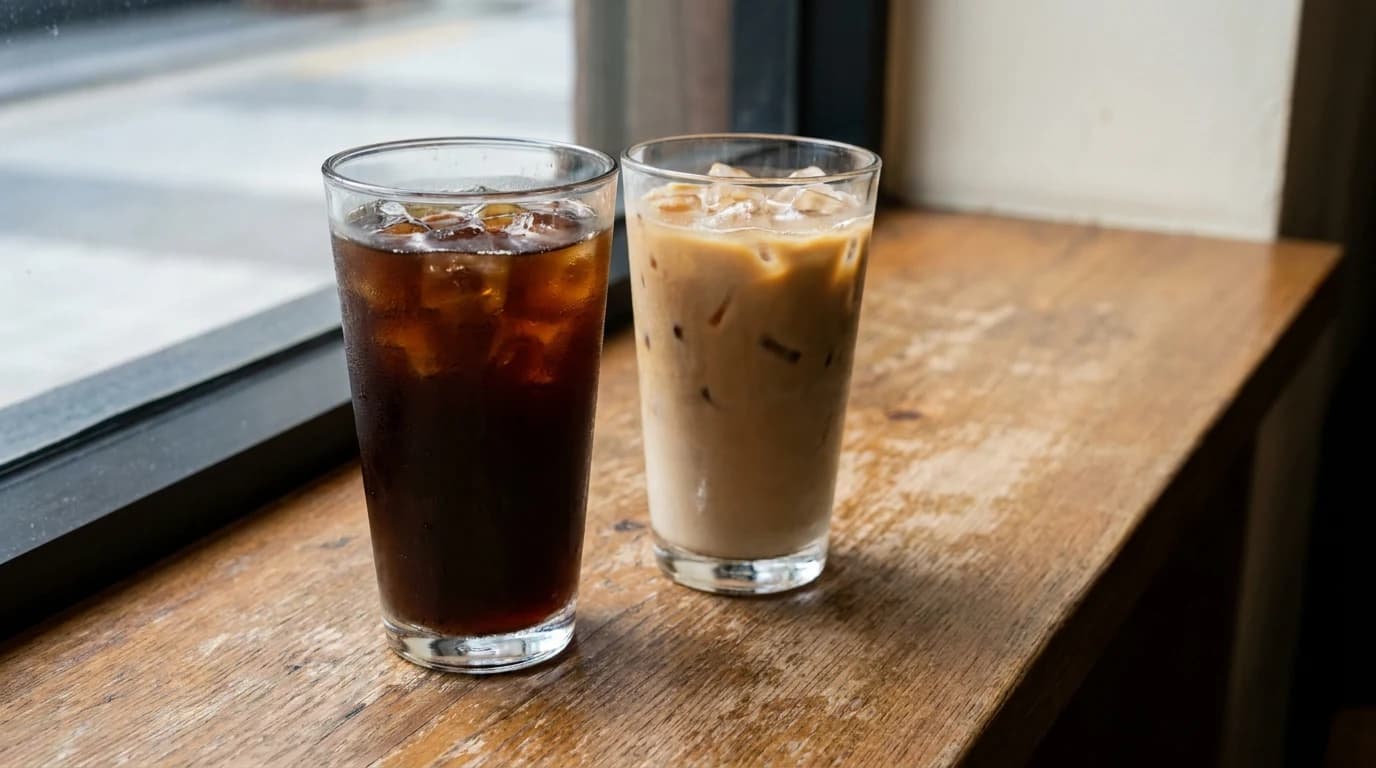
Order a cold brew and an iced coffee at the same counter and you get two drinks that look almost identical: dark coffee, tall glass, plenty of ice. They are not the same drink, and the difference is not the ice. It is what happened before the ice. One was steeped cold for the better part of a day; the other was brewed hot and then chilled. That single fork in the process changes the acidity, the caffeine, the flavor, and how you make each at home.
Same glass, two different drinks
Iced coffee is the simpler one, and the one people get backwards: it is coffee brewed hot with a normal method (drip, pour-over, espresso) and then cooled down to serve over ice. The heat does the extracting; the ice just drops the temperature. Cold brew never sees heat at all. You steep coarse grounds in room-temperature or cooler water for 12 to 18-plus hours, then filter. The name comes from how it is made, not how it is served, so you can actually drink cold brew warm.
The line everyone repeats, "iced coffee is just cold brew poured over ice," is exactly backwards. Iced coffee is hot-brewed coffee that got cold. Cold brew is coffee that was never hot. Get that straight and every other difference follows.
Cold brew is usually made strong and then diluted, so it is really a concentrate system. Iced coffee is a full-strength cup that the ice waters down as it melts, which is why weak, watery iced coffee is so common.
The chemistry, side by side
Two rows in this table surprise almost everyone: the pH is basically the same, and cold brew usually carries more caffeine than iced coffee, not less.
| Cold brew | Iced coffee (hot-brewed) | |
|---|---|---|
| How water meets coffee | Steeped cold, 12 to 18+ hr | Brewed hot, then chilled |
| Grind | Coarse | Your method's normal grind |
| pH (acidity) | ~4.85 to 5.13 | ~4.85 to 5.13 (comparable) |
| Titratable acids | Lower | Higher |
| Caffeine (16 oz, typical) | ~200 mg | ~165 mg |
| Flavor | Smooth, mellow, low bitterness | Bright, aromatic, more acidic |
| Time to make | Hours (plan ahead) | Minutes (on demand) |
| Best gear | Cold brew maker or jar | Kettle + dripper + ice |
What most people get wrong: "less acidic" is mostly a myth
Cold brew's entire marketing pitch is "smoother and way less acidic." Here is the falsifiable version, straight from the lab. A 2018 Thomas Jefferson University study (Rao and Fuller) brewed the same six coffees hot and cold and measured them. The pH values came out comparable across the board, 4.85 to 5.13, so cold brew was not meaningfully less acidic by the number that actually defines acidity. What did differ: hot brewing extracted more total titratable acids (and, as a bonus, more antioxidants).
Why it still tastes smoother
So cold brew tastes smoother not because its pH is dramatically lower, but because hot water pulls out a bigger load of the specific acid compounds, including the bright, sour-edged ones, that cold water leaves behind. The mellowness is real; the "65% less acidic" figures passed around online are not what the chemistry shows. If acid reflux is your only reason for choosing cold brew, the effect is smaller and less certain than the label implies — a genuinely low-acid bean does more for a sensitive stomach than the brew temperature does.
Worth being precise about: "lower in titratable acids" and "lower pH" are not the same claim. Cold brew is the first. Most marketing implies the second.
The caffeine myth runs the other way
People assume cold brew is a caffeine bomb. It can be, but it is not automatic. Cold water extracts caffeine less efficiently than hot water does; cold brew only lands strong because it is made with more grounds over a long steep and then often served as barely-diluted concentrate. Undiluted concentrate is potent, but a properly diluted cup sits around 200 mg per 16 oz, versus roughly 165 mg for the same-size iced coffee. The real levers are your ratio and dilution, not the temperature. Our caffeine-by-brew tool shows the full spread.
Make each one at home
They need opposite planning. Cold brew is a make-ahead batch; iced coffee is best made to order.
Cold brew (plan a day ahead). Coarse-grind about 1 part coffee to 8 parts water for a concentrate (dial it in with our cold brew ratio calculator), steep 12 to 18 hours at room temperature or in the fridge, then filter and dilute the concentrate roughly 1:1 with water or milk over ice. The full method is in our cold brew concentrate guide. The gear only has to hold grounds and water and filter cleanly:
- Cheapest start: a 64 oz mason jar kit with a filter, nothing to it.
- Pour-and-go: the Hario Mizudashi pitcher has a built-in filter and lives in the fridge door.
- Least mess: the OXO Compact Cold Brew drains the concentrate off the grounds by itself when you set the brewer on its carafe.
- Big batches: the OXO Good Grips Cold Brew brews a bigger batch than the Compact and drains the concentrate into its own glass carafe.
See how they stack up on our cold brew makers guide.
Iced coffee, done right: the flash-brew trick
Do not brew a hot pot and stick it in the fridge; slow cooling oxidizes it into something flat and stale. Instead, brew hot coffee directly onto ice:
- Set up a pour-over over a carafe.
- Put part of your total brew-water weight into the carafe as ice — Counter Culture's recipe uses roughly 135 g ice for 30 g coffee.
- Brew the remaining water, about 365 g, hot over the grounds as normal.
- Swirl and serve. The melt finishes the dilution for you.
The hot water extracts full aromatic flavor, and the ice chills it instantly while diluting to the right strength as it melts, locking in the bright notes. It is ready in the four minutes a pour-over takes; our coffee ratio calculator scales it to any size.
Which one is for you
Match the drink to what you actually want in the cup:
Choose cold brew if:
- You want low-bitterness, mellow, chocolatey and nutty coffee
- You drink iced daily and want a grab-and-go batch in the fridge (an insulated travel mug is what turns it into a commute drink — we put Stanley against Contigo head to head)
- You are sensitive to bitterness (smoother, yes, but not a guaranteed low-acid fix)
Choose iced coffee (flash brew) if:
- You want bright, floral, fruit-forward flavor
- You buy single-origin beans whose aromatics you are paying for
- You want a cold cup in minutes with no planning
Neither is "better." They are two different extractions with different chemistry, and now you know exactly what changes when the water runs hot or cold. Make the one that fits your morning.
Your next step
Brewing cold at home this summer?
Cold brew makers for the fridge
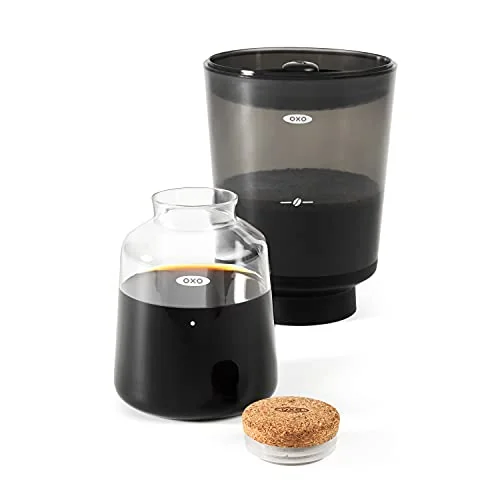
Compact Cold Brew Maker
The tidiest immersion brewer — it drains itself when you set it on the carafe, and it fits in the fridge door.
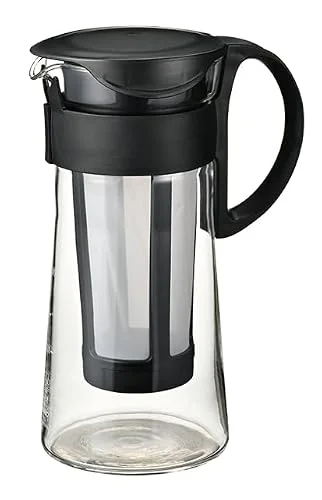
Mizudashi Cold Brew Pot 600ml
A slim glass pitcher with a built-in filter — pour-and-go cold brew with nothing extra to clean.
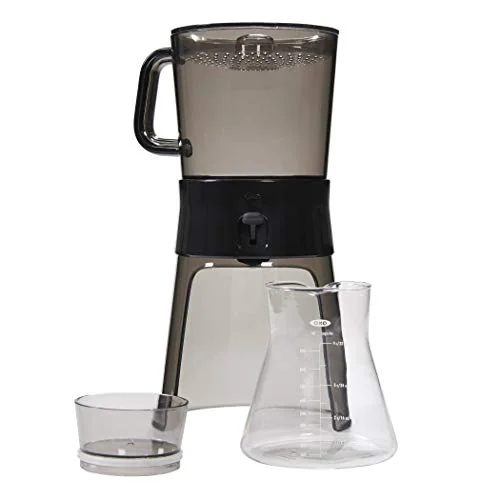
Good Grips Cold Brew Coffee Maker
A rainmaker top evenly wets the grounds, then a valve drains concentrate into an included glass carafe.
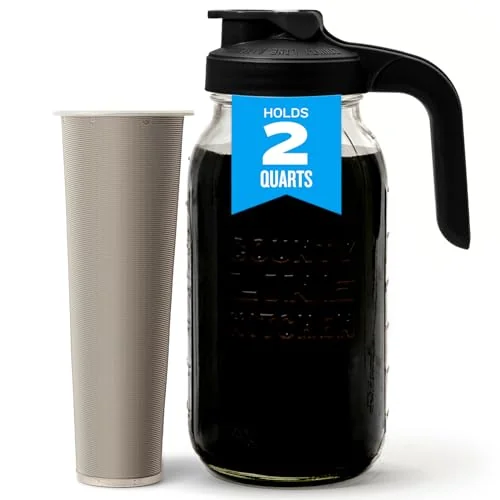
Cold Brew Mason Jar 64oz
A heavy glass mason jar with a stainless filter — big, sturdy, and great value for batch brewers.
BrewSift earns a commission on qualifying purchases made through these links, at no extra cost to you. Prices shown were checked on publication and change often.
FAQ
Is iced coffee just cold brew poured over ice?
No, and it is the most common mix-up. Iced coffee is coffee brewed hot with a standard method (drip, pour-over, espresso) and then cooled to serve over ice. Cold brew is steeped in cold or room-temperature water for 12 to 18-plus hours and never heated. The ice is not what separates them; the brewing temperature and time are.
Is cold brew really less acidic than iced coffee?
Less than most people think. A 2018 Thomas Jefferson University study measured the pH of hot and cold brews as comparable, from 4.85 to 5.13, so by pH they are nearly identical. Hot brewing does extract more total titratable acids, which is why cold brew tastes noticeably smoother, but if you are choosing cold brew purely to avoid acid, the real effect is smaller and less certain than the marketing suggests.
Does cold brew or iced coffee have more caffeine?
Cold brew usually has more. A typical 16 oz cold brew lands around 200 mg of caffeine versus roughly 165 mg for the same-size iced coffee. That is not because cold water extracts more (it extracts less), but because cold brew is made with more grounds over a long steep. Your ratio and how much you dilute the concentrate matter far more than the temperature.
What is the best way to make iced coffee at home?
Flash brew: brew hot coffee directly onto ice instead of chilling a hot pot in the fridge. Put part of your brew-water weight as ice in the carafe (for example 30 g coffee and about 365 g hot water over 135 g ice) and brew a pour-over over the grounds. The hot water extracts full flavor and the ice locks in the bright aromatics as it dilutes. Slow-cooling hot coffee in the fridge oxidizes it and tastes flat.
Is cold brew always served iced?
No. The name describes how it is made, not how it is served. Cold brew is steeped in cold or room-temperature water for 12 to 18-plus hours and never heated, so you can perfectly well drink it warm. Iced coffee is the opposite: brewed hot with a normal method and then chilled over ice, which is why the two taste so different in the same glass.
Sources
- Acidity and Antioxidant Activity of Cold Brew Coffee: pH comparable (4.85 to 5.13), hot brew higher in titratable acids (Rao & Fuller, 2018)
- Cold brew vs iced coffee: iced coffee is hot-brewed then cooled; cold brew uses room-temp or cooler water (National Coffee Association)
- How much caffeine is in cold brew: about 200 mg per 16 oz vs about 165 mg iced coffee (Healthline)
- Guide to flash brew: brew hot directly onto ice; 30 g coffee, 365 g water, 135 g ice (Counter Culture Coffee)