AeroPress vs French Press: Which Should You Buy?
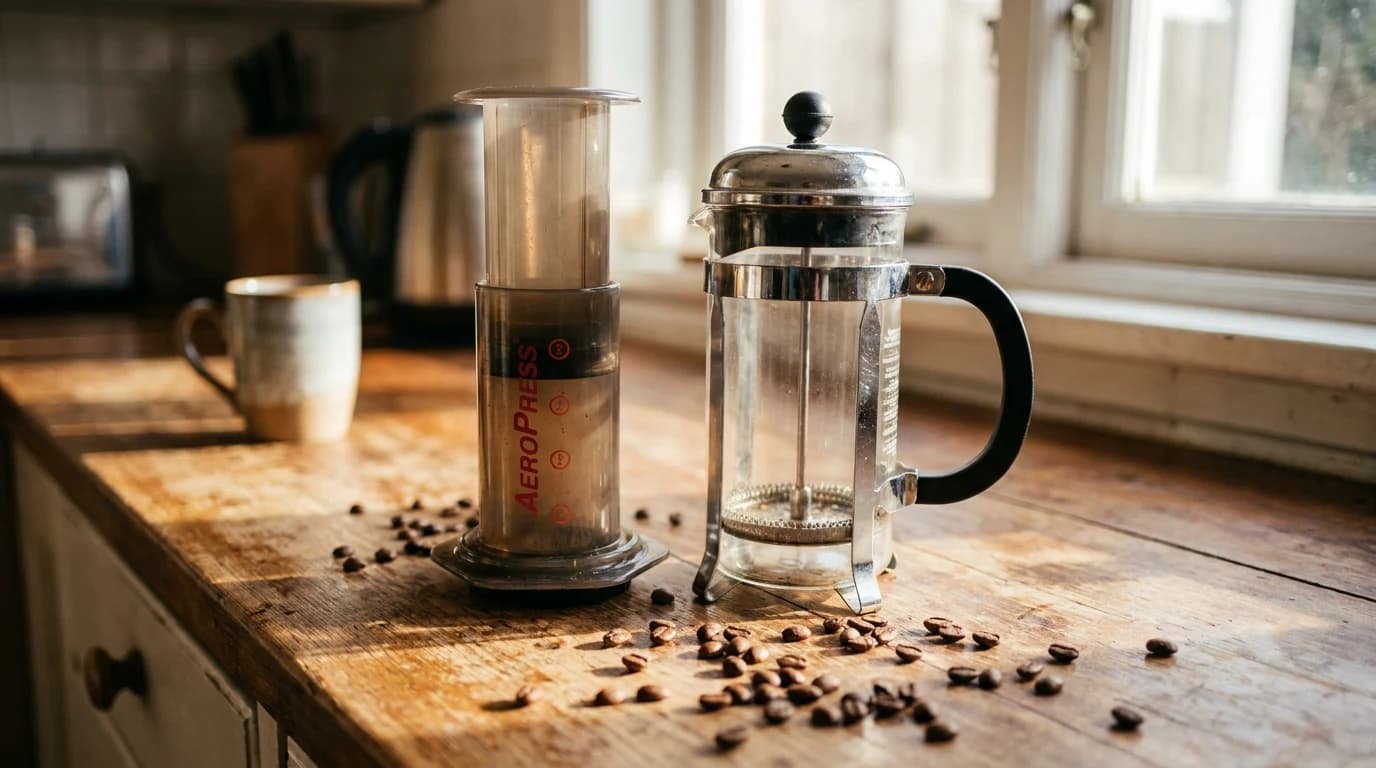
Buy an AeroPress if you mostly make one cup at a time and want clean, bright, low-sediment coffee that rinses out in seconds, or if you travel. Buy a French press if you want a full-bodied, heavier cup and often brew for two or more people at once. Neither is objectively better; they simply target different tastes and routines.
Key takeaways
- AeroPress uses a paper filter and gentle pressure for a clean, single-cup brew; French press uses a metal mesh and full immersion for a heavier, oilier pot.
- French press wins on capacity and hands-off simplicity; AeroPress wins on cleanup speed, portability, and sediment control.
- AeroPress takes a flexible medium to medium-fine grind; French press needs a consistent coarse grind, which makes a decent grinder matter more.
- Choose by lifestyle first: solo and clean-cup drinkers lean AeroPress, pot-for-the-table and full-body drinkers lean French press.
If you are choosing between an AeroPress and a French press, start with two questions: how many cups do you usually make, and do you like your coffee clean and bright or heavy and full-bodied? Answer those and the decision mostly makes itself. Both are inexpensive, manual manual brewers that are easy for beginners, but they produce genuinely different coffee.
This is a lifestyle and taste guide. If you want a spec-by-spec head-to-head on specific models, see our detailed AeroPress vs French press comparison. Here we focus on how each one fits into a real routine.
The core difference: filter and pressure
The AeroPress combines a short immersion with a small amount of pressure as you press the plunger, and it brews through a paper filter. That paper traps oils and fine particles, so the cup comes out clean, bright, and nearly free of sediment. It is designed around a single serving.
A French press is pure full immersion. Grounds steep in hot water for several minutes, then you press a metal mesh plunger to separate them. The mesh lets oils and some fine particles through, which is exactly why the cup tastes heavier, rounder, and a little sludgy at the bottom. It also scales up: most presses are sized for two to eight cups.
It is the filter, not the brewer. Paper traps oils and fines; metal lets them through. Almost every difference in the cup traces back to that one material choice.
Side-by-side
| Factor | AeroPress | French press |
|---|---|---|
| Cup character | Clean, bright, low sediment | Full-bodied, heavier, oily |
| Body | Light to medium | Heavy |
| Best batch size | One cup | Two or more cups |
| Cleanup | Very easy, eject the puck and rinse | Messier, scoop or rinse wet grounds |
| Portability | Excellent, light and durable | Poor, bulky and glass-heavy |
| Grind | Medium to medium-fine, flexible | Coarse, consistency matters |
| Typical price | Low | Low |
| Learning curve | Low, forgiving | Low, but grind-sensitive |
Taste, in plain terms
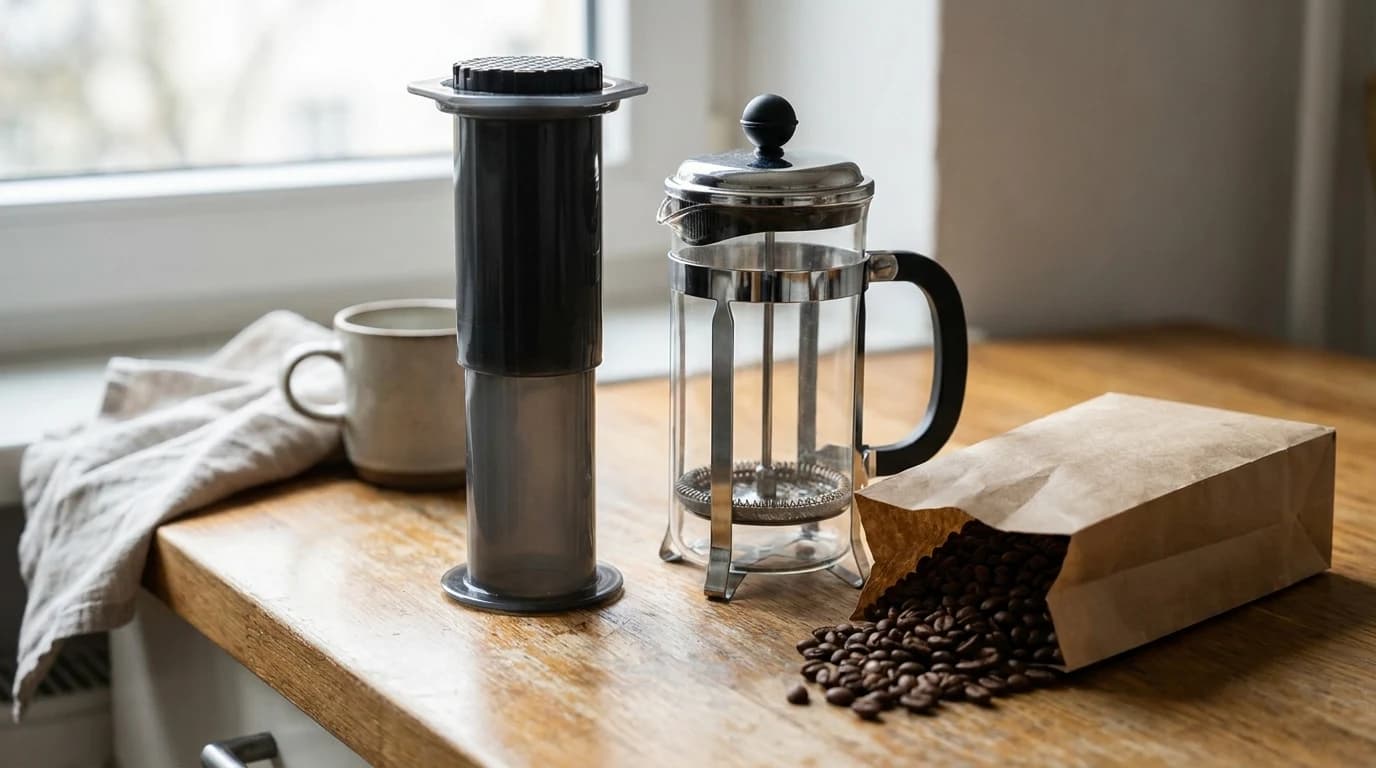
If you gravitate toward light and medium roasts, fruit-forward flavors, and a tea-like clarity, the AeroPress tends to flatter those cups. The paper filter strips out the oils that can mute delicate notes. If you love a dark, syrupy, comforting mug, or you take milk, the French press body holds up better and feels more substantial.
Roughly, the beans that suit each:
- AeroPress: light and medium roasts, single origins, anything fruit-forward or floral
- French press: medium-dark and dark roasts, chocolatey blends, anything you take with milk
There is a sediment trade-off worth naming. The French press always leaves some fines, so the last sip is a little muddy, and pouring gently helps. The AeroPress is close to sediment-free. If gritty dregs bother you, that alone can settle the choice.
Cleanup and daily friction
This is where the AeroPress quietly wins for a lot of people. After pressing, you unscrew the cap and eject a dry-ish puck of grounds straight into the bin or compost, then rinse the rubber seal. It is one of the fastest cleanups in manual coffee.
A French press leaves a slurry of wet grounds at the bottom. You cannot just tip them down most drains without risking a clog, so you scoop or rinse them out, and the mesh disc needs an occasional deeper clean to stay fresh. It is not hard, just messier and slower every single day.
The friction that decides it
Daily reality with an AeroPress:
- Eject the puck, rinse the seal, done in under a minute
- Packs into a bag for travel or the office
- One cup at a time, every time
Daily reality with a French press:
- Scoop or rinse wet grounds, clean the mesh periodically
- Stays on the counter; glass models break
- Serves a table from one press
Capacity and serving
The French press is the obvious pick when you brew for a household or guests. Fill it, wait, plunge, and pour several cups from one vessel. The AeroPress resists this: it is engineered around a single serving, and workarounds to stretch it rarely match a purpose-built pot. If your mornings involve making coffee for two or three people at once, capacity should probably decide it.
Portability
The AeroPress is lightweight, mostly unbreakable plastic, and packs small, which makes it a favorite for travel, camping, offices, and hotel rooms. A French press, especially a glass one, is bulkier and more fragile. If you want one brewer that follows you out the door, the AeroPress is built for it — pair it with a leakproof commuter mug (Stanley vs Contigo) and the desk cup is solved too.
A quiet cost of the glass press: carafes break, and replacements are often close to the price of a new press. Stainless models solve it at the expense of not being able to watch the brew.
Grind and gear
Grind is where the two diverge in a way that affects what else you need to buy. The AeroPress is flexible, working well across a medium to medium-fine range, and it is fairly forgiving of an uneven grind because of the paper filter and short contact time. The French press wants a consistent coarse grind; too fine and you get a muddy, over-extracted, gritty cup.
That makes a grinder more important for French press success. If you are buying beans whole, a decent burr grinder pays off more here — the reasons are in our blade vs burr comparison. Use our grind size reference to see where each method sits, and dial your strength with the coffee ratio calculator; a starting point near 1:15 to 1:16 is sensible for both.
So which should you buy?
- Buy an AeroPress if you mostly make one cup, want a clean and bright cup with almost no sediment, hate fussy cleanup, or travel often.
- Buy a French press if you want a rich, full-bodied cup, regularly brew for more than one person, and do not mind a slightly messier cleanup and a bit of sediment.
- Buy both if you can, because they cover different moods: an AeroPress for fast solo mornings and trips, a French press for slow weekends and serving a table.
Either way you are getting an affordable, durable, low-tech brewer that rewards fresh beans and a decent grind far more than it punishes a small budget. Match the device to how you actually drink, and you will be happy with the cup. For the model-level details and pricing, head to the full product comparison.
Your next step
Picked your brewer? Compare the full lineup.
The two brewers, and the filters
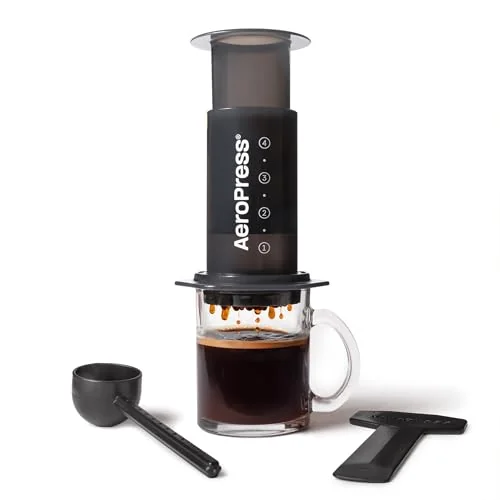
AeroPress Original
The most forgiving, most fun way to make a great single cup — and it's nearly indestructible.
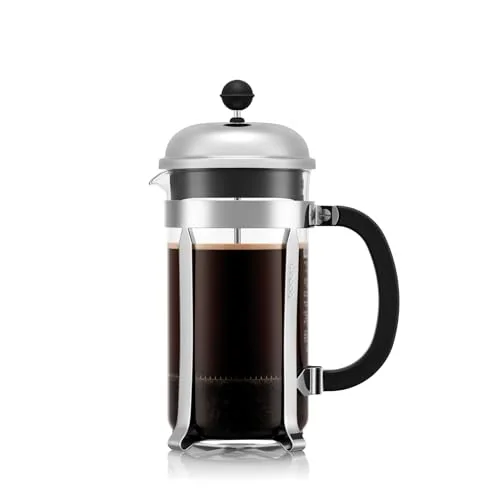
Chambord French Press
The classic French press — rich, full-bodied immersion coffee with no paper and minimal fuss.
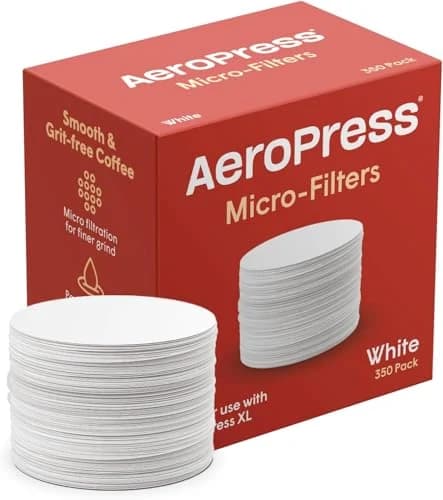
AeroPress Paper Micro-Filters, 350 ct
350 AeroPress filters for under $10 — about 3 cents a cup, the cheapest consumable on the site.
BrewSift earns a commission on qualifying purchases made through these links, at no extra cost to you. Prices shown were checked on publication and change often.
FAQ
Which makes stronger coffee, an AeroPress or a French press?
Strength depends on your ratio and grind more than the device. A French press tastes heavier and more full-bodied because its metal mesh lets oils and fine particles through, while the AeroPress paper filter produces a cleaner, brighter cup that can still be very concentrated if you use less water.
Is an AeroPress better for one person?
Yes, the AeroPress is built around single servings and is hard to scale to a full pot. If you almost always brew just for yourself, it is a natural fit. A French press comes in larger sizes and is better when you regularly make two or more cups at once.
Do I need a burr grinder for either one?
A consistent grind helps both, but it matters most for the French press, which relies on an even coarse grind to avoid a muddy, over-extracted cup. The AeroPress is more forgiving of grind variation because of the paper filter and short brew time. A burr grinder improves either setup.
Which is easier to clean?
The AeroPress is easier for most people. You pop out a compact puck of grounds and rinse the seal, which takes seconds. A French press leaves wet grounds pooled at the bottom that you have to scoop or rinse out, and the mesh filter needs occasional deeper cleaning.
Can one device replace the other?
Not really, because they target different cups. If you love the thick, oily body of a French press, an AeroPress will taste too clean, and vice versa. Many coffee drinkers keep both: an AeroPress for solo mornings and travel, and a French press for slower weekends or serving guests.