Blade vs Burr Grinder: What Changes in the Cup
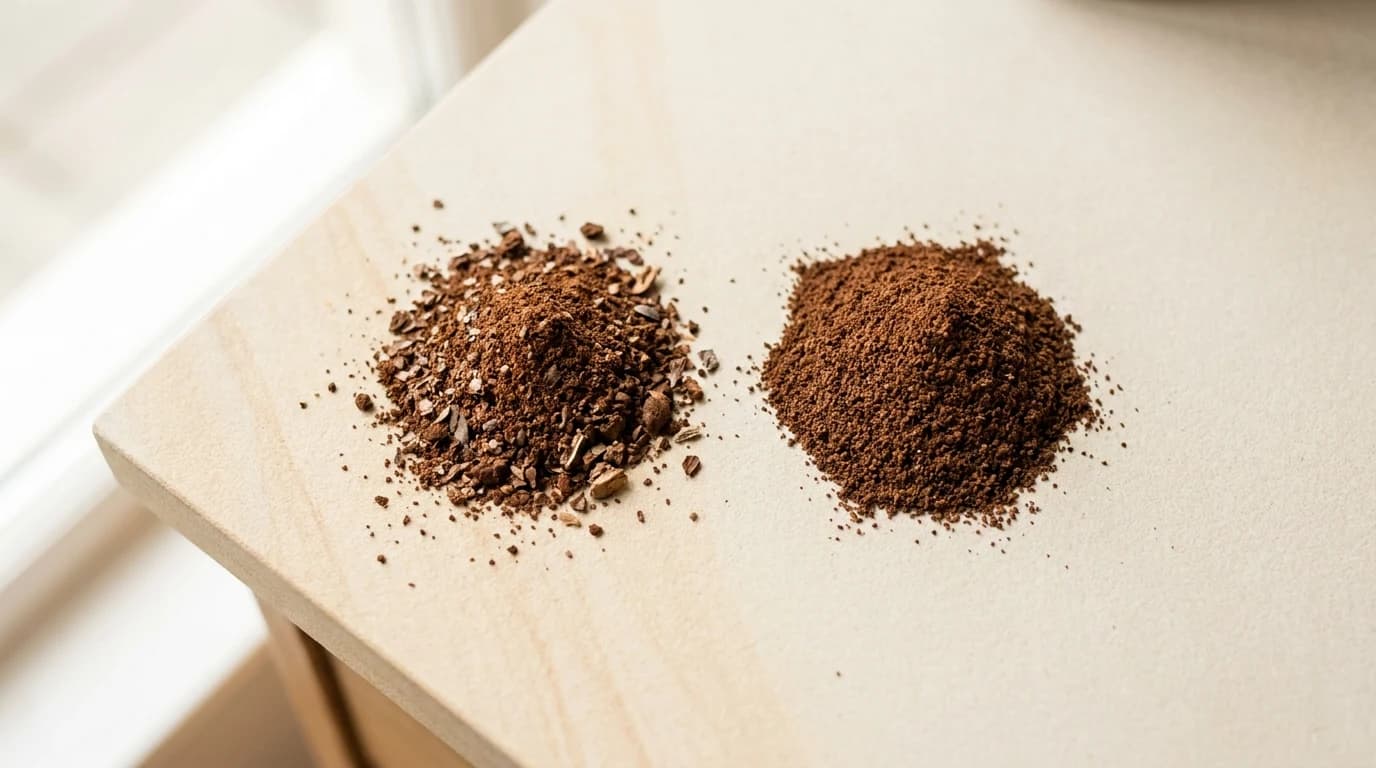
A burr grinder crushes beans to a narrow, repeatable particle size; a blade grinder chops them into a wide, random spread. That spread is what changes the cup: in one blade dose the fine particles over-extract (bitter) while the coarse chunks under-extract (sour) at the same time, so the coffee tastes muddled rather than balanced. Switching to a burr fixes the uniformity, which is the single biggest lever on flavor clarity, no matter your brewer.
Key takeaways
- A blade grinder chops beans into a wide, random particle spread; a burr crushes them to a narrow, repeatable band. Uniformity, not average size, is the real difference.
- An uneven grind makes two opposite defects at once: fines over-extract (bitter, dry) while boulders under-extract (sour, hollow) in the same cup, which reads as muddled.
- Research shows fines under 100 microns collapse the coffee bed's permeability and low size uniformity lowers bed porosity, degrading a clean extraction.
- Distribution only matters as much as your brew exposes it: burr is non-negotiable for espresso and pour-over, but a blade is defensible for French press and cold brew.
- Cheapest real fix, hand grinder8.1BrewSift ScoreExcellent
- Do-everything electric8.1BrewSift ScoreExcellent
- Filter obsessive, no espresso7.9BrewSift ScoreGood
Prices are approximate and change often. BrewSift earns a commission on qualifying purchases, at no extra cost to you.
Here is a claim you can test tomorrow morning: a blade grinder does not grind your coffee to a size. It chops it toward a distribution, and that distribution is why the cup tastes muddled rather than simply strong or weak. Swap to a burr grinder and the single thing that changes is uniformity, yet almost everything people credit to better beans or a better machine traces straight back to it.
The claim, stated so you can falsify it
Grind the same beans, same dose, same water, same brewer, twice: once from a blade grinder and once from a burr. If the story most articles tell (burr is consistent, blade is uneven, done) were the whole truth, the burr cup would just taste a bit better. It does not. The burr cup tastes cleaner and more separated, so you can actually pick out individual flavors, while the blade cup tastes flat and hollow with a bitter edge you cannot dial away. That specific signature is the tell, and it points at one mechanism: particle size distribution.
Listen for this, not "better": if the blade cup were simply weaker you would fix it with more coffee. The fact that more coffee makes it more muddled rather than stronger is the diagnostic.
What a blade actually does
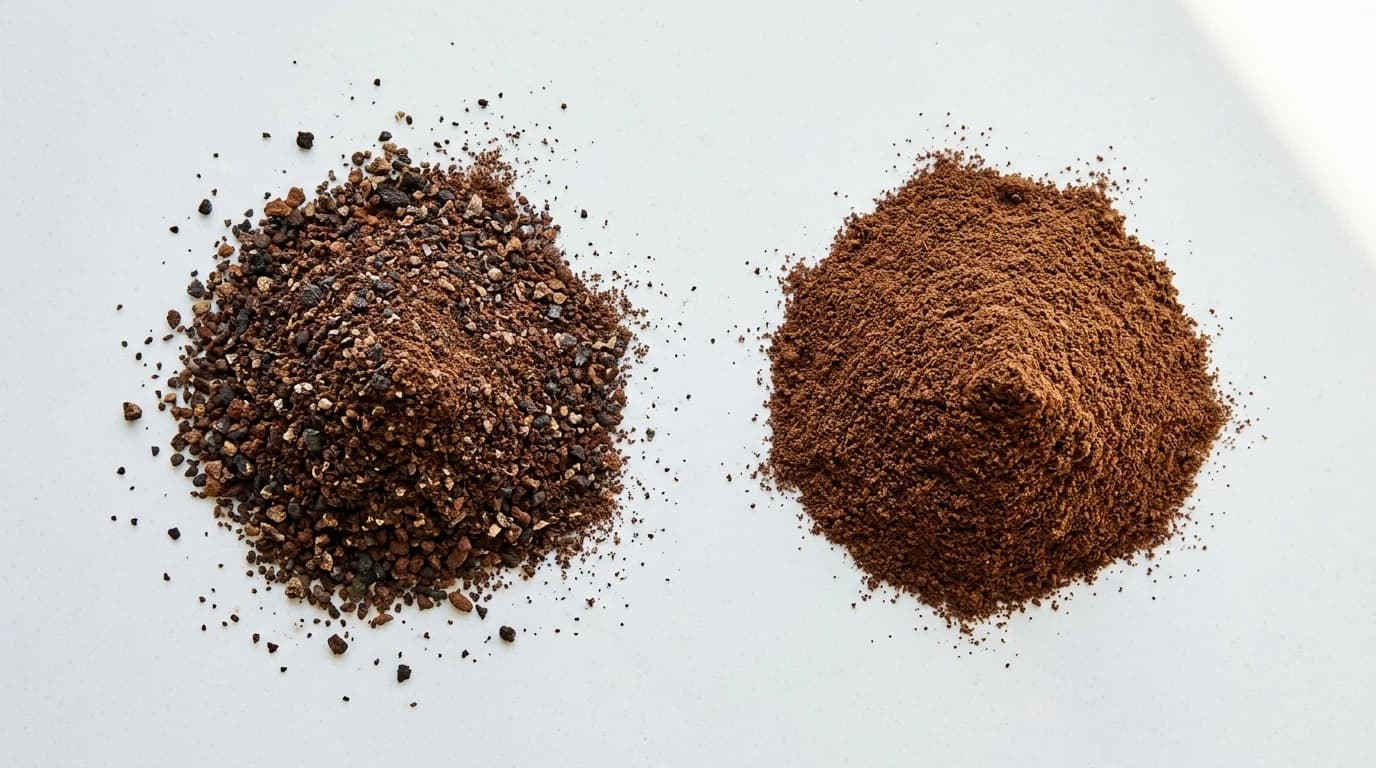
A blade grinder is a propeller in a cup. It does not cut to a gap, it shatters beans by sheer speed and time, so you get a chaotic spread of superfine powder and large chunks in the same batch. A burr crushes beans between two abrasive surfaces set a fixed distance apart, so the grind lands in a far tighter band. Researchers call that tightness size uniformity, and it is measurable: even a good espresso grind is bimodal, meaning it has a peak of fines plus a peak of coarse particles, and different grinders throw sharply different shares of each.
| Blade grinder | Burr grinder | |
|---|---|---|
| Mechanism | Chops by speed and time | Crushes at a fixed gap |
| Particle spread | Wide, uncontrolled | Narrow, repeatable |
| Fines and boulders | Both, in one dose | Minimised |
| In the cup | Muddled, hollow, bitter edge | Cleaner, more separated |
| Real control of size | None (run-time only) | Direct, often stepless |
What actually changes in the cup: two opposite mistakes at once
This is the part the buy-a-burr articles skip. An uneven grind does not make coffee uniformly worse, it makes two opposite defects at the same time. Extraction rate depends on particle size: small particles surrender their solubles fast, large ones slowly. In a single blade dose the fines over-extract into something bitter, dry and astringent, while the boulders under-extract into something sour, thin and hollow, in the same water, in the same brew.
You are not tasting over-extracted coffee, and you are not tasting under-extracted coffee. You are tasting both at once, averaged together, which the palate reads as muddled. It is a flavor smear no grind-setting change can fix, because the problem is the spread itself, not where the spread is centered.
What the lab work shows
The mechanism holds up under measurement. In espresso, fines under 100 microns collapse the coffee bed's permeability, slowing the flow and dragging extraction longer than intended. Packed-bed compression studies go further: lower size uniformity produces lower bed porosity and a genuinely different flow regime. A blade's random spread lands on both extremes of that curve at once, which is exactly the condition those studies show wrecks a clean extraction.
Why grinding longer backfires
The instinct with a blade is to run it longer to get a finer grind. It does get finer, but mostly by generating more fines, which widens the split instead of tightening it. Pulsing and shaking the grinder help a little, yet you are redistributing chaos, not removing it. There is a second, quieter cost too: a blade spins fast enough that friction warms the grounds, and that heat dulls the delicate aromatic compounds before the water ever touches them.
The blade workarounds, ranked honestly
Worth doing if a blade is what you have:
- Pulse in short bursts rather than holding the button down
- Shake or swirl the grinder between pulses
- Sieve out the finest dust with a cheap kitchen strainer
- Brew a method that forgives spread (see below)
Not worth doing:
- Grinding longer to "get finer" (it just makes more fines)
- Buying premium beans first (the grinder smears them equally)
- Chasing a grind setting (a blade has no setting, only run time)
Which one for you, and when a blade is genuinely fine
The honest carve-out most roundups will not give you: distribution only matters as much as your brew method exposes it.
- Espresso, moka pot or a fine AeroPress recipe: burr, non-negotiable. Pressure brewing punishes fines and boulders harder than anything else, and no blade holds a fine grind evenly enough.
- Pour-over or drip: burr. Clarity is the entire point of these methods, and a blade smears it.
- French press or cold brew: a blade is genuinely defensible. A long steep at a coarse target, pulled through a metal filter, hides most of the spread. This is the one place the blade-is-fine crowd is right.
Why the steep methods forgive it
A four-minute French press or a twelve-hour cold brew gives even the boulders time to catch up, and the metal filter lets the fines through as sediment rather than choking a bed. Nothing is being extracted under pressure, so the permeability problem never arises. If those are the only two ways you brew, a burr is a nice upgrade rather than the fix.
One more variable that outranks the grinder: freshness. A burr grinder on month-old supermarket beans still tastes flat. If you upgrade the grinder, upgrade the beans the same week — our beans guide lists roasters that print roast dates — and buy the small bag.
The upgrade path, by budget
If the cup you care about is on the burr list above, uniformity is the lever, and you do not need to spend much to pull it. Each of these is on our scored comparison pages:
- Cheapest real fix: the Timemore Chestnut C2S, steel burrs and a clean filter grind for around 75 dollars, beats any blade outright.
- Do-everything electric: the Baratza Encore ESP, espresso-to-French-press range and repairable more or less forever.
- Filter obsessive: the Fellow Ode Gen 2, big 64mm flat burrs and a very tight distribution (no espresso) — see it against the Encore ESP in our Ode Gen 2 vs Baratza Encore ESP comparison.
- One cup or travel: the 1Zpresso J hand grinder, which 1Zpresso files as a pour-over grinder, so pair it with filter brewing.
If you are choosing between two specific burr grinders, the head-to-head pages settle the common pairs: Baratza Encore ESP vs Fellow Opus for the first-espresso-grinder question, Fellow Ode Gen 2 vs Encore ESP for filter-first buyers, and DF54 vs Fellow Opus for the step up.
See how they stack up on our grinders comparison, and if you are unsure what setting to start from, the grind size guide maps each brew method to a target. The point is not spending more, it is that a 75 dollar burr moves the flavor lever further than a new 600 dollar espresso machine paired with a blade ever will.
Your next step
Ready to switch to a burr grinder?
Burr grinders, by budget
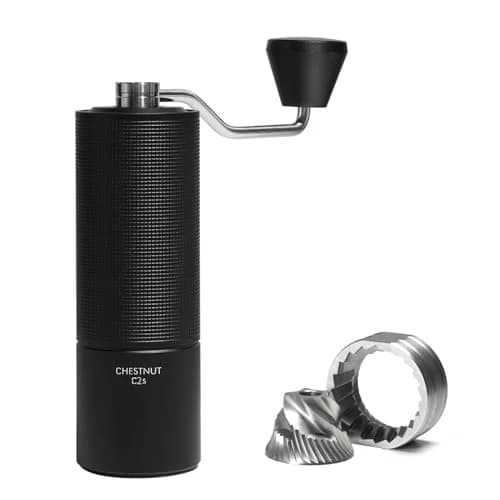
Chestnut C2S
The budget hero — steel burrs and a clean filter grind for the price of a few bags of beans.
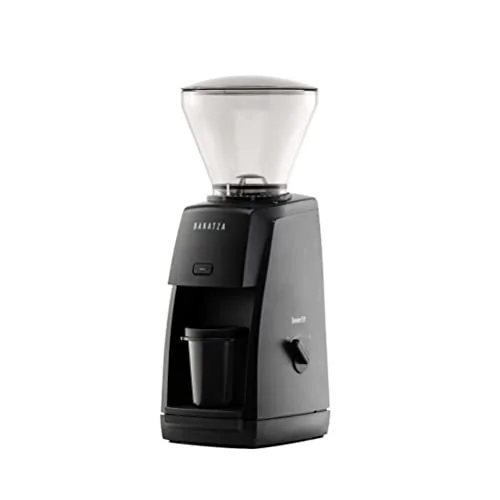
Encore ESP
The grinder most people should buy first — it does espresso and filter, and Baratza will fix it forever.
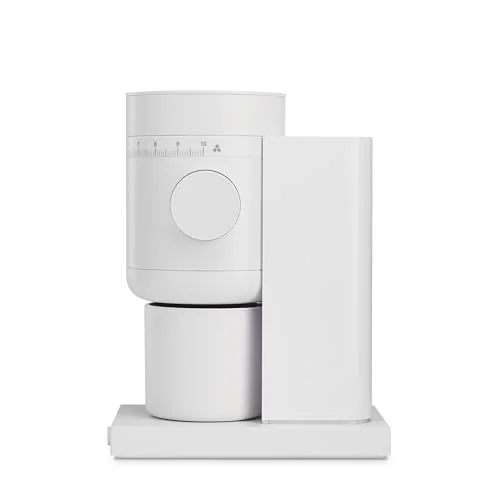
Opus 2
Fellow's all-rounder, now in its second generation: a wide espresso-to-cold-brew range and a design that earns its counter space.
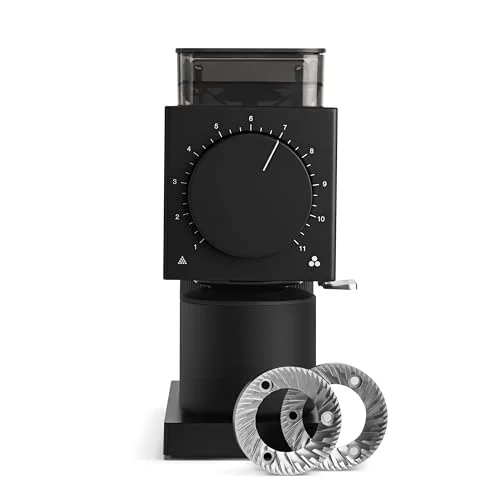
Ode Gen 2
The best filter-only grinder: 64mm flat burrs, near-zero retention, and an exceptionally clean cup.
BrewSift earns a commission on qualifying purchases made through these links, at no extra cost to you. Prices shown were checked on publication and change often.
FAQ
Does a burr grinder really make a noticeable difference in taste?
Yes, and the difference is specific rather than vague. A burr grind tastes cleaner and more separated because the particles extract at a similar rate. A blade grind tastes muddled and often carries a bitter edge, because fines over-extract and boulders under-extract in the same cup. Uniformity is widely considered the single biggest lever on flavor clarity.
Why is a blade grinder bad for espresso specifically?
Espresso forces hot water through a dense bed under pressure, so it is the least forgiving of an uneven grind. Studies show fines under 100 microns collapse the bed's permeability and choke the flow, while coarse chunks channel and under-extract. A blade produces both extremes at once, so shots come out unpredictable and hard to dial in.
Can I just grind longer with a blade to get a finer, more even grind?
Grinding longer does make the coffee finer, but mostly by generating more fines, which widens the spread rather than tightening it. Pulsing and shaking help a little by redistributing beans, but they cannot produce the narrow band a burr does. The high blade speed also heats the grounds, dulling aromatics before you brew.
Is a blade grinder ever acceptable?
Yes, for French press and cold brew. A long steep at a coarse target, pulled through a metal filter, hides most of the particle spread, so the blade's inconsistency matters far less. For espresso, moka pot, or pour-over, where extraction is fast and precise, a burr grinder is the clear choice.
Sources
- The role of fines in espresso extraction dynamics (Scientific Reports, 2024)
- Influence of particle size distribution on espresso extraction (Journal of Food Engineering)
- Analyzing 300 particle size distributions for 24 grinders (Coffee ad Astra)
- Burr vs blade: grind consistency, heat, and flavor (Achilles Coffee Roasters)