AeroPress, V60, Clever Dripper, Chemex, French press — inexpensive, durable brewers that put the craft in your hands. The best value in coffee, and the most forgiving way to learn.
Quick steer — Under $50 buys a brewer that rewards attention — immersion (AeroPress, French press) for forgiveness, pour-over (V60, Chemex) for clarity. Spend the rest on the grinder.
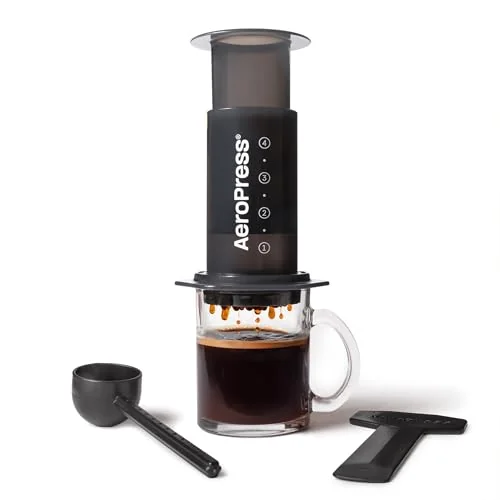
Top pick: AeroPress Original (8.9/10, Approx. $29.96). The most forgiving, most fun way to make a great single cup — and it's nearly indestructible.
Skip this
A pour-over kit bought as a first setup with pre-ground coffee
Pour-over is the method most exposed to grind consistency, and pre-ground coffee is both a fixed grind and a stale one. Owners consistently report better results from an immersion method with the same coffee, and from spending the pour-over kettle money on a grinder first.
The BrewSift Score is a 0–10 weighted average of category-specific sub-scores, built from manufacturer specifications, published reviews and aggregated owner reports — not hands-on testing. In this category it weights cup quality 30%, ease of use 22% and consistency 18%, plus 2 smaller factors. How we score →
The most forgiving, most fun way to make a great single cup — and it's nearly indestructible.
Immersion brewing plus gentle pressure produces a smooth, low-acidity cup in about a minute, with almost no way to mess it up. Endless recipes, a worldwide championship, travel-proof durability, and a $40 price make it the single best value in coffee.
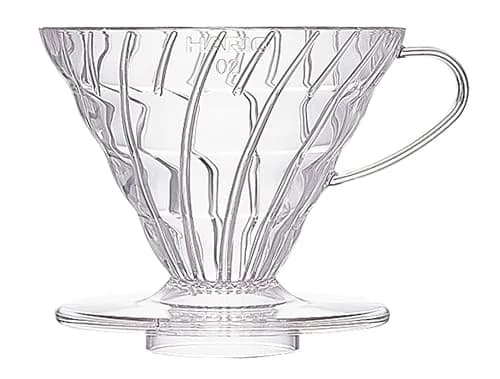
The iconic pour-over cone — a clean, bright, articulate cup if you bring a gooseneck and a little technique.
A 60° cone with spiral ribs and a big single hole gives you full control over flow, rewarding a slow, even pour with the cleanest, most aromatic cup of any everyday method. Hario rates the 02 at 1 to 4 cups (the 01 does 1 to 2, the 03 up to 6) and it takes 02 paper filters. It needs a gooseneck and benefits from a scale, but the ceiling is high and the price is tiny.
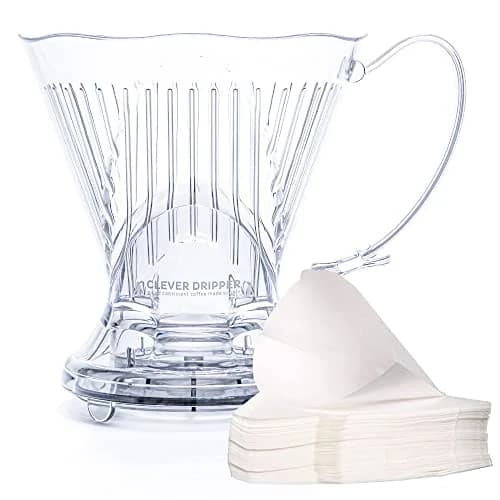
The dripper coffee maker that steeps like a French press and drains like a pour-over — set it on a mug and the valve does the rest.
The Clever is a cone-shaped immersion dripper with a shut-off valve in its base. You add coffee and water, steep with the lid on, then set it on a mug and the valve opens to drain the coffee through a paper filter; Clever's published recipe finishes the whole brew in about two and a half minutes. The result is French-press forgiveness with a clean, sediment-free cup, and because the water sits rather than streams, it needs no gooseneck kettle. It takes standard #4 cone filters. This listing is the Large, rated at 18 oz, sold with 100 filters, a coaster and a lid, in BPA-free Tritan plastic.
Immersion forgiveness with a clean, paper-filtered cup
No gooseneck needed — the valve drains straight onto the mug
Standard #4 cone filters, 100 included
Plastic body rather than glass or ceramic
Only sits on mugs roughly 1.5 to 3.75 inches across the top
What owners say — Amazon owners average 4.7 stars across 503 ratings on this listing, a smaller base than the long-established brewers on this page.
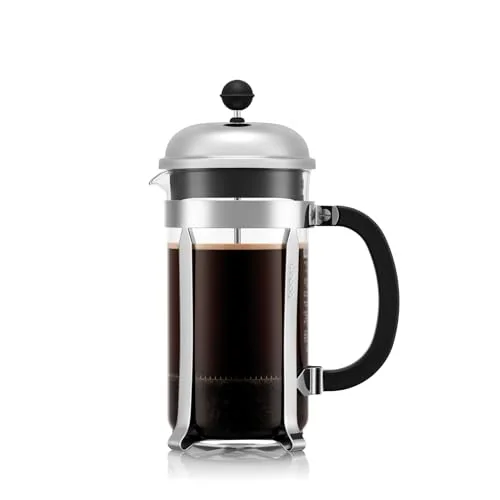
The classic French press — rich, full-bodied immersion coffee with no paper and minimal fuss.
Steep coarse grounds, press, and pour: the French press delivers a heavy, oily, full-bodied cup with zero paper filters to buy. The Chambord is the enduring design. Use a coarse grind and it's nearly foolproof; the trade-off is more sediment than a paper method.
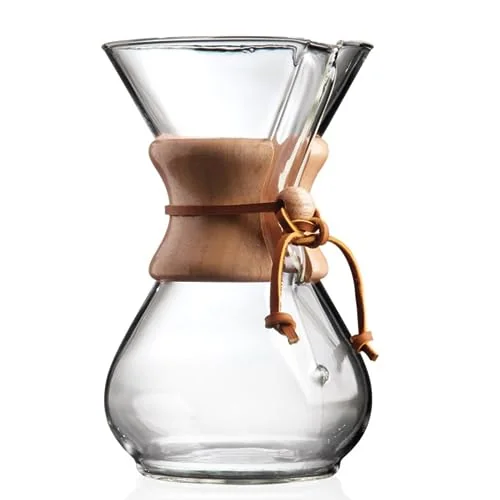
Thick filters and an elegant carafe make an exceptionally clean, sediment-free pour-over for a few cups.
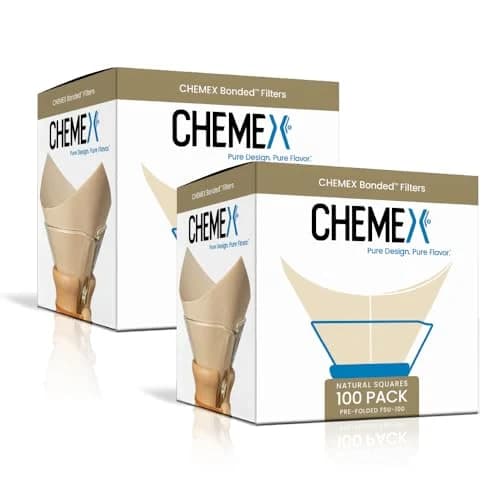
The Chemex's heavy bonded filters strip out oils and fines for a famously clean, tea-like cup, brewed straight into a beautiful all-glass carafe. It's a carafe-scale pour-over: great for serving two or three, technique-dependent, and a design-museum piece on the counter.
The brewer is the cheapest decision in this category and the least consequential. Every manual brewer BrewSift ranks costs less than the cheapest grinder we rank, and the recurring advice from experienced brewers is to buy the grinder first and let it decide which method you can do well.
What owners actually report
r/Coffeer/pouroverr/JamesHoffmannr/AeroPress
Beginner threads in r/Coffee and r/pourover converge on a fairly stable ordering. The AeroPress is the most-recommended starting point because it is forgiving: owners describe it as consistent, quick, hard to ruin, and the method that tolerates a modest grinder best, since the paper filter and short contact time hide a lot. The V60 is recommended to people who want to learn rather than just to drink, with the recurring caveat that it needs a gooseneck kettle and a scale and punishes an inconsistent grind. The French press is treated as the easiest ritual and the one whose drawback is cleanup and sediment rather than difficulty. The point that gets made in nearly every one of these threads is that the brewer is the cheap part and the grinder is what decides how good any of them can be.
Consistently praised
AeroPress — The most-recommended first brewer, and the reason given is consistency rather than peak quality: owners describe it as forgiving of a rough grind, quick to clean, and the method they reach for when they want coffee rather than a project.
Hario V60 — The brewer people recommend for learning. Owners describe more clarity and a stronger response to technique than any other method at the price, with the honest caveat that the response goes both ways.
French press — Recommended for the simplest possible ritual and the fullest body: no kettle requirement, no pouring technique, and a method owners describe as consistent from the first attempt.
Consistently warned about
Starting with a V60 and an inconsistent grinder — The recurring beginner disappointment. Pour-over extraction is paced by particle size, so boulders and dust in the same bed produce a flat or bitter cup that no amount of pouring practice fixes.
Buying the brewer before the grinder — The most repeated ordering advice in these threads: every brewer in this category costs less than a decent grinder, and the grind is what sets the ceiling on all of them.
The nine manual-brewing entries BrewSift ranks, filters included, run $6.29 to $47.03. Every brewer in the category costs less than the cheapest grinder we rank, at $75.
Immersion vs pour-over
Immersion brewers (French press, AeroPress) steep grounds in water then separate them — forgiving and consistent, because contact time is fixed by the clock rather than your pour. Pour-over (V60, Chemex, Kalita) drips water through a bed of grounds, giving a cleaner, brighter, more articulate cup, but the result swings with your grind, pour rate, and technique. If you want reliability first, start with immersion; if you want to chase clarity and flavor separation, learn pour-over.
You'll want a scale and (ideally) a gooseneck
Manual brewing rewards measuring your coffee-to-water ratio and pouring at a controlled rate. A cheap 0.1g scale with a timer makes yesterday's good cup repeatable today, and for pour-over a gooseneck kettle gives the slow, aimed stream that even saturation needs. French press and AeroPress are forgiving enough to skip the gooseneck, but every manual method benefits from weighing rather than scooping.
The grinder matters more than the brewer
A $30 V60 fed by a good burr grinder beats a fancier dripper fed by pre-ground or a blade grinder, every time. Uneven grounds extract at different rates and muddy the cup no matter how careful your pour. If you're building a manual setup from scratch, put the money into a burr grinder first and pick an inexpensive brewer second — the brewer is the cheap part.
Match the brewer to how many you serve
Single-cup brewers (AeroPress, single-serve V60) are quick and easy to clean but only make one drink at a time. Carafe brewers (Chemex, larger V60, French press) serve two to four but ask you to scale up your pour and dial in a slightly coarser grind. Buy for your normal morning, not your rare dinner party — a brewer sized for a crowd makes weak, awkward coffee at single-cup volumes.
Filter type shapes the cup and the cost
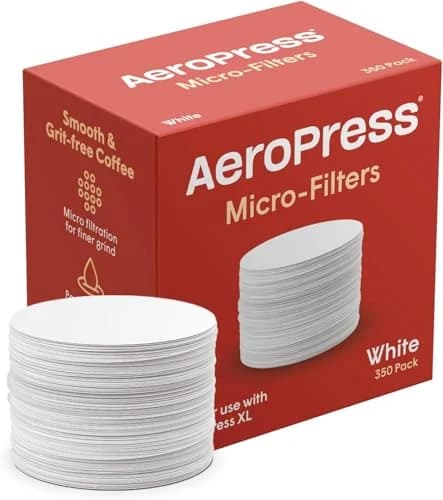
Paper filters (Chemex, V60) trap oils and fines for a clean, tea-like cup, but you buy them forever and Chemex uses its own thicker paper. Metal or cloth filters (French press, some drippers) let oils through for a heavier body, and reusable metal filters cut ongoing cost at the expense of a little sediment. The AeroPress splits the difference: its thin paper is cheap, and a reusable metal disc is available if you prefer more body.
Brewing with a Hario V60: sizes, filters and how it differs
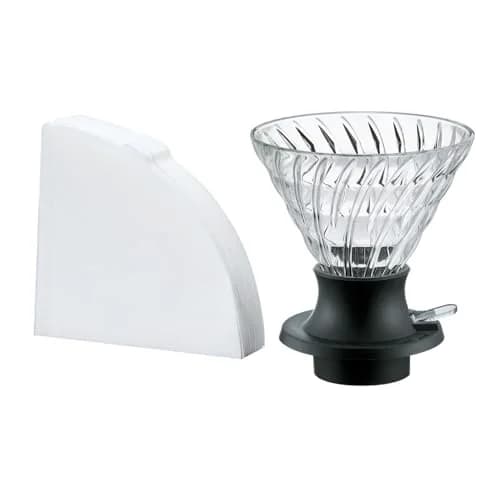
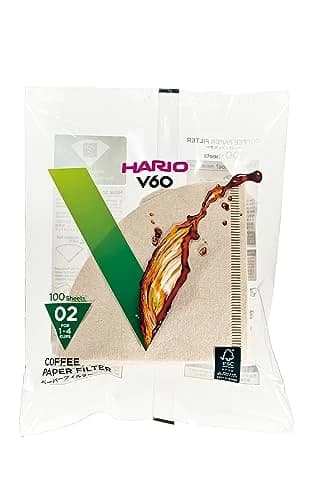
The Hario V60 is the pour-over coffee maker most people mean when they say pour-over, and the name describes the design: a cone set at 60 degrees, spiral ridges up the inside wall and one large hole at the bottom. Hario's own product pages describe it as having no flow restriction, which is the whole point and the whole difficulty. The dripper does not pace the water, your pour does: Hario notes that pouring quickly gives a more delicate body and pouring slowly a heavier one. That is why brewing a V60 well takes a gooseneck kettle and a scale, and why it rewards practice more than any other brewer here. It comes in three sizes that share the same shape. Hario rates the 01 at 1 to 2 cups, the 02 at 1 to 4 cups and the 03 at 1 to 6 cups. The 02 is the one we rank and the one most people should buy, because it handles a single mug and a small carafe alike. Each size takes its own matching V60 paper filter, so an 02 dripper needs 02 papers. Hario makes the cone in plastic, ceramic, glass and metal; the shape is the same across all of them, and plastic is the cheapest and the hardest to break. Against its closest rivals the difference is geometry. Kalita's Wave is flat-bottomed with three small holes and its own fluted filters, which holds a flatter, more even bed and forgives an uneven pour. The Chemex is a cone like the V60 but uses thick bonded papers that drain more slowly and hold back more oil, for a cleaner, lighter cup. The Hario Switch is the V60 cone with a valve added, so it takes the same 02 papers and can steep before it drains.
Dripper coffee makers: an open cone or an immersion dripper like the Clever
A dripper coffee maker is the simplest brewer there is: a cone that sits on your mug, holds a paper filter and the grounds, and lets gravity do the rest. It comes in two kinds, and the difference decides how much technique you need. An open dripper like the Hario V60 drains as fast as you pour, so the cup depends on a slow, steady stream from a gooseneck kettle. An immersion dripper like the Clever Coffee Dripper adds a shut-off valve in the base: the coffee steeps with the valve closed, the way it would in a French press, and only drains when you set the dripper on a mug. Brew time is then set by the clock rather than by your pour, which makes it far more forgiving for beginners and removes the need for a gooseneck, while the paper filter still gives a clean cup without French-press sediment. The Hario Switch does the same job with a switch you flip instead of a valve that opens on the mug, and it uses V60 papers where the Clever takes the common #4 cone filters. Choose an open cone if you want to learn pour-over and chase clarity; choose an immersion dripper if you want a good cup every morning with the least practice.
The AeroPress is the more forgiving starting point: it's nearly unbreakable, travels well, cleans up in seconds, and its short steep-and-press is hard to ruin, so beginners get a good cup fast. The V60 makes a cleaner, brighter, more nuanced pour-over and scales to a carafe, but it's more sensitive to grind and pour technique. If you want easy and versatile, start with the AeroPress; if you want to learn pour-over craft, start with the V60.
Do I need a gooseneck kettle for pour-over?
For pour-over, effectively yes. The narrow gooseneck spout gives you a slow, controlled, aimable stream that evenly saturates the grounds — a wide kitchen-kettle spout dumps water too fast and channels, leaving parts of the bed under-extracted. For immersion methods like French press and AeroPress you don't need one, because the grounds soak rather than get poured over. If you plan to brew V60 or Chemex, budget for a variable-temperature gooseneck.
What grind size should I use for manual brewing?
It depends on the method. French press wants a coarse grind like coarse sea salt; pour-over (V60, Chemex) wants medium, roughly table salt; AeroPress is flexible from medium to fine depending on your recipe. The rule of thumb: the longer the water contacts the grounds, the coarser you grind. Too fine for the method over-extracts and tastes bitter; too coarse under-extracts and tastes sour and weak.
Is a French press or pour-over better for beginners?
A French press is the easier place to begin — you add coarse grounds and hot water, wait four minutes, press, and pour, with no pour technique to learn and no paper filters to buy. It makes a full-bodied, slightly sediment-heavy cup. Pour-over rewards a bit more practice and gear (a gooseneck helps) but produces a cleaner, brighter result. Many people keep both: the press for low-effort mornings, pour-over when they want to fuss.
Why does my manual coffee taste bitter or sour?
Bitterness usually means over-extraction — grind coarser, use slightly cooler water, or shorten the brew. Sourness and thinness usually mean under-extraction — grind finer, use hotter water (around 200–205°F for most roasts), or extend contact time. Weighing your coffee and water to a set ratio (start near 1:16 for pour-over) removes most of the guesswork, which is why a scale is the first upgrade we point manual brewers toward.
Which Hario V60 size should I buy: 01, 02 or 03?
The 02 for most people. Hario rates the 01 at 1 to 2 cups, the 02 at 1 to 4 cups and the 03 at 1 to 6 cups, and all three share the same 60-degree cone, spiral ridges and single large hole. The 02 brews a single mug without trouble and still stretches to a small carafe, which is why it is the size we rank. Buy papers to match the dripper: an 02 takes 02 filters.
Clever Dripper vs V60: which should I buy?
Buy the Clever if you want a reliable cup with the least technique, and the V60 if you want to learn pour-over. The Clever steeps the coffee with its valve closed and drains only when you set it on a mug, so contact time is fixed by the clock and an ordinary kettle is fine. The V60 has no valve and no flow restriction, so your pour sets the brew and you need a gooseneck to control it. The V60 trades the Clever's forgiveness for more control over how the cup tastes. Both use paper filters, but not the same ones: the Clever takes #4 cone filters, the V60 its own size-matched papers.
What do I need to brew coffee with a V60?
The dripper, matching paper filters, a gooseneck kettle, a scale and coffee ground to a medium, table-salt texture. Hario designs the V60 with no flow restriction, so your pour sets the brew time; with a wide-spout kettle the water rushes through and the cup turns weak and sour. Rinse the paper with hot water first, start near a 1:16 coffee-to-water ratio, and adjust the grind before anything else if the cup tastes off.