The Strongest K-Cup Coffee: Caffeine or Bold Taste?
Strong means two unrelated things. If you want caffeine, look for pods built on robusta or sold on caffeine, such as Death Wish, and brew them on the smallest cup setting. If you want a bold taste, an espresso-style dark roast like Cafe Bustelo gets you there for far less per pod. A K-Cup holds a fixed amount of ground coffee, so the only lever that truly doubles the dose is brewing two pods into one mug.
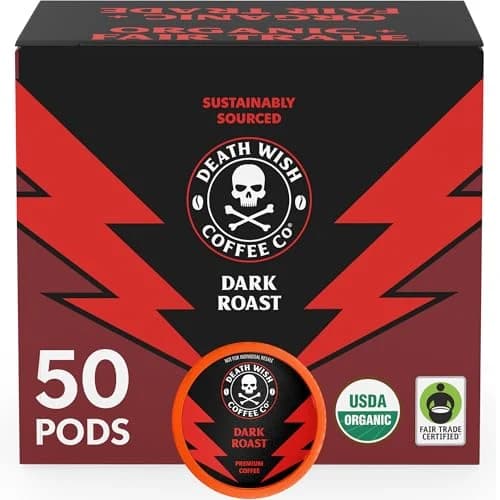
Death Wish Dark Roast, 50 ct
Death Wish markets its pods as its strongest coffee, and the whole brand is built on caffeine rather than nuance. Expect a heavy, smoky dark roast and a higher cost per pod than supermarket boxes. If what you actually want is a bold-tasting cup rather than a bigger dose, the espresso-style Cafe Bustelo is the better buy.
- Organic and Fair Trade
- Strongest cup here
- 50-count
Price is approximate and changes often — check the listing.
Key takeaways
- Caffeine and dark-roast flavour are separate dials. Roasting darker changes the taste, not the caffeine, so extra bold on a box is a promise about flavour.
- Bean species is the real caffeine lever. Coffee-science references consistently put robusta at roughly double the caffeine of arabica.
- K-Cups are dose-limited. The pod sets the grams, the grind and the contact time, so the only things you control are the water volume and the number of pods.
- The smallest cup setting is the free upgrade. The same grounds in less water tastes markedly stronger without costing anything.
- Two pods into one mug is the only trick that genuinely doubles the dose, at double the cost and double the waste.
- Chasing caffeine first7.1BrewSift ScoreGood
- A bold cup rather than a big dose7.7BrewSift ScoreGood
- The medium-roast baseline to judge against7.7BrewSift ScoreGood
Prices are approximate and change often. BrewSift earns a commission on qualifying purchases, at no extra cost to you.
Search for the strongest K-Cup coffee and you get two different kinds of answer stacked on top of each other: pods sold on caffeine, and pods sold on a dark, punchy taste. They are not the same product, and buying the wrong one is how people end up with a cup that tastes like scorched toast and still leaves them yawning by ten.
There is also a ceiling the marketing never mentions. A K-Cup holds about a tablespoon of ground coffee inside a sealed plastic cup, and every brand is working inside that same small space. No pod can hold more coffee than the pod holds. So the useful version of this question is not which pod is strongest, but which lever you are actually allowed to pull.
Two questions hiding inside one word
| When you say strong you mean | What you are really asking for | The lever that moves it |
|---|---|---|
| A bigger kick | More caffeine in the mug | Bean species, cup size, two pods |
| A bolder cup | Roast intensity, body, bitterness | Dark roast or espresso-style pods |
| Both | A small, dark, robusta-heavy cup | The smallest brew setting on a high-caffeine pod |
Roast level and caffeine are separate dials
A dark roast tastes stronger because roasting develops bitterness, body and smoke. That is a flavour change. Caffeine survives roasting largely intact, which is why the extra bold wording on a box is a promise about taste rather than about how awake you will be. Plenty of pods labelled bold, robust or intense are ordinary arabica taken further in the roaster and nothing more.
Bean species is the one real caffeine lever
The difference that does move caffeine is arabica versus robusta. The National Coffee Association puts robusta at 50 to 60 percent more caffeine than arabica, and it also brews heavier and more bitter, which is why it turns up in espresso blends for crema and in high-caffeine pods for reasons nobody has to explain. If a pod brand is quiet about the species, assume arabica.
Rule of thumb: dark roast is a taste claim. Robusta content and cup size are the caffeine claims.
The pod is dose-limited, and that is the whole problem
Everything a Keurig does happens downstream of a fixed amount of grounds. What you cannot change:
- The quantity of coffee sealed inside the pod
- The grind, which was set at the factory
- The contact time, which the machine decides
- The brew temperature, on most models
What you can change is how much water gets pushed through those grounds, and whether one pod or two goes into the mug. That is a shorter list than the internet implies, and it is why pod strength arguments so often go in circles.
What actually makes the cup stronger:
- Brewing the smallest cup size your machine offers, which concentrates the same grounds into less water
- Choosing a pod that names robusta, or an espresso-style blend built for intensity
- Running two pods into one mug when you genuinely want a double
- Using the strong or bold button, which slows the brew rather than adding coffee
- Buying from a brand that sells on caffeine instead of on roast adjectives
What people try that does not work:
- Buying a darker roast and expecting more caffeine, when roast is a flavour setting
- Re-brewing a second cup through a used pod, which pulls out bitterness and little else
- Choosing the largest cup size and then wondering why it tastes thin
- Trusting words like extra bold, robust or intense, which nobody regulates
- Leaving the pod in longer, since the machine controls contact time, not you
Three pods, three definitions of strong
| Pod | Why it is here | Best for | About |
|---|---|---|---|
| Death Wish Dark Roast | The brand markets it as its strongest | Chasing caffeine first | $44 / 50 ct |
| Café Bustelo Espresso Style | Dark, espresso-style Latin roast | A bold cup rather than a big dose | $48 / 96 ct |
| McCafé Premium Roast | An ordinary medium roast | The baseline everything else is judged against | $39 / 84 ct |
Death Wish is the caffeine-first pick
Death Wish markets its pods as its strongest coffee, and the whole brand is built on that positioning rather than on nuance. The cup is a heavy, smoky dark roast: some drinkers love it, plenty find it blunt, and nobody calls it delicate. Buy it because you want the kick and accept a forceful cup, not because you are expecting something sweet and layered. It also costs meaningfully more per pod than supermarket boxes, which is the real trade you are making.
Café Bustelo is the bold-flavour pick
If what you actually want is a cup that tastes strong, an espresso-style Latin roast is a better route than a caffeine brand. Café Bustelo brews dark, syrupy and slightly bitter in the way espresso drinkers expect, and it does that at a fraction of the cost per pod. Brewed on a small setting it reads as intense in the mug even though nothing about it is unusual on the caffeine side.
McCafé is the baseline worth keeping around
A medium roast in the cupboard is what makes the other two legible. Without a reference point, every pod feels either fine or too much, and you end up rebuying on packaging language. Keeping an ordinary box alongside a strong one also gives you the half-measure option on days when a full-strength cup is more than you want.
Cup size does more than pod choice
The single biggest change available to most people is free. Brewing a pod on a six-ounce setting instead of a ten- or twelve-ounce one puts the same coffee into far less water, and the result is denser, darker and more bitter in exactly the way people mean when they say strong. It does not add caffeine to the mug, but it dramatically changes how strong the mug tastes.
Two pods into one large mug is the other honest lever, and it is the only one that genuinely doubles the dose. It also doubles the cost per cup and doubles the waste, so it is a treatment for a specific bad morning rather than a daily routine.
Rough guide to the settings on most brewers:
- Six ounces on a dark roast for the densest, most intense cup a single pod can give
- Eight ounces for an everyday cup that still tastes like coffee rather than hot water
- Ten or twelve ounces only with a bold or espresso-style pod, which has the body to survive it
- Two pods into a large mug when the goal is the dose rather than the flavour
Worth remembering: the smallest cup setting changes how strong the coffee tastes. Two pods is the only trick that actually doubles the dose.
Half-caff pods exist and are underrated for the same reason the strong ones sell: most people want to move the dial, not read a chart. If your problem is an afternoon cup that keeps you up, a half-caff box is a cleaner fix than switching to decaf entirely, and it sits in the same brewer alongside whatever you drink at seven in the morning.
If you want to see how a K-Cup lands next to an espresso shot or a mug of drip before you change pods, the caffeine by brew method calculator puts the methods side by side. For the boxes themselves, our K-Cup pods guide covers what is worth restocking. And if the question underneath all of this is really whether the machine is the problem, Keurig versus Nespresso is the comparison to read next.
Your next step
Restocking the cupboard? Here is what to buy.
Three pods, three definitions of strong
Death Wish Dark Roast, 50 ct
The strongest pod on the page — organic, very dark, very caffeinated — at about 98 cents each.
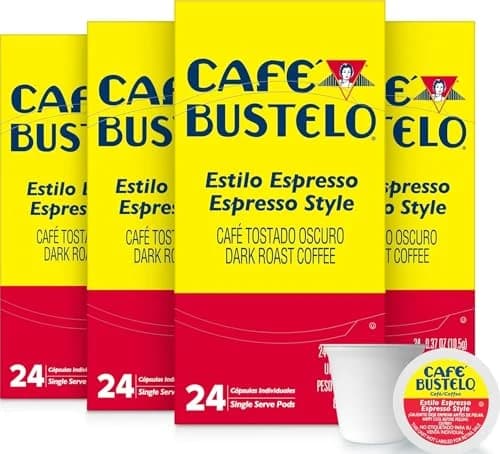
Café Bustelo Espresso Style, 96 ct
The bold, Latin-style dark roast for people who find Keurig coffee weak — 96 pods at about 47 cents.
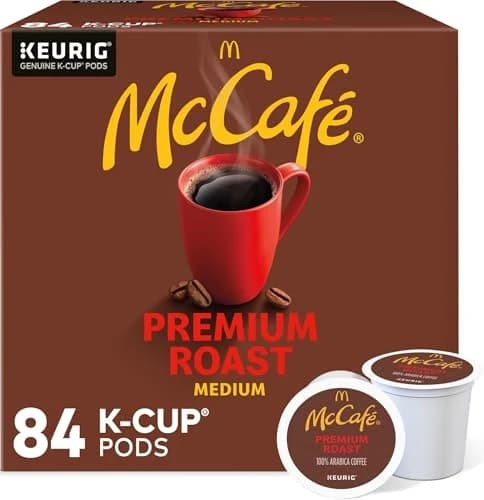
McCafé Premium Roast, 84 ct
The McDonald's cup at home — the safest 'everyone will drink it' box.
BrewSift earns a commission on qualifying purchases made through these links, at no extra cost to you. Prices shown were checked on publication and change often.
FAQ
What is the strongest K-Cup coffee?
Death Wish markets its dark roast pods as its strongest coffee, and the brand is built around caffeine rather than nuance, which makes it the usual answer when people mean caffeine. If you mean taste rather than dose, an espresso-style dark roast such as Cafe Bustelo delivers a bolder cup for far less per pod. Whichever you pick, brewing on the smallest cup size does more for perceived strength than switching brands.
Does dark roast coffee have more caffeine?
No. Roasting darker develops bitterness, body and smoke, which reads as strength on the tongue, but caffeine survives roasting largely intact. Labels like bold, robust and intense describe the flavour a roaster is aiming for and are not regulated claims about caffeine content.
Can I put two K-Cups in one cup of coffee?
Yes, and it is the only reliable way to genuinely double the dose. Brew the first pod on the smallest setting into a large mug, then brew a second pod into the same mug. It costs twice as much per cup and creates twice the waste, so it works better as an occasional fix than as a daily habit.
Why does my K-Cup coffee taste weak?
Almost always because of cup size. Running a pod on a ten or twelve ounce setting pushes a lot of water through a small amount of grounds, and the result is thin. Drop to six or eight ounces with the same pod before you assume the coffee is the problem. A scaled-up brewer that runs slow and cool can also produce a weak cup.
Is there a high-caffeine K-Cup that does not taste burnt?
Robusta and heavy dark roasts are what most high-caffeine pods are made of, so a smoky, blunt cup comes with the territory. If you want intensity without the ashy edge, an espresso-style blend brewed short is usually the happier compromise. Half-caff pods exist for the opposite need if an afternoon cup is keeping you awake.