Independent coffee benchmarks · No sponsored winners · Est. MMXXVI

Best K-Cup Pods for Keurig Brewers

The coffee your Keurig actually brews. Boxes from 24 to 100 pods, ranked on cup quality and the price per pod rather than the price on the box.

Quick steer — Price per pod is the only price that matters. Buy a variety pack to find the roast you like, then buy the biggest box of that one.

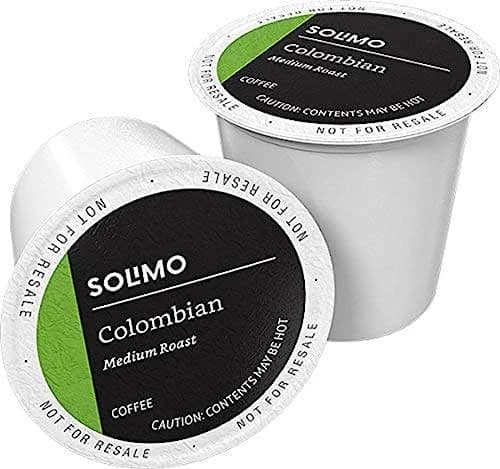
Top pick: Solimo Colombian Medium Roast, 100 ct (7.6/10, Typical price: $33.84$28.7615% offPrime exclusive). The cheapest credible K-Cup by the pod — a clean, mild Colombian at about 29 cents a cup.

Skip this

Small 12- to 24-count boxes of a roast you already drink daily

They cost 30 to 60 percent more per pod than the same coffee in a 72- to 100-count box; the small box is only worth it as a trial.

17 products researched · Updated · How we score

Jump to the shortlist ↓
Compare & buy

The shortlist

Worth a look at today’s price: the deal pick moves next to our overall recommendation while the offer lasts. Scores reflect our editorial assessment. Prime requirements are shown with the price.

The shortlist: each pick with its BrewSift Score, approximate price and a buy link
Best overallSolimo (Amazon)Solimo Colombian Medium Roast, 100 ct

Daily drinkers

7.6
BrewSift Score
Good
Typical price: $33.84$28.7615% offPrime exclusiveBuy on Amazon
Read review of Solimo Colombian Medium Roast, 100 ct
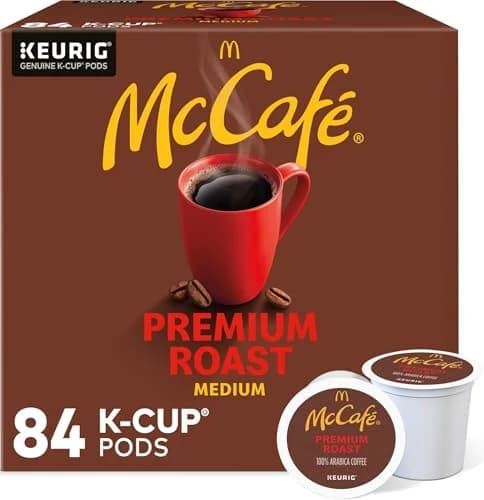
Deal pickMcCaféMcCafé Premium Roast, 84 ct

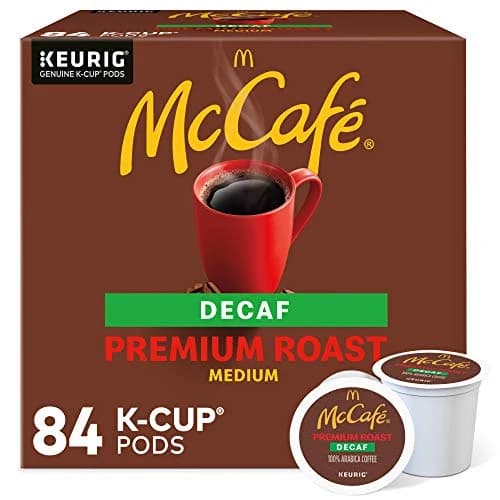
At this deal price, the 84-count box costs under 39 cents per pod: a familiar medium roast for offices and guests. Solimo remains the cheaper bulk choice.

7.7
BrewSift Score
Good
Typical price: $39.38$31.5020% offPrime exclusiveBuy on Amazon
Read review of McCafé Premium Roast, 84 ct
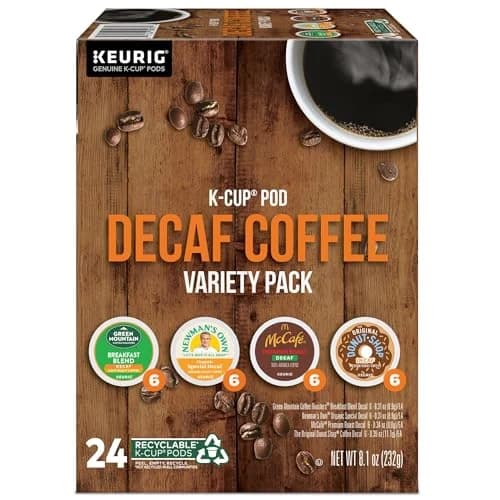
Best valueKeurigKeurig Decaf Variety Pack, 24 ct

Decaf drinkers

7.6
BrewSift Score
Good
Read review of Keurig Decaf Variety Pack, 24 ct
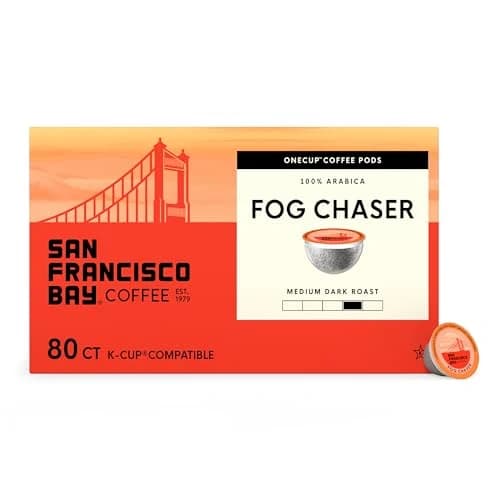
Best compostableSan Francisco BaySan Francisco Bay Fog Chaser, 80 ct

The only pod on this page San Francisco Bay certifies as commercially compostable, in a mesh-bottom cup with a medium-dark blend. It costs more per pod than the value boxes, it is a Keurig-compatible rather than a licensed pod, and it is neither home compostable nor recyclable, so it only helps if you have a commercial compost stream.

7.9
BrewSift Score
Good
Read review of San Francisco Bay Fog Chaser, 80 ct
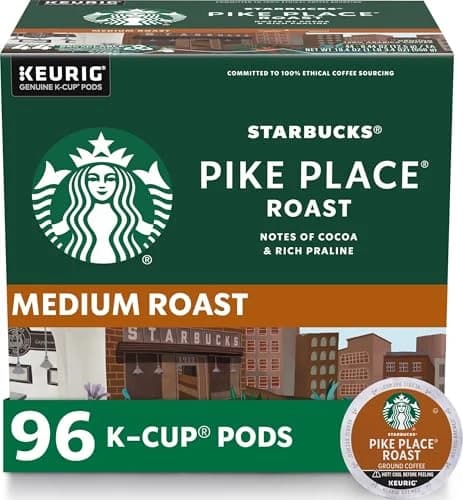
Premium pickStarbucksStarbucks Pike Place Roast, 96 ct

Starbucks regulars

7.7
BrewSift Score
Good
Read review of Starbucks Pike Place Roast, 96 ct

The BrewSift Score is a 0–10 weighted average of category-specific sub-scores, built from manufacturer specifications, published reviews and aggregated owner reports — not hands-on testing. In this category it weights cup quality 35%, value per pod 25% and roast variety 15%, plus 2 smaller factors. How we score →

At a glance

Our top picks

Best overall
Solimo (Amazon) Solimo Colombian Medium Roast, 100 ct
Solimo (Amazon)

Solimo Colombian Medium Roast, 100 ct

The cheapest credible K-Cup by the pod — a clean, mild Colombian at about 29 cents a cup.

7.6
BrewSift Score
Good
Typical price: $33.84$28.7615% offPrime exclusive
Best value
Keurig Keurig Decaf Variety Pack, 24 ct
Keurig

Keurig Decaf Variety Pack, 24 ct

A decaf sampler across roasts — 24 pods at about 66 cents — for finding a decaf you'll actually drink.

7.6
BrewSift Score
Good
$15.78
Best compostable
San Francisco Bay San Francisco Bay Fog Chaser, 80 ct
San Francisco Bay

San Francisco Bay Fog Chaser, 80 ct

The compostable pod: a medium-dark blend in a mesh-bottom cup you can put in a commercial compost stream, at about 55 cents.

7.9
BrewSift Score
Good
$51.56
Premium pick
Starbucks Starbucks Pike Place Roast, 96 ct
Starbucks

Starbucks Pike Place Roast, 96 ct

Starbucks' house medium roast in the biggest box — 96 pods at about 56 cents, for people who want that cup at home.

7.7
BrewSift Score
Good
$54.00
In depth

The best k-cups, reviewed

Solimo (Amazon) Solimo Colombian Medium Roast, 100 ct
1
7.6
BrewSift Score
Good

The cheapest credible K-Cup by the pod — a clean, mild Colombian at about 29 cents a cup.

Amazon's house brand. Nothing remarkable in the cup, nothing wrong with it either, and a 100-count box at this price is the floor for a daily drinker who brews two a day.

  • Lowest per-pod price here
  • 100-count box lasts a two-a-day household seven weeks
  • Works in Keurig 2.0 and classic brewers
  • Mild — dark-roast drinkers will find it thin
  • Plastic pods, not compostable
Buy on AmazonTypical price: $33.84$28.7615% offPrime exclusiveFull review of Solimo Colombian Medium Roast, 100 ct
McCafé McCafé Premium Roast, 84 ct
2
7.7
BrewSift Score
Good

The McDonald's cup at home, for about 58 cents a pod — the safest 'everyone will drink it' box.

A medium roast built to be inoffensive, which is exactly what a shared office or a guest-heavy kitchen wants. The 84-count box is the value size.

  • Familiar, crowd-pleasing medium roast
  • About 58 cents a pod in the 84-count
  • Decaf version in the same box size
  • No character to speak of
  • Plastic pods
Buy on AmazonTypical price: $39.38$31.5020% offPrime exclusiveFull review of McCafé Premium Roast, 84 ct
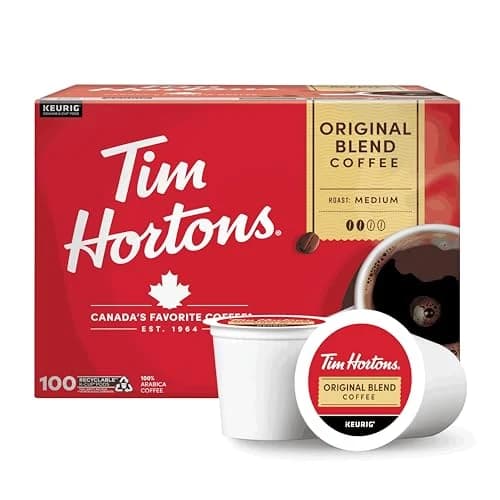
Tim Hortons Tim Hortons Original Blend, 100 ct
3
7.7
BrewSift Score
Good

Canada's default coffee in a 100-count box at about 48 cents a pod — smoother than the price suggests.

A medium roast with more body than McCafé and less bite than Dunkin'. The 100-count box is the whole point: it is the biggest single box on this page.

  • 100-count box — the largest here
  • Smooth, medium body
  • Around 48 cents a pod
  • Only one roast in the big box
  • Plastic pods
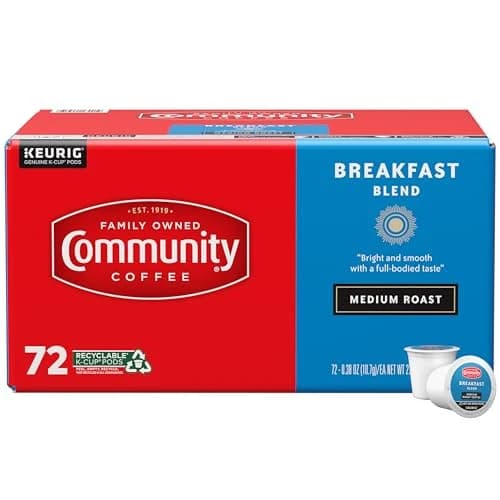
Community Coffee Community Coffee Breakfast Blend, 72 ct
4
7.7
BrewSift Score
Good

A Louisiana roaster's bright breakfast blend at under 50 cents a pod — more flavour than the national brands at the same price.

Community Coffee is a fourth-generation New Orleans roaster, and it shows: this is a lively medium roast with real acidity, not a flat office cup. The 72-count is the sweet spot on price.

  • More character than the big brands at this price
  • 72-count value box
  • Brewer-compatible with Keurig 2.0
  • Brightness isn't for dark-roast fans
  • Plastic pods
Buy on AmazonTypical price: $34.79$29.5715% offPrime exclusiveFull review of Community Coffee Breakfast Blend, 72 ct
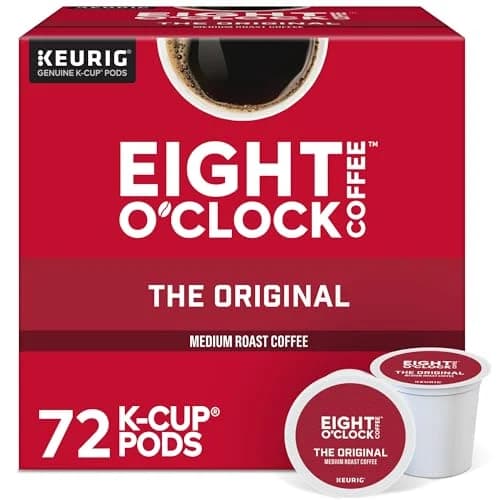
Eight O'Clock Eight O'Clock The Original, 72 ct
5
7.6
BrewSift Score
Good

A 160-year-old American brand's medium roast at about 50 cents a pod — a reliable middle of the road.

Eight O'Clock's Original is the coffee a lot of people grew up on. In a pod it is a balanced, slightly sweet medium roast; the 72-count keeps it near the half-dollar line.

  • Balanced, slightly sweet
  • 72-count box
  • Widely available replacement
  • Unremarkable
  • Plastic pods
San Francisco Bay San Francisco Bay Fog Chaser, 80 ct
6
7.9
BrewSift Score
Good

The compostable pod: a medium-dark blend in a mesh-bottom cup you can put in a commercial compost stream, at about 55 cents.

SF Bay's OneCup is the pod for anyone who winces at the plastic. The Fog Chaser blend is a solid medium-dark with a little chocolate. Note the compatibility caveat: these are Keurig-compatible, not Keurig-made — they brew in most Keurig models but the mesh cup can occasionally misread in older 2.0 brewers.

  • Commercially compostable pod (manufacturer claim)
  • 80-count box
  • Real medium-dark flavour
  • Not a Keurig-licensed pod — fit can vary by brewer
  • Needs a commercial compost stream to actually compost
Starbucks Starbucks Pike Place Roast, 96 ct
7
7.7
BrewSift Score
Good

Starbucks' house medium roast in the biggest box — 96 pods at about 56 cents, for people who want that cup at home.

Pike Place in a pod tastes like Pike Place: medium, round, a little roasty. The 96-count brings it under the price of the 40-count by a wide margin, which is the only reason to buy it over Peet's.

  • The Starbucks cup at home
  • 96-count is the value size
  • Hot or iced
  • More per pod than Lavazza or Peet's
  • Plastic pods

Surprising truth

The cheapest pod on this page costs less than a third of the most expensive one. Per-pod price spreads from about 29 cents to about 98 cents across these seventeen boxes.

What owners actually report

r/keurigr/Coffee

Two patterns run through r/keurig and the K-Cup threads in r/Coffee. The first is that warehouse and store-brand pods hold up remarkably well against the premium names: Costco's Kirkland, Amazon's Solimo, Aldi's own label and various supermarket house brands are recommended repeatedly, often by people who have worked through the branded options first and come back on price. The second is that the most common complaint, weak or watery coffee, is usually a brew-size problem rather than a pod problem. A pod holds a fixed dose, so the recurring advice is to brew at the smallest cup setting the machine offers and to buy darker roasts if the result still reads as thin. Sugar-added flavoured and latte-style pods are the one segment that draws consistent disappointment, with owners reporting the aroma does not carry through to taste.

Consistently praised

  • Warehouse and store-brand pods — Kirkland, Solimo, Aldi and supermarket house labels get recommended over and over by owners who tried the branded options first, on the grounds that the cup is comparable and the per-pod price is not.
  • Dark and French roasts — The standing recommendation for anyone who finds pod coffee thin: the roast carries through the short, fast extraction a pod gets in a way that lighter roasts do not.
  • Peet's, Eight O'Clock, San Francisco Bay and Community — The names that recur when the question is flavour rather than price, from owners describing them as tasting like coffee rather than like a coffee-flavoured drink.

Consistently warned about

  • Sugar-added flavoured and latte-style pods — The most consistently disappointing segment in these threads. Owners describe the flavouring as showing up in the aroma and not the taste, and the sweetened latte pods as sweet rather than good.
  • Brewing a pod at the largest cup size — The dose in the pod is fixed, so a 10 or 12 oz setting is diluting the same amount of coffee. This is the cause behind most of the 'why is my Keurig coffee watery' threads, and the fix owners give is to brew at 6 or 8 oz.
The full list

All k-cup pods, ranked

From the journal

K-Cups explained

Complete the setup

The brewer underneath

Every pod on this page brews in the current Keurig range. If you are still choosing the machine, these are the two we rank highest — and the water filter that keeps either one from scaling up.

Keurig brewers we rank

The K-Elite is the better all-round brewer; the K-Café SMART adds a frother for lattes from a K-Cup. Both take every box on this page.

Filter the reservoir

All coffee water & filters

Scale is what kills a Keurig. A filtered reservoir slows it down and makes the pod taste like the coffee rather than the tap.

Buying guide

How to choose k-cups

Price per pod is the only price that matters

A 24-count box at $16 and a 100-count box at $29 are 66 cents and 29 cents a cup. Every box on this page carries its per-pod price in the spec table, worked out from the box price on the date shown there. Two pods a day is 730 a year: the difference between a 40-cent pod and a 90-cent pod is about $365 a year, which is more than the brewer cost.

Licensed K-Cup vs Keurig-compatible

Keurig licenses its pod format to brands like Green Mountain, Starbucks, Peet's and Donut Shop; those pods carry the Keurig name on the box and brew in every Keurig model. Compatible pods from other makers — San Francisco Bay, Death Wish's own pods, Amazon's Solimo — fit too, but older Keurig 2.0 brewers occasionally misread a non-licensed lid. If you own a 2.0-era machine, the licensed boxes are the safe bet; on a current K-Elite or K-Café any of these work.

Roast matters more than brand

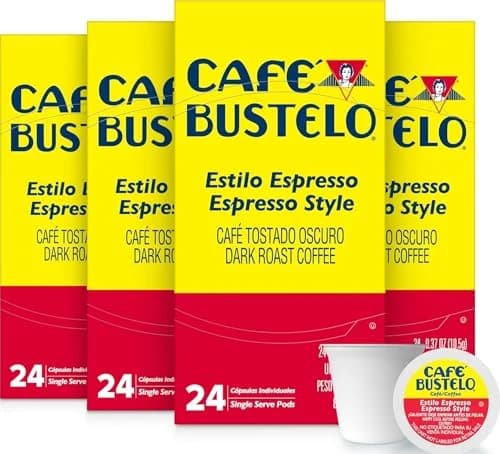
The most common Keurig complaint is thin coffee, and the fix is usually roast, not brand: a dark espresso-style pod like Café Bustelo or Peet's Major Dickason's brews noticeably fuller than a medium. If you drink it black, start dark; if you add milk, a medium like Community or Tim Hortons holds up fine.

The waste question, honestly

Most K-Cups are #5 plastic with a foil lid, and whether your municipality recycles them varies. Keurig says its own pods are recyclable once the lid and grounds are removed. The only genuinely different option here is San Francisco Bay's mesh-bottom OneCup, which is commercially compostable — but only if you have a commercial compost stream; it will not break down in a backyard pile. A reusable filter cup is the other route, and it brings back grinding.

Variety packs are for finding, not for buying

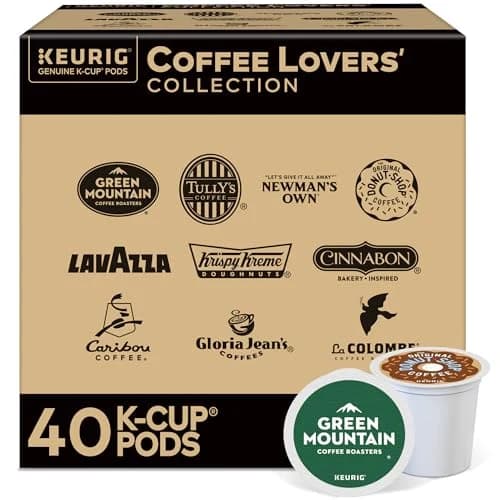
The Keurig Coffee Lover's Collection costs about 90 cents a pod, which is twice the value boxes. That is the right price for a box that tells you which of twenty varieties you actually like; it is the wrong price for a box you keep re-ordering. Buy the sampler once, then buy the 72- or 96-count of the winner.

Hazelnut, vanilla, caramel and a flavored sampler: the best flavored K-Cups

Brew size decides strength more than the pod does

Every K-Cup holds a fixed dose of coffee, so the single biggest control you have over strength is the cup size you press, not the brand on the box. The same pod brewed at the smallest size and at the largest makes two quite different drinks: the larger one is the same coffee spread through more water. That is why so many complaints about thin Keurig coffee disappear when the owner drops a size. Current brewers add a second lever. Keurig's K-Elite has a Strong Brew setting that it describes as brewing a bolder cup, and an Iced button that brews hot over ice for iced coffee. The K-Café SMART we rank also offers short 2oz and 4oz shot sizes for milk drinks. So before you change pods, try the smallest size that fills your mug with milk or water added, and use Strong Brew if your machine has it. If the coffee still reads as weak after that, then the fix is a darker roast, not a different machine.

Keurig brewers and their size and strength settings

Recycling, K-Cycle and compostable pods: what each one actually requires

The waste story is more specific than the box copy suggests, and it differs by pod. Keurig states that all of its K-Cup pods have been recyclable since 2020 and are made of polypropylene, the #5 plastic used for butter tubs and yogurt pots, but the recyclable part is only the empty cup: you let the pod cool, peel the lid, empty or compost the grounds, and then check whether your local program accepts the cup, because Keurig itself notes that pods are not recycled in many communities even where #5 plastic is. For areas that do not take them, Keurig sells a K-Cycle mail-in bag. The paperboard carton is the easy part and goes in ordinary curbside recycling. San Francisco Bay's OneCUP pods are a different material with different rules: the company states they are certified compostable only in a commercial or industrial composting facility, that they are not recyclable, that they are not home compostable, and that without a commercial composter nearby they belong in the garbage. Which pod is greener therefore depends on your local services, not on the label.

The reusable filter route

The alternative to buying pods at all is a reusable filter cup that you fill with your own ground coffee. Keurig sells its own, the My K-Cup reusable filter, which it describes as designed for and approved on its brewers, and there are many third-party versions. The appeal is cost and waste: your cost per cup falls to whatever the ground coffee costs, and there is no single-use cup. The trade is the convenience that made you buy a Keurig in the first place, since every cup now involves scooping, closing the lid and rinsing out wet grounds. It also brings grind back into play. Pre-ground drip coffee works, and a burr grinder set around medium improves it, but a reusable cup is still a short, fast brew and will not taste like a pour-over. For a household drinking two or more cups a day, the savings add up quickly; for a single cup now and then, pods stay the better fit. The pod-versus-beans calculator works out the break-even for your own habit.

Pod vs beans cost calculator

Decaf K-Cups: the smallest corner of the aisle

Decaf is where K-Cup choice gets thin, so it pays to shop it deliberately. Two decaf boxes are on this page: McCafé Premium Roast Decaf in an 84-count box, a medium roast that is the straightforward everyday choice for someone who drinks decaf daily, and the Keurig Decaf Variety Pack in a 24-count box, which covers light to dark roasts and exists to help you find a decaf you like before committing to a big box. Follow the same logic as regular coffee: try the variety pack once, then buy the large box of the one you kept reaching for. Decaf drinkers who find pods flat should use the same fixes as everyone else, a smaller cup size and a darker roast, since decaffeinated coffee brewed at the largest size is the thinnest cup a Keurig makes.
∑Pod Price IndexEvery K-Cup and Nespresso box we track, ranked by price per pod — Keurig, Original and Vertuo side by side.
FAQ

Common questions

Which K-Cups are the cheapest per pod?

At the October 2, 2026 prices, Amazon's Solimo 100-count was about 29 cents a pod, followed by Café Bustelo's 96-count espresso-style pods at about 47 cents and Tim Hortons' 100-count at about 48 cents. Prices move; the spec table on each product shows the per-pod price and the date of the box price behind it.

Do non-Keurig pods work in a Keurig?

Compatible pods from brands like San Francisco Bay and Solimo fit and brew in current Keurig machines. Some older Keurig 2.0 brewers use a lid sensor that occasionally rejects non-licensed pods; if you have one, the licensed boxes from Green Mountain, Peet's, Starbucks or Donut Shop avoid the issue.

What is the strongest K-Cup?

Death Wish's dark roast is the most caffeinated pod here and Café Bustelo's espresso-style the boldest-tasting at a normal price. Both are dark roasts; if the problem is thin coffee rather than too little caffeine, Peet's Major Dickason's is the better-tasting fix.

Are K-Cups recyclable?

Keurig states its own pods are recyclable #5 plastic once you peel the lid and empty the grounds, but acceptance depends on your local program. San Francisco Bay's OneCup is the only commercially compostable pod on this page.

Which Keurig machines do these fit?

All of them fit the current Keurig range, including the K-Elite and K-Café SMART we rank. See our capsule-machine page for the brewers themselves.

How do I make K-Cup coffee stronger?

Brew at a smaller cup size first, because every pod holds a fixed dose and a larger setting just adds water. If your brewer has a strength option, use it: Keurig's K-Elite has a Strong Brew setting for a bolder cup. If the coffee is still thin at the smallest size that works for you, switch to a darker roast such as an espresso-style or French roast pod, which carries more flavour through the short, fast brew a pod gets. Changing brands within the same medium roast rarely fixes it.

Are reusable K-Cup filters worth it?

They are worth it if you drink several cups a day and do not mind a little work. A reusable filter, including Keurig's own My K-Cup, lets you brew your own ground coffee, which cuts the cost per cup to the price of the coffee and removes the single-use pod. The trade is convenience: each cup means scooping grounds and rinsing the filter. For an occasional cup, pods remain the easier choice. Use a medium grind and fresh coffee for the best result.

Are compostable K-Cups really compostable?

Only in the right facility. San Francisco Bay states its OneCUP pods are BPI certified compostable in a commercial or industrial composting facility, that they are not home compostable and not recyclable, and that if you have no commercial composter nearby they should go in the garbage. So they are a genuine improvement where commercial composting exists and no better than a standard pod where it does not. Check what your local composting service accepts before paying extra for them.

What is the best decaf K-Cup?

For a daily decaf drinker, McCafé Premium Roast Decaf in the 84-count box is the straightforward choice on BrewSift's list: a medium roast in a large box. If you have not settled on a decaf yet, start with the Keurig Decaf Variety Pack, a 24-count box spanning light to dark roasts, then buy the large box of whichever one you liked. Brew decaf at a smaller cup size, since it is the style that turns thinnest at the largest setting.

Top pick · Solimo (Amazon) Solimo Colombian Medium Roast, 100 ct

Typical price: $33.84$28.7615% offPrime exclusive
Buy on Amazon