Gooseneck vs Regular Kettle: When the Spout Matters
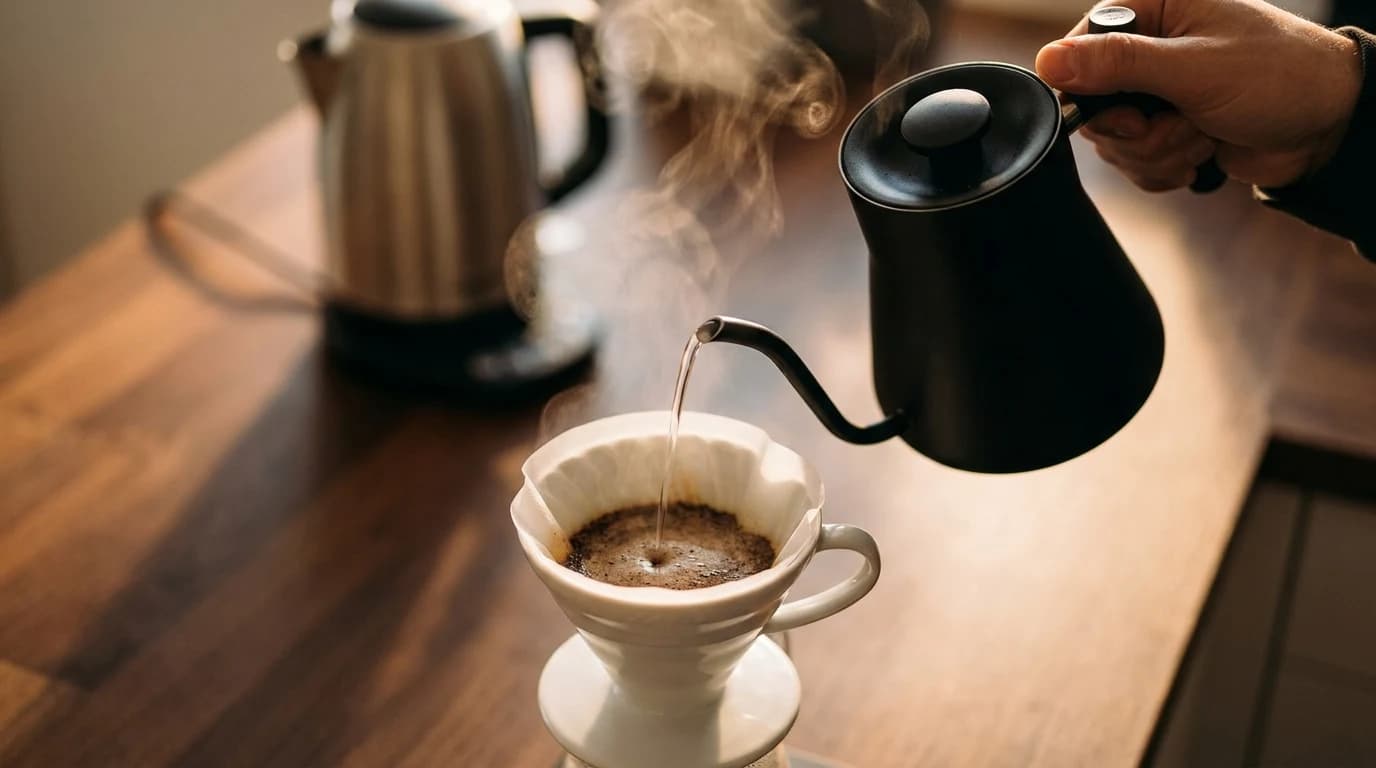
A gooseneck matters only when your pour delivers the water to the grounds — which is pour-over (V60, Chemex, Kalita) and essentially nothing else. Its real job is not temperature (any variable-temp kettle hits the SCA 195 to 205 F range) but flow-rate control at low speed: a narrow spout lets you hold a thin, steady 4 to 6 g/s stream and place it precisely, so the coffee bed saturates evenly instead of channeling. For French press, AeroPress, moka pot, espresso, and cold brew, a steep, steam pressure, or a pump moves the water, so the spout does nothing and a regular variable-temp kettle is all you need.
Key takeaways
- A gooseneck's real job is flow-rate control at low speed, not temperature. Any variable-temp kettle hits the SCA 195 to 205 F range; the spout is what lets you hold a thin, steady 4 to 6 g/s stream where a wide spout can only dump or dribble.
- It only matters when your pour delivers the water: pour-over (V60, Chemex, Kalita). For immersion, moka, and espresso, a long steep, steam pressure, or a 9-bar pump moves the water, so the spout changes nothing.
- The falsifiable tell of a bad pour is a cup that tastes sour AND bitter at once. That is channeling from uneven saturation, exactly what an even gooseneck pour prevents.
- If you don't brew pour-over, skip it and spend the difference on a burr grinder or a scale, which move flavor far more than a spout you won't use.
- The benchmark8.8BrewSift ScoreExcellent
- Most pour for the money8.4BrewSift ScoreExcellent
- Long-time budget pick8.2BrewSift ScoreExcellent
Prices are approximate and change often. BrewSift earns a commission on qualifying purchases, at no extra cost to you.
A gooseneck kettle looks like a coffee-nerd flex: the swan-neck spout, the temperature dial, a price that can double a plain electric kettle. For most of the coffee people actually make at home, it is just a flex — the water reaches the grounds the same way whether the spout is narrow or wide. But for one specific method, that spout does real, measurable work. The trap is that the usual sales pitch — "precise temperature control" — is the wrong reason to buy one, so people buy it for a job it doesn't do and skip it for the job it does.
What a gooseneck actually controls: flow, not temperature
Almost every buying guide leads with temperature. That is the mistake. Temperature precision comes from a kettle being variable-temperature, not from the shape of its spout. Plenty of wide-spout electric kettles let you dial a set point and hold it, and the SCA brewing range is 195–205°F (90–96°C) — any decent variable-temp kettle lands you there.
What a gooseneck uniquely buys you is control of flow rate at low speed. A narrow, curved spout lets you lay down a thin, steady stream and place it exactly where you want on the coffee bed.
The number most guides skip
A typical gooseneck spout is around 5.5 mm across and can gush water at roughly 24 grams per second wide open — but a controlled pour-over stream runs closer to 4–6 g/s. You are deliberately pouring at about a fifth of the kettle's maximum, holding a slow trickle steady for 30-plus seconds. A wide kitchen-kettle spout physically can't meter water that slowly: it either dumps or dribbles. That low-and-steady controllability is the entire feature.
What most people get wrong: they pay for a gooseneck to get "barista temperature." Temperature is the variable-temp part, which cheaper kettles also have. The spout only earns its price when your pour is what moves the water.
What changes, and what doesn't
Whether flow rate matters comes down to one question: who delivers the water to the grounds — you, or the equipment?
In pour-over (V60, Chemex, Kalita), your pour is the brew. The stream agitates the bed, and how evenly you saturate it decides whether extraction is even. Pour too fast, too high, or into one spot and you carve channels: water races through the gaps and over-extracts (bitter) while bypassing the rest, which under-extracts (sour). The tell is a cup that tastes sour and bitter at the same time — the classic signature of channeling. A gooseneck is the tool that prevents it.
In every other common method, water delivery is out of your hands entirely:
| Method | Who delivers the water | Does the spout matter? |
|---|---|---|
| Pour-over (V60, Chemex, Kalita) | You — your pour is the agitation | Yes — transformative |
| French press / AeroPress | Full immersion; grounds steep in the water | No — you just fill a vessel |
| Moka pot | Steam pressure pushes water up through the puck | No — no manual pour at all |
| Espresso | A pump forces water through at ~9 bar | No — the machine delivers water |
| Cold brew | Grounds steep 12–24 hours in any container | No — no kettle required |
For immersion methods, the long steep evens everything out no matter how the water went in — pour angle and flow rate are irrelevant. For moka and espresso, steam pressure or a pump, not your wrist, moves the water. In all of these the gooseneck has literally nothing to do.
The pour, step by step
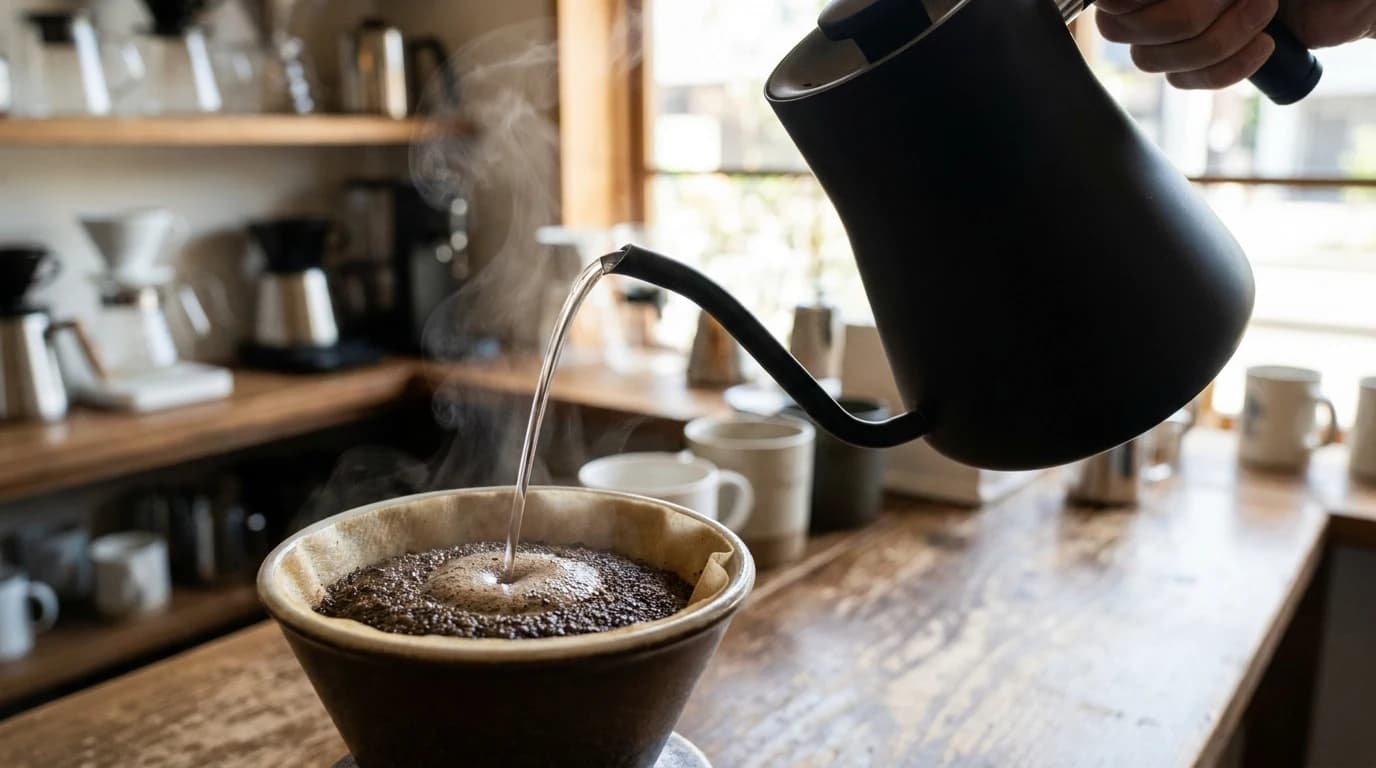
This is where the spout earns its keep — and why a stream you can't slow down can't do it:
- Bloom. Pour about twice the coffee's weight in water, gently, in a small spiral from the center out. Wait 30–45 seconds for the grounds to degas.
- Slow, steady pours. Keep a thin 4–6 g/s stream. Spiral outward, then back toward the center, and stay off the filter wall — water running down the wall bypasses the coffee entirely.
- Keep the bed level. Pour to hold an even water line so the bed stays flat; a flat bed drains uniformly instead of channeling.
- Mind your height. A low spout is gentle; a high pour adds agitation that churns fines and invites channeling. Lower the kettle as the bed gets shallow.
None of this is possible with a kettle you can't meter. That, not the temperature dial, is the whole argument for the spout.
Signs your pour is the problem
Symptoms a gooseneck actually fixes:
- Sour and bitter notes in the same cup (channeling)
- A crater or a dry patch in the spent bed
- Wildly different drawdown times, same grind
- Grounds stranded high on the filter wall
If the pour is fine and the cup still isn't, the other four variables — grind, ratio, temperature and time — are laid out in our pour-over variables guide, and the kettle picks separate the goosenecks that hold a set temperature from the ones that only boil.
Symptoms it won't touch:
- Uniformly bitter coffee (heat or grind, not pour)
- Flat, stale flavor (bean freshness)
- Muddled, hollow cups (a blade grinder)
- Anything brewed by immersion or pressure
Before you spend: try slowing your existing pour by half using a jug or a measuring cup. If the cup improves even slightly, flow rate is a live variable for you and a gooseneck will pay off. If nothing changes, your bottleneck is elsewhere.
Who should skip a gooseneck (and buy first)
If you brew French press, AeroPress, moka pot, espresso, or cold brew — even mostly — skip it. A regular variable-temp kettle gives you the one thing you actually need (repeatable temperature) for less. Put the difference toward a burr grinder or a scale; both move flavor more than a spout you'll never use.
If you brew pour-over, it is the rare upgrade that is genuinely transformative — and you don't have to overspend:
- The benchmark: the Fellow Stagg EKG Pro, to-the-degree control, saved presets, and a counterbalanced handle that makes a slow pour effortless.
- Most pour for the money: the OXO Brew Adjustable Gooseneck, about a third less and a larger capacity.
- Long-time budget pick: the Bonavita Variable Temperature Gooseneck, widely loved for Chemex; Stagg EKG vs Bonavita weighs it against the benchmark.
See how they stack up on our electric and gooseneck kettles guide, or go straight to the Stagg EKG vs OXO head-to-head if it is down to those two, and use the coffee ratio calculator to fix your dose before you start chasing pour technique.
The honest version: buy a gooseneck if your pour is the brew, and don't if it isn't. The spout is a precision instrument for exactly one job.
Your next step
Shopping for a gooseneck?
The gooseneck kettles we rate
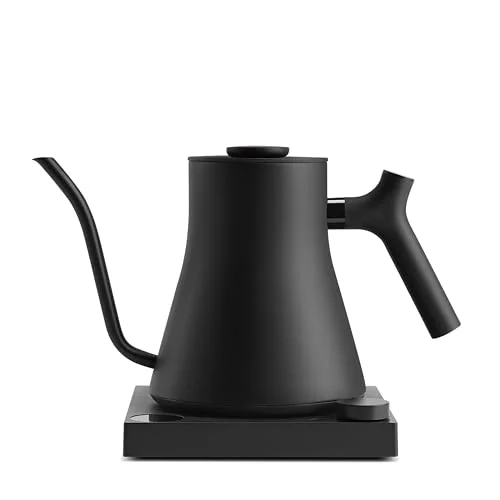
Stagg EKG Pro
The benchmark electric gooseneck — to-the-degree control, a PID that holds it, and a counterbalanced handle.
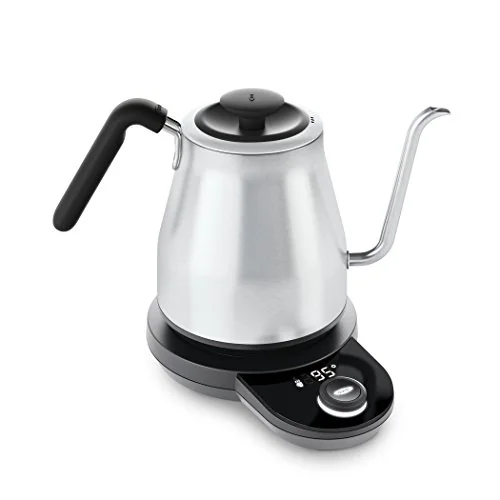
Brew Adjustable Gooseneck
Variable-temp gooseneck pouring for a third less than a Stagg, with a larger capacity.
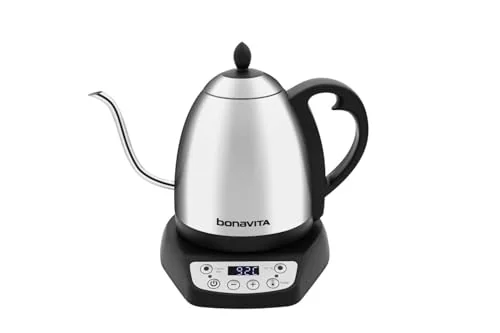
Variable Temperature Gooseneck
A long-favorite budget gooseneck many consider the best cheap pour for Chemex.
BrewSift earns a commission on qualifying purchases made through these links, at no extra cost to you. Prices shown were checked on publication and change often.
FAQ
Do I really need a gooseneck kettle for pour-over?
For pour-over (V60, Chemex, Kalita), close to yes. Your pour is what agitates and saturates the coffee bed, and a controlled stream runs about 4 to 6 grams per second — roughly a fifth of a gooseneck spout's wide-open flow. A wide kitchen-kettle spout can't meter water that slowly and steadily; it dumps or dribbles, which digs channels and gives you uneven extraction. The narrow, curved spout is the tool that lets you hold a thin, precise stream.
Is a gooseneck kettle about temperature or flow control?
Flow control. Temperature precision comes from a kettle being variable-temperature, not from the shape of its spout, and many wide-spout electric kettles hold a set point in the SCA 195 to 205 F (90 to 96 C) range just fine. What only a gooseneck gives you is the ability to pour a slow, steady, precisely placed stream. Buying one for temperature is paying for the wrong feature.
Do I need a gooseneck for French press or AeroPress?
No. Both are immersion methods: the grounds steep in the water for minutes, so pour angle and flow rate are irrelevant — you are just filling a vessel. A regular variable-temp kettle is all you need, and the long steep evens out extraction regardless of how the water went in.
Does a gooseneck kettle make any difference for espresso or moka pot?
No. In a moka pot, steam pressure pushes water up through the grounds with no manual pouring at all. In espresso, a pump forces water through the puck at around 9 bar and the machine handles water delivery entirely. Since your wrist never meters the water, the spout has nothing to do in either method.
Sources
- Kettle spout diameter and flow rate: a 5.5 mm gooseneck tops out near 24 g/s vs a controlled ~5 g/s pour (Coffee ad Astra, Jonathan Gagne)
- How the pour agitates the bed and why channeling makes a cup taste both sour and bitter (Podium Coffee Club)
- SCA recommended brewing temperature range 195 to 205 F / 90 to 96 C (Podium Coffee Club)
- Method-by-method: only pour-over truly needs a gooseneck; immersion, moka, espresso and cold brew do not (InstaCuppa)