Organic Freeze Dried Instant Coffee, 3.53 oz Jar
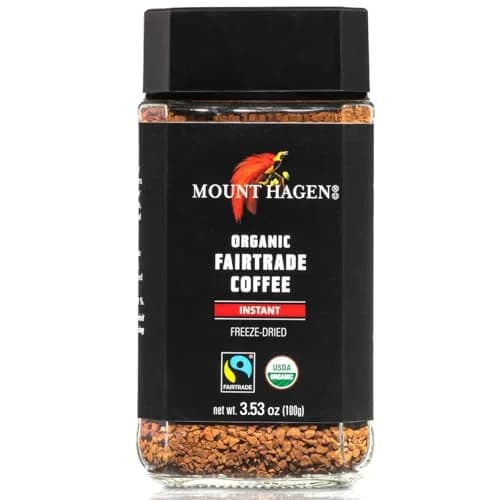
Freeze-dried organic fair-trade arabica in a glass jar, and long-running community consensus treats it as the default recommendation when someone wants instant that is not harsh.
Instant coffee carries a reputation earned decades ago by cheap spray-dried powder, and it no longer describes what is on the shelf. Freeze-drying, better green coffee and single-serve packets have quietly turned instant into a reasonable everyday cup, especially for camping, hotel rooms, office drawers and the second cup you did not want to grind for. The picks below cover the jar that coffee forums default to, a packet format for travel, an organic decaf, and two budget jars that do very different jobs.
Updated September 2026
Jump to the shortlist ↓
mild cocoa · toasted grain · clean finish

cocoa · praline · toasted nut

mild cocoa · nutty · soft finish

mild · toasted grain · light body

roasty · bittersweet · smoky
| Coffee | Roast | Acidity | Body | Price | Buy |
|---|---|---|---|---|---|
| Mount HagenOrganic Freeze Dried Instant Coffee, 3.53 oz JarOrganic | Medium | Medium | Medium | — | Amazon |
| StarbucksVIA Instant Pike Place Roast, 50 Packets | Medium | Medium | Medium | ~$58.79 | Amazon |
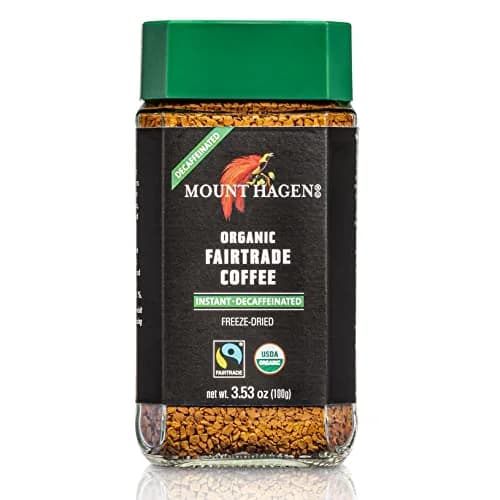
| Mount HagenOrganic Freeze Dried Instant Decaf, 3.53 oz JarOrganicDecaf | Medium | Medium | Medium | ~$14.99 | Amazon |
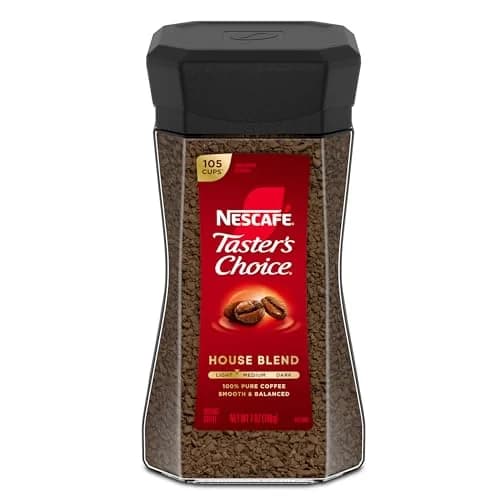
| NescaféTaster's Choice House Blend Instant Coffee, 7 oz Jar | Medium | Medium | Low | ~$13.48 | Amazon |
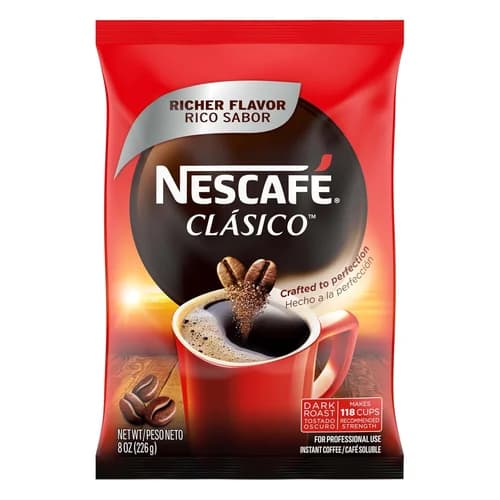
| NescaféClasico Dark Roast Instant Coffee, 7 oz Jar | Dark | Low | High | ~$5.99 | Amazon |

Freeze-dried organic fair-trade arabica in a glass jar, and long-running community consensus treats it as the default recommendation when someone wants instant that is not harsh.

Microground plus instant packets sold in a 50-count box, and owner reviews report the large box is the cheapest way per cup to keep VIA in a desk drawer.

The decaffeinated jar of the same organic freeze-dried line, and owner reviews report it is one of the few instant decafs people buy repeatedly.

The brand describes House Blend as a smooth light-to-medium roast, and it is the milder counterpart to Clasico for people who find dark instant harsh.

A robusta and arabica dark instant the brand states makes up to 100 cups per jar, and it is the one most often used as the base for whipped and milk-based instant drinks.
Stir the granules into a splash of cool water first, then top up with hot water off the boil. The cold dissolve kills clumps and gives you a concentrate you can pour straight over ice.
Both methods start with brewed coffee that gets concentrated, and the difference is how the water leaves. Spray-drying blasts the concentrate into hot air, so the droplets dry in seconds into a fine powder. It is cheap and fast, and the heat drives off a lot of the aromatic compounds that make coffee smell like coffee, which is where instant got its reputation for tasting flat and slightly burnt. Freeze-drying takes the opposite approach: the concentrate is frozen, broken into granules, and the ice is removed under vacuum so it turns straight to vapor without ever becoming hot liquid. More of the aroma survives, and the result is the irregular amber granules you see in a jar of Mount Hagen rather than a uniform brown dust. Packaging usually tells you which you are holding. Freeze-dried is a selling point, so brands print it; if a jar says nothing at all, spray-dried is the safe assumption. Granule shape is the other tell, and it is visible through a glass jar.
The instant most people formed an opinion about was made from commodity robusta, spray-dried for cost, and left open in a cupboard for a year. Three things have changed. Freeze-drying moved down from premium into the mid shelf, so a jar of decent granules is no longer a specialty purchase. Green coffee quality improved across the board as arabica supply grew, and several brands now put certified organic arabica into instant rather than whatever was cheapest. And the single-serve packet arrived, which matters more than it sounds: a sealed foil sachet protects the coffee from oxygen and moisture until the moment you open it, while a jar starts staling the first time you unscrew the lid. None of this makes instant competitive with a fresh pour-over. It does mean the honest comparison is against stale supermarket pre-ground, not against your best cup, and against that benchmark a good freeze-dried jar holds up well.
Three habits do most of the work. First, stop using boiling water. Water straight off a rolling boil scalds the granules and pushes the cup toward bitter and papery, so let the kettle rest for a minute, or aim for roughly the same 195 to 205 degree range you would use for brewed coffee. Second, dose more than the label suggests. Most jars call for a rounded teaspoon per cup, and a heaped teaspoon or two level ones is where the cup stops tasting thin. Weigh it once if you have a scale, then eyeball it after that. Third, dissolve before you dilute. Add a splash of cool or room-temperature water to the granules, stir into a smooth dark slurry, then top up with hot water. The cold dissolve prevents clumps, and it also gives you a concentrated base for iced coffee that will not water down as it melts. For iced, dissolve in a tablespoon of cool water, fill the glass with ice, then add cold water or milk.
This is the use case where instant is not a compromise but the correct answer. It weighs almost nothing, needs no grinder, no filter, no press and no cleanup, and it works with whatever hot water you can find. On a trail that means one pot doing double duty for coffee and breakfast. In a hotel room it means skipping the sour pod machine bolted to the desk. Format matters more than flavor here. Packets win for anything you carry, because a jar in a pack is glass or bulky plastic that will crack, spill or absorb moisture, while a sachet is single-dose, sealed and disposable. Jars win for the office and the kitchen cupboard, where the cost per cup is lower and nothing has to survive being dropped. A practical hybrid many people land on is a jar at home and a small handful of packets kept permanently in a bag, a glovebox or a desk drawer, so the decision is already made when you need it.
Instant is usually the cheapest way to make coffee at home. A budget jar advertises up to a hundred cups, which lands well under what the same number of pods would cost and comfortably below most bags of whole bean once you account for the grinder. Freeze-dried organic jars cost more per cup than budget instant but still undercut pods, and single-serve packets are the priciest instant format because you are paying for the sachet as much as the coffee. Prices move often, so check the current listing before you plan around a number. The one gap worth naming: a wave of specialty roasters launched premium single-serve instant in recent years, and several of those listings have since gone dead or intermittent on Amazon, which is why this list stays with products that are reliably in stock. If you want to try boutique instant, buy it direct from the roaster and expect availability to come and go.
When you buy through links on BrewSift, we may earn an affiliate commission. This is how we fund independent research — it never influences our scores or which products we recommend. How we score & stay independent →
The taste quiz narrows it to three picks matched to exactly how you brew and what you like.
Take the taste quizFor most people it is Mount Hagen Organic Freeze Dried. It is organic arabica, freeze-dried rather than spray-dried, and r/coffee threads consistently recommend it as the default answer for instant that is not harsh. If you want single-serve packets for travel instead of a jar, Starbucks VIA Pike Place is the better format, and if price is the deciding factor, the two Nescafe jars here cover mild and bold.
Generally yes, on flavor. Freeze-drying removes water from frozen concentrate under vacuum without high heat, so more aromatic compounds survive, while spray-drying uses hot air and drives many of them off. Freeze-dried granules are irregular and amber; spray-dried is a fine uniform powder. Brands print freeze-dried on the label because it is a selling point, so a jar that does not mention it is probably spray-dried.
Mount Hagen's organic instant decaf is the one to start with. It is the decaffeinated version of the same freeze-dried line, so it keeps the mild cocoa character instead of tasting thin, and owner reviews report it is one of the few instant decafs people buy repeatedly. Note that the jar is sold as organic decaf and does not advertise a specific decaffeination method, so do not assume one.
Single-serve packets, not a jar. Starbucks VIA Pike Place packets are sealed, pre-dosed, weigh almost nothing and cannot spill in a pack, and each sachet stays fresh until you tear it open. A glass jar is heavy, breakable and starts absorbing moisture once opened, which is a real problem in a damp tent. Keep the jar at home and carry the packets.
Start with a heaped teaspoon, or about two grams, per six to eight ounces of water. Most jar labels suggest a level or rounded teaspoon, which is where the thin, watery reputation comes from. If the cup tastes weak rather than bitter, add more coffee rather than less water. Weigh it once to calibrate your teaspoon and you can eyeball it afterwards.
Usually somewhat less per cup, because a typical instant serving uses less coffee than a standard brewed dose, but it varies a lot by brand, dose and whether the blend includes robusta, which carries more caffeine than arabica. Dosing two teaspoons instead of one roughly doubles it. Instant is not decaf, and if you want no caffeine you need a jar labeled decaf.
Yes, once the seal is broken. Instant is hygroscopic, meaning it pulls moisture out of the air, and damp granules clump and taste dull. Keep the jar closed tightly, store it somewhere cool and dry rather than above the stove, and use a dry spoon every time, since a wet one introduces moisture that stays in the jar. Sealed single-serve packets sidestep the problem entirely.
Top pick · Mount Hagen Organic Freeze Dried Instant Coffee, 3.53 oz Jar