Organic coffee is coffee certified under the USDA National Organic Program, whose rules prohibit synthetic pesticides and fertilizers apart from a limited approved list and require each certified farm and handler to be inspected every year by an accredited certifying agent. The seal says nothing about flavor, so the best organic coffee is a certified bag you would buy anyway: Kicking Horse Three Sisters is the all-round pick, Lifeboost the low-acid one, Mayorga Café Cubano the dark roast and Kicking Horse Decaf the decaf.
Look for: USDA Organic certification, plus a flavor profile you'll enjoy.
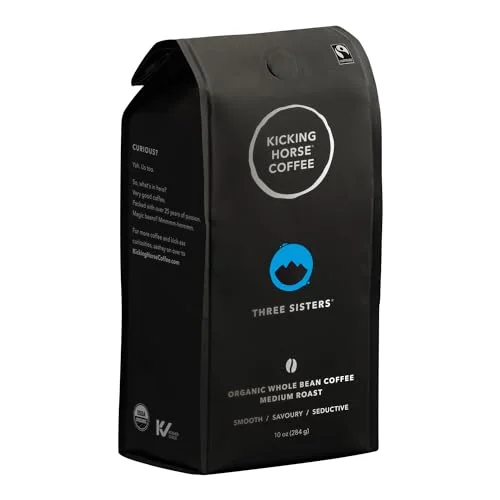
An organic, fair-trade medium roast with easy chocolate-and-nut balance across any brewer.
ChocolateNuttyFruityCaramel
Acidity
Medium
Body
Medium
Sweetness
Sweet
Brews: Drip · Espresso · French pressOrganic
Why this one: Three Sisters is organic and fair-trade with an easy, likable profile: chocolate, nutty, fruity, and caramel notes at a medium roast that balances across any brewer, all for around $15. It's the best all-around pick because it delivers genuine flavor and both certifications without a price premium. The profile is friendly and versatile rather than bold or distinctive — exactly what you want in a daily organic driver.
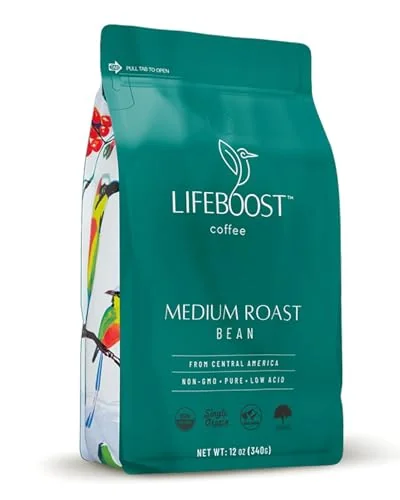
A single-origin Nicaraguan organic roast marketed for low acidity — smooth and easy on the stomach.
ChocolateCaramelSmooth
Acidity
Mild
Body
Medium
Sweetness
Sweet
Brews: Drip · Pour-overOrganic
Why this one: Lifeboost's single-origin Nicaraguan organic medium roast pairs organic certification with a smooth, low-acid profile (acidity 2/5) of chocolate and caramel, marketed for sensitive stomachs. It's the pick if you want organic and gentle on the stomach at once. The clear trade-off is cost — at about $28 it's the priciest bean here, so it's a splurge rather than an everyday value.
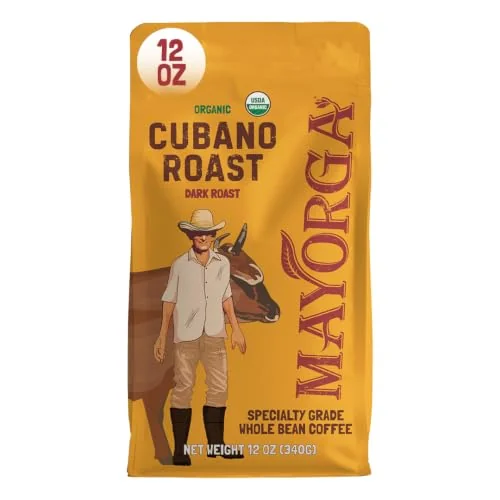
An organic, slow-roasted dark roast — bold and sweet with a notably low-acid finish.
BoldCaramelSmokyLow-acid
Acidity
Mild
Body
Full
Sweetness
Sweet
Brews: Espresso · Drip · Cold brewOrganic
Why this one: Café Cubano is an organic, slow-roasted dark roast that's bold, smoky, and caramel-sweet with low acidity (2/5) — the organic pick for people who like it dark and strong. The slow roast builds sweetness (4/5) while keeping the acid low, so it's full and satisfying rather than sharp. It's assertively roasty by design, which is the appeal for dark-roast fans and a drawback if you prefer something lighter.
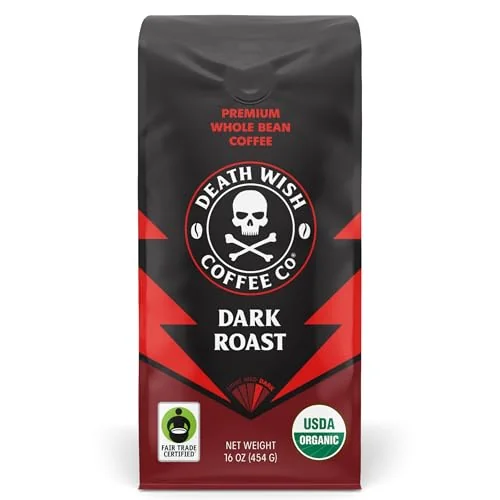
Marketed as the world's strongest coffee — a bold, low-acid dark roast with a big caffeine hit.
BoldSmokyCherryLow-acid
Acidity
Mild
Body
Heavy
Sweetness
Balanced
Brews: Drip · French press · Cold brewOrganic
Why this one: Death Wish is organic, bold, smoky, and low-acid with a full body (5/5) and a famously large caffeine hit. It earns a spot for anyone who wants organic plus maximum strength and caffeine in one bag. The intensity is the whole point — which also makes it too much if you're after a smooth, moderate everyday cup rather than the strongest possible one.
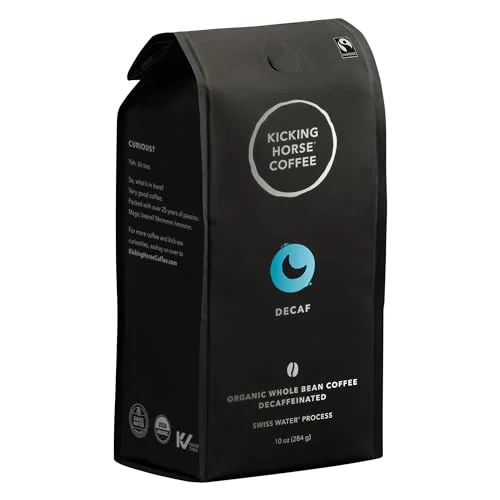
Organic Swiss Water decaf with chocolate-hazelnut smoothness — a great everyday decaf.
ChocolateHazelnutSmooth
Acidity
Mild
Body
Medium
Sweetness
Sweet
Brews: Drip · Pour-overOrganicDecaf
Why this one: Kicking Horse Decaf covers the organic drinker who wants no caffeine: it's organic, uses the chemical-free Swiss Water process, and still tastes good with chocolate and hazelnut notes at a smooth dark roast. It's the natural pick for an organic evening cup. As a decaf it's built for easy drip and pour-over drinking rather than bold intensity, which suits its role perfectly.
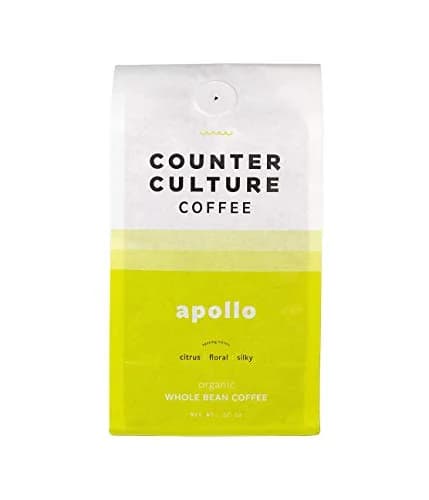
An all-Ethiopian organic blend that the roaster describes as citrusy and floral, and owner reviews commonly single out for its tea-like delicacy in a pour-over.
CitrusFloralSilky
Acidity
Lively
Body
Light–med
Sweetness
Balanced
Brews: Pour-over · Filter · DripOrganic
~$19.5Not sold on Amazon right now
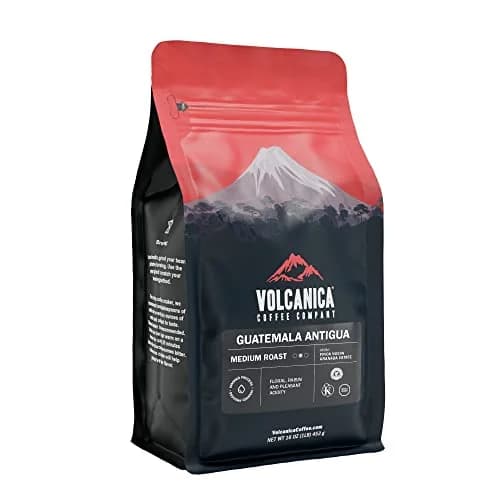
Volcanica Coffee
Guatemala Antigua
Medium roast
A USDA Organic Antigua lot the roaster describes as cocoa-forward with a spiced finish, and Antigua is generally the origin people reach for when they want body without a dark roast.
CocoaToffeeSpice
Acidity
Medium
Body
Full
Sweetness
Sweet
Brews: Drip · French press · Pour-over · Moka potOrganic
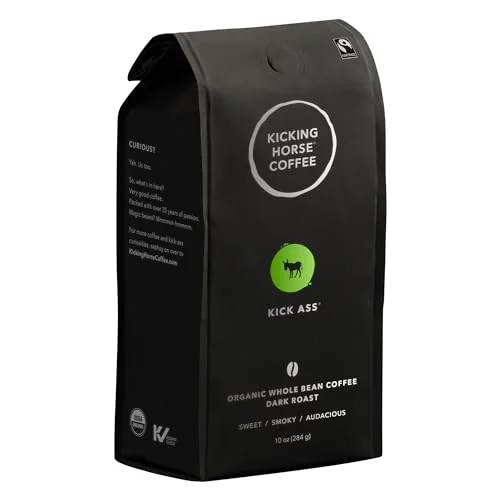
Kicking Horse's darkest organic Fairtrade blend, described by the roaster as smoky with molasses and licorice, and owner reviews report it as a gentler alternative for people who find extreme-caffeine dark roasts harsh.
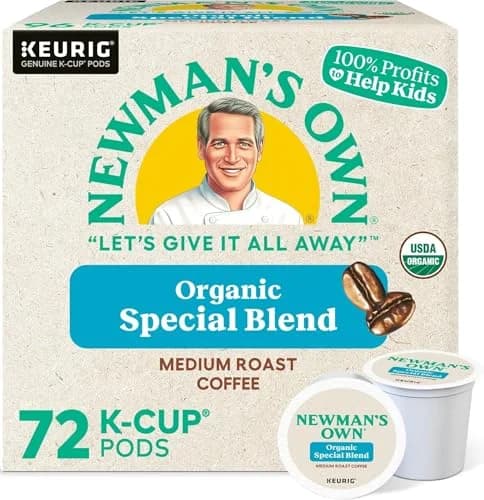
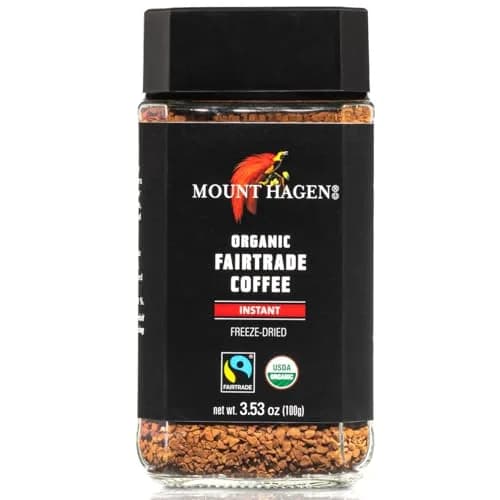
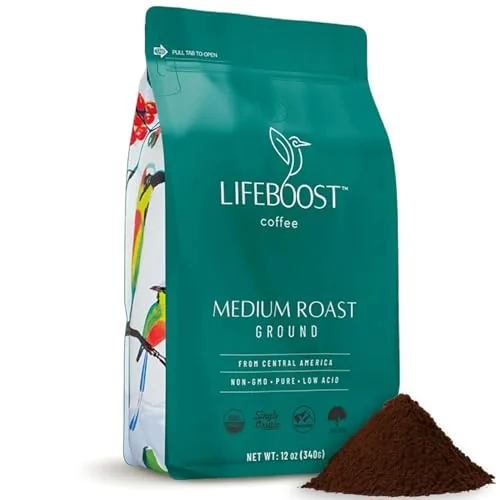
Certified-organic options across pods, ground, instant, and cold brew concentrate.
Newman's Own Organics
Newman's Own Organics Special Blend, 72 ct
Medium roast
USDA Organic and Fair Trade certified, blending medium-roast Central American with darker Indonesian coffee, which is why owner reviews report it drinking heavier and earthier than a typical supermarket medium.
Freeze-dried organic fair-trade arabica in a glass jar, and long-running community consensus treats it as the default recommendation when someone wants instant that is not harsh.
Marketed as a low-acid single-origin organic ground coffee, and owner reviews from people with sensitive stomachs report it sits easier than a standard supermarket roast.
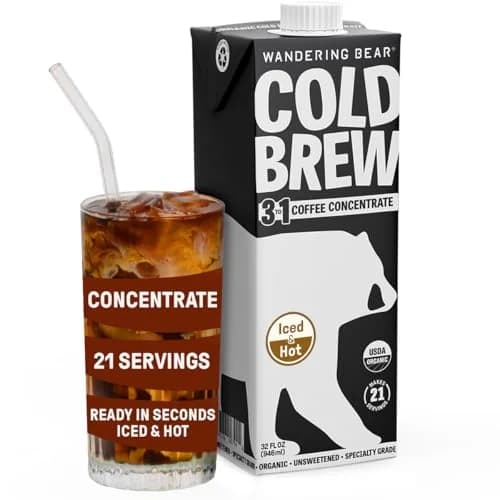
A shelf-stable carton with a spout the brand states dilutes one to three for about 21 servings, which makes it the low-effort route to daily iced coffee.
Organic says nothing about roast or origin — pick by the flavor notes that match your taste, then let the certification be the tie-breaker.
USDA Organic vs Rainforest Alliance vs Fair Trade
These labels certify different things, so they're not interchangeable. USDA Organic governs how the coffee is grown and handled: no synthetic pesticides, herbicides or fertilizers apart from a limited approved list, verified by an accredited certifier. Rainforest Alliance focuses on environmental sustainability and biodiversity, and allows some approved agrochemicals. Fair Trade is primarily a social and economic standard, guaranteeing farmers a minimum price and community premiums. A coffee can carry one, two, or all three, and each tells you something different.
What organic does and doesn't tell you about flavor
Organic certification is a farming-and-handling standard, not a flavor or quality guarantee. It says nothing about roast level, origin, altitude, or how skillfully the coffee was roasted — all of which drive taste far more than growing method. Plenty of organic coffees are excellent (Kicking Horse, Lifeboost, Mayorga are good examples), but 'organic' alone won't tell you whether you'll like the cup. Choose by the flavor notes and roast you enjoy, then treat certification as the tie-breaker.
Is organic coffee worth the premium?
That depends on what you value. If growing without most synthetic chemicals matters to you — for the ecosystem, the farm workers, or personal preference — the premium is usually modest and the quality gap with conventional coffee has largely closed. If you only care about the cup, a great non-organic coffee can taste just as good; the certification is about growing practices, not what's in your mug. Neither choice is wrong.
How to read the organic label on a coffee bag
The USDA uses tiered wording, and the phrasing on the front of the bag tells you how much of the product is actually certified. "100% Organic" means every ingredient is certified organic. "Organic" means at least 95% is, with the remainder from an approved list. "Made with organic ingredients" means at least 70%, and that tier is not allowed to display the USDA Organic seal at all. For plain coffee this distinction rarely bites, since a bag of beans is a single ingredient and lands in the top tiers by default. It matters most with flavored coffees, instant blends, and anything with added dairy or sweetener, where the organic share can drop into the 70% band while the word "organic" still sits prominently on the front. The other thing worth looking for is the certifier. Certified products are required to name the accredited certifying agent on the packaging, usually in small type on the back near the seal. If a bag says "organically grown" or "natural farming" with no seal and no certifier named, it is making an uncertified marketing claim rather than a verified one. That is not automatically dishonest, but it is unverified, and you are trusting the roaster rather than an inspection.
Organic blends vs single-origin organic
Most of what you see on the organic shelf is a blend, and there is a supply-chain reason for that. Organic certification has to follow the coffee through every handler, so a roaster building an organic line needs certified farms, certified mills, and certified handling all the way through. Blending across several certified sources gives the roaster a wider pool to draw from and lets them hold a consistent flavor profile year-round as individual lots run out. Kicking Horse Three Sisters and Death Wish are both blends, which is part of why they stay affordable and taste the same bag to bag. Single-origin organic, like Lifeboost's Nicaraguan medium roast, works differently. You get the character of one growing region rather than a house profile, and that origin identity is the point. It also tends to cost more, both because the certified single-origin pool is smaller and because those coffees are usually positioned as a premium product. Neither approach is more organic than the other, since the certification standard is identical. Choose a blend if you want consistency, value, and a profile that stays put across restocks. Choose single origin if you want a specific regional character and are willing to accept more seasonal variation and a higher price for it.
Why some organic coffee has no organic label
A large amount of coffee is grown without synthetic pesticides or fertilizers and never carries a seal. Certification is a paid, audited process with real overhead: annual inspections, documented records of every input, and a transition period during which the land must be free of prohibited substances for three years before the harvest can be sold as organic. Many smallholders farm at a scale where that cost and paperwork are hard to justify, particularly if they sell into a market that does not pay a premium for the label. Others have simply always farmed that way and never framed it as a certification decision. This creates a real gap between growing practice and paperwork, and it is worth understanding before you treat the seal as the only signal. The seal tells you a third party verified the practice. Its absence tells you nothing definite either way. If you buy from a small roaster who names the farm or cooperative and describes how the coffee is grown, you may be getting exactly the farming practice you want without the certification cost baked into the price. If you want verification rather than a description, the seal is the tool for that, and the certified picks on this page all carry it.
What the organic seal does not cover
Organic certification is narrow by design, and several things people assume it includes are governed separately or not at all. Shade grown is the clearest example. As a standalone phrase on a bag it is unregulated, so any roaster can print it. The certified version is Smithsonian Bird Friendly, which requires organic certification as a baseline and then adds specific canopy and habitat criteria on top. That layering is why Bird Friendly coffee is always organic but organic coffee is usually not Bird Friendly. Farmer pay is likewise outside the organic standard entirely, which is what Fair Trade addresses. Decaffeination is one place the standard does reach further than people expect. An organic-certified decaf has to be decaffeinated using methods and substances permitted under organic rules, which in practice means water-based or CO2 processing rather than solvents. That is why organic decafs like Kicking Horse Decaf carry the Swiss Water mark alongside the organic seal. The practical takeaway is to match the label to the thing you actually care about. Growing inputs point to organic, farmer economics to Fair Trade, biodiversity to Rainforest Alliance or Bird Friendly, and chemical-free decaffeination to Swiss Water. Stacked labels cost more, so decide which one is doing the work for you.
Whole bean vs pre-ground organic coffee
Certification does not change with grind. A bag of organic pre-ground is held to exactly the same growing and handling standard as whole bean from the same roaster, so if the seal is what you are after, ground coffee costs you nothing on that front. What it costs you is freshness. Ground coffee has vastly more surface area exposed to air, so it stales in days rather than weeks, and most of the aromatic compounds that make a good coffee worth its premium are gone well before the bag is empty. That trade-off stings more on organic coffee than on cheap supermarket coffee, simply because you have usually paid more for the bean. If you are buying pre-ground anyway, buy smaller bags you will finish inside about two weeks, keep them sealed and away from heat, and skip the freezer unless you are storing an unopened bag long term. If you grind at home, whole bean is the better value on almost any organic coffee here, and a burr grinder does more for the cup than moving up a price tier in beans. Also check the grind on the bag before you buy, since a coffee ground for espresso will run bitter and muddy in a drip machine.
When you buy through links on BrewSift, we may earn an affiliate commission. This is how we fund independent research — it never influences our scores or which products we recommend. How we score & stay independent →
Not sure which is right for you?
The taste quiz narrows it to three picks matched to exactly how you brew and what you like.
USDA Organic certification means the coffee was grown without synthetic pesticides, herbicides or fertilizers apart from a limited approved list, and handled without prohibited additives, verified by an accredited certifier. It's a farming-and-handling standard — it says nothing about roast level, origin, or flavor, so still pick by taste.
Does organic coffee taste better?
Not automatically — organic is about how it's grown, not how it tastes. But many organic coffees are also carefully sourced and roasted (Kicking Horse, Lifeboost, Mayorga are good examples), so you can get excellent flavor and the certification together. Choose by the flavor notes you like, then treat organic as the tie-breaker.
Is organic coffee worth the extra cost?
If you value farming without most synthetic chemicals — for the ecosystem, the farm workers, or your own preference — the small premium is modest and the quality gap has closed. If you only care about the cup, a great non-organic coffee can taste just as good; the certification is about growing practices, not a flavor guarantee.
What's the difference between organic, Fair Trade, and Rainforest Alliance?
They certify different things. USDA Organic is about growing without most synthetic chemicals; Fair Trade is a social and economic standard guaranteeing farmers a minimum price and community premiums; Rainforest Alliance focuses on environmental sustainability and biodiversity. A coffee can hold one, two, or all three — Kicking Horse Three Sisters, for instance, is both organic and fair-trade.
Does organic coffee have fewer pesticides or chemicals?
Fewer synthetic inputs on the farm, yes; that is the core of the certification. The USDA organic rules prohibit synthetic substances in organic production and handling except those on an approved list, and the land must have had no prohibited substances applied for three years before harvest. That is a rule about farming inputs rather than a residue test of the beans in the bag. If avoiding those inputs is your priority, the organic label is the most direct signal, though it says nothing about the coffee's roast, origin or flavor.
What is the difference between 100% Organic, Organic, and Made with organic ingredients?
They are USDA tiers describing how much of the product is certified. 100% Organic means every ingredient is certified organic. Organic means at least 95%, with the rest from an approved list. Made with organic ingredients means at least 70%, and products in that tier cannot display the USDA Organic seal. Plain coffee is a single ingredient, so whole bean and ground coffee almost always sit in the top tiers. The distinction matters most for flavored coffees and ready-to-drink products, where added ingredients can pull the organic share down while the word organic stays on the front of the pack.
Are organic coffee blends as good as single-origin organic?
They meet the same certification standard, so neither is more organic than the other. Blends dominate the organic shelf because a roaster can draw from several certified sources, which keeps the flavor consistent bag to bag and the price down. Kicking Horse Three Sisters and Death Wish are both blends and both land around or below the price of a single-origin organic. Single origin, like Lifeboost's Nicaraguan medium roast, gives you the character of one growing region instead of a house profile, but usually costs more and varies more by season. Pick blends for consistency and value, single origin for regional character.
Can coffee be organic if it is not certified?
Yes, in practice. Plenty of farms grow without synthetic pesticides or fertilizers and never pursue the seal, because certification means annual inspections, detailed input records, and a three-year transition period during which the land must be free of prohibited substances before the harvest can be sold as organic. That overhead is hard for many smallholders to justify. The seal verifies the practice through a third party, but its absence does not prove synthetic inputs were used. If you want verification, buy certified. If you trust a small roaster who names the farm and describes the growing method, you may get the same practice without paying for the audit.
Is natural coffee the same as organic coffee?
No, and the two words get confused constantly. In coffee, natural is a processing term. It means the cherries were dried whole with the fruit still on the bean, rather than having the pulp washed off first, which typically produces a fruitier, heavier cup. It says nothing about pesticides or fertilizers. A natural-process coffee can be conventionally farmed, and a certified organic coffee can be washed, natural, or honey processed. Organic is the growing-and-handling standard; natural describes what happened after harvest. If avoiding synthetic inputs is your goal, look for the USDA Organic seal rather than the word natural.
Does organic pre-ground coffee meet the same standard as whole bean?
Yes. Certification covers growing and handling, not grind size, so organic ground coffee is held to exactly the same standard as whole bean from the same roaster. The difference is freshness rather than certification. Ground coffee has far more surface area exposed to air and goes flat within days, so a good deal of what you paid a premium for is gone before you reach the bottom of the bag. If you buy ground, get smaller bags you will finish in about two weeks and keep them sealed away from heat. If you already own a burr grinder, whole bean is the better value on any organic coffee.
What is the best organic coffee?
Kicking Horse Three Sisters is the best all-round certified-organic pick here: USDA Organic and fair-trade, a medium roast with chocolate, nutty and caramel notes that behaves in any brewer, at around $15. After that it depends what you want alongside the seal — Lifeboost's Nicaraguan medium roast for low acidity, Mayorga Café Cubano for a dark roast, Death Wish for caffeine, Kicking Horse Decaf for none at all. Organic is a growing-and-handling standard, so pick the flavor first and let the seal decide the tie.