Decaf used to mean flat and papery. It doesn't anymore — Swiss Water and other gentle decaffeination methods preserve real flavor. The trick is buying decaf from roasters who treat it as seriously as their caffeinated coffee — Volcanica's Colombian Swiss Water decaf is the clearest example, and it leads this list.
Look for: Swiss Water process, a roaster you already trust, your usual roast level.
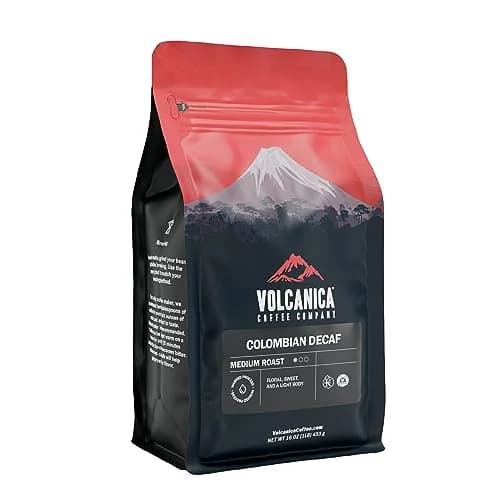
Chemical-free Swiss Water decaf that keeps real Colombian sweetness — no flat decaf flavor.
CaramelNuttyChocolate
Acidity
Medium
Body
Medium
Sweetness
Sweet
Brews: Drip · Pour-over · EspressoDecaf
Why this one: Volcanica's Colombian Decaf uses the chemical-free Swiss Water process and keeps real Colombian sweetness — caramel, nutty, and chocolate notes at a medium roast — rather than the flat, papery taste decaf is known for. It's versatile across drip, pour-over, and espresso, making it the most all-around useful pick here. The trade-offs are a higher price than a supermarket decaf, and that Amazon currently stocks the ground version — buy direct from Volcanica if you want whole bean.
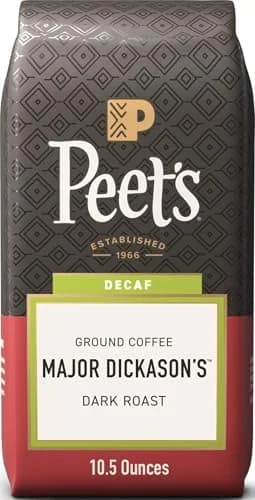
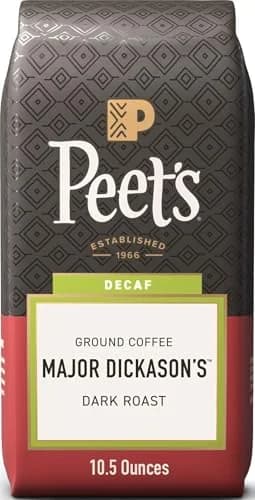
A full-strength decaf for dark-roast drinkers — the smoky Peet's character without the caffeine.
SmokyDark chocolateBold
Acidity
Mild
Body
Full
Sweetness
Balanced
Brews: Drip · French pressDecaf
Why this one: This is a full-strength decaf for dark-roast drinkers: the smoky, dark-chocolate, bold Peet's Major Dickason's character with a full body (4/5) and low acidity (2/5), minus the caffeine. If you love a deep, roasty cup and don't want to compromise going decaf, it delivers. Peet's describes it as water-processed decaf, though not under the Swiss Water name, and the profile is assertively dark, so it's less suited to anyone wanting something lighter.
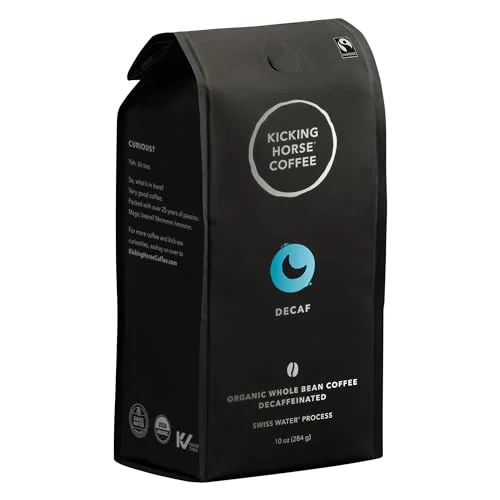
Organic Swiss Water decaf with chocolate-hazelnut smoothness — a great everyday decaf.
ChocolateHazelnutSmooth
Acidity
Mild
Body
Medium
Sweetness
Sweet
Brews: Drip · Pour-overOrganicDecaf
Why this one: Kicking Horse Decaf is an organic, Swiss Water decaf with chocolate and hazelnut notes and a smooth dark-roast body — an easy, affordable everyday cup. Kicking Horse lists it as organic and Fairtrade, so it hits both the organic and chemical-free-decaf boxes while still tasting genuinely good, especially in drip or pour-over. It's a comfortable, approachable profile rather than a bold or complex one, which is exactly the point for daily drinking.
The same no-caffeine brief for Keurig and Nespresso machines.
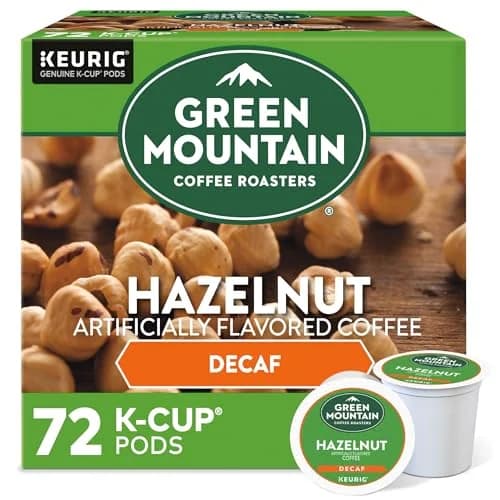
Green Mountain Coffee Roasters
Green Mountain Coffee Roasters Hazelnut Decaf, 72 ct
Light roast
A flavored decaf is unusually hard to find in bulk, and the roaster describes this one as carrying the same sweet, buttery hazelnut character as the caffeinated version.
For drip brewers and travel, these carry real roast character without the caffeine.
Peet's Coffee
Decaf Major Dickason's Blend Ground, 10.5 oz
Dark roast
The decaffeinated version of Peet's flagship blend in a ground bag, and owner reviews report it keeps more of the original's weight than most supermarket decafs.
Brew decaf exactly as you brew regular coffee: the same ratio, grind and water temperature. Buy whole bean where you can, because decaf goes stale just as fast as caffeinated coffee.
Swiss Water, sugarcane, CO2 and methylene chloride: the four labels you will see
Every decaf process removes caffeine from green, unroasted beans before they are roasted; they differ in what does the removing. Swiss Water uses water, temperature and time, with a caffeine-free Green Coffee Extract and carbon filters doing the work, and no added solvent. Sugarcane decaf uses ethyl acetate; the Colombian decaffeinator Descafecol says its ethyl acetate comes from a sugarcane-based process and that only spring water and ethyl acetate touch the coffee. CO2 decaf uses carbon dioxide under pressure; Carbonic Natural in Bremen, for example, uses liquid CO2. The fourth, methylene chloride, is the classic solvent method, and bags using it rarely say so on the front.
How to tell which process a decaf used
Start with the bag, then the roaster's product page. Swiss Water decaf almost always says so, because the name is a selling point; Volcanica's Colombian decaf and Kicking Horse Decaf both do. Sugarcane or ethyl acetate decafs usually name the process too. Water-process decafs that are not Swiss Water often say only water process; Peet's describes its Decaf Major Dickason's that way, and Mexico's Descamex sells a Mountain Water Process that steams the beans and then uses a water-based solution of coffee solubles. If a decaf names no process at all, that silence is worth a question to the roaster, since solvent methods rarely advertise themselves.
What the methylene chloride rule actually is
Methylene chloride is legal for decaffeinating coffee in the US. The FDA's regulation for it, 21 CFR 173.255, allows residues of no more than 10 parts per million in decaffeinated roasted coffee. The EPA's 2024 rule restricting methylene chloride covered industrial and consumer uses and, as the Center for Science in the Public Interest has pointed out, does not reach its use in food. Petitions asking the FDA to revoke the food use are still under consideration, and no decision has been announced. If you would rather avoid it, buy Swiss Water, Mountain Water, sugarcane or CO2 decaf, which name their process.
Does decaf lose flavor?
Older decaf earned its flat, papery reputation because harsh processing stripped flavor along with the caffeine. Modern gentle methods, especially Swiss Water, preserve far more of the bean's character — which is why a Swiss Water Colombian can still taste of caramel and chocolate. The bigger variable is the roaster: decaf from someone who sources and roasts it as seriously as their regular coffee (like the picks here) tastes like real coffee, not a compromise.
Is decaf caffeine-free?
No. The National Coffee Association says decaffeination typically removes about 97% of the caffeine, and the FDA puts an 8-ounce cup of decaf at typically 2 to 15 mg of caffeine. Swiss Water's 99.9% caffeine-free claim applies to the green, unroasted coffee; Swiss Water itself says a brewed cup of decaf typically still carries a few milligrams. That is negligible for most people, but if you are avoiding caffeine for medical reasons, know that a trace remains.
When you buy through links on BrewSift, we may earn an affiliate commission. This is how we fund independent research — it never influences our scores or which products we recommend. How we score & stay independent →
Not sure which is right for you?
The taste quiz narrows it to three picks matched to exactly how you brew and what you like.
Yes. Volcanica lists its Colombian decaf as Swiss Water process, decaffeinated with water and carbon filtration rather than a chemical solvent. Roasters sometimes offer the same origin in more than one process, so check the bag you are buying.
Which decaf brands taste most like regular coffee?
The ones that start from good beans and decaffeinate gently: on our list Volcanica's Colombian decaf (Swiss Water process) keeps the body and sweetness of the caffeinated version, and Peet's decaf Major Dickason's keeps the blend's dark, roasty character. Decaf from cheap commodity beans tastes flat because the beans did, not because of the process.
Is Swiss Water decaf better?
It is the most transparent choice. Swiss Water uses water, temperature, time and carbon filtration with no added solvent, and the name on the bag tells you exactly how the coffee was decaffeinated. It is popular with specialty roasters, which makes it a reliable signal of a decaf that will actually taste like coffee.
Which decafs on this list use Swiss Water?
Two of the three. Volcanica's Colombian Decaf and Kicking Horse Decaf are both Swiss Water process, and Kicking Horse is also organic and Fairtrade. Peet's Decaf Major Dickason's is described by Peet's as water-processed, but not under the Swiss Water name.
Does decaf have any caffeine?
Yes, a small amount. The FDA says an 8-ounce cup of decaf typically has 2 to 15 mg of caffeine, and the National Coffee Association says decaffeination typically removes about 97% of it. Decaf is never truly 100% caffeine-free.
Is sugarcane decaf chemical-free?
Not strictly. Sugarcane decaf uses ethyl acetate, a solvent, but one made from sugarcane rather than from petrochemicals; the Colombian decaffeinator Descafecol says only spring water and ethyl acetate touch its coffee. If you want no solvent at all, choose a water process such as Swiss Water or Mountain Water.
Is methylene chloride allowed in decaf coffee?
In the US, yes. FDA regulation 21 CFR 173.255 allows methylene chloride residues of up to 10 parts per million in decaffeinated roasted coffee. Petitions asking the FDA to end that use are under consideration with no decision yet. Bags that use it rarely say so, so a decaf that names Swiss Water, Mountain Water, sugarcane or CO2 is the way to avoid it.
Does decaf coffee taste worse than regular?
It doesn't have to. The flat, papery reputation comes from older, harsher processing. Modern gentle methods — especially Swiss Water — preserve real flavor, so a well-made decaf like Volcanica Colombian or Kicking Horse Decaf tastes like proper coffee. The roaster matters more than the fact that it's decaf.
Is decaf coffee bad for you?
Decaf is sold and regulated as an ordinary food, and the one solvent people worry about, methylene chloride, is capped by the FDA at 10 parts per million in decaffeinated roasted coffee. If you want to avoid solvents entirely, buy a water-process decaf. For specific health concerns, that is a conversation for your doctor.