An insulated mug keeps your coffee hot for hours, doesn't leak in your bag, and survives being dropped. The right one is the difference between coffee at your desk and lukewarm regret.
Quick steer — Vacuum insulation is non-negotiable. After that the lid decides how leak-proof it is, and the gasket decides how much of yesterday's coffee you taste today.
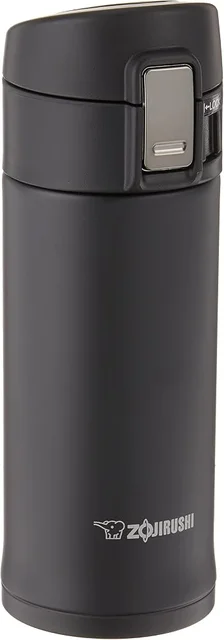
Top pick: Zojirushi Stainless Steel Mug 16oz (8.9/10, Approx. $29.59). The mug owners name most often for heat retention, with a flip lid that locks shut.
Skip this
A mug chosen purely on how long it holds heat
Hours-hot is the number every listing advertises and rarely the reason a mug gets replaced. Owner threads consistently point at the lid instead: how many parts it has, whether the gasket can be removed, and whether it seals when the mug is upside down in a bag.
The BrewSift Score is a 0–10 weighted average of category-specific sub-scores, built from manufacturer specifications, published reviews and aggregated owner reports — not hands-on testing. In this category it weights heat retention 35%, leak-proof seal 25% and durability 15%, plus 2 smaller factors. How we score →
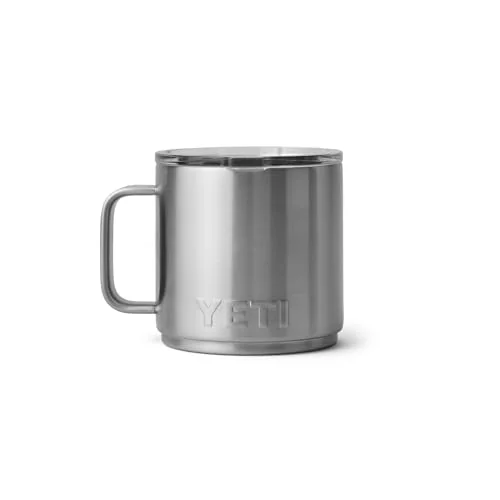
A nearly indestructible desk mug with a handle; YETI's own product page calls the MagSlider lid splash-resistant, so treat it as a desk lid rather than a leak-proof one.
The mug owners name most often for heat retention, with a flip lid that locks shut.
Zojirushi's vacuum mug keeps drinks hot or cold for hours, with a tight flip-open lid and a safety lock that stops it opening in a bag, and a wide mouth that takes full-size ice cubes. The interior is SlickSteel so it cleans easily and never holds flavor. The benchmark commuter mug.
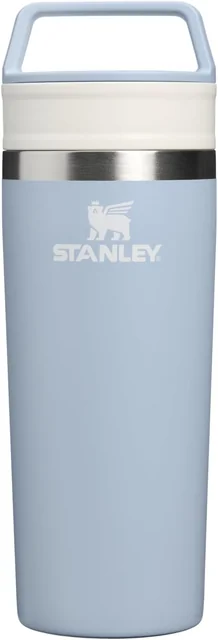
Stanley's current 16oz commuter mug: a leakproof two-part drink-through lid, an integrated handle and 18/8 steel, rated 5 hours hot by Stanley.
This is the mug that replaced Stanley's Classic Trigger-Action in the 16oz slot, which is no longer offered on Amazon US. The two-piece lid works two ways: remove the top for an open mug, or leave the lower section on for controlled sipping. Stanley rates it 5 hours hot and 6 hours cold, calls it leakproof and dishwasher-safe, and the handle makes it the easiest mug here to carry loaded.
A nearly indestructible desk mug with a handle; YETI's own product page calls the MagSlider lid splash-resistant, so treat it as a desk lid rather than a leak-proof one.
Of the six mugs we rank, four makers put a number to heat retention — Contigo at 11 hours hot, Fellow at 12 and Stanley at 5, and Zojirushi as a temperature, 154°F after 6 hours for the 16 oz mug — and the rest say "for hours". Only Zojirushi publishes its test conditions, so the four figures are not comparable with each other.
What owners actually report
r/Coffeer/BuyItForLifer/JamesHoffmann
Zojirushi is close to a default answer across r/Coffee, r/BuyItForLife and r/JamesHoffmann, with owners describing coffee still uncomfortably hot hours later and mugs in daily use for six years and more. The competition is framed differently rather than as a rival on heat: Yeti gets recommended for durability and, specifically, for lids with few parts that come apart easily, and Contigo's AutoSeal for being cheap, genuinely leakproof in a bag, and lasting far longer than its price suggests. The complaint that cuts across every brand is the lid. Multi-part lids with hidden gaskets are the recurring reason people replace an otherwise fine mug, and threads about cleaning them are their own genre. There is a real minority report on Zojirushi too, from owners who found the cap gasket held onto coffee odour.
Consistently praised
Zojirushi stainless mugs — The most consistently named mug for heat retention, and owners back it with years of daily use rather than a first impression; Zojirushi publishes the retention figures rather than leaving it to marketing language.
Yeti Rambler mugs — Praised on a different axis to insulation: owners single out lids with very few parts and magnetic rather than clipped mechanisms, which is what makes them easy to take apart and actually clean.
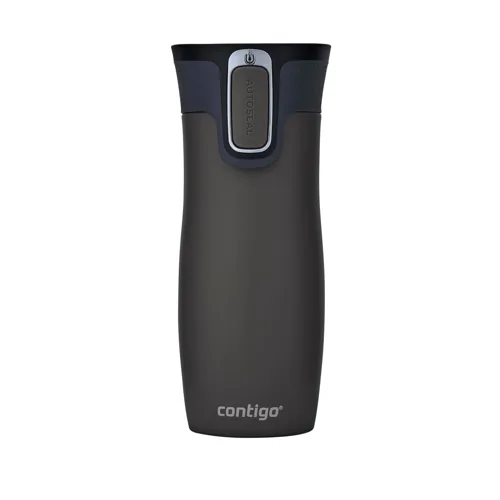
Contigo AutoSeal West Loop — The recurring value answer. Owners report throwing full mugs into bags without leaks and keeping the same one for the better part of a decade, at roughly a third of the price of the premium options.
Consistently warned about
Lids with many parts and concealed gaskets — The most common reason owners give for retiring a mug they otherwise liked: a seal you cannot reach does not get cleaned, and the gunk and smell that follow are what end the relationship, not the insulation.
Assuming premium insulation means no odour retention — A consistent minority report even on the best-regarded mugs is that the cap's rubber seal picks up coffee smell that will not wash out, which is a gasket-design problem rather than an insulation one.
A nearly indestructible desk mug with a handle; YETI's own product page calls the MagSlider lid splash-resistant, so treat it as a desk lid rather than a leak-proof one.
An insulated mug holds heat for hours, which mostly means it preserves whatever you put in it. The two things that change what you are drinking at 10am are the brewer and how the beans were stored.
A travel mug is a commuter's last step. If the coffee going into it is from a pot that has been sitting on a hotplate, insulation just keeps stale coffee hot for longer.
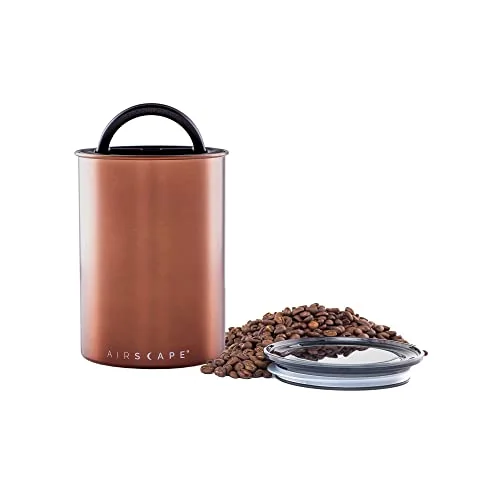
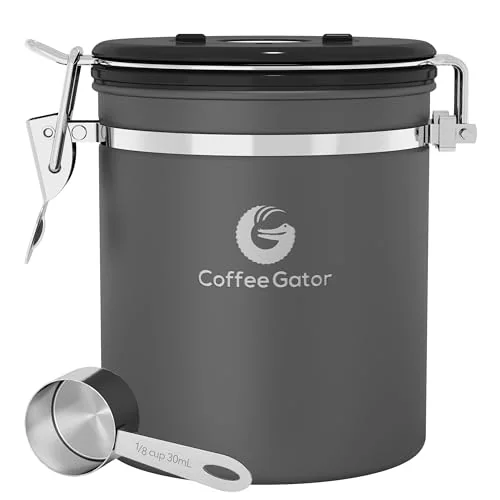
Ground coffee goes flat within days in the bag it came in. An airtight, opaque canister is the cheapest thing on this page that changes how the coffee tastes.
All six travel mugs BrewSift ranks hold between 12 and 16 oz, and they run $13 to $37. None of that 2.8x price spread buys extra capacity.
What each maker actually claims about heat
We read the makers' own listings rather than inventing a test: Contigo states the West Loop keeps drinks hot up to 11 hours and cold up to 24 with its vacuum insulation; Fellow states 12 hours hot and 24 hours cold for the Carter Move; Stanley rates the Cafe To Go 5 hours hot and 6 hours cold. Zojirushi gives a temperature rather than hours, and is the only one of these makers to state its test conditions: 154°F after 6 hours for the 16 oz mug, from 203°F water in a 68°F room. Hydro Flask and YETI describe their mugs as keeping drinks hot or cold for hours without a figure on the listings we checked. Treat any precise hold time you read elsewhere as someone's kitchen test, not a spec — and remember that a full, closed mug is the condition every claim assumes.
Vacuum insulation is non-negotiable
Double-wall vacuum-insulated stainless steel is what keeps a drink hot for six hours or more — the vacuum gap between the walls blocks the heat transfer that cools your coffee. Single-wall stainless, plastic, and ceramic travel mugs go lukewarm within about half an hour and sweat on the outside. Look explicitly for the words 'vacuum insulated'; 'double wall' alone (without a vacuum) is a much weaker claim. This one spec matters more than brand or looks.
Insulated travel mugs: what the word covers on a listing
An insulated travel mug is any mug built to slow heat moving through its wall, and the word covers three quite different constructions. The first, and the only one worth buying for hot coffee on a commute, is double-wall vacuum-insulated stainless steel: two steel walls with the air pumped out of the gap between them, so there is almost nothing to carry heat across. Every one of the six mugs BrewSift ranks is built this way by its maker's own description, which is why the insulation itself is not what separates them. The second is double-wall with an air or foam gap and no vacuum, common in plastic commuter cups; it keeps your hand cool but holds heat far less well, and a listing that says double wall without the word vacuum is usually this. The third is a single wall with a sleeve, which is a grip, not insulation. Two quick checks settle it before you buy: the listing should say vacuum insulated in plain words, and with hot coffee inside, the outside of a vacuum mug stays at room temperature. Interior finishes are a separate question. Fellow's ceramic coating in the Carter Move and Zojirushi's SlickSteel-finished interior change taste and cleaning rather than heat retention, and insulated works in both directions, so the same mug keeps iced coffee cold. Thermal travel mug and insulated coffee tumbler describe the same thing. Once a mug is vacuum insulated, choose it on the lid, the size and how easily it comes apart to clean, because those are the differences you will notice every day.
Lid type decides how leak-proof it is
The lid is where most travel mugs win or lose. Fully-sealed screw or lock lids are the ones you can throw in a bag on its side without a puddle — best for commuters and travelers. Flip-top and slide lids are easier to sip one-handed and better at a desk or in a cupholder, but many will seep if tipped. Push-button lids are convenient but have the most parts to clean and the most gaskets that can fail. Match the lid to whether the mug rides upright in a car or gets tossed in a backpack.
Size it to your drink and your cupholder
A 12oz mug suits a single espresso drink or a short commute; 16–20oz is the everyday sweet spot for a full coffee; 24oz+ is for long hauls or big iced drinks. Check the base diameter against your car's cupholder before you buy — plenty of wide-bottomed tumblers don't fit, which is the most common regret. If you'll refill from an espresso machine or under a drip basket, also check that the mug clears the spout height.
Cleaning, taste, and gaskets
Coffee oils and milk build up fast in lids, so the easier a mug is to clean, the longer it stays odor-free. Wide mouths let a bottle brush in; removable, dishwasher-safe gaskets beat fixed ones that trap residue and eventually smell. Uncoated 18/8 stainless steel is inert and won't hold or add flavor — a good sign. Fewer lid parts means fewer places for mold to hide, so a simpler sealed lid often beats a gadgety one over the long run.
Hot and cold, and the little extras
Good vacuum insulation works both ways — the same mug that holds coffee hot will keep iced coffee cold and condensation-free all day. Extras worth caring about: a non-slip base, a comfortable drink opening, and (for hot lovers) a mug that doesn't keep coffee scaldingly hot for so long you can't drink it — some are almost too good. Powder-coated exteriors resist scratches and grip better than bare steel. These are the details that decide whether a mug becomes your daily one or lives in a drawer.
Tea in a travel mug is a different problem than coffee
A travel coffee mug and a travel tea mug are usually the same object sold to two people with opposite needs, and the mismatch is why so many tea drinkers end up disappointed. Coffee goes into the mug already brewed and finished, so the only job left is holding temperature. Tea is often still brewing when the lid goes on. Leaves or a bag left sitting in a sealed vacuum mug keep extracting for the whole commute, and because the water stays close to the temperature you poured it at, you get a cup that is bitter and drying by the time you drink it. The two practical fixes are both about ending the steep. Either brew in a separate vessel, time it properly, and decant into the mug once it is done, or buy a mug with a removable basket infuser you can lift out and park in the lid. The second thing to know is that tea types want different water. Black tea and most herbal infusions take near-boiling water and are relatively forgiving of a long hold. Green, white, and delicate oolong want distinctly cooler water and short steeps, which means a mug prized for holding heat will punish them. If you drink green tea from a travel mug, pour a little cooler than you would for coffee, or brew and cool before you seal it. Most travel mugs are awkward to fish leaves out of, so if loose leaf is your habit, prioritise a wide opening you can get a hand and a brush into.
Travel thermos or travel mug? They are not the same product
People searching for the best travel thermos and the best travel coffee mug often want two genuinely different things, and the distinction is about how the drink leaves the container. A travel mug is single-serve and you drink directly from the lid. It opens and closes constantly, which is exactly what a commuter wants and exactly what costs it heat, since every sip vents warm air and draws in cool. A thermos, or vacuum flask, is a sealed carrier with a screw cap that doubles as a cup, or a stopper you unscrew to pour. You open it a few times rather than a few dozen, and each pour serves a portion rather than the whole thing. That is the real reason flasks hold heat longer than mugs of similar build quality: the design assumes you are not sipping from it. Capacity follows from that. Travel mugs cluster around 12 to 20oz because that is one drink, which is why the mugs in this guide sit at 12, 14, and 16oz. Flasks commonly run from around 25oz up past a litre, because they exist to carry several servings for several people or a whole day. Choose by the shape of the outing. Desk, car, train, one coffee: a mug, and specifically one with a lid that suits how it will be carried. A long hike, a fishing trip, a job site, a car full of people, or anywhere you want coffee available for hours without carrying a full drink in your hand: a flask, plus something to drink it out of. A common setup is both, filling the mug from the flask as the day goes on. Where people go wrong is buying an oversized tumbler for a commute, then finding it does not fit the cupholder and the last third goes cold.
Flavour carryover: why yesterday's coffee shows up in today's tea
Stainless steel itself does not absorb flavour, but the residue sitting on it does, and this is the single most common long-term complaint about travel mugs. Two different things are at work. Coffee leaves behind oils, which oxidise into a sticky film that turns rancid and gives an old mug a stale, slightly cardboard edge on a fresh pour. Tea leaves behind tannins, which stain rather than smear, building a brown film on the interior wall that is chemically bound on and largely immune to a quick rinse with dish soap. If you use one mug for both drinks, you get both problems at once, and tea is where you notice it first because it has nothing strong enough to hide behind. Soap and a bottle brush handle the oils if you do it the same day. Tannin stain needs an oxidising agent: a soak with a scoop of oxygen-based cleaner, denture tablets, or a baking soda paste worked over the stain will lift what scrubbing will not. Avoid steel wool and abrasive powders, which scratch the interior and give residue more surface to cling to. Interior finish matters here more than the marketing suggests. Uncoated 18/8 stainless is inert and easy to reclaim once stained. A ceramic-coated interior like the one in Fellow's Carter Move is genuinely more resistant to picking up coffee character and is the honest pick if a metallic edge bothers you, but the coating is a wear surface and abrasive cleaning shortens its life. The most reliable fix is not chemical at all: if you drink both, keep one mug for coffee and one for tea, and neither will ever taste of the other.
What the big travel mug roundups measure, and what they miss
Most published best travel mug rankings are built around one number: how warm the drink still is after a fixed stretch of hours, usually taken in a room with the lid closed and nobody drinking. It is a fair, repeatable comparison and it is why the same handful of names keep winning. It is also a poor model of a commute. Real use means opening the lid, filling only two-thirds, leaving the mug in a cold car, and drinking most of it in the first hour, and all of those affect the result more than the small gaps between well-made vacuum mugs. Fill level is the biggest lever nobody publishes: a half-full mug has a large volume of air to keep warm and cools much faster than a full one. Pre-heating with a splash of boiling water before you fill is the other. So read the rankings for the coarse split, which is real, between vacuum-insulated mugs and everything else, then decide on the things the tests cannot score. Whether the lid survives being face-down in a bag, since that is a binary you cannot recover from. Whether you can open it with one hand while driving, which is what the Contigo AutoSeal button and the Zojirushi flip lid exist for. Whether it fits your cupholder and under your brewer. Whether the lid comes apart far enough to clean properly, which decides how the mug tastes in year two. Whether you actually want maximum heat retention, since a mug that holds coffee at pouring temperature is undrinkable for the first part of your morning and some people are better served by a lighter, simpler mug. Those are the differences you will notice daily. The hour-by-hour numbers are the ones you will notice once.
Travel mugs with a handle, and what a handle costs you
Handles have quietly disappeared from commuter mugs, and the reason is the lid rather than fashion. A mug you can seal and throw in a bag is designed to be drunk from upright through a small opening, and a handle makes it wider than a cupholder allows while adding a part that catches on everything. So the mugs built to survive a backpack, like the Contigo AutoSeal West Loop and the Zojirushi with its flip-and-lock lid, have no handle at all. Of the mugs we rank, the YETI Rambler 14oz is the handled one, and its MagSlider lid is a magnetic slider we list as splash-resistant rather than sealed, which is the trade in miniature: you get a handle and a mug that is pleasant to hold at a desk or a campsite, and you give up the ability to put it in a bag on its side. If you want both, the practical answer most owners land on is two vessels rather than one compromise: a handled mug that lives upright where you drink, and a sealed handle-less mug for the journey.
Tumbler, travel mug or to-go cup: the words and what they actually mean
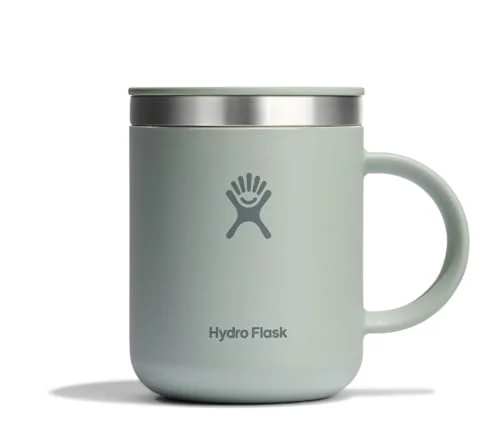
Listings use these three words interchangeably, so buy on the lid and the shape instead. A travel mug is built around transport: a narrower body, a lid that seals, and a mechanism you open to drink and close again. The Contigo AutoSeal button, the Zojirushi flip lid and the Stanley two-part drink-through lid are all versions of that idea. A tumbler is built around drinking: usually taller, tapered to fit a cupholder, often larger, and closed with a slider or a straw lid that stops splashes but is not meant to be inverted. The YETI Rambler's MagSlider and the Hydro Flask's Flex Sip both sit in that group. To-go cup is a fourth phrase and usually means the same thing as a tumbler in a listing rather than a distinct format. None of this affects insulation, which is a function of the vacuum wall rather than the shape, so a tumbler holds heat as well as a mug of the same build. Decide first whether the vessel will ever be carried closed and sideways. If it will, you need a sealing lid, and no amount of insulation substitutes for one.
FAQ
Common questions
What is the best travel coffee mug?
For most commuters, the Zojirushi 16 oz Stainless Steel Mug: owner threads name it more often than any other mug for heat retention, and its flip-and-lock lid seals in a bag. The Contigo AutoSeal West Loop 16 oz is the value pick, with a button lid that reseals when you let go, so it works one-handed in a car; Contigo rates it up to 11 hours hot. The Stanley Cafe To Go 16 oz adds a carry handle and a two-part lid Stanley calls leakproof. The Fellow Carter Move suits people bothered by a metallic taste, thanks to its ceramic-coated interior. Hydro Flask and YETI mugs are better for sipping at a desk than for a bag, because their lids resist splashes rather than locking shut.
Which travel mug brand is best?
It depends on what you need the mug to do, because the major brands all use vacuum-insulated steel and differ mainly in their lids. Zojirushi is the brand owners most often name for keeping coffee hot and for a lid that locks shut. Contigo is the value brand, known for AutoSeal lids that do not leak in a bag. Stanley builds tough mugs with handles. YETI and Hydro Flask make very durable mugs and tumblers whose lids resist splashes but are not meant to be carried upside down. Fellow focuses on taste, with ceramic-coated interiors. Pick the brand whose lid matches how you carry coffee.
What is the best insulated travel mug?
Any mug you shortlist should be double-wall vacuum insulated, which all six mugs we rank are, so the choice comes down to the lid and the maker's stated performance. Among those that publish a figure, Fellow states up to 12 hours hot for the Carter Move and Contigo up to 11 hours for the West Loop, while Zojirushi, the mug owners most often praise for heat, publishes a temperature instead: 154°F after 6 hours for the 16 oz mug, from water starting at 203°F. Only Zojirushi states its test conditions, so treat these as claims rather than a ranking, and buy on the lid you need.
What is the best leak-proof travel mug under $40?
Three of the mugs we rank are built to ride in a bag and typically sell for under $40. The Contigo AutoSeal West Loop 16 oz has a lid that locks between sips, which Contigo calls leak- and spill-proof, and Contigo rates it up to 11 hours hot. The Stanley Cafe To Go 16 oz has a two-part lid Stanley calls leakproof, plus a carry handle, and Stanley rates it 5 hours hot. The Zojirushi 16 oz has a flip lid with a safety lock to stop it opening accidentally, and Zojirushi rates it at 154°F after 6 hours. Prices move, so check the live price before you buy. The YETI Rambler is the one mug we rank that usually sells for more than $40.
Which lid type is actually leak-proof?
Auto-seal and screw-on lids with a gasket are the ones that survive a bag; flip lids and sliders are splash-resistant, not leak-proof. If it goes in a backpack, choose a mug whose maker says leak-proof, not spill-resistant.
How long does a vacuum-insulated travel mug keep coffee hot?
It depends on the mug and how full it is, and makers differ in what they will put a number to: Contigo's West Loop listing states hot up to 11 hours and cold up to 24; Fellow states 12 hours hot and 24 cold for the Carter Move; Stanley rates the Cafe To Go 5 hours hot. Zojirushi publishes a temperature instead: 154°F after 6 hours for the 16 oz mug, from 203°F water in a 68°F room. Hydro Flask and YETI say hours without a figure on the listings we read. In practice a full mug with the lid closed holds drinkable heat for a working morning; a half-full open mug does not. Pre-warming the mug with hot water before filling helps.
Are Yeti and Zojirushi travel mugs worth the price?
They earn their reputations for different reasons. Zojirushi mugs are the ones owners most often name for heat retention, with an easy-to-clean flip lid that has a safety lock to stop it opening by accident — a favorite of commuters who want coffee hot at lunchtime. Yeti tumblers are built like tanks with excellent insulation and a huge accessory ecosystem, though several of their lids aren't fully leak-proof for a bag. Both outperform bargain mugs on insulation and durability; whether the premium is worth it depends on whether you value that longevity and lid quality over a cheaper mug that still insulates well.
Do travel mugs keep drinks cold too?
Yes — vacuum insulation blocks heat transfer in both directions, so the same mug that holds coffee hot will keep iced coffee or cold brew cold for many hours, often longer than it keeps things hot. A well-insulated stainless mug also won't sweat or leave a ring, since the outer wall stays near room temperature. If you drink iced coffee in summer and hot in winter, one good vacuum mug covers both.
Are travel mugs leak-proof enough for a bag?
Only the ones with fully-sealed screw or locking lids are truly bag-safe — you can lay them on their side without spilling. Flip-top, slide, and push-button lids are made for sipping and cupholders and will often seep if tipped over. If you carry your mug loose in a backpack with a laptop, buy specifically for a lid the manufacturer calls leak-proof or lock-tight, and check that the gasket seats fully every time you close it.
How do I clean a travel mug and stop it smelling?
Disassemble the lid completely after use — the gasket, valve, and any silicone seals all trap coffee oils and milk that turn rancid and smell. Wash the lid parts and body with warm soapy water and a bottle brush; for stubborn coffee odor, soak with a baking-soda or diluted vinegar solution, then rinse well. Let everything air-dry fully with the lid off before storing, since sealing a damp mug is what breeds mustiness. Mugs with fewer lid parts and removable gaskets are far easier to keep fresh.
What is the best travel mug for tea rather than coffee?
Look for a removable infuser basket and a wide mouth, in that order. Tea keeps brewing in a sealed vacuum mug, so unless you can lift the leaves out, or brew elsewhere and decant, a long commute turns a good cup bitter. A wide opening also matters more for tea than coffee, because you will be removing wet leaves and scrubbing tannin stain out of the interior. Beyond that the requirements are the same as any travel coffee mug: vacuum insulation and a lid that seals the way you need it to. If you drink green or white tea, note that heat retention works against you, since those want cooler water and short steeps.
Can I use the same travel mug for coffee and tea?
You can, but expect flavour carryover unless you clean it thoroughly between drinks. Coffee leaves an oily film that goes stale, and tea leaves tannin stain that bonds to the steel. Tea is where you notice the problem, because it has nothing bold enough to mask an old coffee note. Same-day washing with soap and a bottle brush handles the oils; tannin needs a periodic soak with an oxygen-based cleaner or baking soda. If you drink both every day, two mugs is the simpler answer and neither will ever taste of the other.
What is the difference between a travel thermos and a travel mug?
A travel mug is single-serve and you drink directly from the lid; a thermos or vacuum flask is a sealed carrier you pour from into a cup, usually the screw cap. That changes everything downstream. Mugs get opened constantly, which is what a commuter wants and what costs heat, and they cluster around 12 to 20oz because that is one drink. Flasks are opened a few times a day, hold roughly 25oz upward, and are built to serve several portions over hours. Buy a mug for a commute or a desk, a flask for a long day out or several people, and plenty of people carry both and refill the mug from the flask.
Why does my travel mug make coffee taste metallic or stale?
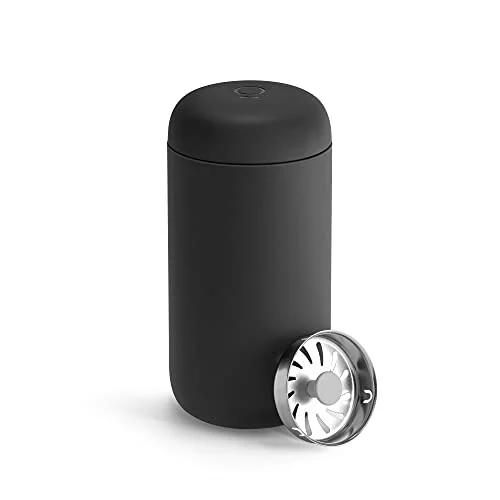
It is almost always residue rather than the steel. Uncoated 18/8 stainless is inert and does not add flavour, but coffee oils left in the lid, gasket, and interior oxidise into a stale film, and that is what you are tasting. Strip the lid down completely, wash every silicone part, and run a bottle brush around the interior wall. If a faint metallic edge persists on a genuinely clean mug, a ceramic-coated interior such as the one in Fellow's Carter Move is designed for exactly that complaint, at the cost of a coating you have to treat gently.
How do I keep coffee hot longer in a travel mug?
Three habits do more than upgrading the mug. Pre-heat it by filling with boiling water for a minute and tipping it out before you pour the coffee in, since a cold steel interior takes a real bite out of the drink. Fill it as close to full as you can, because trapped air cools far faster than liquid and a half-empty mug loses heat quickly. And open the lid as little as possible, which is where mugs give up most of their advantage over a flask. If you regularly need coffee hot for a long stretch without sipping it, that is a flask's job rather than a mug's.
Which travel mugs have a handle, and does it matter?
Most commuter mugs have no handle, because a handle makes the body too wide for a cupholder and pairs badly with a lid you can seal and invert. Of the mugs we rank, the YETI Rambler 14oz is the handled one, and its magnetic MagSlider lid is splash-resistant rather than sealed. That is the general pattern: a handle signals a mug intended to be drunk from where it sits, not carried closed in a bag. If you want a handle for hot drinks at a desk or on a campsite and also need something bag-safe for the commute, two vessels solves it more happily than any single mug does.
What is the difference between a coffee tumbler and a travel mug?
In listings, very little, and the words are used interchangeably. In practice a travel mug is built for transport, with a narrower body and a lid that closes: the Contigo AutoSeal button, the Zojirushi flip-and-lock and the Stanley two-part drink-through lid are all versions of that. A tumbler is built for drinking, usually taller and tapered for a cupholder, closed with a slider or straw lid that stops splashes but is not meant to be tipped over. Insulation comes from the vacuum wall rather than the shape, so neither format holds heat better. Choose on whether the vessel will ever travel closed and sideways.