Best Espresso Accessories (Tampers, Distributors, Knock Boxes)
The small tools that turn a decent espresso machine into a great one — a proper tamper, a distribution or WDT tool, a dosing cup, and a knock box. Cheap upgrades, outsized impact on your shots.
Quick steer — Fix your prep before you buy a new machine: a flat tamper sized exactly to your basket and a WDT tool cure most channeling for under $50.
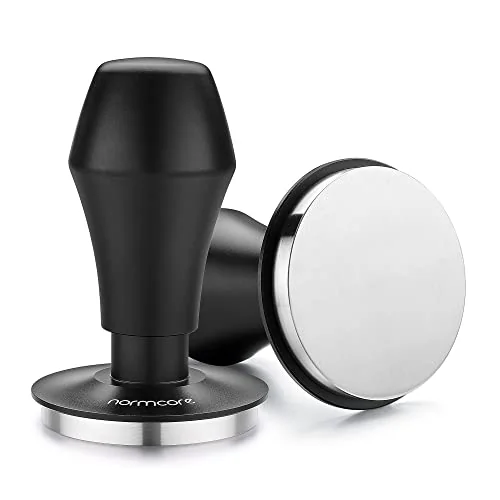
Top pick: Normcore 58.5mm Spring-Loaded Tamper (8.9/10, Approx. $42.99). A calibrated spring clicks at a consistent pressure, so every tamp is level and identical — the fix for shot-to-shot variance.
Skip this
A tamper chosen by eye rather than by your machine's basket diameter
Basket size is set by the machine, not by preference. Breville publishes the Barista Express as a 54 mm portafilter, most prosumer machines are 58 mm, and many entry DeLonghi units are 51 mm. A tamper a millimetre under leaves an unpressed ring at the basket wall for water to run through, which is worse than a rough hand tamp — so check the manual before ordering anything that goes inside the basket.
The BrewSift Score is a 0–10 weighted average of category-specific sub-scores, built from manufacturer specifications, published reviews and aggregated owner reports — not hands-on testing. In this category it weights performance 35%, build quality 25% and compatibility 20%, plus 1 smaller factor. How we score →
A calibrated spring clicks at a consistent pressure, so every tamp is level and identical — the fix for shot-to-shot variance.
Normcore's spring-loaded tamper takes the guesswork out of tamping: a 30lb spring clicks when you've applied even, consistent pressure, giving a level puck every time. At 58.5mm it fits standard portafilters snugly. The single best upgrade for consistency.
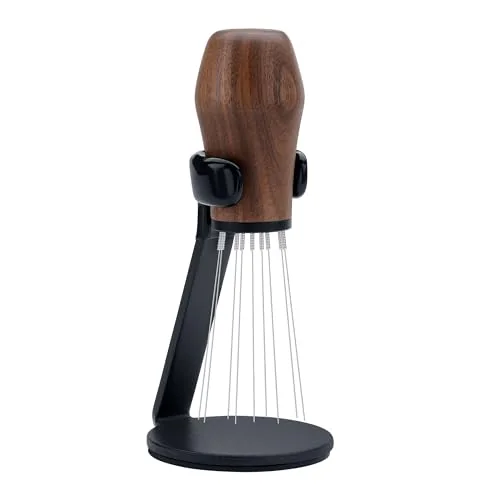
Fine needles break up clumps in the grounds so water flows evenly — the cheapest cure for sour, weak shots.
WDT, the Weiss Distribution Technique, means stirring the grounds in the basket with fine needles before you tamp. Normcore's listing describes the job plainly: break up clumps so the coffee sits evenly, which gives a more even extraction and less channeling. It matters most with a single-wall basket and a grinder that clumps. With a pressurized (dual-wall) basket it does much less, because Breville's own manuals say dual-wall baskets regulate the pressure and help the extraction regardless of grind, dose, tamp or freshness. This V3 has nine stainless steel needles in an aluminium and walnut handle, and comes with a stand.
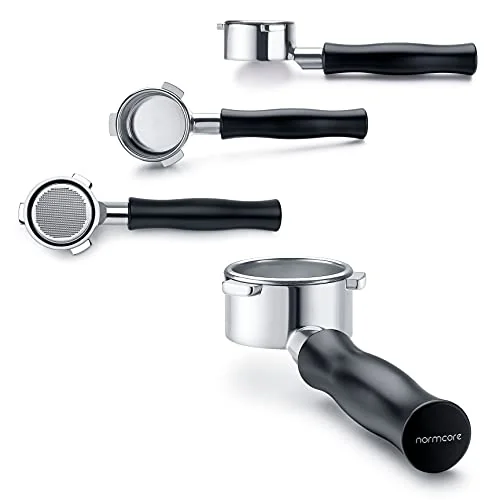
A naked portafilter shows exactly how your shot pours — the best way to see and fix channeling on a Breville.
With the spouts removed you watch the shot form on the underside of the basket, so channeling shows up as a thin, fast jet or a spurt instead of hiding inside a spout. Normcore sells this 54 mm version for Breville and Sage machines with a 54 mm group, such as the Bambino, Bambino Plus and Barista Express, and includes a 16 to 18 g basket. It does not fit 58 mm machines like the Gaggia Classic Evo Pro or Breville's own 58 mm models; Normcore makes a separate 58 mm version for those. Expect some spraying at first: Normcore notes that channeling and spurting are common and point to grind, distribution or tamping, not a fault in the portafilter.
The backflush tablet every café uses — 100 tablets is a year of weekly cleaning for about 18 cents a go.
Cafiza is the standard espresso-machine detergent: one tablet in a blind basket, backflush, rinse. If your machine has a three-way solenoid (most prosumer machines do), this is the consumable that keeps shots tasting clean. Not for machines without a solenoid, and never for the boiler.
The technique that fixes most channelling was worked out by a retired computer scientist with a dissecting needle. John Weiss described what became the Weiss Distribution Technique on coffee forums in December 2005, after concluding that uneven grounds distribution rather than tamping force was what ruined his shots. Two decades on he still says the declumping and distribution benefits apply, which is why a few dollars of needles outperforms almost anything else you can add to an espresso setup.
What owners actually report
r/espressor/Coffeer/barista
The order r/espresso recommends is remarkably stable: WDT first, then a tamper that matches the basket, then everything else. Threads describe a needle tool as the highest return per dollar in the whole hobby and a bottomless portafilter as the thing that shows you whether it worked, with the standing warning that a naked basket will redecorate your kitchen until the prep is clean. Calibrated tampers get a more mixed reception — useful while you are building the habit, largely beside the point once the puck underneath is even, and the sub says so bluntly to anyone about to spend on one. Distribution palms sit in a similar place: liked, but described repeatedly as a finisher that cannot reach clumps buried in the middle of the dose. The accessories owners say they underrated are the boring ones, a dosing cup and a knock box, because they fix mess rather than flavour and mess is what makes people stop pulling shots.
Consistently praised
WDT needle tools — Named first in almost every thread that opens with bad shots. The technique's originator described it as a fix for grounds distribution rather than for tamping, and owners report it as the single change that ended sour, gushing extractions.
Bottomless portafilters — Praised as a diagnostic rather than an upgrade: owners say channelling becomes visible instantly from underneath, and accept that the tool is unforgiving until the prep improves.
Dosing cups with single-dose grinders — Quietly one of the most recommended quality-of-life buys. Owners describe weighing in the cup and tipping it into the basket as the step that removed most of the mess from the daily routine.
Consistently warned about
Buying a tamper before checking the basket — The most common returns story in the category and the easiest to avoid: Breville machines take 54 mm, most prosumer machines 58 mm, and many entry DeLonghi units 51 mm.
An expensive calibrated tamper as the first upgrade — Repeatedly talked down in these threads: owners say even pressure matters far less than even grounds, and that the money belongs in a needle tool or the grinder.
Treating a distribution palm as a WDT substitute — The recurring correction: a leveller smooths the surface of the dose and cannot reach a clump sitting in the middle of it.
What we didn't pick
Popular options we looked at and passed on, with the specific reason each one fell short.
Puck screensConsidered 2026-09
A metal screen resting on top of the puck keeps the shower screen cleaner, but it sits above the coffee and does nothing about the clumps inside the dose. The problem the Weiss Distribution Technique was invented to solve is distribution within the puck, so a screen is an addition to good prep rather than a shortcut past it. Source.
Calibrated tampers that do not publish a spring forceConsidered 2026-09
A calibrated tamper's only claim is that it clicks at a stated force. Where that figure is not published, the calibration is unverifiable and what you have bought is a plain tamper with an extra mechanism that can fail.
Bottomless portafilters listed only by millimetreConsidered 2026-09
A naked portafilter has to match both the basket diameter and the specific machine's lug pattern. A listing quoting only 58 mm is describing half the fitment, and the returns risk is high enough that we would rather rank one that names the machine it fits.
Prep tools fix the last stretch of a shot — channeling, uneven distribution, a sloppy dose. If the shots are still inconsistent after that, the problem is upstream, and these are the two places it usually lives.
Grind consistency sets the ceiling for everything downstream: no tamper rescues a dose that was ground unevenly, and a stepped grinder can't make the small adjustments espresso needs. If your shots swing from sour to bitter day to day, this is the upgrade that comes before any accessory.
A 58mm tamper and a bottomless portafilter only pay off on a machine with stable temperature and enough pressure to hold a nine-bar shot. If you are still on an entry pressurised basket, moving the machine does more than any tool will.
The ten espresso accessories BrewSift ranks run $7.98 to $45, a 5.6x spread, and the two items that do most for a shot — a needle tool and a tamper sized to the basket — come to under $76 of it together.
The tools that actually matter, in order
If you're upgrading prep, buy in this order of impact: a WDT tool (rakes fine needles through the grounds to break up clumps so water flows evenly), a flat-base tamper sized exactly to your basket, and a distribution tool for a level puck. Together they attack channeling — the number-one cause of sour, weak, gushing shots — for well under $50 total. A dosing cup and knock box are quality-of-life upgrades that come after these three.
Match your basket size exactly
Tampers, distribution tools, and dosing cups are sized to the portafilter basket: 58mm on most prosumer machines, 54mm on Breville, and 51mm on many entry-level DeLonghi units. Buy the precise size — a tamper even a millimeter undersized leaves an unpressed ring around the edge where water channels through, which is worse than a rough hand-tamp. Measure or check your machine's spec before ordering anything that goes in the basket.
A bottomless portafilter is a diagnostic, not a gimmick
A bottomless (naked) portafilter removes the spouts so you can watch extraction from underneath. Channeling, uneven flow, and a spritzy edge become obvious instantly, which makes it the fastest way to see whether your grind, distribution, and tamp are working. It's the single best feedback tool for improving shots — but it will also spray your counter until your prep is clean, so it teaches by being unforgiving.
Distribution vs WDT — you probably want WDT
Both aim for an even puck, but they fix different things. A spinning distribution tool (a 'palm' or 'leveler') smooths and levels the surface, but it can't undo clumps buried inside the dose. WDT — stirring the grounds with fine needles right after dosing — breaks up those clumps throughout the puck, which is where most channeling starts. If you buy one, buy the WDT tool; a distribution tool is a nice complement, not a substitute.
The quality-of-life tools
Beyond puck prep, a dosing cup catches grounds cleanly from a single-dose grinder and helps you transfer without spilling, a knock box gives you somewhere to bang out the spent puck without wrecking your bin, and a precision shot glass or scale helps you weigh output. None of these change the coffee much, but they make the espresso routine faster and less messy — worth adding once the puck-prep basics are handled.
Choosing an espresso tamper: size first, then base, then handle
Diameter is the only specification that can make a tamper wrong rather than merely different. Baskets are nominally 58mm, 54mm on Breville machines and 51mm on many entry DeLonghi units, and the nominal figure is generous, which is why 58.5mm tampers exist and why they are the usual recommendation for a 58mm basket: the closer the tamper comes to the basket wall, the less unpressed coffee is left around the edge for water to run through. Base shape is next, and flat is the default. Convex and ripple bases have advocates, but they solve a narrower problem than an even puck does. The handle is preference rather than performance, and the one genuine functional split is spring-loaded versus plain. A calibrated spring, like the 30lb spring in the Normcore 58.5mm, clicks at a fixed force, which mainly buys repeatability while you are learning. Once the grounds underneath are evenly distributed, exact pressure matters far less than beginners expect, so a plain flat tamper of the right diameter, held level, is not a compromise.
Knock boxes: the parts that actually fail
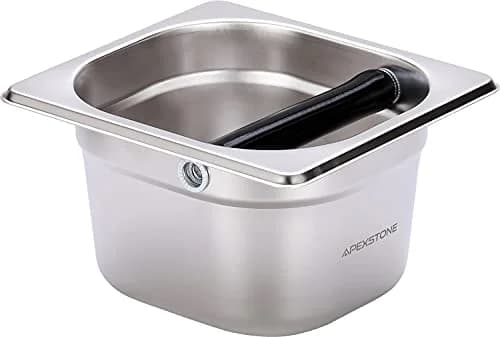
A knock box is a bin with a bar across it, and the bar is the whole product. Look for one that is padded and, more importantly, removable, because the joint where the bar meets the housing is where spent coffee packs in and where cheap boxes eventually loosen or snap. The Apexstone box in this category uses that pattern, in stainless with an ABS housing and a padded, removable bar. Height matters more than volume: you knock the portafilter down onto the bar, so a box that is too shallow means clipping the rim of the bin, and one that is too tall is awkward under a low group head. Weight and a non-slip base decide whether the box slides across the counter when you hit it, which is the most common daily annoyance. Volume is the specification listings lead with and the least important one, since a box holding a dozen pucks is emptied for smell rather than fullness. If your machine sits on a wooden counter, note that knocking generates real noise and shock, which is the argument for a heavier box with a rubber foot.
Levelers, dosing rings and dosing cups: three different tools
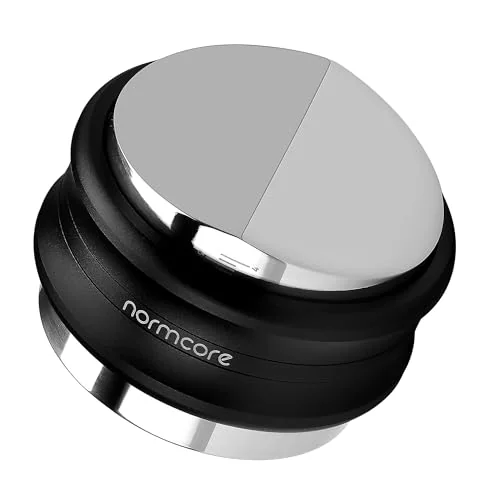
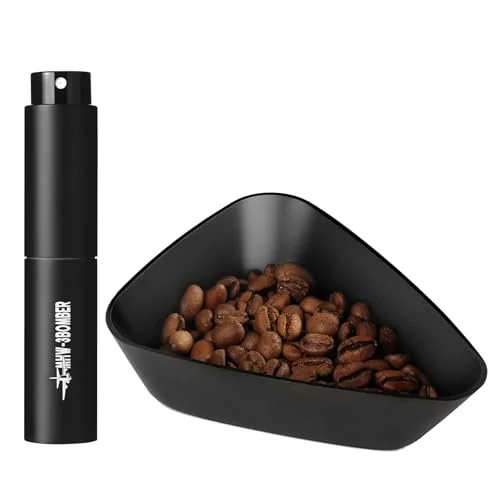
These three get used interchangeably in listings and do entirely separate jobs. A leveler, also sold as a distributor or a palm distributor, drops into the basket and spins to flatten the surface of the dose to a set depth. The Normcore Coffee Distributor and Tamper is that tool with an adjustable depth collar and a tamper on the other face. A dosing ring, sometimes called a dosing funnel, is a plain collar that sits on the rim of the basket so that grounds falling from a grinder land inside rather than on the counter. It shapes nothing and improves no shot; it stops mess and makes stirring with a WDT tool practical without spilling. A dosing cup is a small steel cup that catches the entire dose from a single-dose grinder so you can weigh it and tip it in, which is what the MHW-3BOMBER 58mm cup here is for. The one of the three that changes a shot is the leveler, and even then only by making the puck even. If the puck is clumpy underneath, none of them fixes it, and that is the WDT tool's job.
In order of impact: a WDT tool, a tamper sized exactly to your basket, and a bottomless portafilter. The Normcore WDT Distribution Tool breaks up clumps in the grounds, which r/espresso treats as the highest-return upgrade in the hobby. The Normcore 58.5 mm spring-loaded tamper gives the same pressure on every tamp, but only fits 58 mm baskets, so check your machine first. A bottomless portafilter, such as Normcore's 54 mm model for Breville machines, shows channelling as the shot pours. A knock box like the Apexstone is the cheap quality-of-life buy that keeps the counter clean.
What is a WDT tool and do I need one?
WDT stands for Weiss Distribution Technique — you stir the dosed grounds with a cluster of fine needles to break up clumps before tamping, so water can't carve an easy channel through a dense spot. It's one of the cheapest, highest-impact espresso upgrades: a few dollars of needles noticeably reduces channeling and evens out extraction, especially with clumpy fresh grounds or static-prone grinders. If your shots run sour, uneven, or spritzy, a WDT tool is where we'd start.
Do I need a bottomless portafilter?
You don't need one to make good espresso, but it's the best tool for diagnosing why a shot went wrong. With the spouts removed you can watch the extraction from below, so channeling and uneven flow are immediately visible instead of hidden inside a spouted basket. It's a superb learning aid and looks great pouring, with two caveats: it'll spray until your puck prep is dialed in, and you lose the ability to split a shot into two cups.
58mm vs 54mm — which tamper size do I need?
It's set by your machine, not preference. Most prosumer and commercial-style machines use a 58mm basket; Breville's espresso machines use 54mm; and many entry-level DeLonghi machines use 51mm. Buy the tamper (and distribution tool and dosing cup) that matches your basket exactly — an undersized tamper leaves an unpressed edge that channels, and an oversized one won't fit. If you're unsure, check your machine's manual or measure the basket's inner diameter.
Does a distribution tool or a better tamper matter more?
For most people, distribution matters more than tamping pressure. Once the puck is even, tamping just needs to be level and consistent — the exact force is far less important than beginners assume, and a flat tamper sized to your basket handles it. Uneven grounds, by contrast, channel no matter how you press. So spend on getting the grounds even (WDT, then a distribution tool) before agonizing over a fancy calibrated tamper.
What's the cheapest way to improve my espresso shots?
Fix your prep before buying a new machine. A WDT tool and a correctly-sized flat tamper — under $50 together — eliminate most channeling and turn sour, gushing, or weak shots into even ones. Pair that with a grinder that can go fine enough and grinding fresh, and you'll get more improvement than a pricier machine would deliver on top of poor prep. Prep and grind are where cheap money buys the biggest jump in the cup.
What should I look for in an espresso tamper?
Diameter first: 58mm baskets are usually best served by a 58.5mm tamper, Breville machines take 54mm and many entry DeLonghi units take 51mm. A tamper narrower than the basket leaves an unpressed ring at the edge for water to channel through. Then base shape, where flat is the sensible default. Then the handle, which is comfort rather than performance. The one functional option is a calibrated spring, like the 30lb spring in the Normcore, which clicks at a fixed force and mainly helps while you are building the habit. Once the grounds are evenly distributed, level matters far more than hard.
Do I need a knock box, and what makes a good one?
You do not need one, but hitting spent pucks into a bin lid gets old and eventually breaks something. If you buy one, the bar is the product: padded, and removable so you can clean the joint where grounds pack in, which is where cheap boxes fail. Height matters more than volume, since you knock the portafilter down onto the bar and want to clear the rim comfortably. Weight and a non-slip base stop the box travelling across the counter as you knock. Capacity is the specification listings lead with and the one that matters least.
What is the difference between a coffee leveler and a dosing ring?
A leveler, also sold as a distributor, drops into the basket and spins to flatten the top of the dose to a set depth. A dosing ring, or dosing funnel, is a plain collar that sits on the basket rim so grounds from the grinder land inside rather than on the counter, and so you can stir with a WDT tool without spilling. It shapes nothing. A dosing cup is a third thing again, a steel cup that catches the whole dose from a single-dose grinder for weighing before you tip it in. Only the leveler touches the puck, and even it cannot fix clumps buried in the dose, which is what the WDT tool is for.