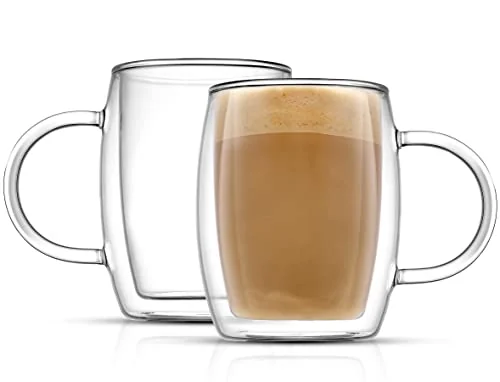
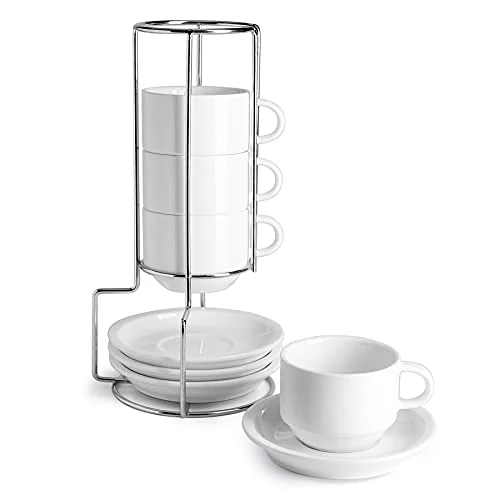
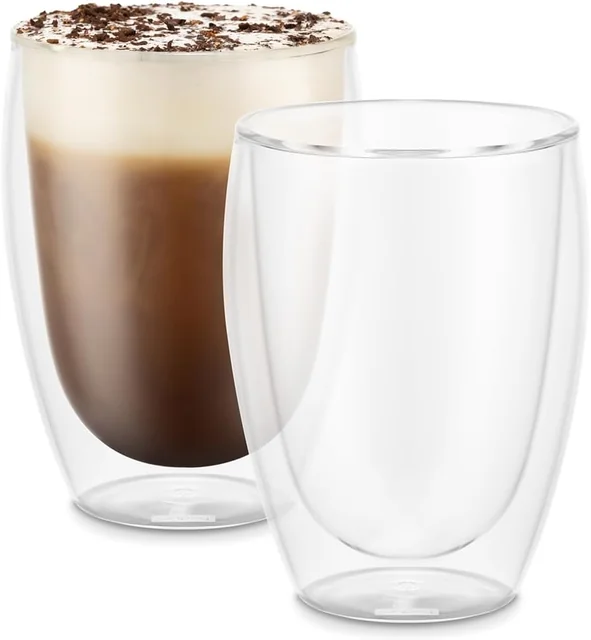
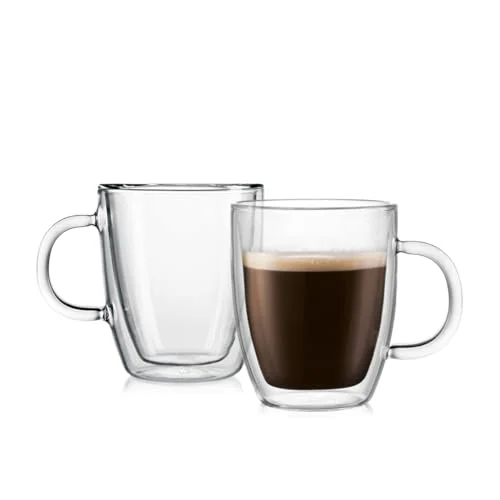
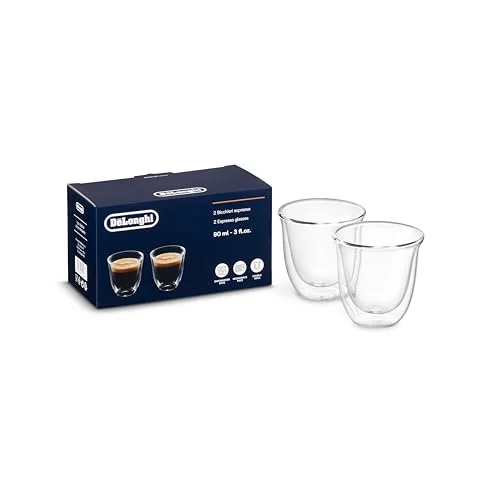
The vessel matters more than you'd think. Double-wall glasses keep drinks hot and show off the layers in a latte; a proper espresso cup pre-warms and concentrates the crema. The finishing touch on a good setup.
Quick steer — Double-wall glass keeps milk drinks hot and shows the layers; a thick, pre-warmed demitasse is what stops a 1 oz espresso going cold on the way to the table.
Espresso cup sizes vary far more than the label suggests. Sweese alone publishes a 2 oz demitasse and a 3.5 oz cup under the same espresso heading, and a single shot sitting in a 3.5 oz cup is a shallow puddle that loses its crema and its heat quickly. Buy 2 to 3 oz for single shots and treat the larger cups as what they really are — doppio, macchiato and cortado cups.
The BrewSift Score is a 0–10 weighted average of category-specific sub-scores, built from manufacturer specifications, published reviews and aggregated owner reports — not hands-on testing. In this category it weights insulation 30%, build quality 25% and design 20%, plus 2 smaller factors. How we score →
The classic double-wall glass — keeps drinks hot, stays cool to hold, and shows off the layers in a latte.
Bodum's Pavina is the double-wall glass everyone copies: borosilicate, mouth-blown, with an air gap that insulates so the cup is cool to hold and the coffee stays hot. The floating-drink look is gorgeous with milk drinks. The default upgrade for café-style at home.
Two cups sold as espresso cups can hold nearly twice as much as each other. Sweese lists a 2 oz porcelain demitasse and a 3.5 oz porcelain espresso cup in the same range, both marketed for espresso. Because a single shot is a small fixed volume, the cup decides how deep the liquid sits, how quickly it cools and how the crema reads — which is why the same shot can feel generous in one cup and mean in another.
What owners actually report
r/espressor/Coffeer/barista
The drinkware conversation in r/espresso and r/Coffee is shorter than most and lands in the same place every time: warm the cup, and buy thick. Owners report that a preheated cup is the cheapest thing that stops a single shot going lukewarm before it reaches the table, and that thin, pretty cups shed heat fastest. Double-wall glasses get genuine affection for milk drinks, both for the insulation and because the layers are visible, and the caveats are practical rather than about taste: they are more fragile than they look, they end up hand-washed in practice whatever the box allows, and the trapped air makes them hold less than their outside dimensions imply. Porcelain is the default for espresso for being thick, cheap and dishwasher-proof — Sweese states its porcelain cups are microwave, dishwasher and oven safe — and the running consensus is that the cup is the last thing to spend on and the first thing people over-buy.
Consistently praised
Thick porcelain demitasse cups — The default espresso recommendation: they hold heat, they survive a dishwasher, and Sweese publishes its porcelain as microwave, dishwasher and oven safe.
Double-wall glasses for milk drinks — Liked for keeping a latte hot and for showing the layers; owners describe them as the cups guests actually notice.
Preheating the cup — The one piece of technique everybody in these threads agrees on, and the only upgrade in the category that costs nothing at all.
Consistently warned about
Oversized espresso cups — A single shot in a 3.5 oz cup reads as a puddle and cools quickly; the advice is to match the cup to the drink rather than buy one size and use it for everything.
Double-wall glasses in a dishwasher — The most common breakage story in the category, reported regardless of what the listing permits.
Buying a set before you know the drink — Owners repeatedly say they bought six matching cups for a drink they stopped making, and suggest buying two of a size first.
What we didn't pick
Popular options we looked at and passed on, with the specific reason each one fell short.
Thin glass is close to the worst case for a one-ounce drink: there is almost no thermal mass to preheat, so the shot cools noticeably between the machine and the table. They photograph beautifully, which is most of why they sell.
Latte mugs above about 16 ozConsidered 2026-09
Past a point the vessel stops being a coffee cup and becomes a milk container. The espresso-to-milk ratio that defines a latte cannot stretch that far without the result being warm milk with a coffee note.
Double-wall glasses with no stated glass typeConsidered 2026-09
What lets a double-wall glass survive a hot pour is borosilicate and a properly sealed cavity. A listing naming neither is describing an ornament, and a failed seal fogs the cavity permanently the first time it is washed hot.
The five drinkware sets BrewSift ranks run $15.50 to $34.95, a 2.3x spread, and four of the five are double-wall glass. The single porcelain set is the only one in the group a dishwasher cannot eventually ruin.
Double-wall keeps heat and shows the drink
Borosilicate double-wall glasses trap a layer of air between two walls, so the outside stays cool enough to hold bare-handed while the coffee inside stays hot, and they look stunning with the layered look of a latte or cortado. The glass is more fragile than ceramic and pricier, but for milk drinks the insulation and the presentation are worth it. Brands like Bodum popularized the style, and it's become the default café-at-home glass for good reason.
Size to the drink
Match the vessel to the drink and it both looks right and tastes better. Espresso wants a small 2 to 3oz demitasse; a cortado, macchiato, or piccolo suits a 4 to 5oz glass; a flat white or small cappuccino lives around 5 to 6oz; and a latte wants 8 to 12oz. A cup that's too big leaves a milk drink looking thin and going cold, while one too small overflows the microfoam — sizing is half of making it feel like a café.
Pre-warm, especially for espresso
A cold cup steals heat from a small drink instantly — an espresso poured into a room-temperature demitasse can drop noticeably before you taste it. Pre-warming the cup (rinse with hot water, or rest it on the machine's cup warmer) keeps the shot hot and its crema intact through the first sips. This is why espresso is traditionally served in thick-walled, pre-warmed demitasses rather than thin glass, and it's a free upgrade to every shot you pull.
Material shapes the experience
Thick ceramic retains heat well, is durable and dishwasher-safe, and is the honest choice for espresso and everyday coffee. Double-wall borosilicate glass insulates and shows off milk drinks but is more delicate. Double-wall insulated stainless holds temperature the longest and won't break, though you lose the visual and some people notice the metal. Choose ceramic for daily durability, glass for presentation, stainless for heat retention and toughness.
Buy a set, or buy for one drink
If you make the same drink every day, a single well-sized cup for that drink beats a mismatched cupboard. If your household drinks a range — espresso, cortados, lattes — a graduated set covers every size and looks intentional together. Watch that 'espresso cup' sets aren't undersized novelty pieces and that latte glasses are actually 8oz or more; listed capacities are often to the brim, so usable volume runs a bit lower.
FAQ
Common questions
What size should an espresso cup be?
For a single shot, 2 to 3 oz. A single espresso is only about 1 oz of liquid, and a small, thick cup keeps it hot and keeps the crema together. Sizes sold as espresso cups vary more than the label suggests: Sweese publishes a 2 oz demitasse and a 3.5 oz espresso cup in the same range, and a single shot in the larger one sits as a shallow puddle that cools quickly. Treat cups of 3.5 to 4 oz as doppio, macchiato and cortado cups, and a 4 to 5 oz glass as the cortado size.
Glass or porcelain espresso cups: which is better?
Porcelain for the shot itself, double-wall glass for looks and milk drinks. Thick porcelain holds heat once preheated, survives the dishwasher, and Sweese states its porcelain cups are microwave, dishwasher and oven safe. Double-wall borosilicate glass insulates through the trapped air layer and shows off the crema and the layers in a macchiato, but it is more fragile, it holds less than its outside size implies, and owners report hand-washing it whatever the box allows. Avoid thin single-wall glass for espresso: it has almost no mass to preheat, so the shot cools on the way to the table.
Why does the cup shape matter?
A narrow, thick-walled cup keeps espresso hot and concentrates aroma; a wide cup cools a latte faster and gives the milk somewhere to go. It is less about taste chemistry than temperature and what you do with the drink.
Why use a double-wall glass?
Two reasons: insulation and looks. The trapped air layer between the two walls keeps the outside cool enough to hold comfortably while your coffee stays hot longer than it would in a single-wall cup, and the clear glass shows off the layered crema and milk of an espresso or latte. The trade-offs are cost and fragility — borosilicate double-wall glasses are pricier and more breakable than a plain ceramic mug. For milk drinks and anyone who enjoys the presentation, most people find them well worth it.
What size cup should I use for a latte, cortado, or espresso?
Match the cup to the drink. A single espresso wants a small 2 to 3oz demitasse so the shot and crema aren't lost in a big cup. A cortado or macchiato suits a 4 to 5oz glass, and a flat white or small cappuccino sits around 5 to 6oz. A latte wants 8 to 12oz to hold the larger volume of steamed milk. Sizing right isn't just aesthetics — a milk drink in an oversized cup looks thin and cools fast, while microfoam overflows a cup that's too small.
Are double-wall glasses worth it?
For milk drinks and espresso, generally yes. You get real insulation — a cup that stays cool to hold while the coffee stays hot — plus a striking layered look that plain mugs can't match, which is a big part of the café-at-home appeal. The downsides are a higher price and more fragility than ceramic, and they need reasonably careful handling and washing. If you mostly drink black drip coffee from a travel mug, a sturdy ceramic mug makes more sense; for lattes and cortados at home, double-wall glass earns its place.
Why is espresso served in a small cup?
Because a single espresso is only about 1oz of liquid, and a small, thick-walled demitasse concentrates the crema and keeps the shot hot. A large cup would let the tiny volume spread out, thin the crema visually, and cool fast against all that cold ceramic. The demitasse is also traditionally pre-warmed so the shot doesn't lose heat on contact. Small and warm is exactly what keeps an espresso tasting the way it should through the last sip.
Can you put double-wall glasses in the dishwasher or microwave?
It depends on the glass, so check the maker's guidance, but borosilicate double-wall glasses are generally microwave-safe and many are dishwasher-safe on a gentle setting. The bigger risk is handling: they're thinner and more delicate than a solid mug, so knocks against other dishes or a crowded rack are what tend to break them rather than the heat. Hand-washing and giving them a little space is the safe habit if you want them to last.